Sightings

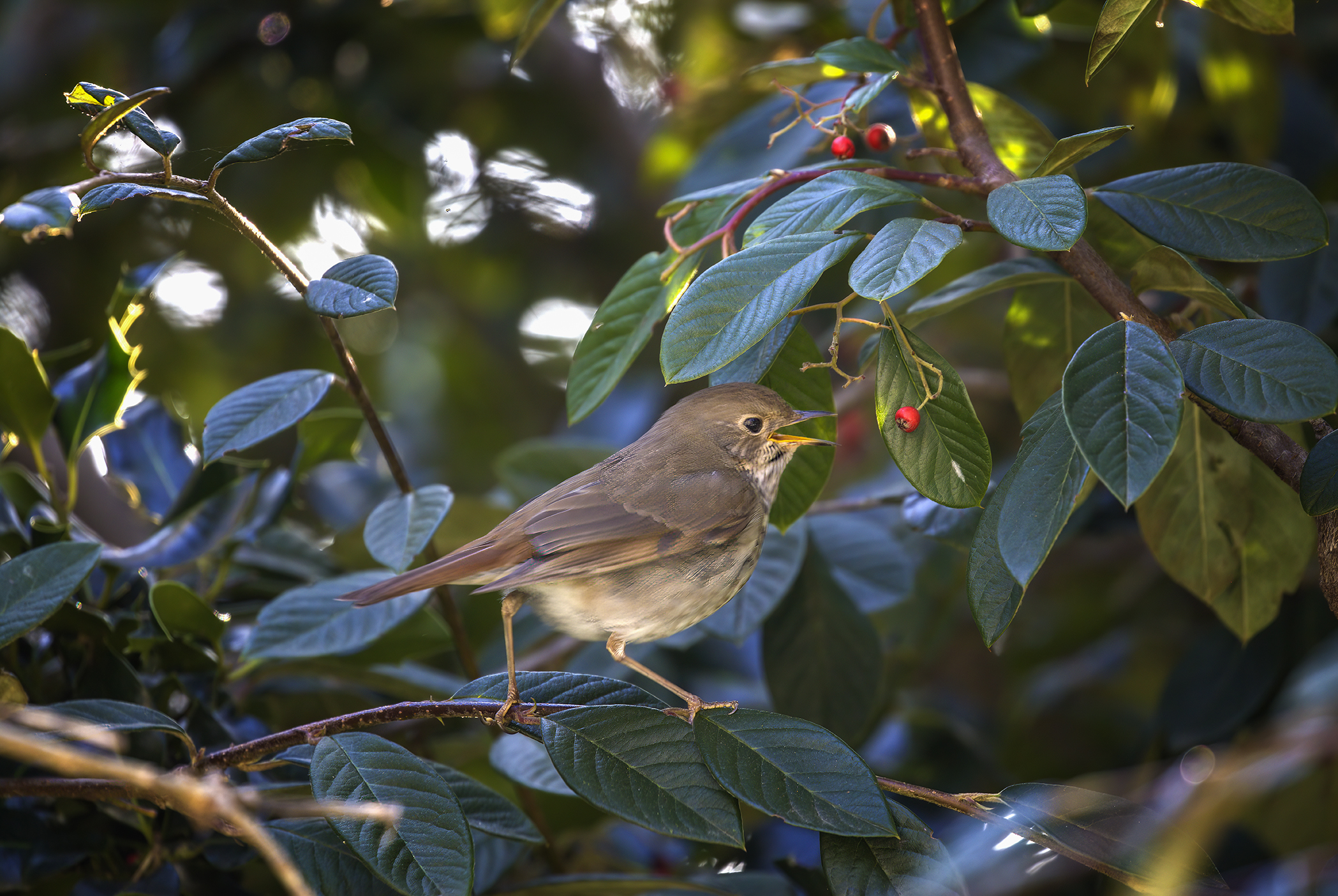
Ron Bolander was at the right place - right outside his home - when he spotted this Hermit Thrush. And the little thrush was headed straight for a ripe berry with his or her beak wide open.

What great timing by Ron to catch this Hermit Thrush stepping forward for a meal!

Hermit Thrushes have a beautiful song. I always listen for the first trills early in the morning as we get closer to spring. You can hear the song at this link at the Cornell Lab of Ornithology: https://www.allaboutbirds.org/guide/Hermit_Thrush/sounds

Thanks to Ron for allowing me to share his photo with you here.

It rained hard Sunday morning but it cleared up for the afternoon. It was then sunny and cool. Clouds began piling in in the late afternoon as more rain is headed our way!

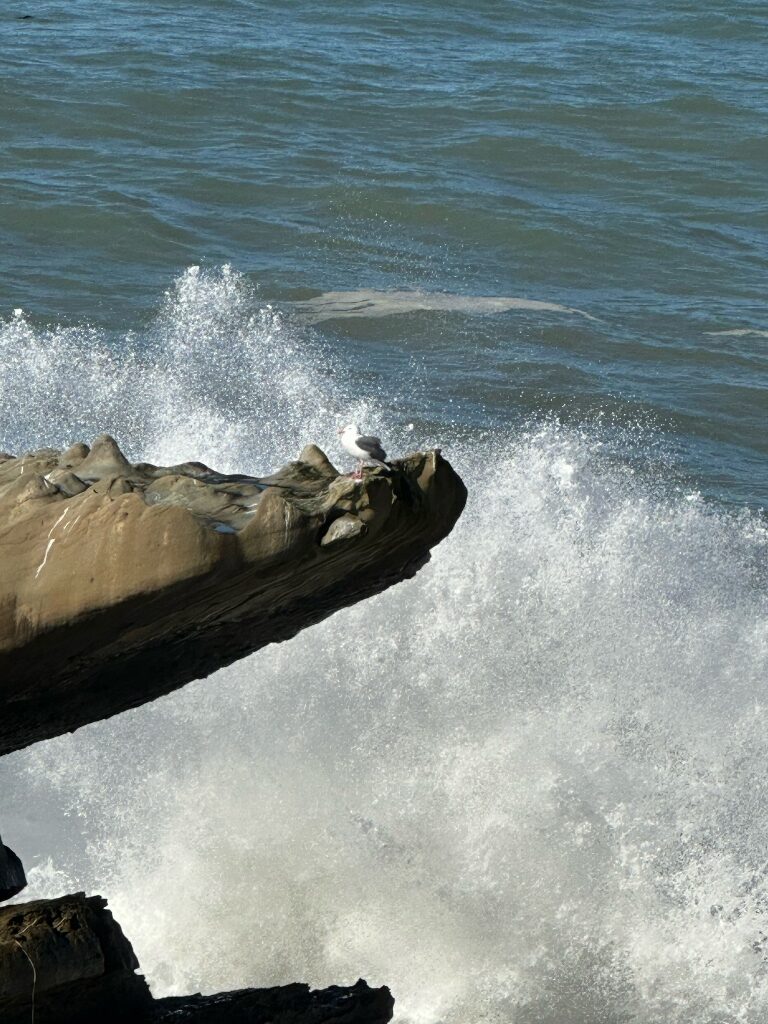
Tami Sutton noticed this lone Western Gull standing on a rocky outcropping while a big wave crashes onshore. That gull had to get wet!

Western Gulls are the only year-round gull here on the Mendonoma Coast, though we see quite a few other species of gulls overwintering here.

Thanks to Tami for allowing me to share her photo with you here.

It was sunny this morning, but clouds are pouring in, creating beautiful patterns in the sky. More rain headed our way. Can you hear that drought breaking? I can!

2 Comments

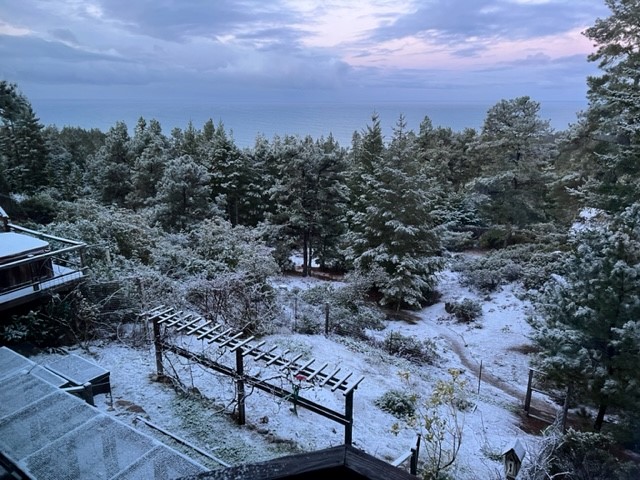
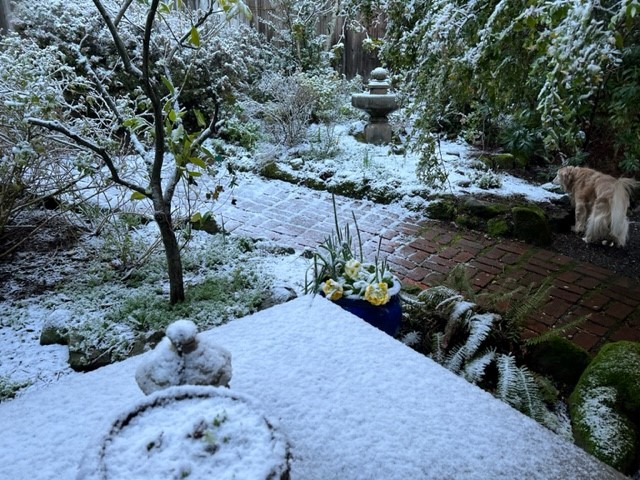
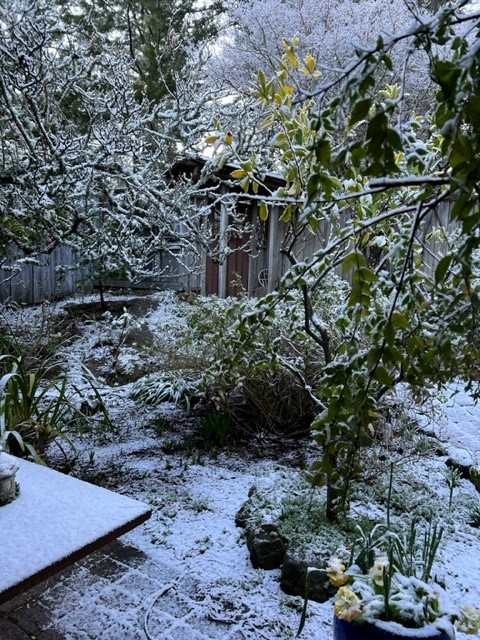
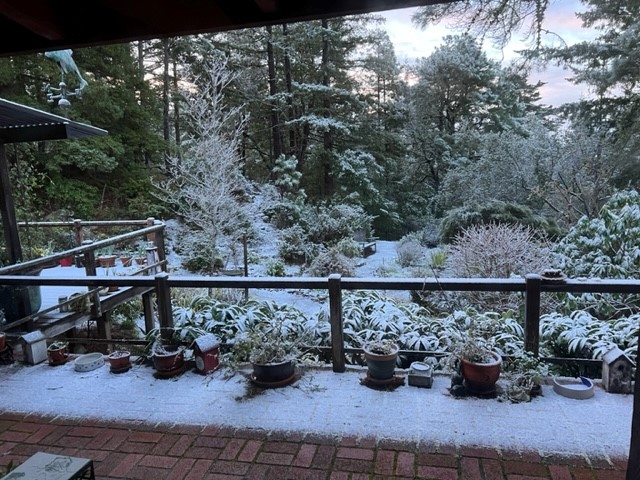
Many coast residents woke up this morning to a winter wonderland. It was no exception at Rick's and my place in Anchor Bay!

It looked like the land had been transported to the Sierras!

The temperature this morning was 32 degrees, very cold for the coast! But the sun came out and the snow melted in a few hours. But as I type this at 4:43 this afternoon, it's raining with intermittent snowflakes, and it's 35 degrees...brrrr!

It doesn't snow too often - my elevation is 600+ feet. It sure feels like we are going to get more snow overnight.

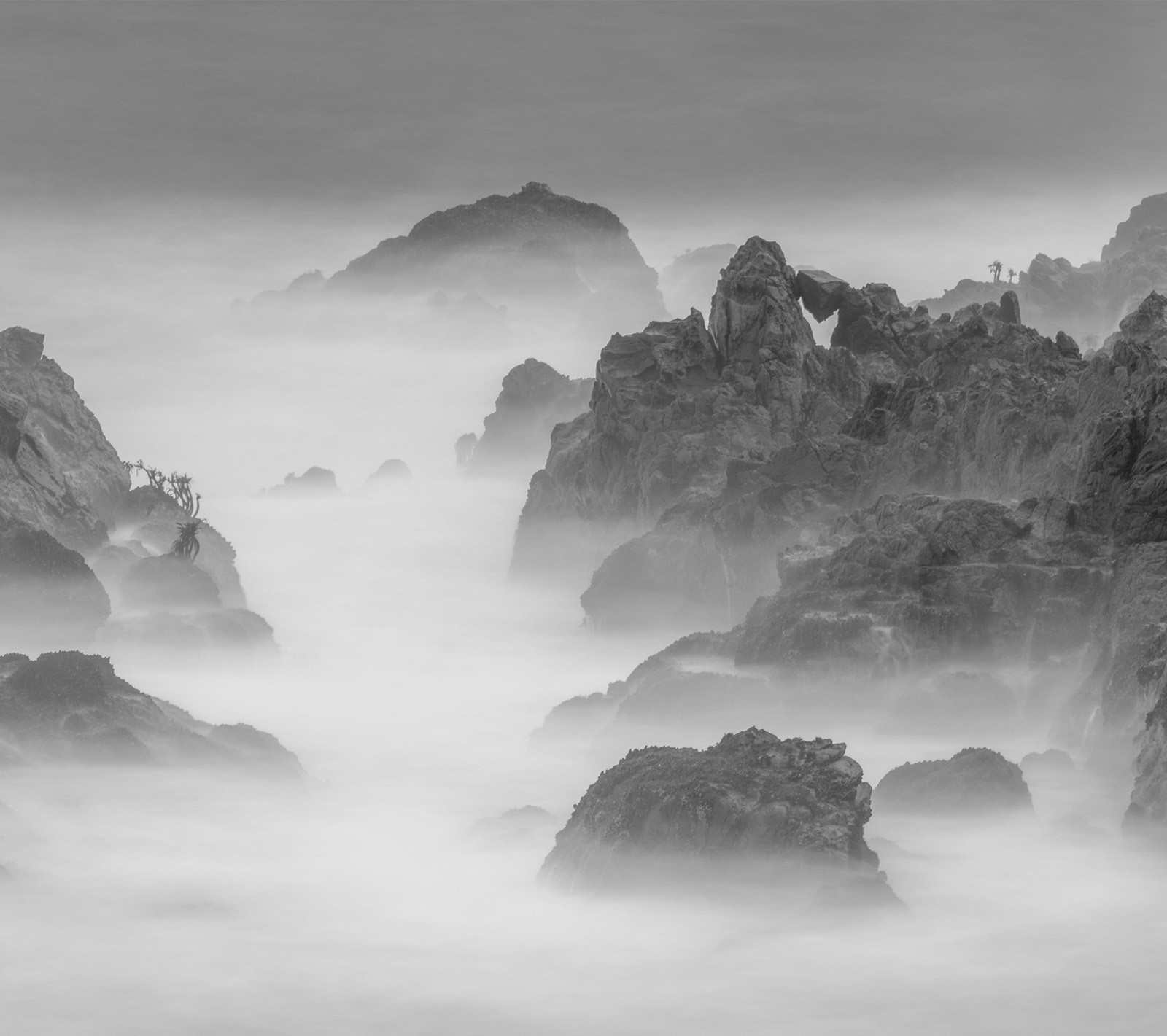
In December of 2022, Phil Lewenthal photographed theses offshore rocks, showing a triangle-shaped rock wedged in an opening on  the upper right.

After the big storms last month, Phil found this sight. Another rock was deposited on top of the hanging rock seen last year!

Those had to be huge waves to be able to carry another rock and deposit it up there. Amazing!

Thanks to Phil for allowing me to share his photos with you here.

It's terribly windy here today. There has been some scattered rain and our lovely spring-like temperatures are a thing of the past. It's about 20 degrees cooler today. This morning there were rainbows, which is always a treat. Rain is in our forecast with cooler than normal temps. There is a possibility of snow, something that is very rare on the Mendonoma Coast.

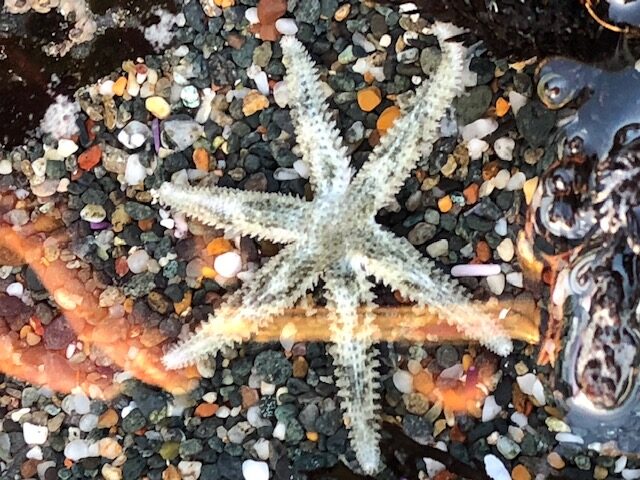
Just look at this beauty - a six-legged, small, nearly translucent Sea Star. Marilyn Green photographed it at the most recent low tide at Pebble Beach off The Sea Ranch.
Here's what intertidal zone expert, Robert Van Syoc, had to say about this Star.

"This is a very interesting star, and a rare find on our part of the coast. According to Prof. Sarah Cohen at San Francisco State University, who is an expert on this group of stars, it's a member of a ‘species complex’ of three species distinguished by differences in their DNA, but not yet easily identifiable to species-level by obvious morphological characteristics.

“Formerly, all three species were known as Leptasterias hexactis, a smallsix-armed star. Currently, Prof. Cohen considers true Leptasterias hexactis to be the most northern of the three species, ranging from Alaska south to Washington State.  The remaining two species of Leptasterias are most common further south in California, uncommonly found this far north.  So, it would appear that Marilyn has photographed a currently undescribed species of Leptasterias!  Keep your eyes open for more, please!”

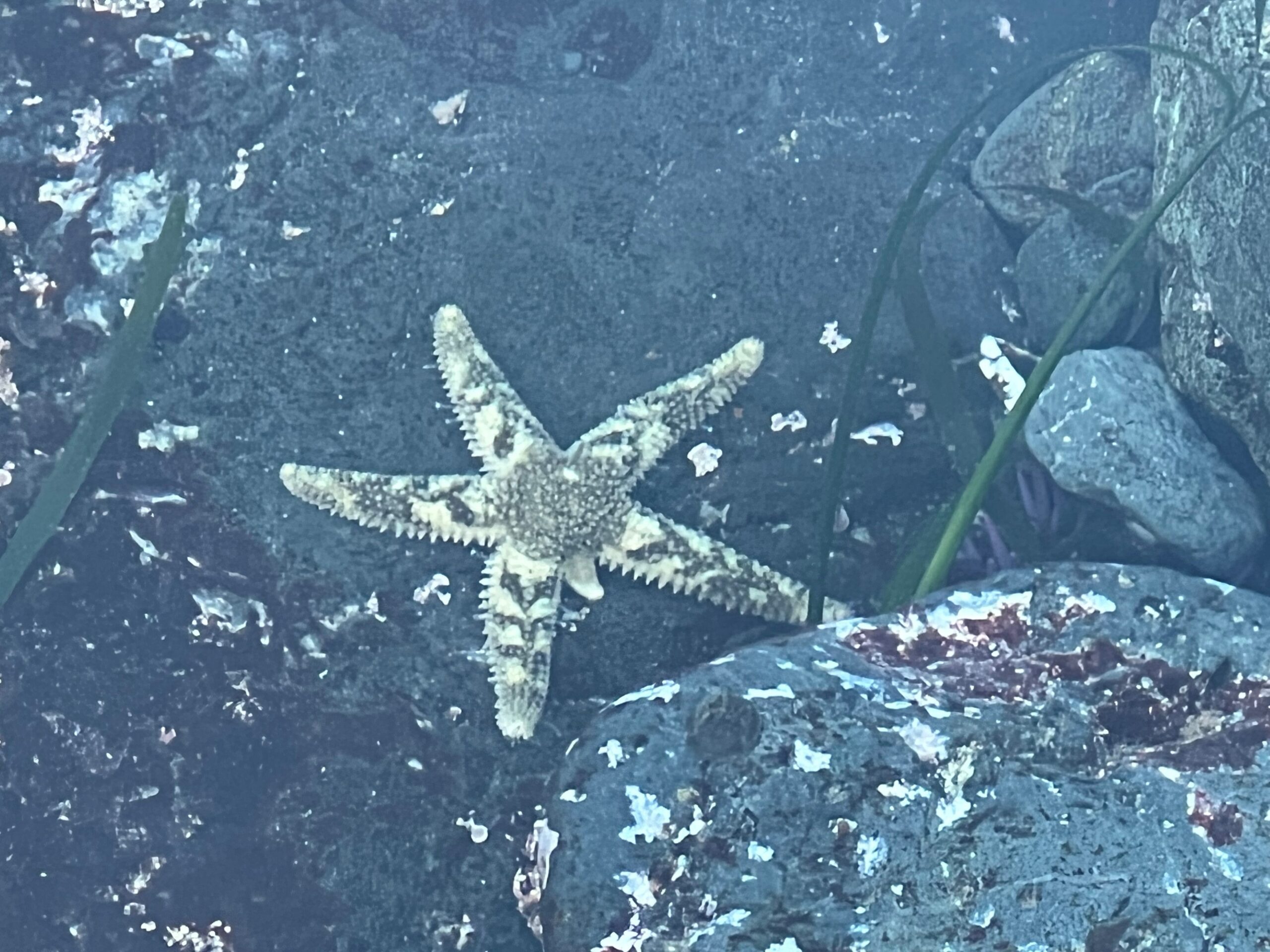
As Amy Ruegg often photographs in the intertidal zone, I sent her Marilyn's photo and it turns out Amy photographed this type of Star last year, off Pebble Beach. One of its legs is mostly underneath the center of the Star. Bob agrees it's probably the same species as Marilyn's find.
Bob sent in some fascinating information about these Stars. He wrote, “Another important aspect of Leptasterias biology is that they are ‘brooders,’ that is they do not have planktonic larvae, but keep their developing offspring on ‘Mom’ until they ‘walk away’ as tiny versions of the adults.  This limits their ability to re-colonize distant areas after the Sea Star wasting disease of 2015 in our area.  Hence, the slow re-establishment of Leptasterias on our part of the coast…and our excitement at seeing them again.”

How great is this? At the next low tide, perhaps you will find one of these rare Stars.

Thanks to Marilyn and Amy for allowing me to share their photos with you here.

It's a stunning day - warm with no wind. But the forecast has it cooling off, big time! For today, I'm enjoying the sunshine and the 70 degree temps. It's not really winter today!