Tag Archives: Shari Goforth

A Gulf Fritillary was spotted by Hilary Prentiss in her yard in Gualala.
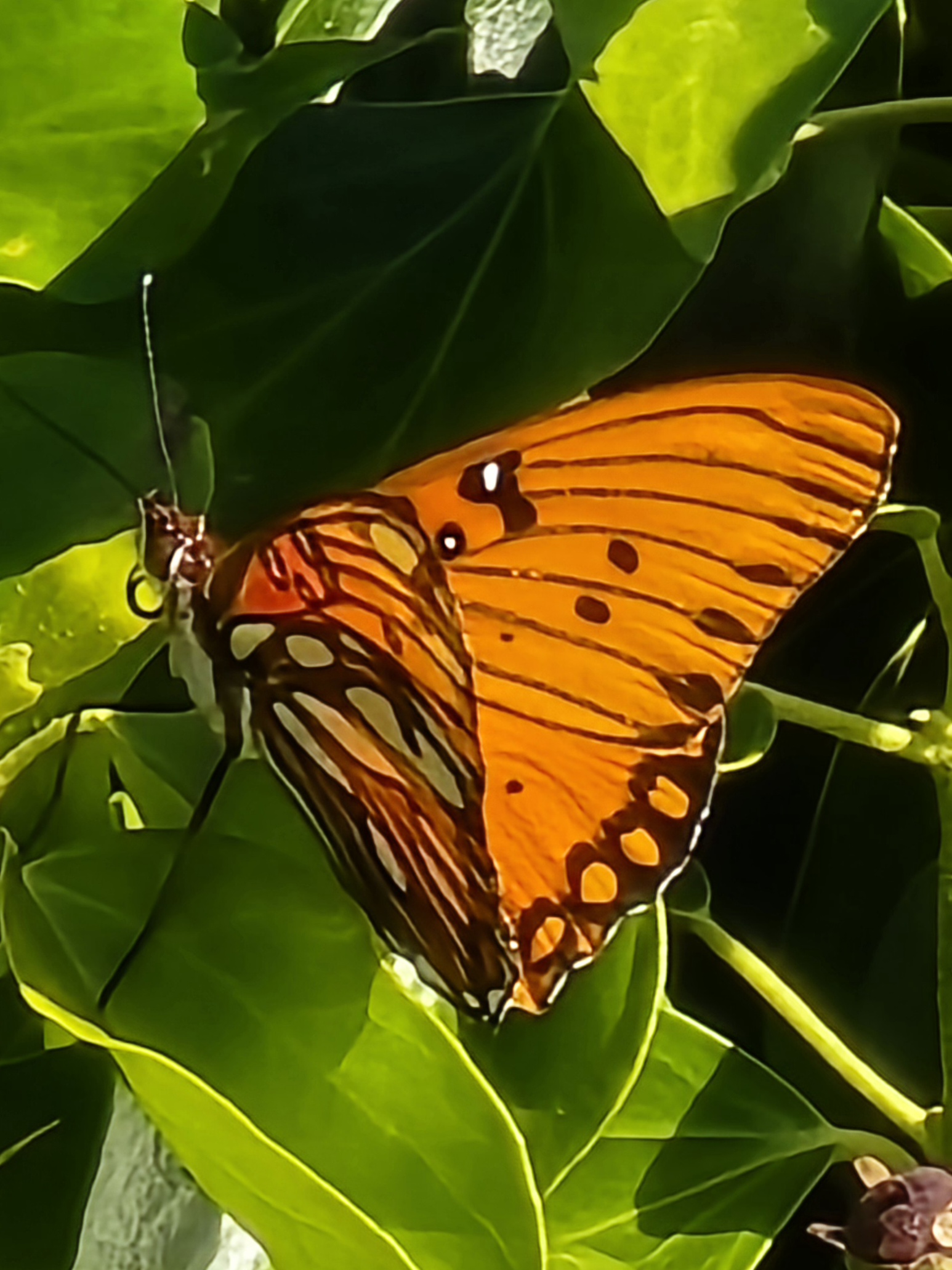
She wrote, “Fun facts about this butterfly: Their caterpillars feed exclusively on passion flower vines. Their bright orange color serves as a warning to predators that they are unpalatable due to the toxins in the passion flower vines they eat. And the underside of their wings have shiny spots that offer camouflage when their wings are closed.”

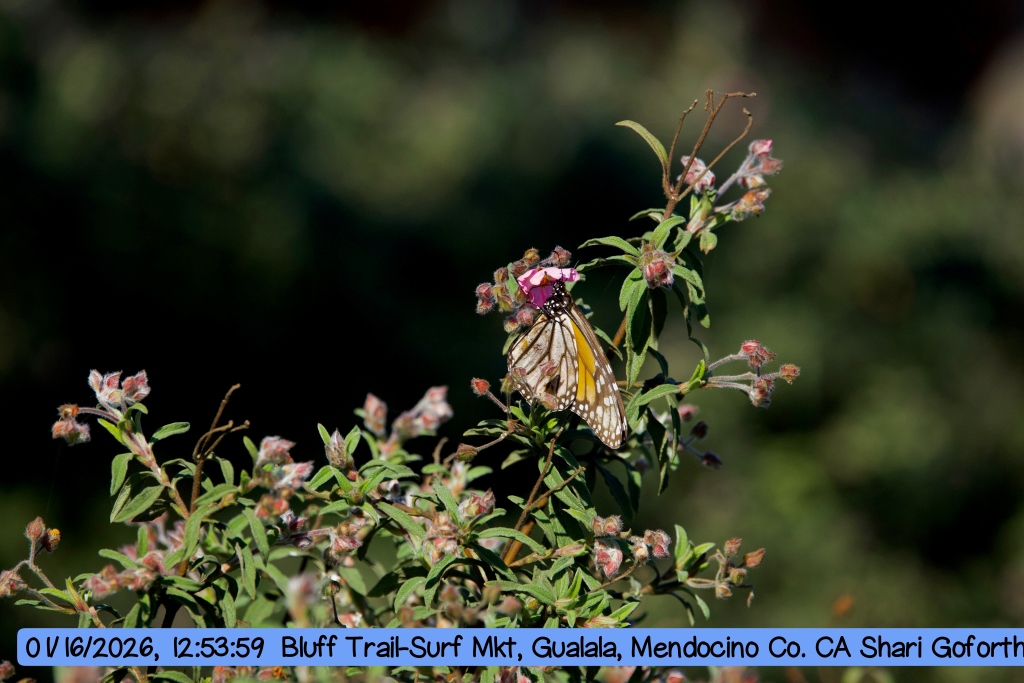
We've also had two Monarch butterfly sightings. One was quite tattered and photographed by Shari Goforth. Shari saw this butterfly near Surf Market in Gualala. It flew to the Gualala Bluff Trail where it then fed on rock rose blossoms.
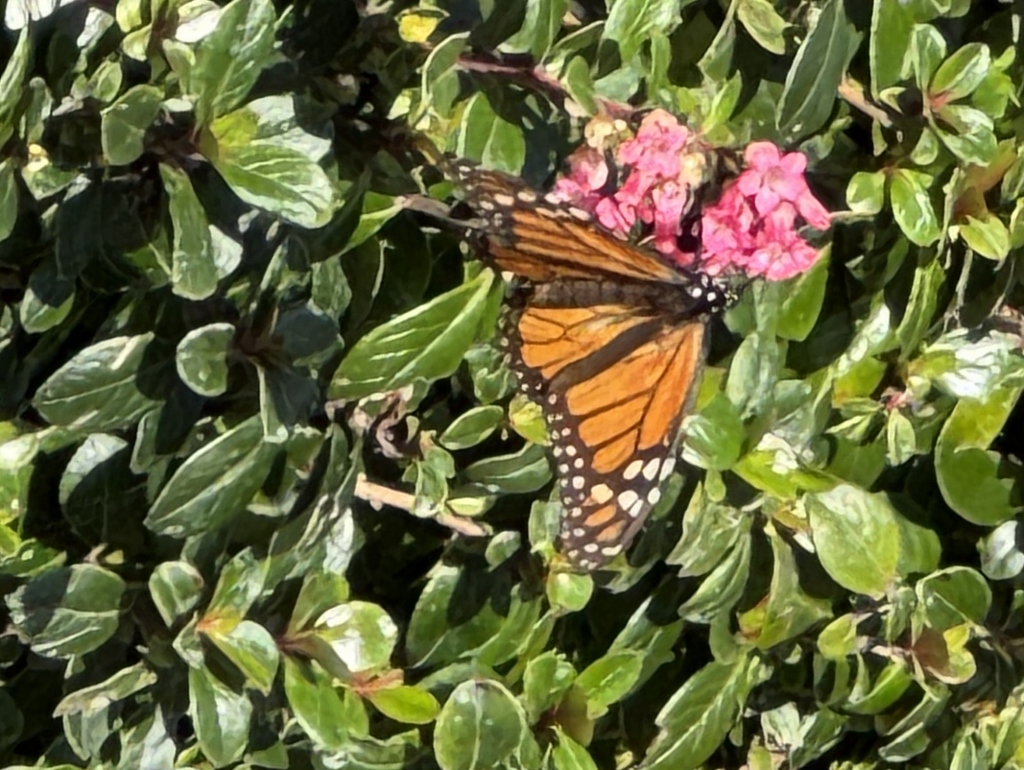
Ann Yeo saw a Monarch in much better shape, also in Gualala. Those who study these butterflies are very interested in what they are feeding on and where they are over-wintering. Mary Sue Ittner took a look at Ann’s photo and believes the plant could be Escalonia rubra, a non-native plant known to be popular with Monarchs as its flowers are nutrient rich.
We know Monarch butterflies are struggling so any sighting of one is precious. Gulf Fritillary butterflies were introduced to southern California before 1908. According to UCDavis' website: "This butterfly has no native host plant in California and is entirely dependent on introduced species of the tropical genus Passiflora (Passion Flower, Passion Vine), including the common Maypop (P. incarnata) and P. X alatocaerulea."

Thanks to Hilary Prentiss, Shari Goforth, and Ann Yeo for allowing me to share their photos with you here.

There must be butterflies today as the temperature was close to 70 degrees. While much of the country is experience extremely cold temps, it seems rather surreal to have this warm, dry weather.
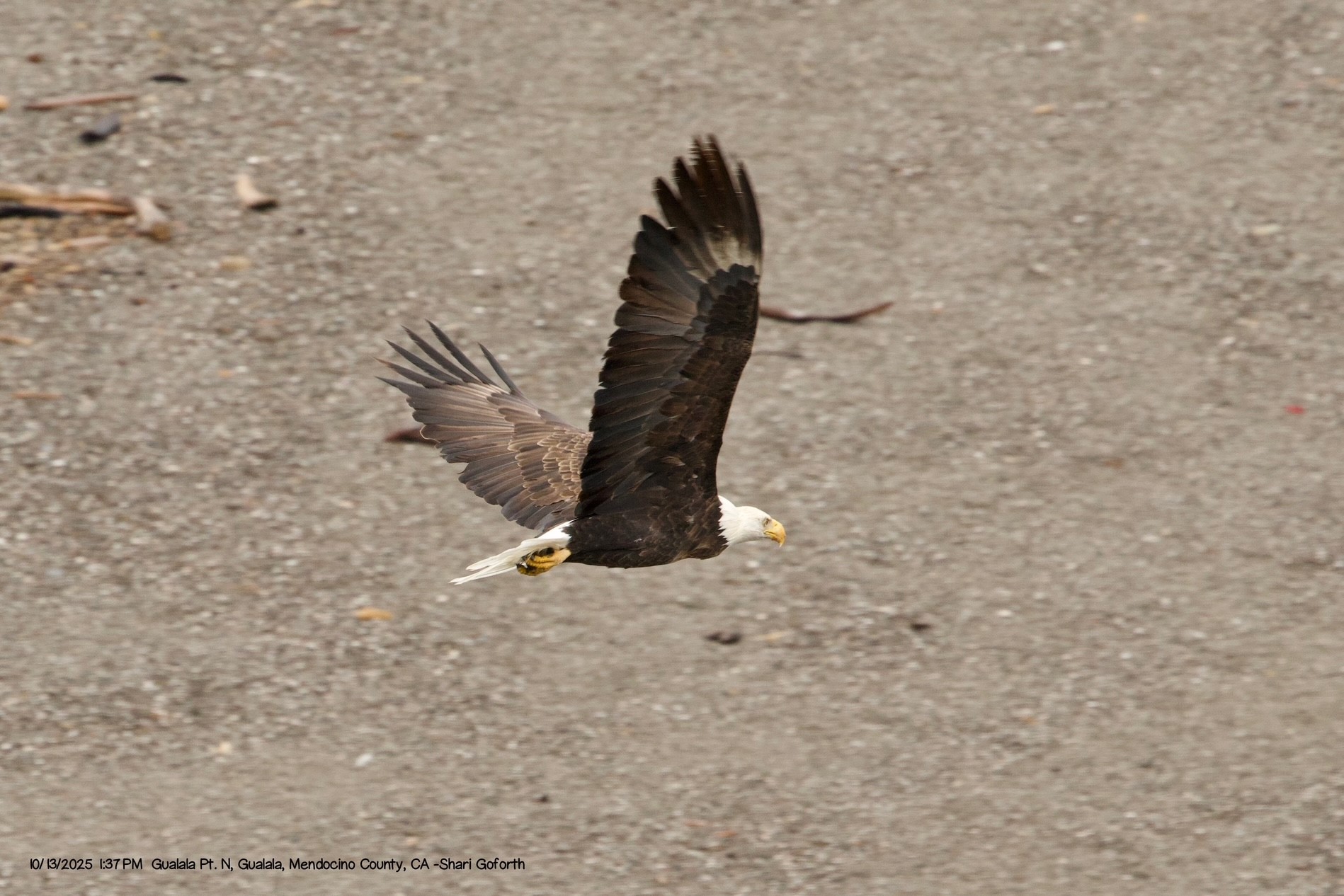


Shari Goforth found this bald eagle hunting. She saw all the gulls take flight but the brown pelicans stayed in place. It's very rare for a bald eagle to take a much bigger brown pelican, but gulls are much easier pickings.

Thanks to Shari for allowing me to share her photo with you here.

The past weekend and today, Monday, have been warm with very little wind - perfect autumn days!


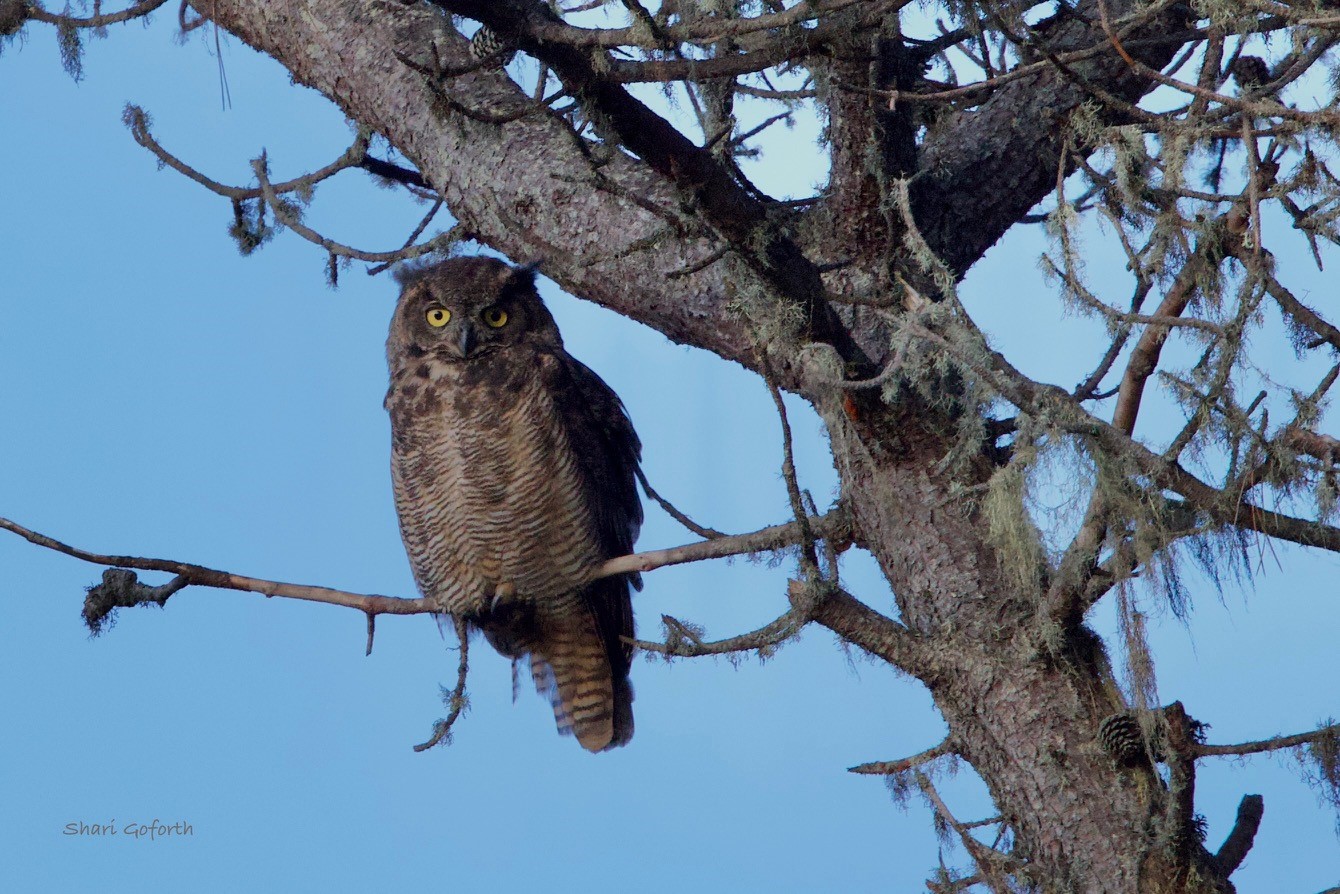
Shari Goforth was at Stewarts Point at dusk to watch the Vaux's swifts enter the old brick chimney. She was rewarded with a sighting of this young Great Horned Owl.


Here's what the Cornell Lab of Ornithology's website, http://www.allaboutbirds.org, says about these owls: "With its long, earlike tufts, intimidating yellow-eyed stare, and deep hooting voice, the Great Horned Owl is the quintessential owl of storybooks. This powerful predator can take down birds and mammals even larger than itself, but it also dines on daintier fare such as tiny scorpions, mice, and frogs. It’s one of the most common owls in North America, equally at home in deserts, wetlands, forests, grasslands, backyards, cities, and almost any other semi-open habitat between the Arctic and the tropics."

You can hear their hooting calls at this link, also at the Cornell Lab of Ornithology's website: https://www.allaboutbirds.org/guide/Great_Horned_Owl/sounds

Thanks to photographed Shari Goforth for allowing me to share her great photo with you here.

Today was a beautiful, sunny, breezy day.

2 Comments

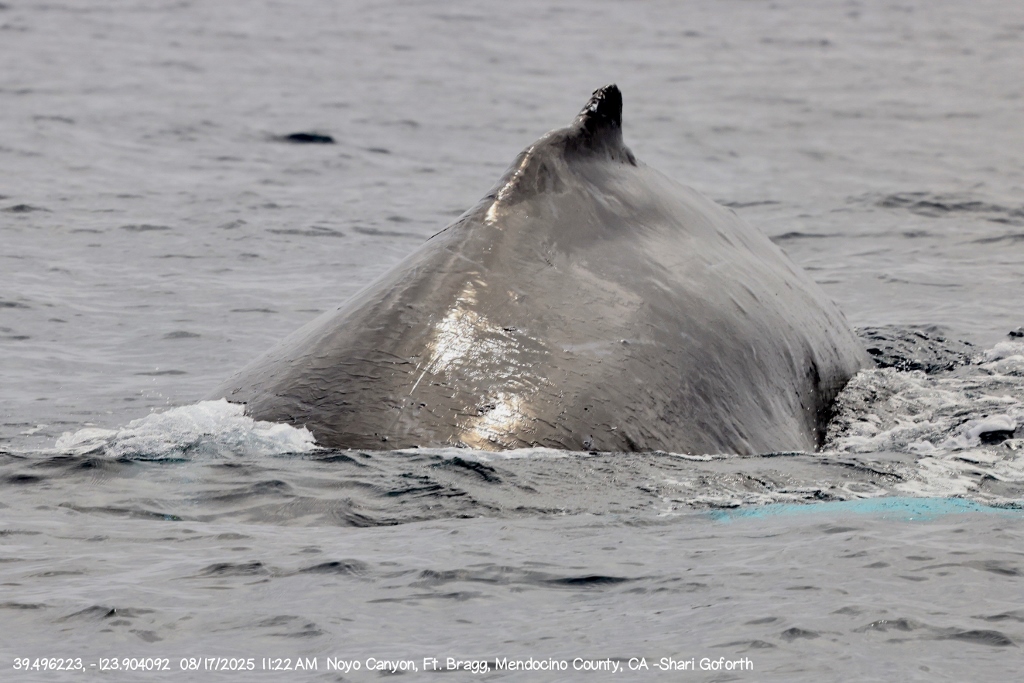
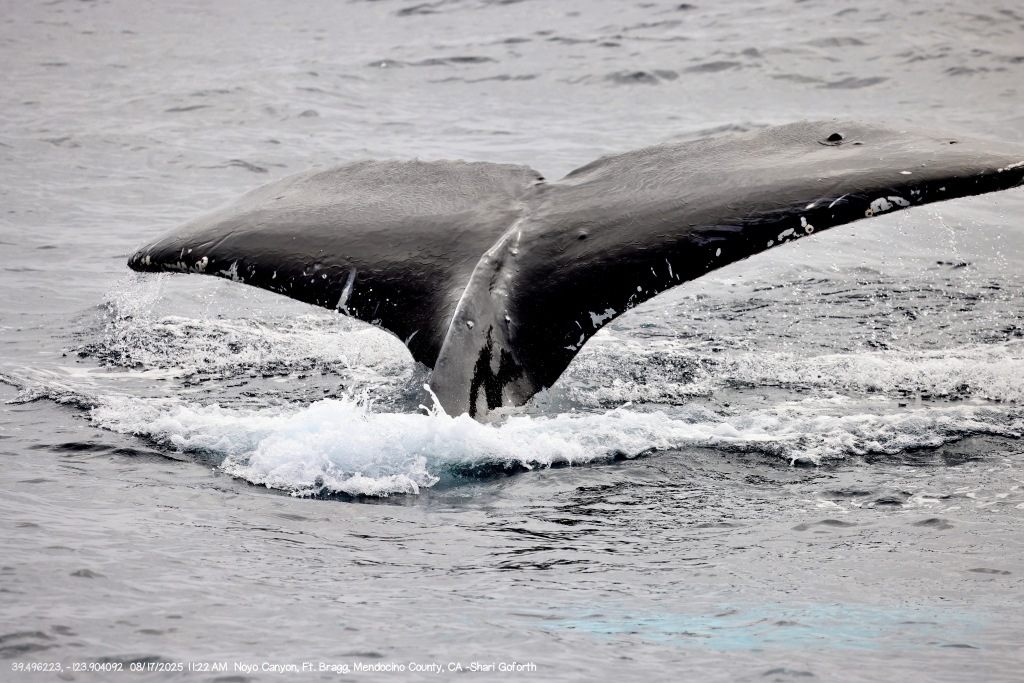
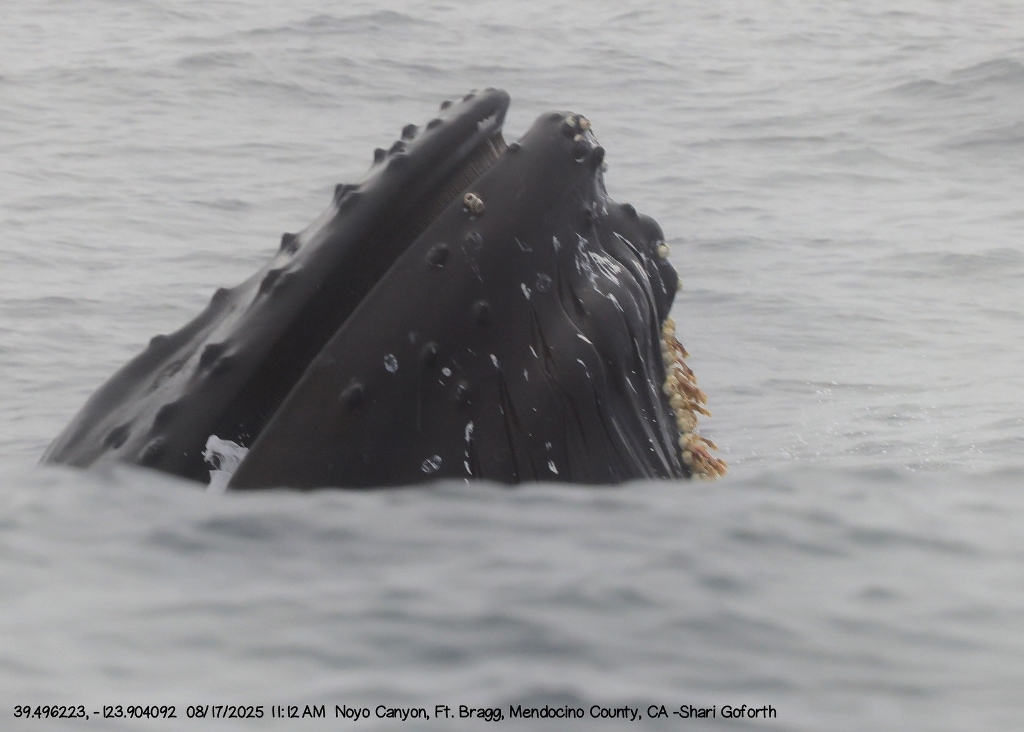
Shari Goforth headed out in two weeks ago on a Saturday for a pelagic trip out of Noyo Harbor on The Kraken along with 24 other seafarers. Many on board were birders, excited to see different kinds of petrels, albatrosses, skua and terns. Shari is mostly on the trip to spot whales. A blue whale was seen and Pacific white-sided dolphins. And humpbacks! Shari wrote, “It was a gray day, so here are a few photos that are not fogged-in. We were about from eight miles from the red and white whistle buoy outside Noyo Harbor when we encountered a group of humpback whales.”

Look at the green light on the water on the lower right. It's the sun reflected on the whale's body that is underwater. Shari says they can often see a whale before it spouts by noting this green reflection.

Shari got a clear photo of a distinctive fluke and she sent it in to Happy Whale to see if they had a previous identification of this particular whale. They did. Shari wrote, “That fluke is CRC-20332, Cascadia Research collective’s research number,  no nickname, first recorded off Baja 01-03-2022, the only sighting before our photo record on 08-17-2025."

Another photo is of a humpback rostrum showing the mouth nearly closed after a lunge feeding event with one other whale. The barnacles visible on the lower mandible pouch show their exposed cirri, the barnacles’ feeding appendages. Needless to say, it was a great trip!”

Thanks to Shari for allowing me to share her photos with you here. If you'd like to learn more about the pelagic trips out of Noyo Harbor, here is the link: http://noyopelagics.com

To be on their mailing list, you can sign up here: https://groups.io/g/Mendocino-Pelagics

The fog bank is smaller and a ways out over the ocean. Breezy sunny weather happening now!

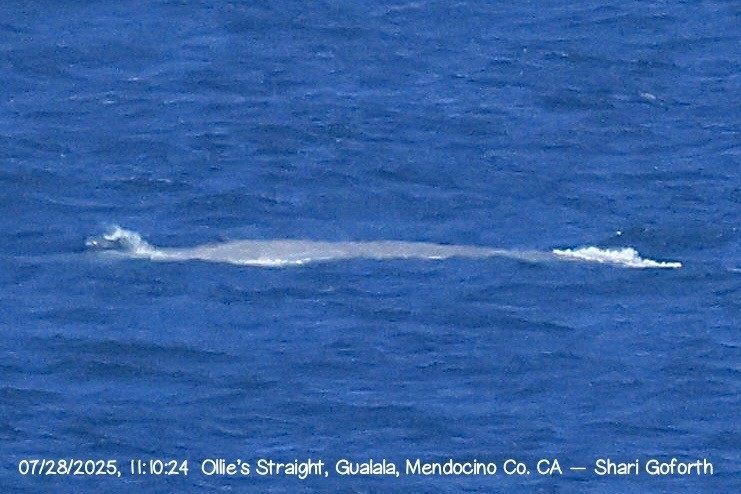
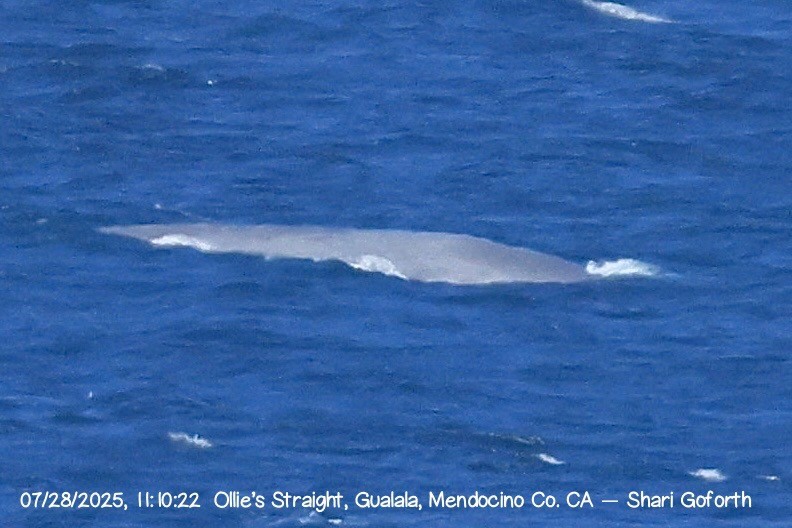
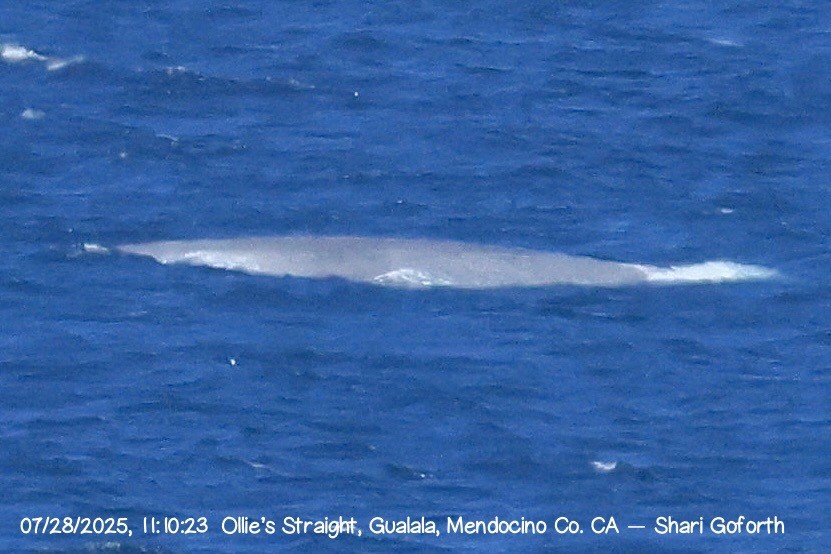
The largest animal on Earth, a Blue Whale, cruised up the Mendonoma Coast Monday morning.  Shari was one of several of us notified about this whale. She went out to several choice locations and managed to get these long-distance photos.

Shari estimates the whale was about 1/2 mile out. It is rare for a Blue Whale to be so close to shore. You can read the details of this sighting in tomorrow's Independent Coast Observer. What? You don't subscribe? You can easily fix that at https://mendonoma.com/memberships.html

Thanks to Shari for allowing me to share her photos with you here!

Sunny and mild here in Anchor Bay. But there is a big fog bank lurking and keeping the temps mild.