Tag Archives: Shari Goforth

Flying over bluffs and the Pacific Ocean, Aleutian Cackling Geese have been streaming northward in very large flocks.  Eric Zetterholm photographed this sight on The Sea Ranch.

Michael Coustier got a closer look.

MCOUSTIER@PROTONMAIL.COM

Shari Goforth got this video as the geese passed Gualala Point Island.

Aleutian Cackling Geese headed north by Shari Goforth

To hear their "cackling" calls, here is the link to the Cornell Lab of Ornithology"

https://www.allaboutbirds.org/guide/Cackling_Goose/sounds

Thanks to Eric, Michael and Shari for allowing me to share their photos and video with you here.

It's sunny and warm here today with no wind.

Clear weather then moved in and two weeks ago Sunday looked to perfect for a pelagic trip out of Noyo harbor on the Kraken to look for seabirds and gray whales. Shari Goforth was ready her camera. She wrote, “With the break in the rain, sun and calm seas prevailed. Noyo Pelagics, on short notice, came up with enough people to take a half-day trip offshore to the Noyo Canyon. The water was perfect for the trip; the seas were calm, the air was cool with almost no wind, and the skies overcast.

“We were in the middle of the gray whale migration and were hoping to photo document gray whales for identification database. Within the first half hour, we spotted a breaching whale several miles toward the horizon. From then on, we began to see gray whale blows (forceful exhales creating a mist) and stayed the permitted legal distance of 100 yards away from them. We were surprised by humpbacks! It’s not the usual time of year to see humpbacks.

“The captain put the boat in idle (stopped the propeller) to avoid any potential propeller injuries in case we were approached by a curious whale, and we had several curious humpbacks surface near the boat. They don’t have to be very close to know that they have been feeding; their exhales smell strongly like fermented Brussel sprouts! Throughout the day, we photographed many humpback whales breaching, slapping their 15 foot-long front flippers on the water, and thrashing their tails, however, we were only able to get a few views of the underside of the humpbacks’ flukes, the view needed for ID. We had more success with the gray whales and have eight photos of individuals to submit for ID.” Shari and others submit their photos to http://Happywhale.com.

Noyo Pelagics is a collaboration between Mendocino Coast Audubon, The Noyo Center for Marine Science, and Anchor Charter Boats (the Kraken), based at Noyo Harbor, Fort Bragg. The trips are open to the public, check the website: http://www.noyopelagics.com for all day and half-day trips, or call for shorter whale watching trips.

Thanks to Shari for allowing me to share her photo with you here.

Toasty warm here today with no wind - unbelievable weather for March.


We are having an irruption of CA Tortoise Shell Butterflies. They do have similar colors of Monarchs, but they are much smaller. Shari Goforth got this photo of one of the dozens in my courtyard yesterday.

They were being seen in vast numbers yesterday, Saturday, down in Bodega Bay and in Jenner. Cynthia Schreiner wrote to me last night: "Many people in Bodega Bay saw thousands of butterflies  today, colored/looked like Monarchs, flying south? For an hour maybe two they were everywhere,  not milling around  but quite intent on going south.  So cool, they just didn't alight to get a Pic."

Mating for these butterflies, Nymphalis californica, takes place from March to May, when they emerge from their winter hibernation once the weather warms up.

Thanks to Shari for allowing me to share her photo with you here.

And warm up it has! Another toasty day with no wind here on the beautiful Mendonoma Coast.

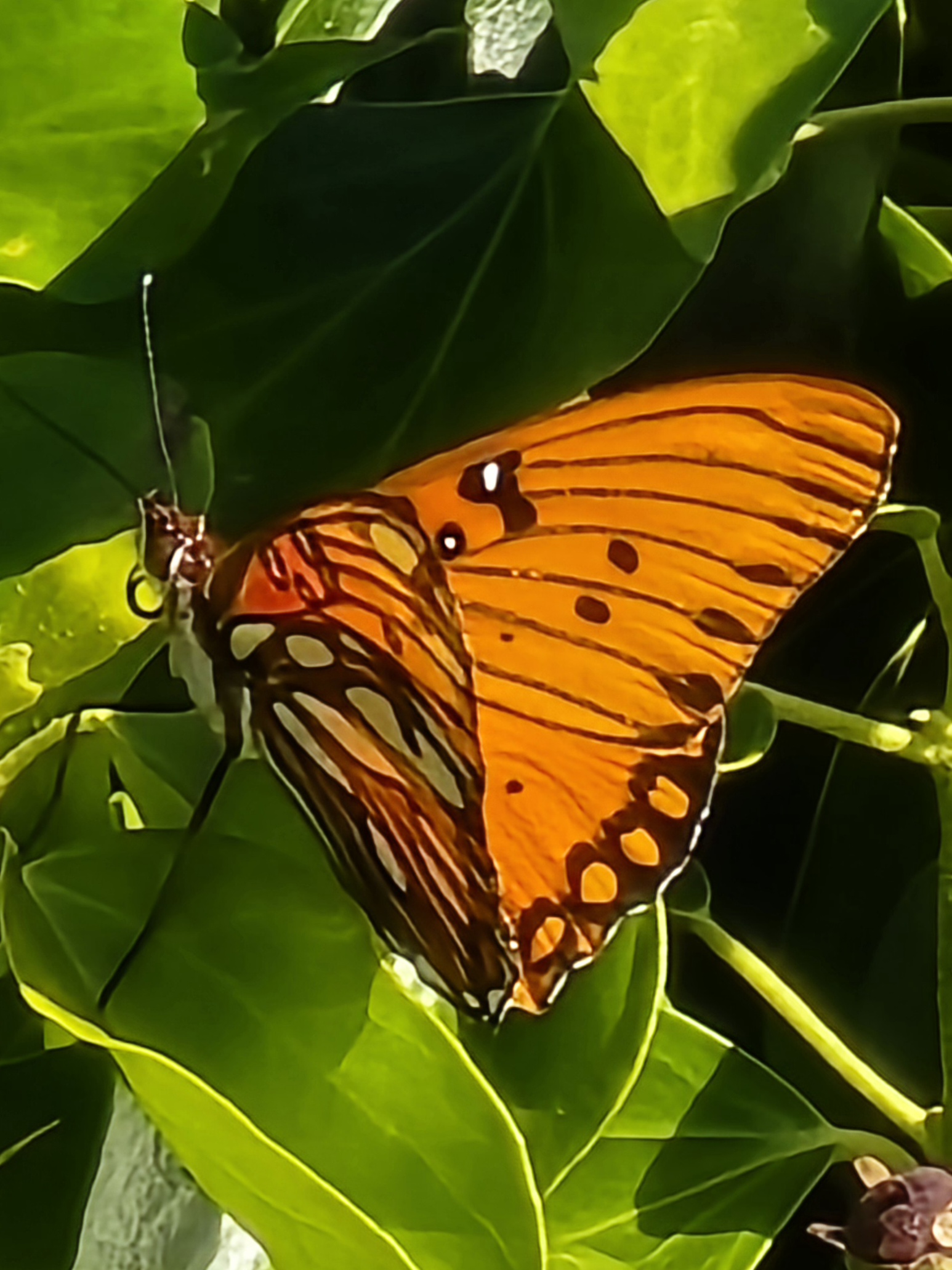
A Gulf Fritillary was spotted by Hilary Prentiss in her yard in Gualala.

She wrote, “Fun facts about this butterfly: Their caterpillars feed exclusively on passion flower vines. Their bright orange color serves as a warning to predators that they are unpalatable due to the toxins in the passion flower vines they eat. And the underside of their wings have shiny spots that offer camouflage when their wings are closed.”

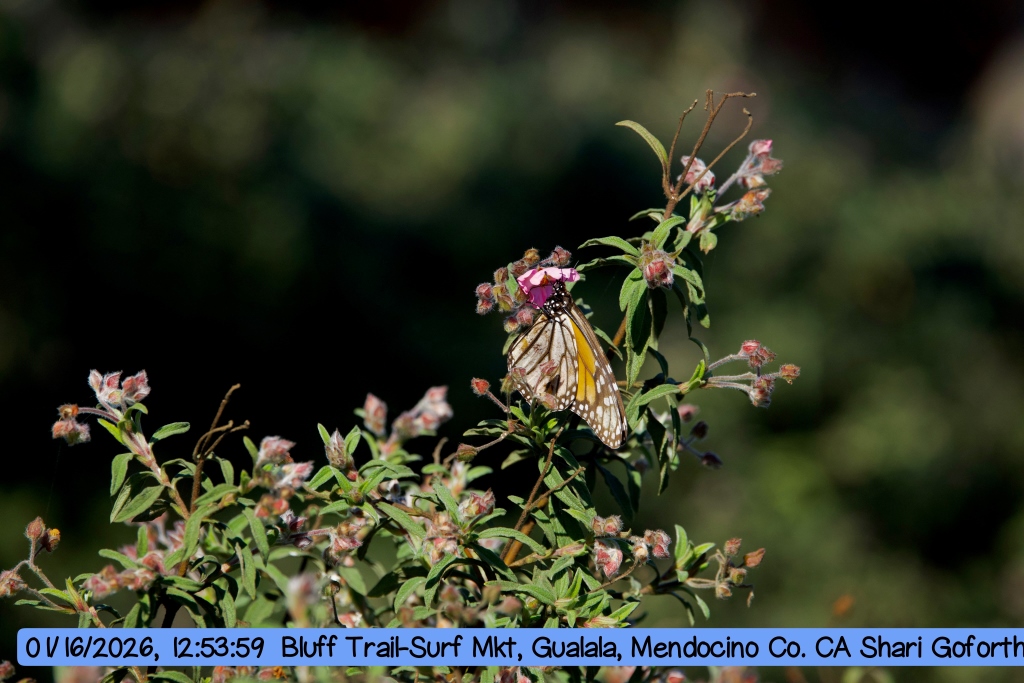
We've also had two Monarch butterfly sightings. One was quite tattered and photographed by Shari Goforth. Shari saw this butterfly near Surf Market in Gualala. It flew to the Gualala Bluff Trail where it then fed on rock rose blossoms.

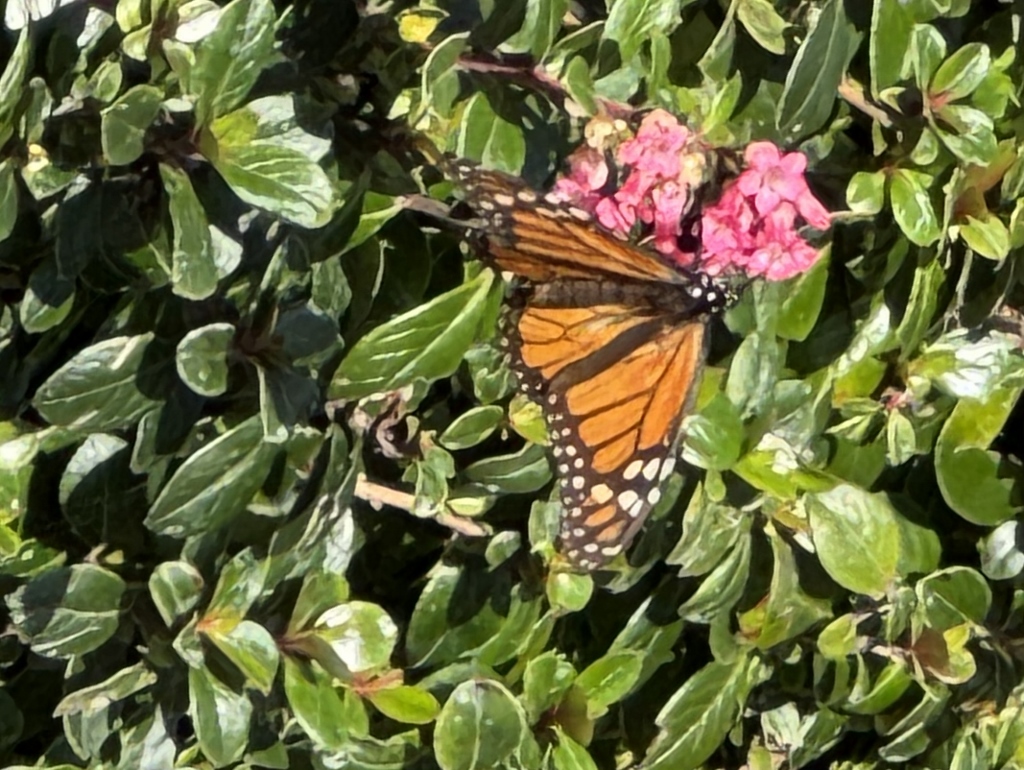
Ann Yeo saw a Monarch in much better shape, also in Gualala. Those who study these butterflies are very interested in what they are feeding on and where they are over-wintering. Mary Sue Ittner took a look at Ann’s photo and believes the plant could be Escalonia rubra, a non-native plant known to be popular with Monarchs as its flowers are nutrient rich.

We know Monarch butterflies are struggling so any sighting of one is precious. Gulf Fritillary butterflies were introduced to southern California before 1908. According to UCDavis' website: "This butterfly has no native host plant in California and is entirely dependent on introduced species of the tropical genus Passiflora (Passion Flower, Passion Vine), including the common Maypop (P. incarnata) and P. X alatocaerulea."

Thanks to Hilary Prentiss, Shari Goforth, and Ann Yeo for allowing me to share their photos with you here.

There must be butterflies today as the temperature was close to 70 degrees. While much of the country is experience extremely cold temps, it seems rather surreal to have this warm, dry weather.


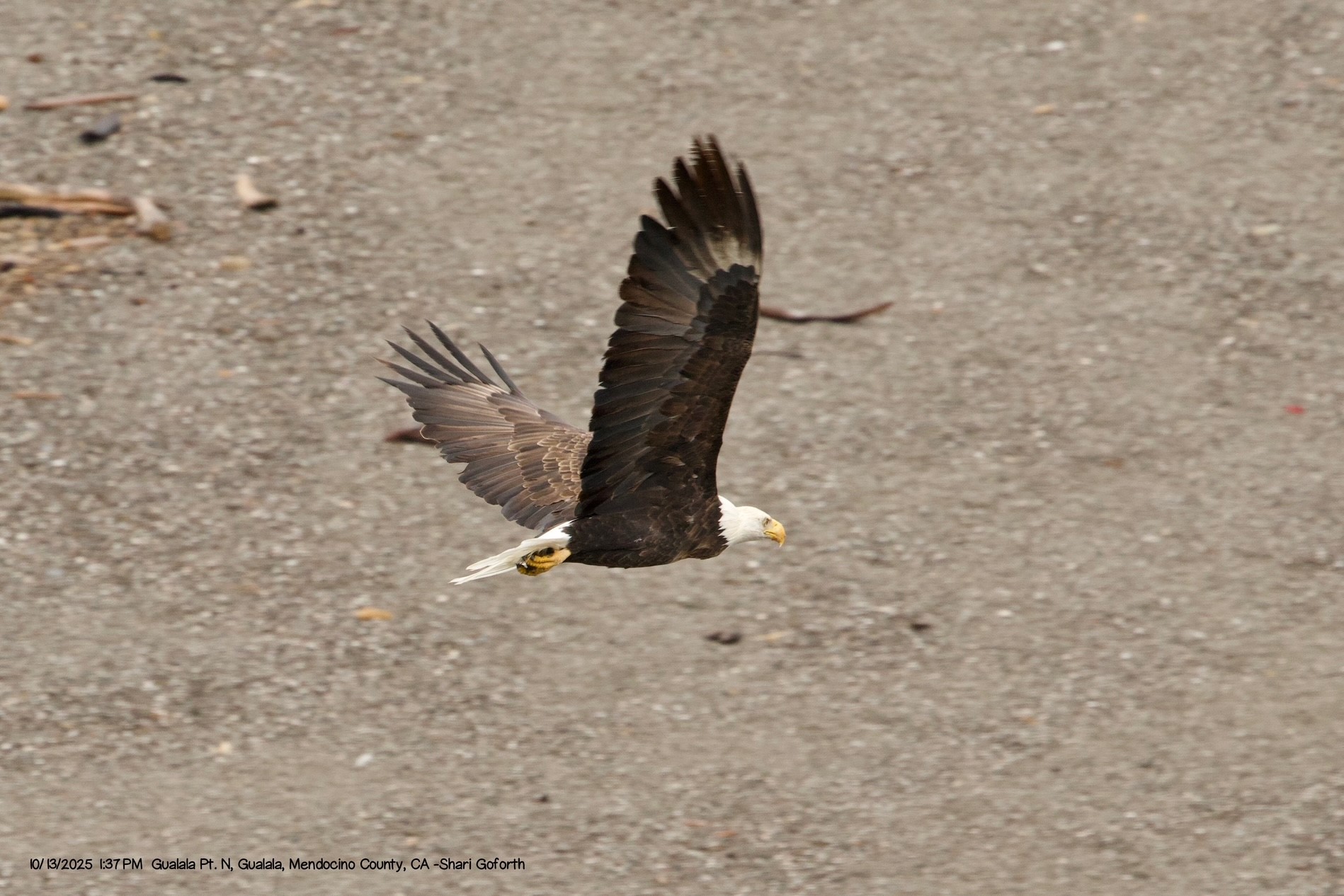
Shari Goforth found this bald eagle hunting. She saw all the gulls take flight but the brown pelicans stayed in place. It's very rare for a bald eagle to take a much bigger brown pelican, but gulls are much easier pickings.

Thanks to Shari for allowing me to share her photo with you here.

The past weekend and today, Monday, have been warm with very little wind - perfect autumn days!