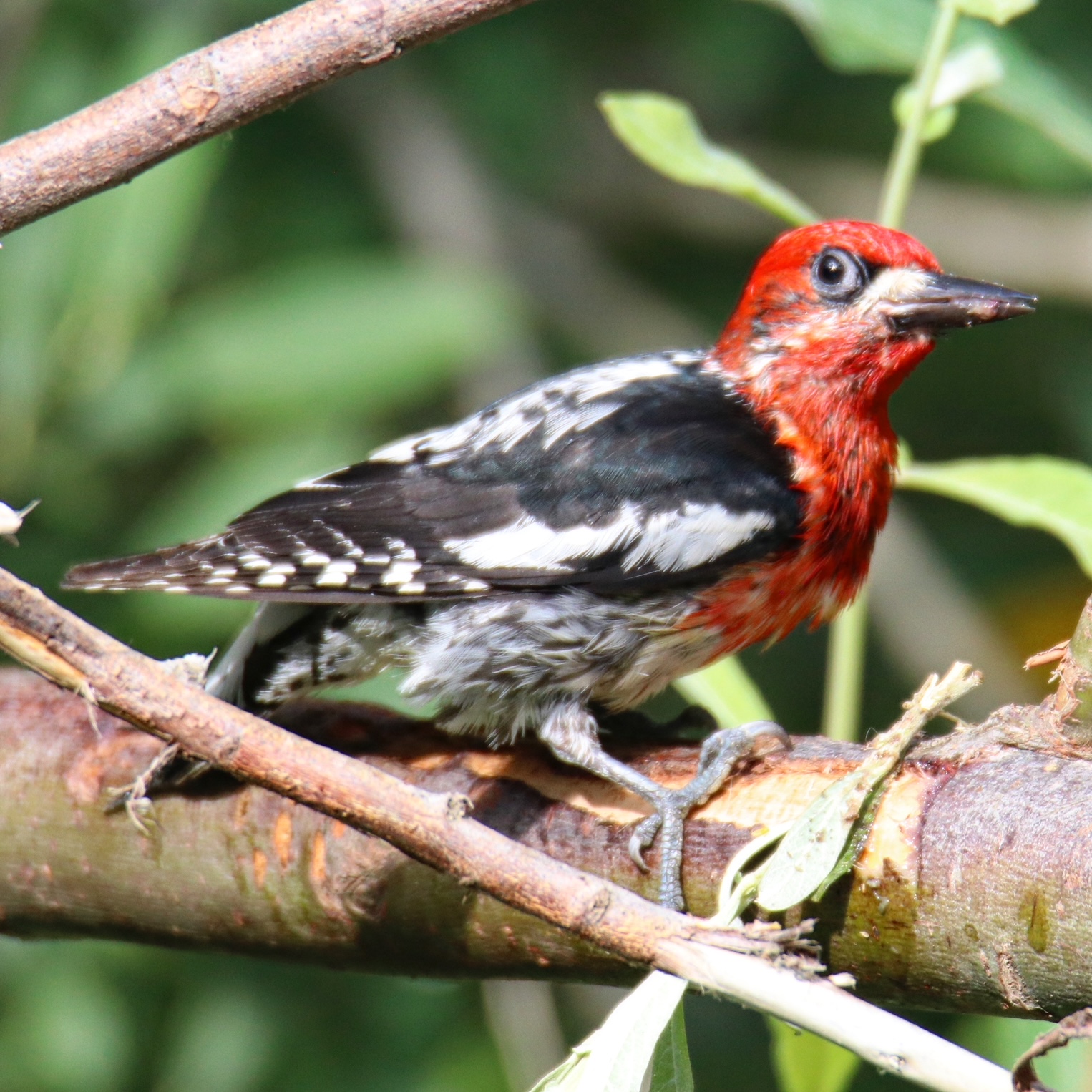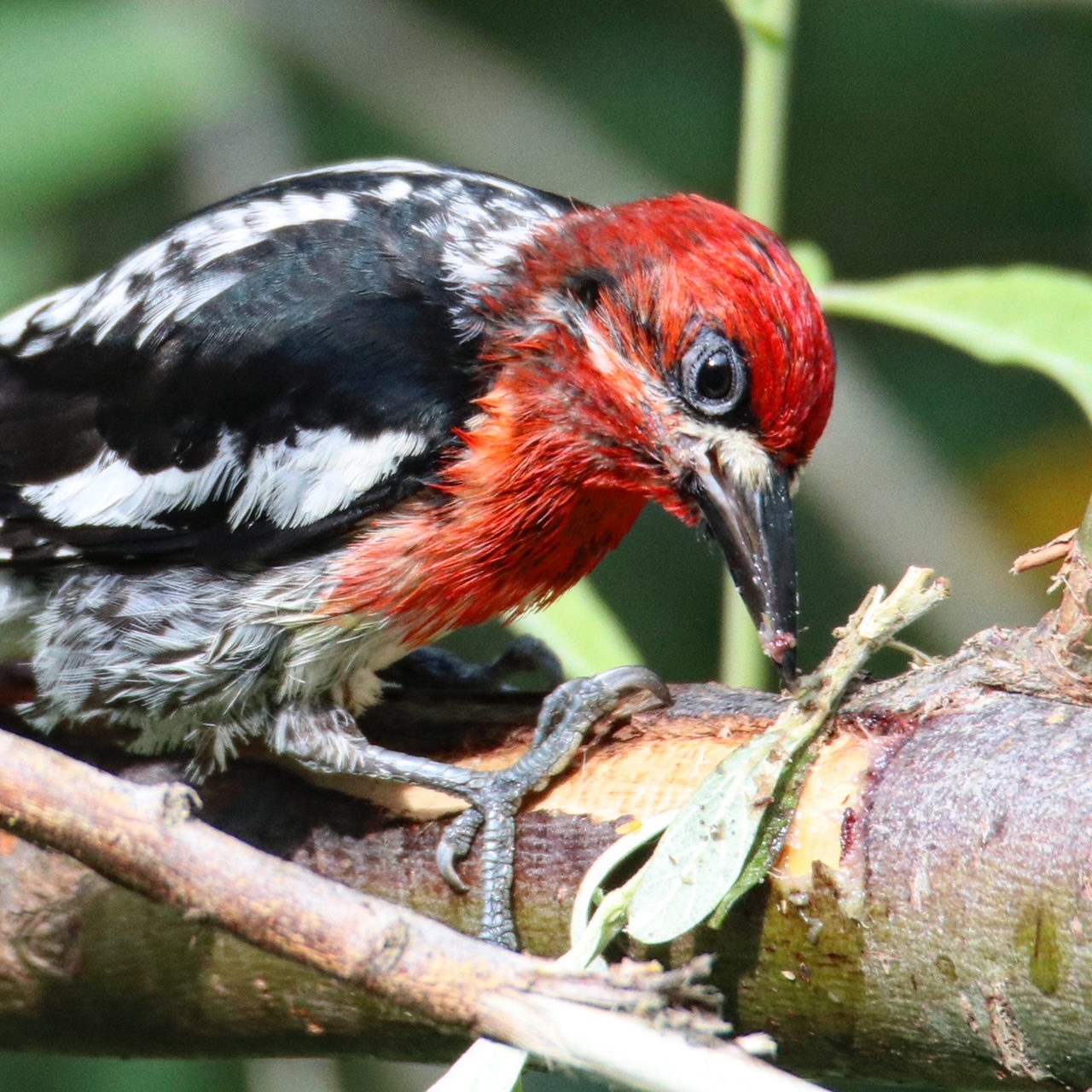
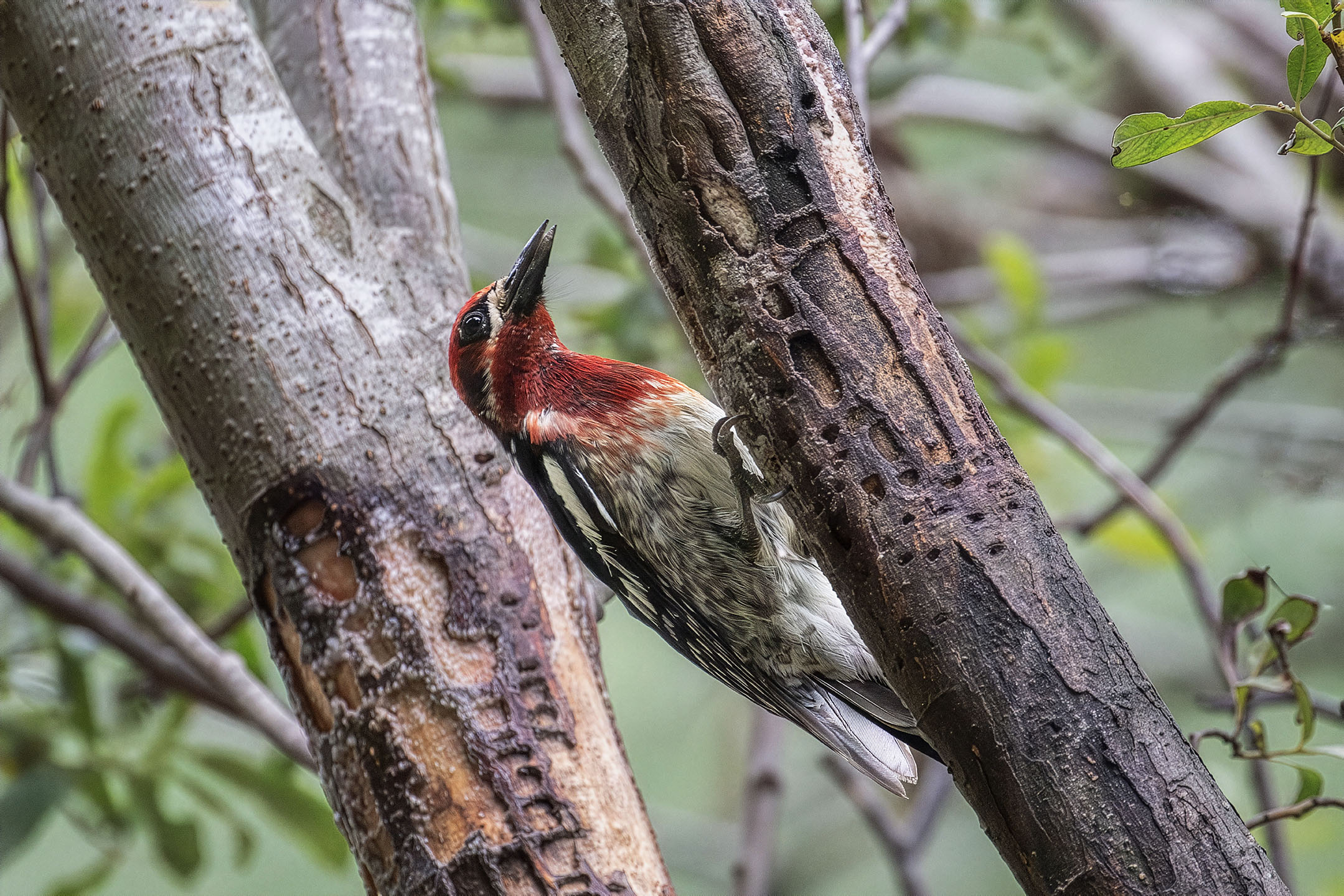
A walk along the Gualala River is certain to bring you great sightings and joy. Ron Bolander had discovered a group of willow trees, we think Sitka willows, that red-breasted sapsuckers were drilling holes – called wells – in the bark to get the sap. Other creatures then use these wells to feed, so the sapsuckers are important for the ecosystem. Ron invited Shari Goforth and me to take a hike with him on Saturday to see the show.
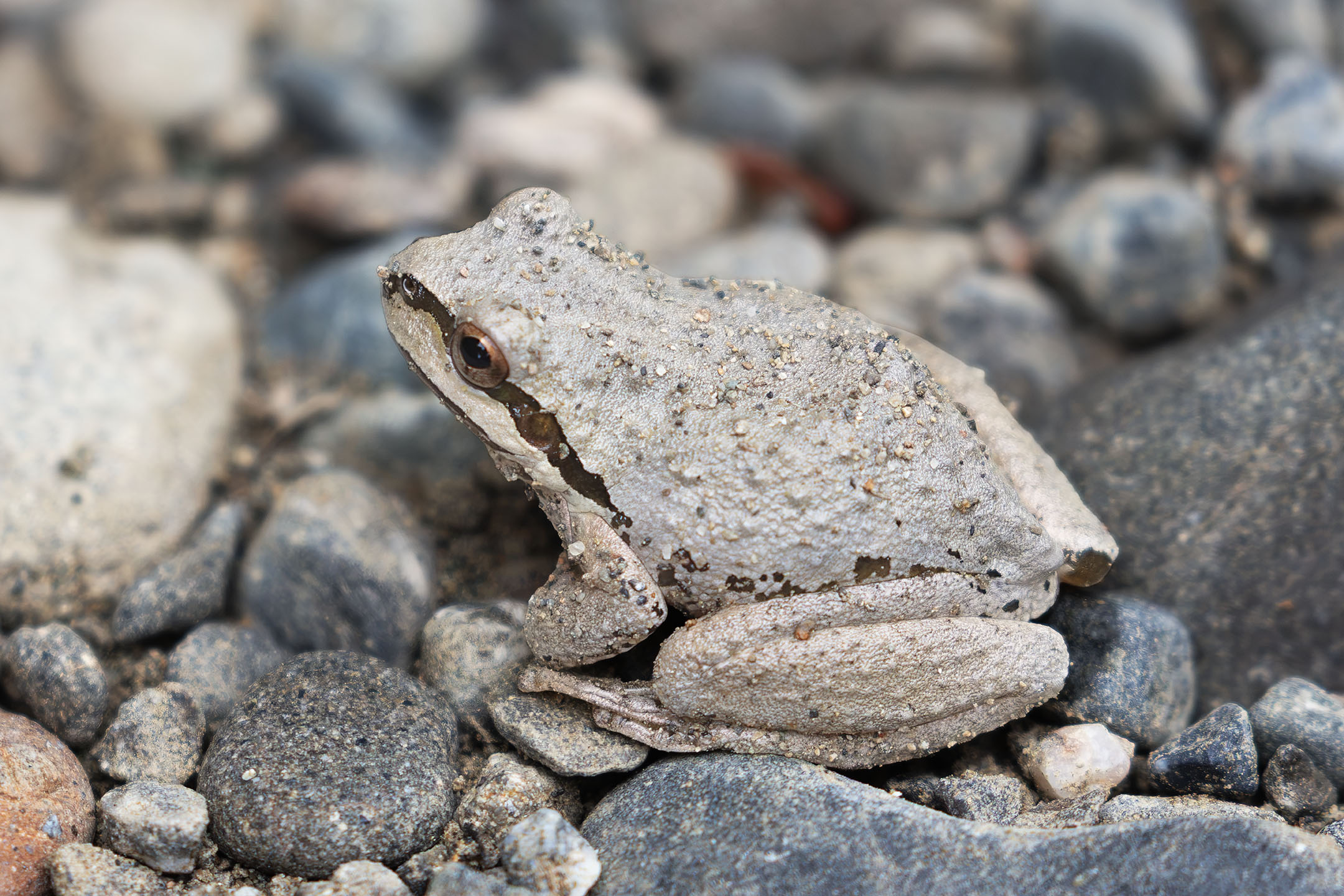
While walking on the cobbles by the river, we saw a tiny Sierran treefrog, normally colored emerald green, which was colored tan to match the stones. It was so well camouflaged that we kept losing sight of it.
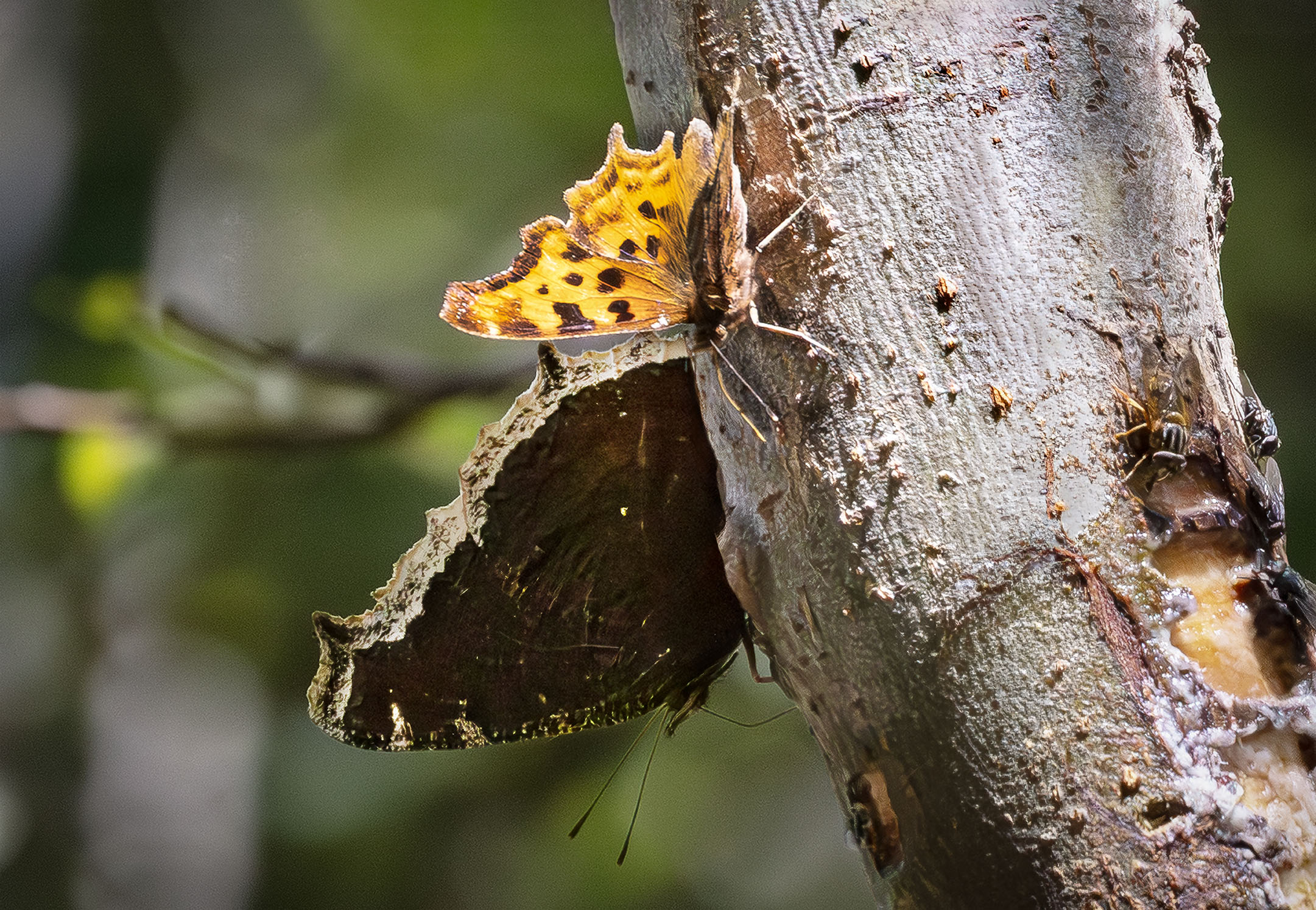
When we came to the willow trees, we watched from a distance as a red-breasted sapsucker appeared, the male. Some minutes later the female arrived. Ron told us there must be a nest nearby. When the sapsuckers were gone, other birds moved in to feast, including Anna’s and Allen’s hummingbirds. A Wilson’s warbler stopped by, perhaps eating insects in the sap. Then several beautiful butterflies appeared, a satyr comma and a mourning cloak, and fed. It was quite wonderful to see.
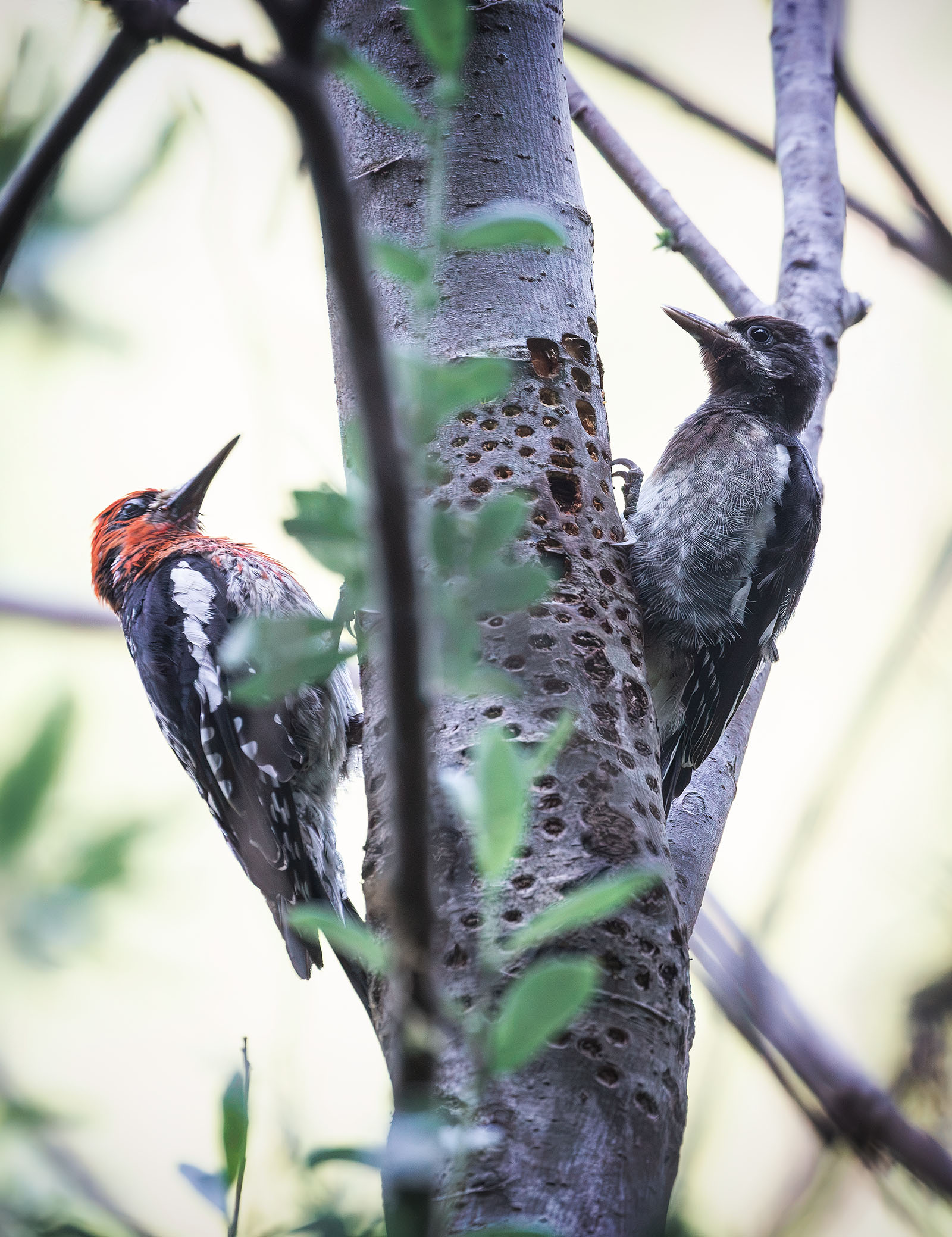
The next day, Sunday, Ron returned to the same place and found two red-breasted sapsuckers on the willow trees, but this time one was a fledgling, perhaps just out of the nest!
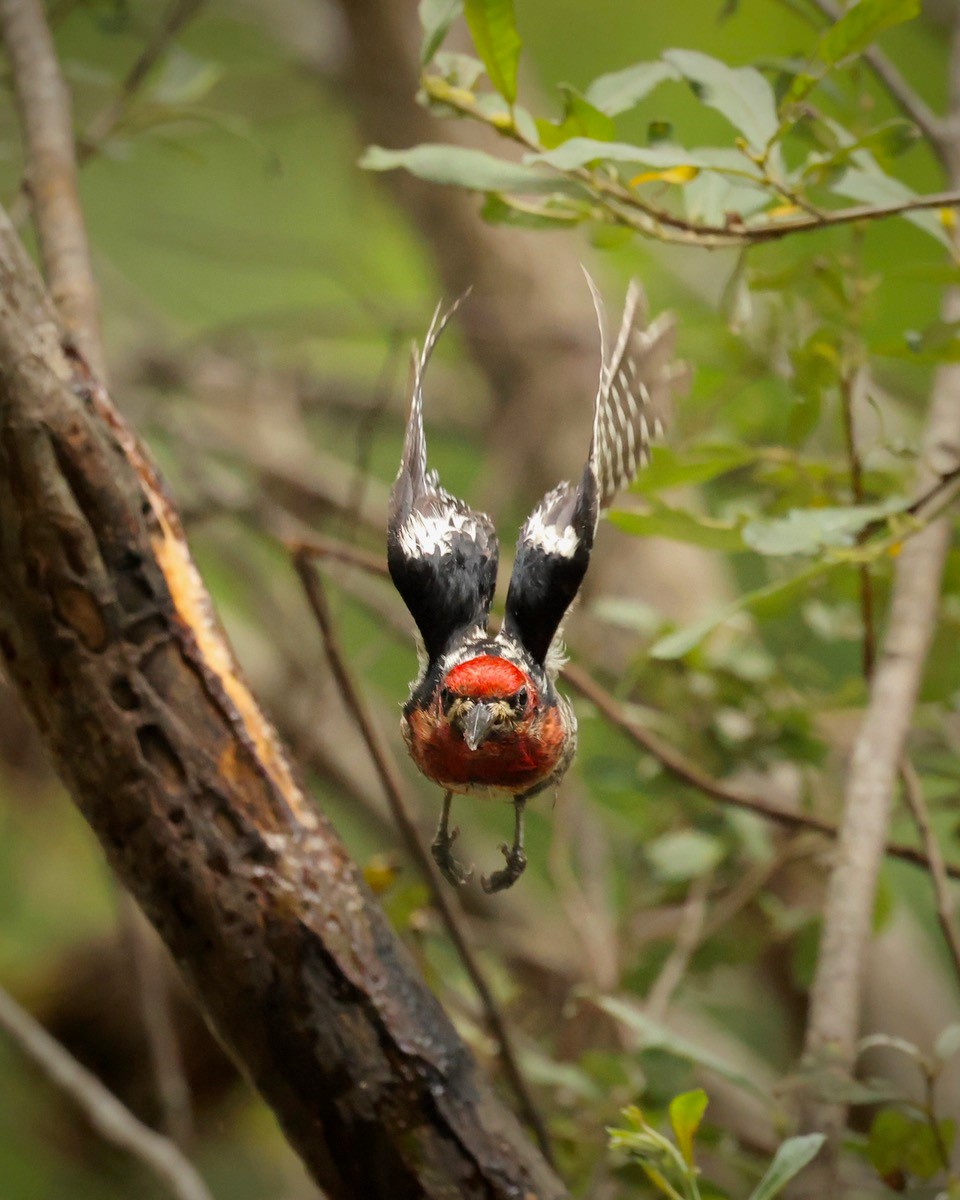
A bonus photo from Shari of one of the adults flying straight at her.
Thanks to Ron and Shari for allowing me to share their photos with you here.
Quite foggy here today, but sunny up on the ridge. Temps in the 60's. With those heat domes in the eastern part of the US and in Europe, we're not going to complain about the cooling fog.