Tag Archives: NOAA

Gary Prochazka found an Ochre sea star in an unusual position. He wrote, “[Here’s a sea star playing] peekaboo from Walk On Beach at a recent low tide.” I’ve never seen a star in this position. Then it struck me – this star only has four arms.
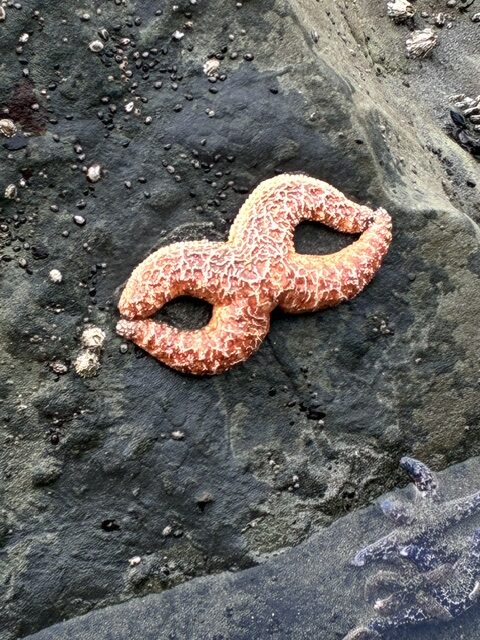
I sent Gary’s photo to intertidal expert Bob Van Syoc. He wrote, “Very cool photo. Yes looks like a healthy four armed star!  Unusual and I would guess that it did lose an arm and healed but has not yet regenerated the lost arm. Love the infinity symbol!”

I also sent Gary's photo to Jennnifer Stock NOAA. She's the Education and Outreach Coordinator at Cordell Bank National Marine Sanctuary. She forwarded Gary's photos to several experts there. I heard back from Julieta Gomez. She looked at Gary’s photo and wrote, “Sometimes they lose an arm and it just doesn't regrow or sometimes two grow instead. I've noticed it more in bat stars than ochre stars though, so this is a unique find!”

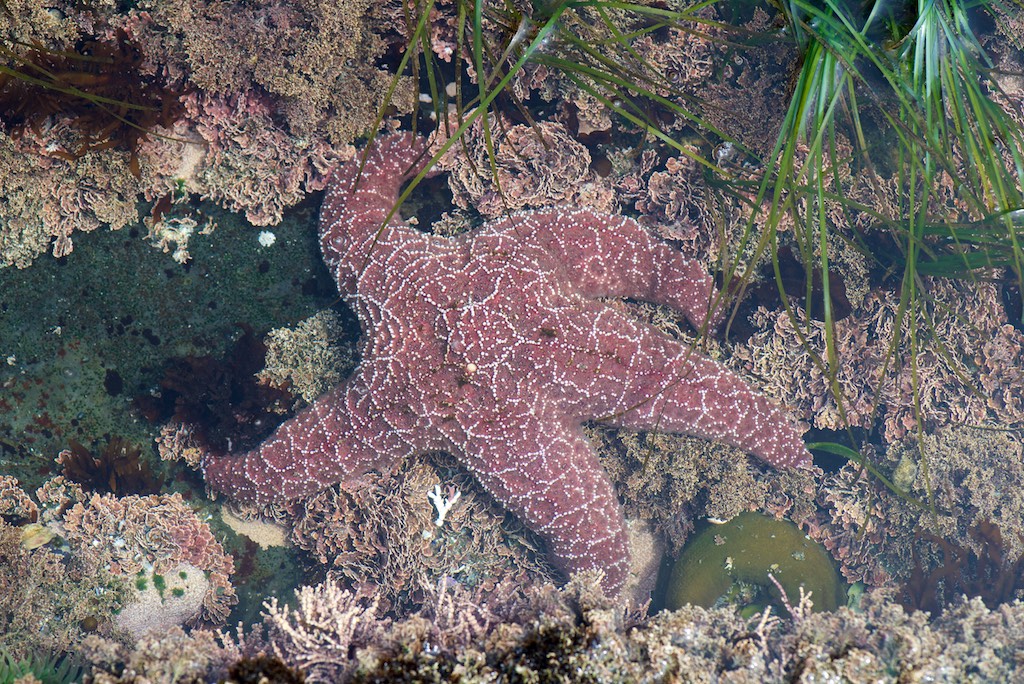
Here's what an ochre star usually looks like. This photo was taken by Allen Vinson. Ochre stars come in various colors!
Gary went back a week or so later and the unusual star was gone. It could well reappear so check your spots at low tide events.

Thanks to Gary and Allen for allowing me to share their photos with you here.

There's a big fog bank over the ocean and it's keeping it nice and cool here in Anchor Bay!
5 Comments

GREATER FARALLONES NATIONAL MARINE SANCTUARY SEEKS BEACH SURVEYORS

NOAA’s Greater Farallones and Cordell Bank National Marine Sanctuaries and Greater Farallones Association are seeking community scientists to help collect data on the condition of our sanctuary shores in north-central California. For 30 years, Beach Watch has monitored the presence of bird, marine mammal, oil and human uses on the California coast with the help of community volunteers.

Beach Watch volunteers receive training and monitor an assigned beach segment, collecting data to support the conservation and management of sanctuary wildlife, habitats, and ecosystem. Volunteers identify, count, and photo-document living and dead birds and marine mammals; document human uses of the coast in partnership with MPA Watch; and document and collect oil pollution samples as evidence.

Interested in Becoming a Beach Watch Volunteer? Here's How:

  • Register and attend one of the orientations to receive program details and application materials:
  • Orientation coming up is a  Virtual Orientation Feb 10, 2024 9:30 am-11:00am. 
  • Be 18+ years old, able to navigate uneven terrain;
  • Have a passion or interest in coastal ecology and learning;
  • Submit an application;
  • Attend all required training, and 80 hours of field and classroom instruction;
  • Commit to surveying your beach once every four weeks, for a minimum of one year.

People of all backgrounds and life experiences are welcome and encouraged to apply.

***Visit https://beachwatch.farallones.org/get-involved/ to learn more and register for an Orientation. ***


I added the photos and they are all by the fabulous photographer Craig Tooley. Thanks as always to Craig for allowing me to share his photos. See much more at his website: http://www.ruffimage.com

I hope some of you will become Beach Watch volunteers - you are sure to learn a lot and contribute to science while doing so!

It is storming here this afternoon, Sunday Feb. 4th. There are many power outages including at Rick's and my place in Anchor Bay. I'm thankful for the generator! It's very windy to go along with the drenching rain, and it's coming from a different direction than normal. That causes a lot of trees to fall. Many of the coast's roads are closed. It's a day to stay home and off the roads. May we all come through this river-of[rain event in good shape! I will report on the rain totals soon.

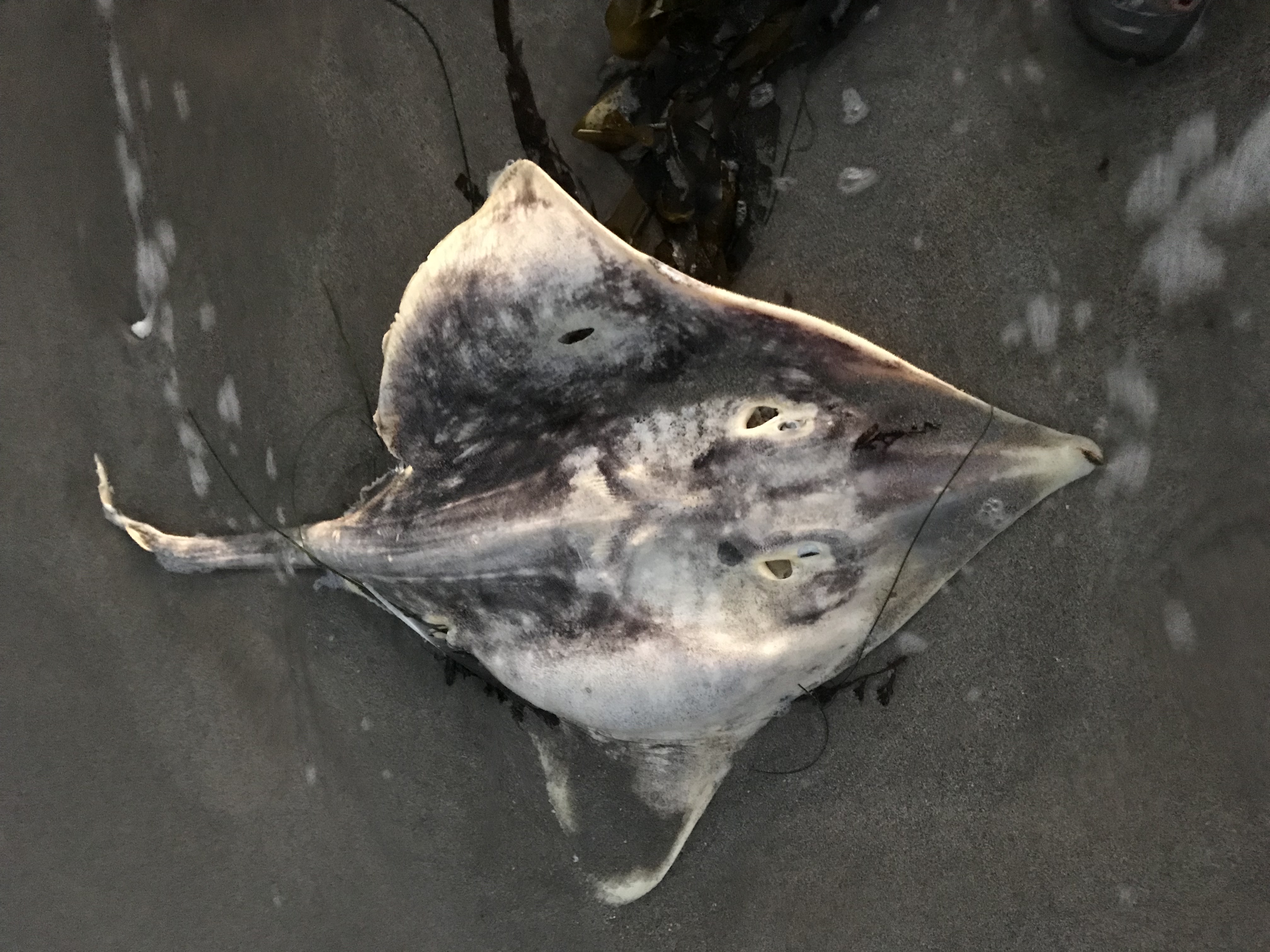
Michael Combs' dog, Ranger, found an unusual sighting. Michael wrote, "On Cooks Beach, our dog, Radar, was very excited by something he smelled in the surf near the shore. After a bit, I saw the tip of what was the wing of a dead Longnose Skate in the water. I dragged it to shore and took its picture."

"Including the tail, it was about four feet long, and was heavy, estimated 40 to 50 pounds. It wasn’t on the beach today, a good thing as it was starting to smell pretty bad.”

I had never seen one of these skates with a very long nose before. I sent Michael’s photo to MaryJane Schramm of NOAA. She wrote, “Cool find!  I believe this is a Longnose skate, Raja rhina, and they are found here, indeed. They're usually at deeper depths, but wildlife notoriously does not read the books we write about them.”

Thanks to Michael for allowing me to share his photo with you here.

We are beginning to cloud up this afternoon. Some rain is predicted soon, our first in nearly six months. It is so very welcomed!

2 Comments

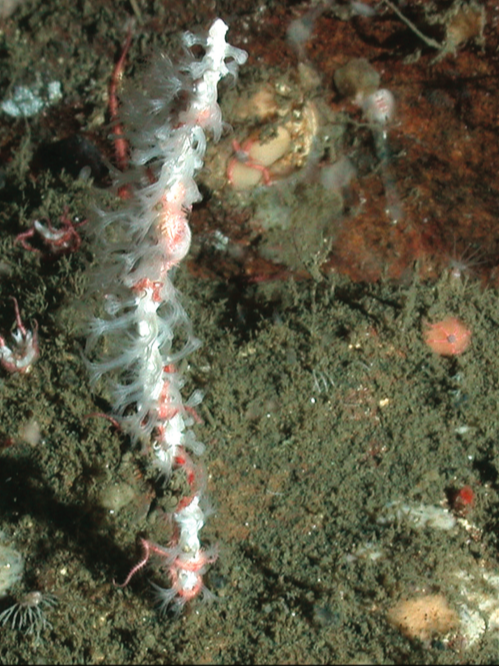
NOAA conducted a deep sea corals cruise in 2015. They found a new coral species.

It was named Swiftia faralloneseca, a gorgonian. It was found at "The Football," an oval-shaped area north of Bodega Canyon and west of Salmon Creek.

NOAA, the National Oceanic Atmospheric Administration, studies our oceans, among many other things. NOAA's National Weather Service monitors storms, droughts, and all things to do with the atmosphere. At NOAA, science matters.

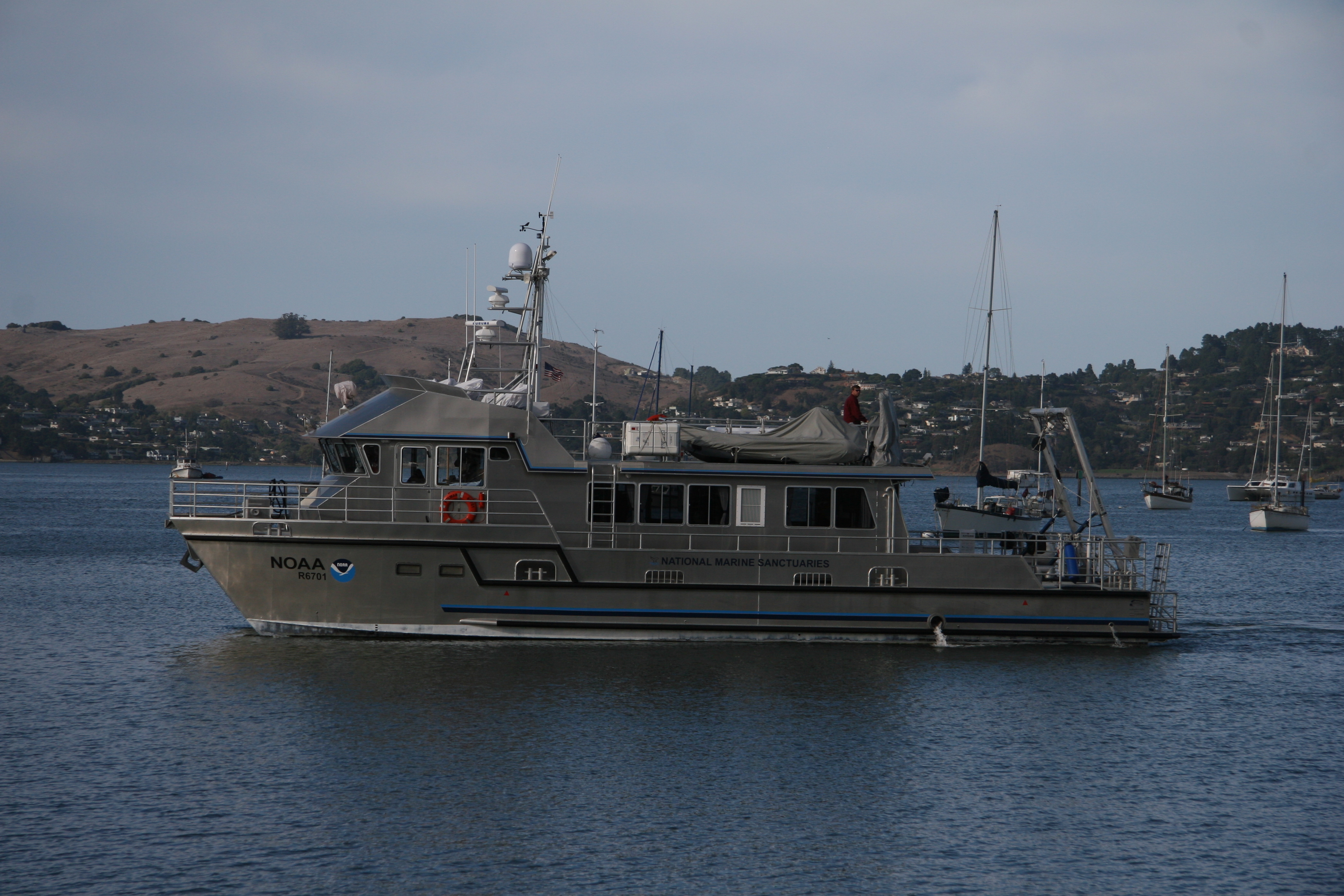
Every now and then we see The Fulmar, their research vessel off our coast. Here's a look at the Fulmar, photo by Jamie Hall.

Thanks to NOAA's Mary Jane Schramm and Jamie Hall for allowing me to share these photos with you here. To learn much more about NOAA, here is their website: http://www.noaa.gov/

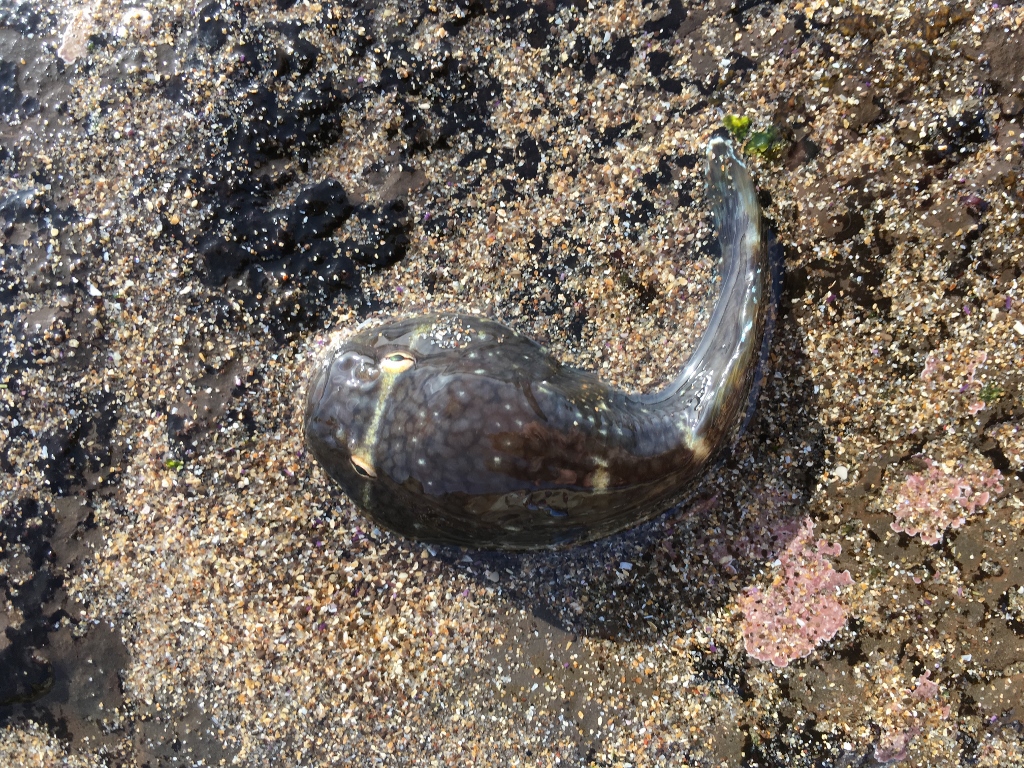
Steve Coffee-Smith sent in a photo of an unusual fish. Steve wrote, “Our group of family and friends went to Bowling Ball Beach. We found this fish, maybe three inches long, on the newly exposed rocks in the lowering tide. We tried to scoop him up in order to return him to deeper water, but he was stuck to the rock.”

Carol Preston of NOAA knew the ID of the fish. Carol wrote, “It is a Clingfish, Gobiesox maeandricus. They use their ‘suction cup,’ which is their pelvic fins fused together, to cling to the undersides of rocks in the tidepools. They mainly eat small crustaceans and molluscs.”

Thanks to Carol for the ID, and thanks to Steve for allowing me to share his photo with you here.