Tag Archives: Cornell Lab of Ornithology

They are not always easy to see but Michael Reinhart has the coveted ability to have birds pose for him - or so it seems! Here's a Hermit Thrush...posing.
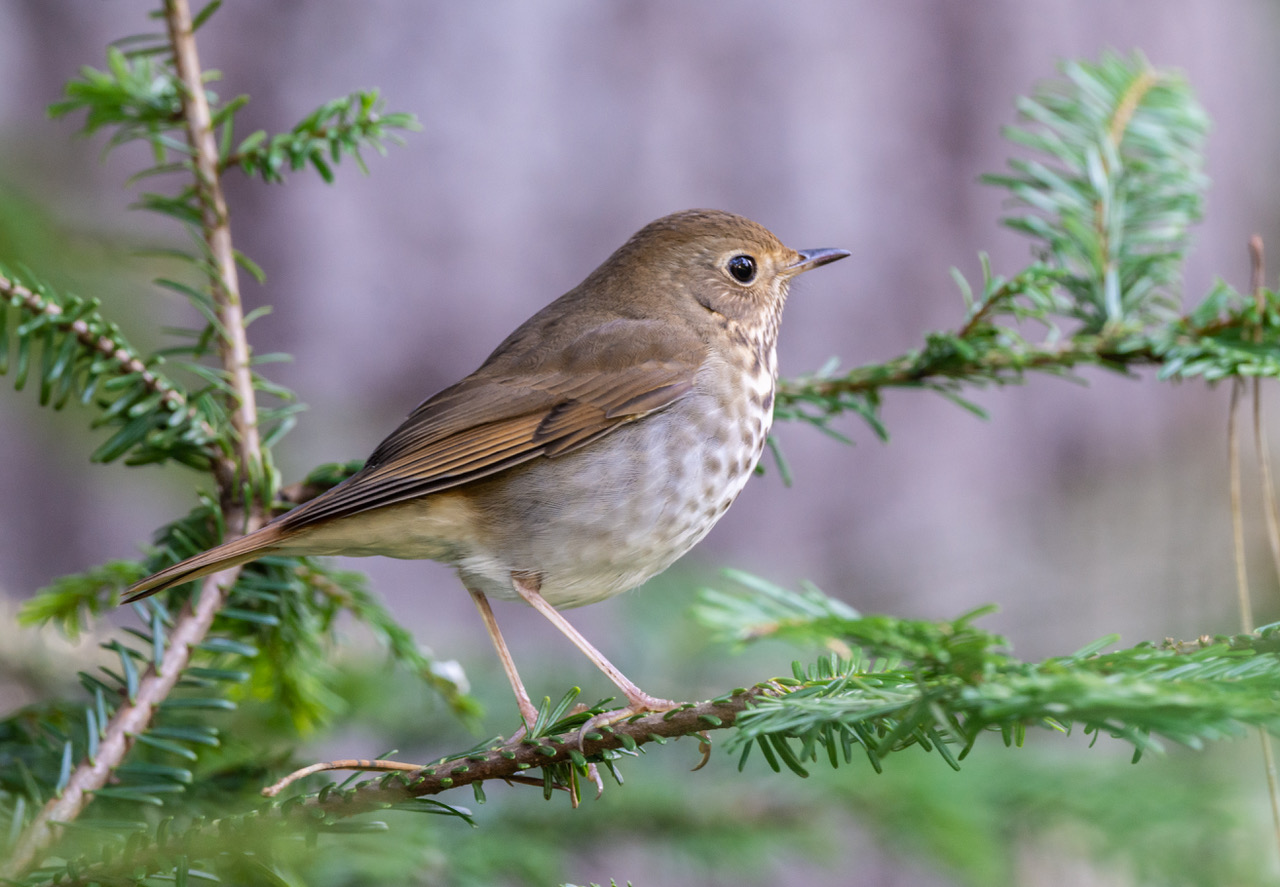
Just lovely! These birds love to sing in the spring and once they pair up they continue to sing to each other from a distance. To hear their beautiful songs, here is a link to the Cornell Lab of Ornithology: https://www.allaboutbirds.org/guide/Hermit_Thrush/sounds

Thanks to Mike for allowing me to share his photo with you here.

We are in another dry spell with no rain predicted for a week or so. It's warm and there is no wind - a beautiful time to be on the Mendonoma Coast.

Bald Eagles continue to expand northward as their numbers increase. Jon Shiu photographed this Bald Eagle flying over the Navarro River.

From the Cornell Lab of Ornithology:

"For such a powerful bird, the Bald Eagle emits surprisingly weak-sounding calls—usually a series of high-pitched whistling or piping notes. The female may repeat a single, soft, high-pitched note that has been called “unlike any other calls in nature”; apparently this signals her readiness for copulation." You can listen for yourself at this link: https://www.allaboutbirds.org/guide/Bald_Eagle/sounds

Thanks to Jon for allowing me to share his photo with you here.

We are having cool and dry weather. No rain predicted for at least a week or more. There are overhead clouds late this afternoon, which are making for a dreamy-looking sunset!

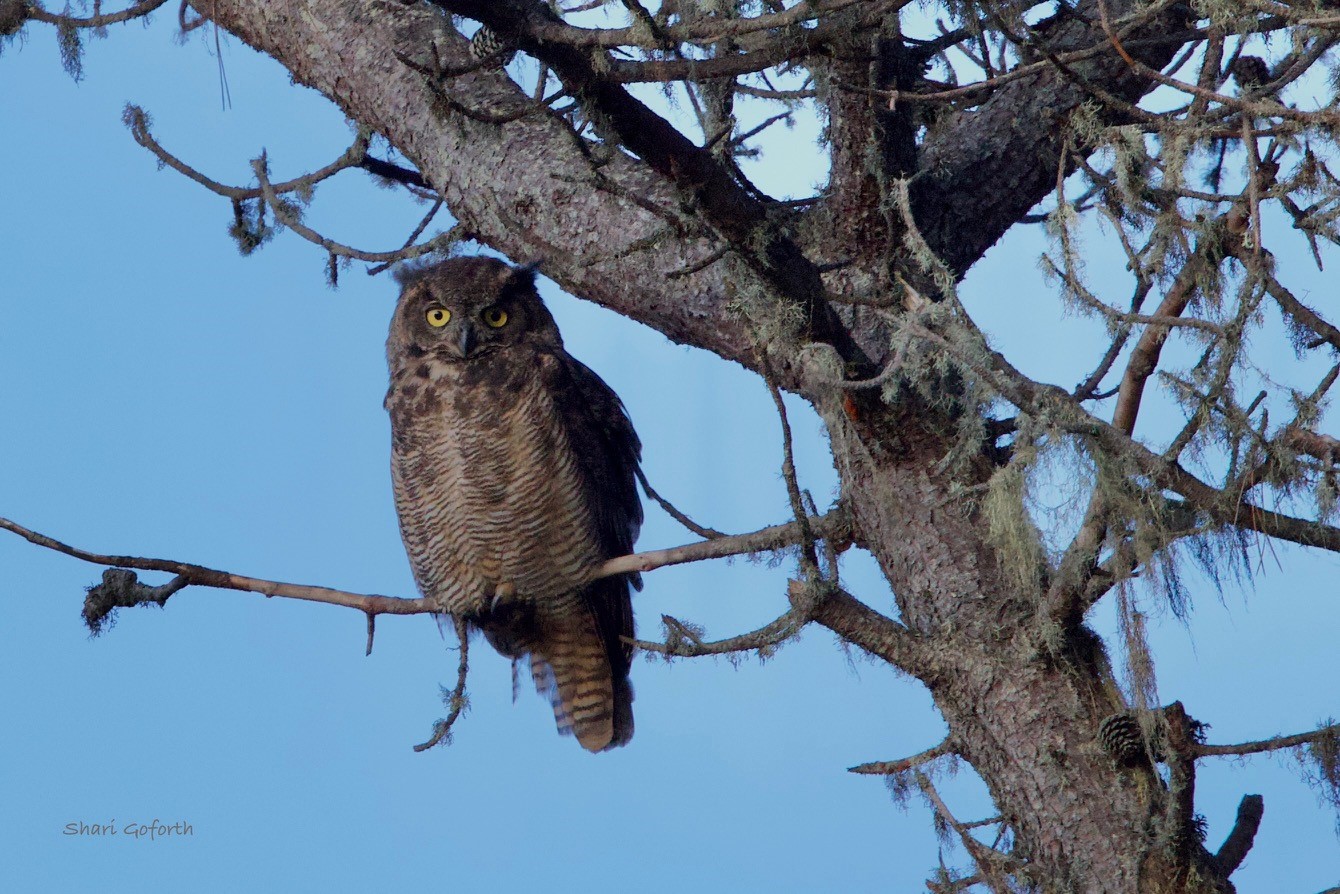
Shari Goforth was at Stewarts Point at dusk to watch the Vaux's swifts enter the old brick chimney. She was rewarded with a sighting of this young Great Horned Owl.


Here's what the Cornell Lab of Ornithology's website, http://www.allaboutbirds.org, says about these owls: "With its long, earlike tufts, intimidating yellow-eyed stare, and deep hooting voice, the Great Horned Owl is the quintessential owl of storybooks. This powerful predator can take down birds and mammals even larger than itself, but it also dines on daintier fare such as tiny scorpions, mice, and frogs. It’s one of the most common owls in North America, equally at home in deserts, wetlands, forests, grasslands, backyards, cities, and almost any other semi-open habitat between the Arctic and the tropics."

You can hear their hooting calls at this link, also at the Cornell Lab of Ornithology's website: https://www.allaboutbirds.org/guide/Great_Horned_Owl/sounds

Thanks to photographed Shari Goforth for allowing me to share her great photo with you here.

Today was a beautiful, sunny, breezy day.


Ospreys fish in the ocean and in rivers for fish. Their other name is Sea Hawks. Yep, the Seattle Seahawks are named after an Osprey...I presume! Ron Bolander was out with his camera and he was ready when this Osprey flew by with its catch.

If you know what kind of fish this is, I'd love to know. So would Ron. See how the Osprey has positioned the fish? It's the best aerodynamic position for the big bird to fly with the fish.

This is a good time to see and hear Ospreys on the Mendonoma Coast. The chicks have fledged and they are beginning to fish for themselves. To hear the distinctive call of an Osprey, here is a link to the Cornell Lab of Ornithology: https://www.allaboutbirds.org/guide/Osprey/sounds

Thanks to Ron for allowing me to share his photo with you here. And get well soon, Ron!

The heat has left the immediate coast and the fog has returned. We also have some high clouds drifting through, making it a little humid today. Temps in the low 70's. Yay!

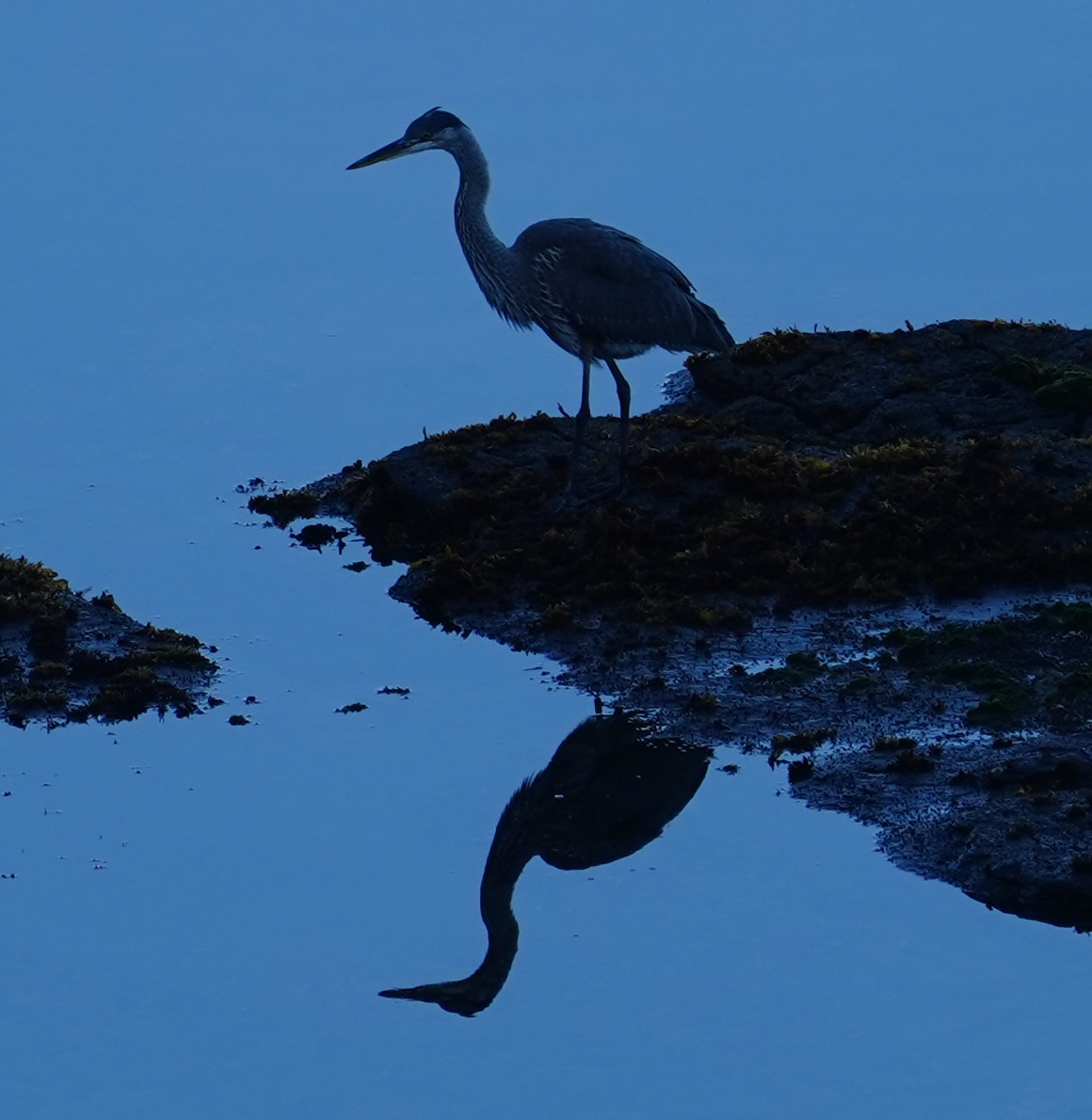
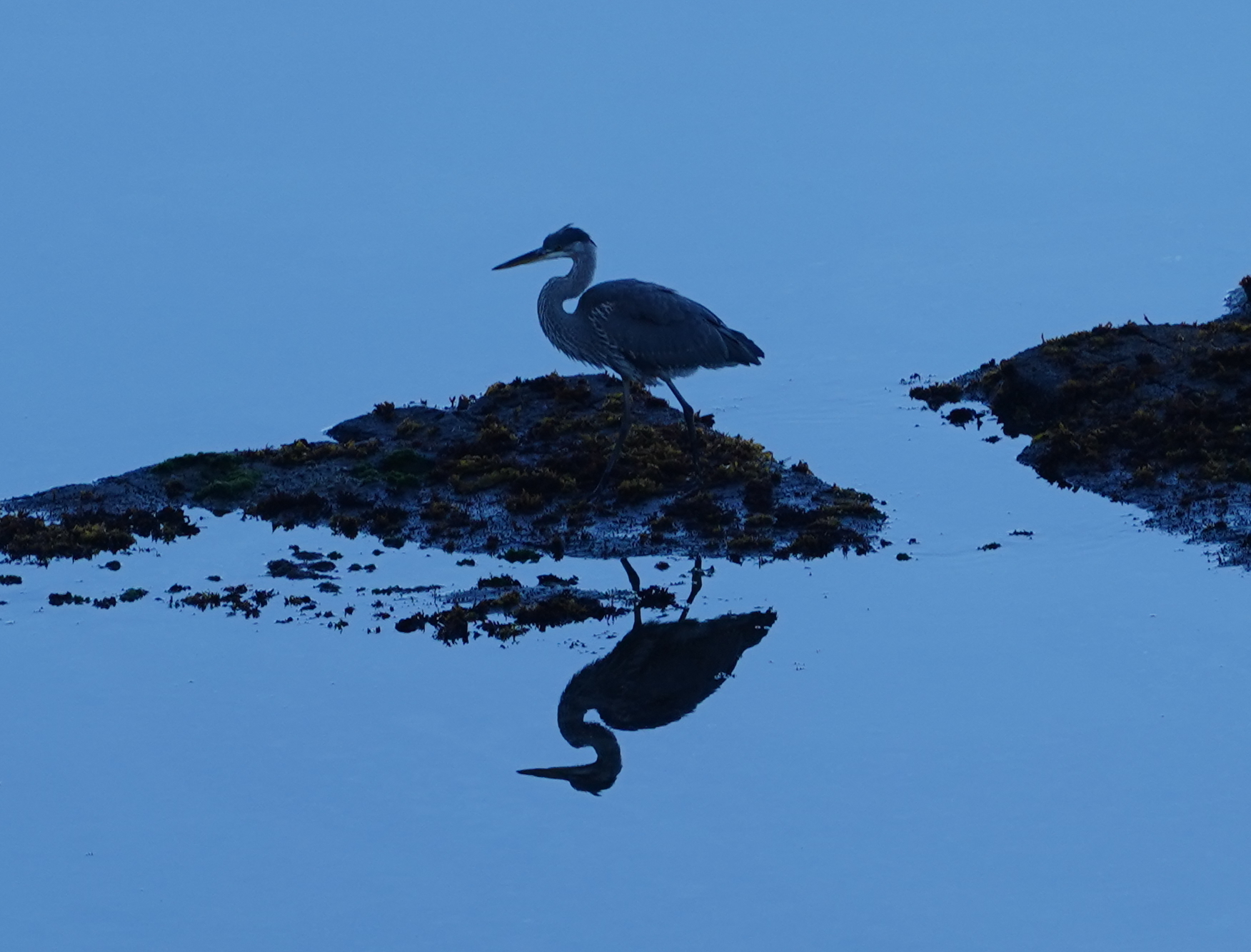
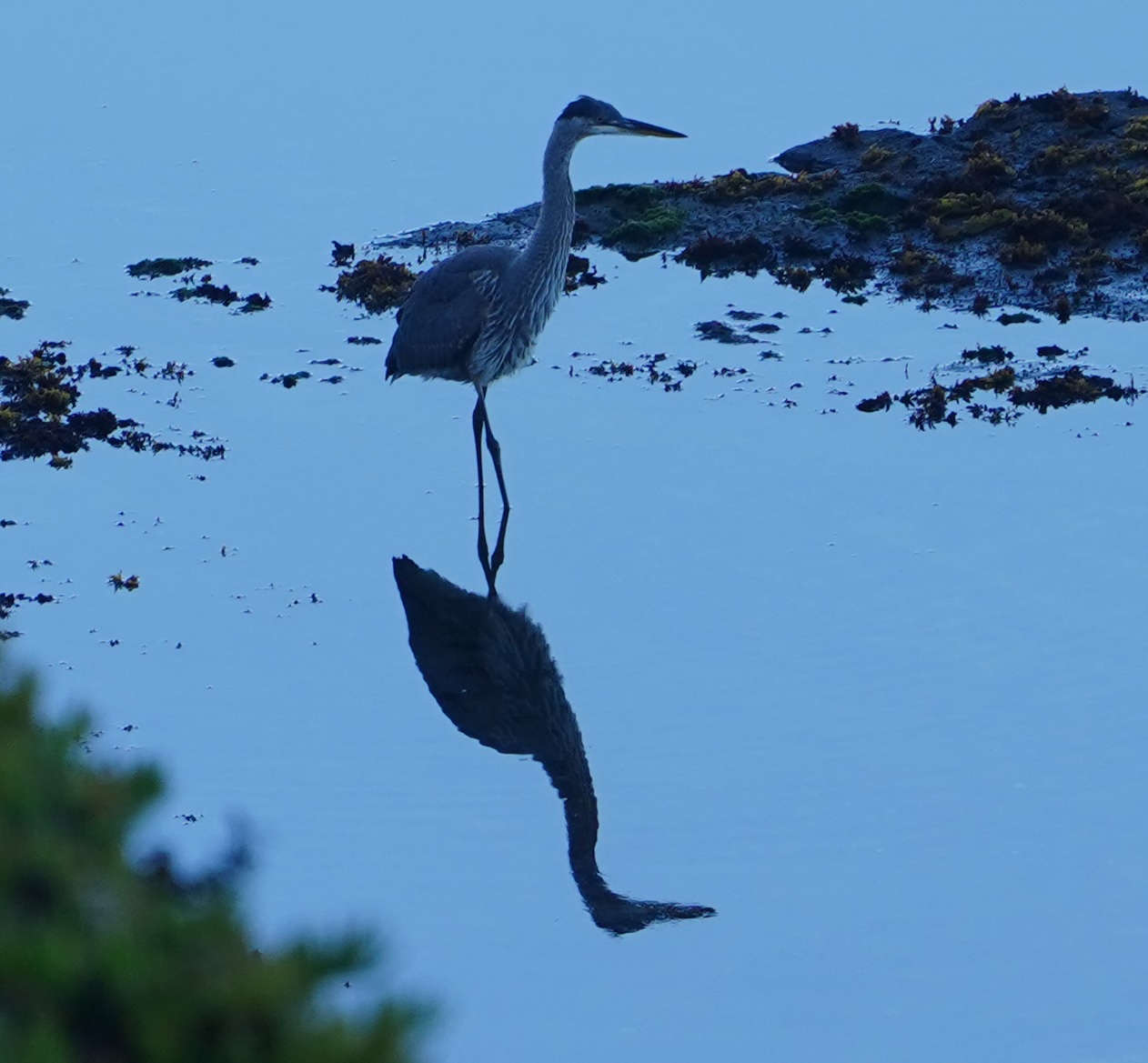
Bill Budge found this Great Blue Heron reflected in the water.

Aren't these beautiful photos?

I went to the Cornell Lab of Ornithology's website to see exactly what these herons eat. They wrote, "Great Blue Herons eat nearly anything within striking distance, including fish, amphibians, reptiles, small mammals, insects, and other birds. They grab smaller prey in their strong mandibles or use their dagger-like bills to impale larger fish, often shaking them to break or relax the sharp spines before gulping them down."

Their calls sound like "awk!" You can listen for yourself at https://www.allaboutbirds.org/guide/Great_Blue_Heron/sounds

Thanks to Bill for allowing me to share his photos with you here.