Tag Archives: Cornell Lab of Ornithology


Ospreys fish in the ocean and in rivers for fish. Their other name is Sea Hawks. Yep, the Seattle Seahawks are named after an Osprey...I presume! Ron Bolander was out with his camera and he was ready when this Osprey flew by with its catch.

If you know what kind of fish this is, I'd love to know. So would Ron. See how the Osprey has positioned the fish? It's the best aerodynamic position for the big bird to fly with the fish.

This is a good time to see and hear Ospreys on the Mendonoma Coast. The chicks have fledged and they are beginning to fish for themselves. To hear the distinctive call of an Osprey, here is a link to the Cornell Lab of Ornithology: https://www.allaboutbirds.org/guide/Osprey/sounds

Thanks to Ron for allowing me to share his photo with you here. And get well soon, Ron!

The heat has left the immediate coast and the fog has returned. We also have some high clouds drifting through, making it a little humid today. Temps in the low 70's. Yay!
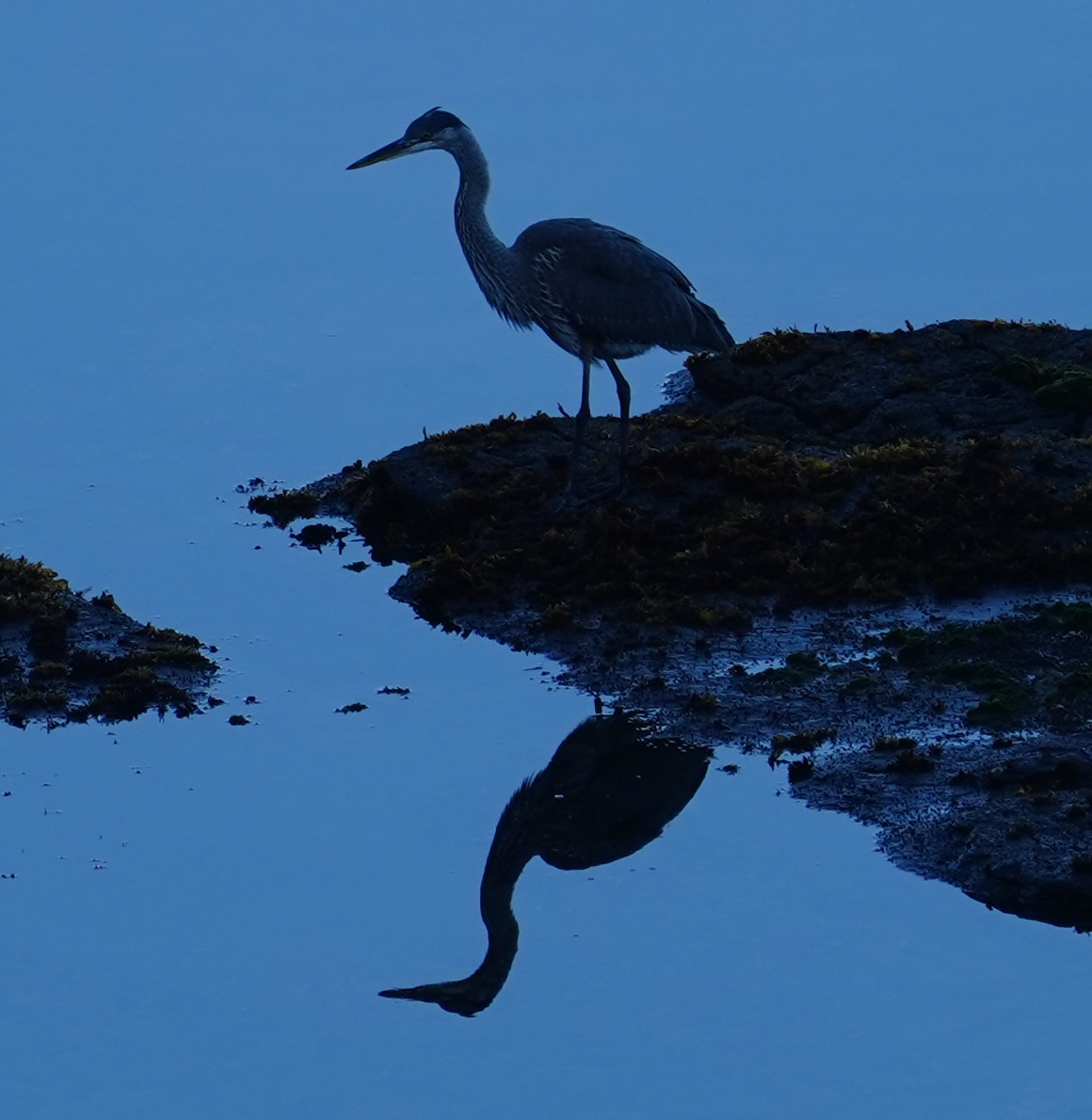
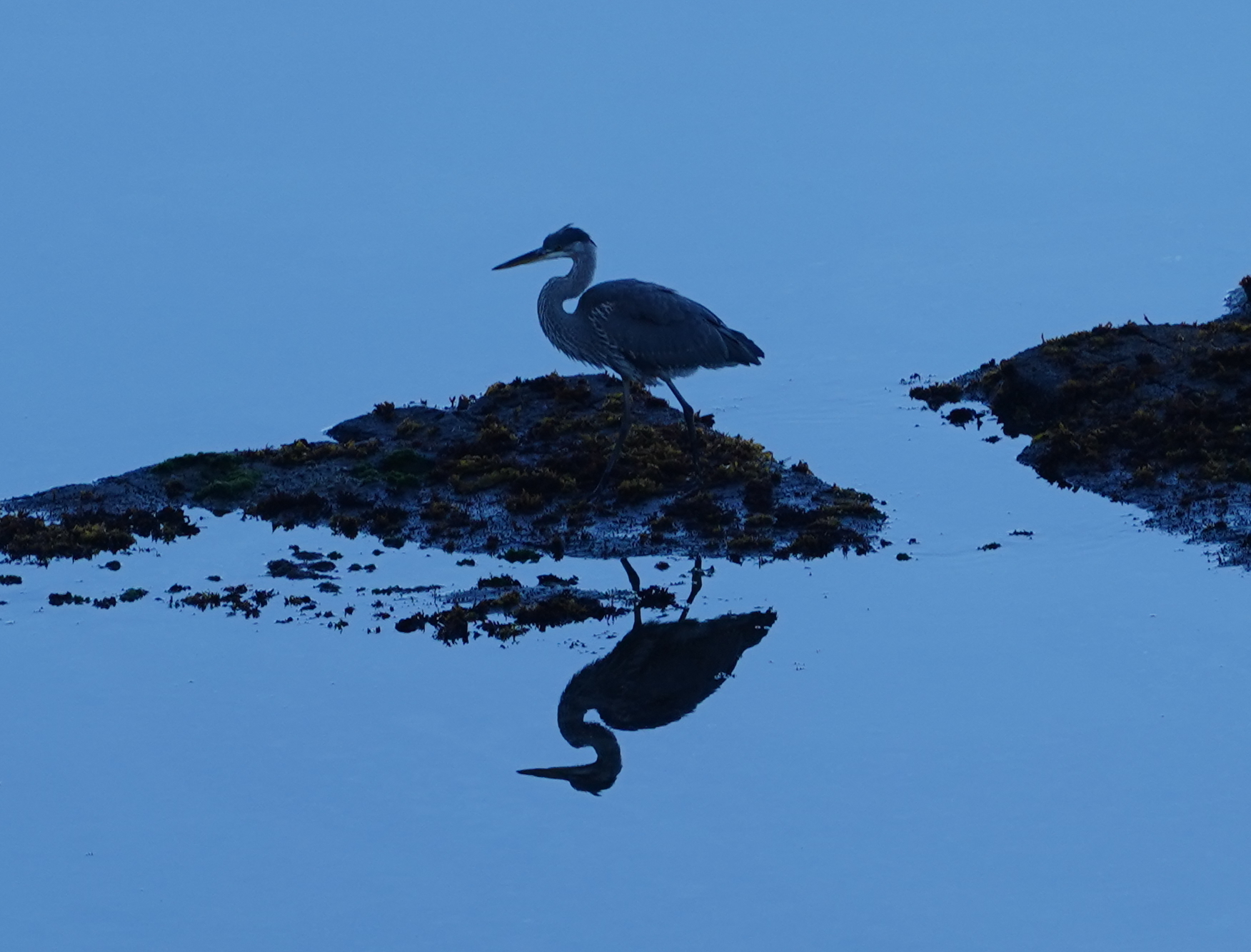
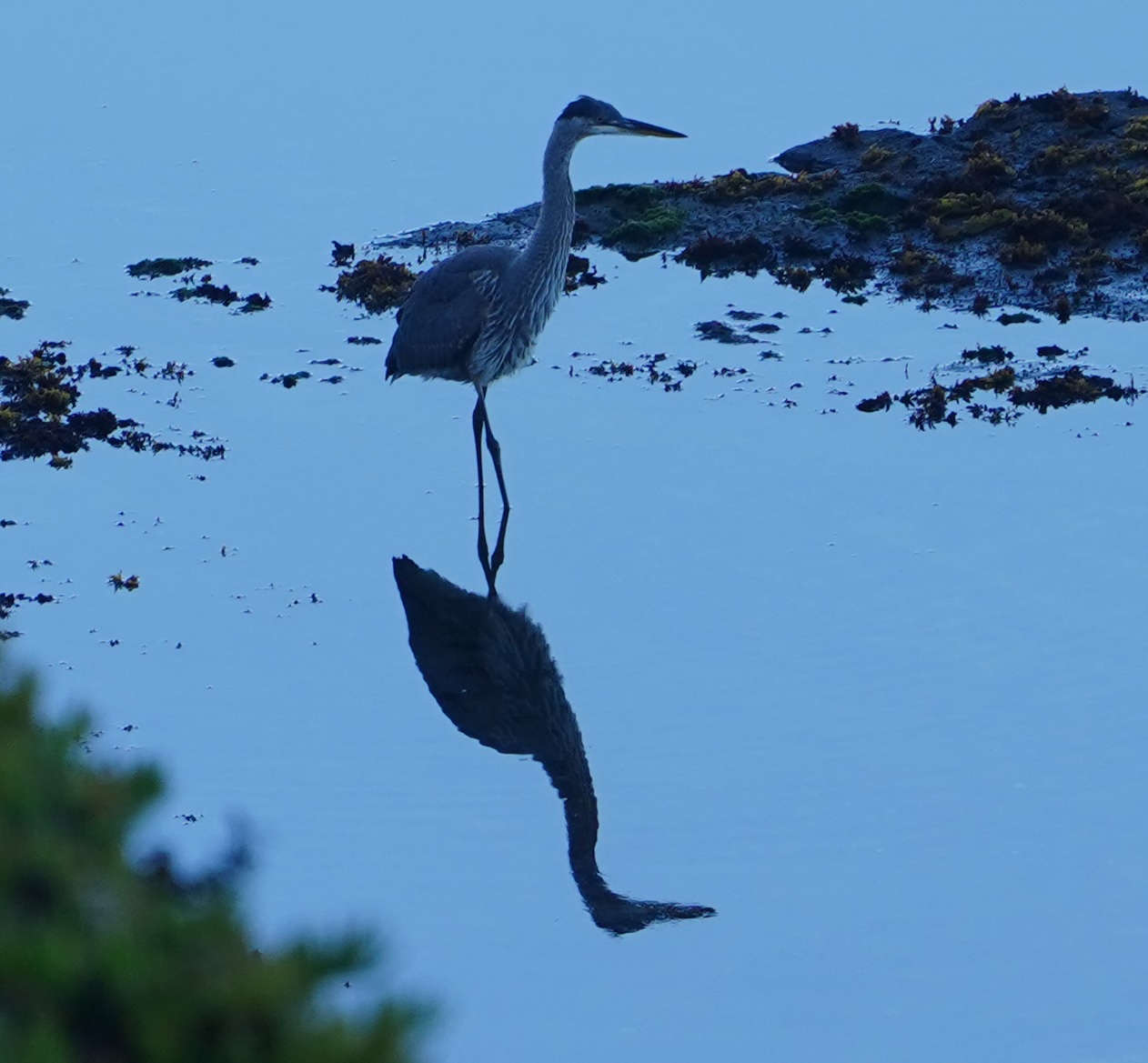
Bill Budge found this Great Blue Heron reflected in the water.

Aren't these beautiful photos?

I went to the Cornell Lab of Ornithology's website to see exactly what these herons eat. They wrote, "Great Blue Herons eat nearly anything within striking distance, including fish, amphibians, reptiles, small mammals, insects, and other birds. They grab smaller prey in their strong mandibles or use their dagger-like bills to impale larger fish, often shaking them to break or relax the sharp spines before gulping them down."

Their calls sound like "awk!" You can listen for yourself at https://www.allaboutbirds.org/guide/Great_Blue_Heron/sounds

Thanks to Bill for allowing me to share his photos with you here.

2 Comments

I hear the calls of Wilson's Warblers most days in the forest at Rick's and my place in Anchor Bay. They are beautiful birds, with their vibrant yellow color. Craig Tooley got this photo recently of a male - the black cap on top of his head is definitive.

You can see he is singing! To hear the calls of this warbler, here is a link to the Cornell Lab of Ornithology: https://www.allaboutbirds.org/guide/Wilsons_Warbler/sounds

Thanks to Craig for allowing me to share his photo with  you here. To see much more of Craig's nature photography, here is the link to his website: http://www.ruffimage.com

Foggy this morning near the coast, but warm away from the ocean.

1 Comment

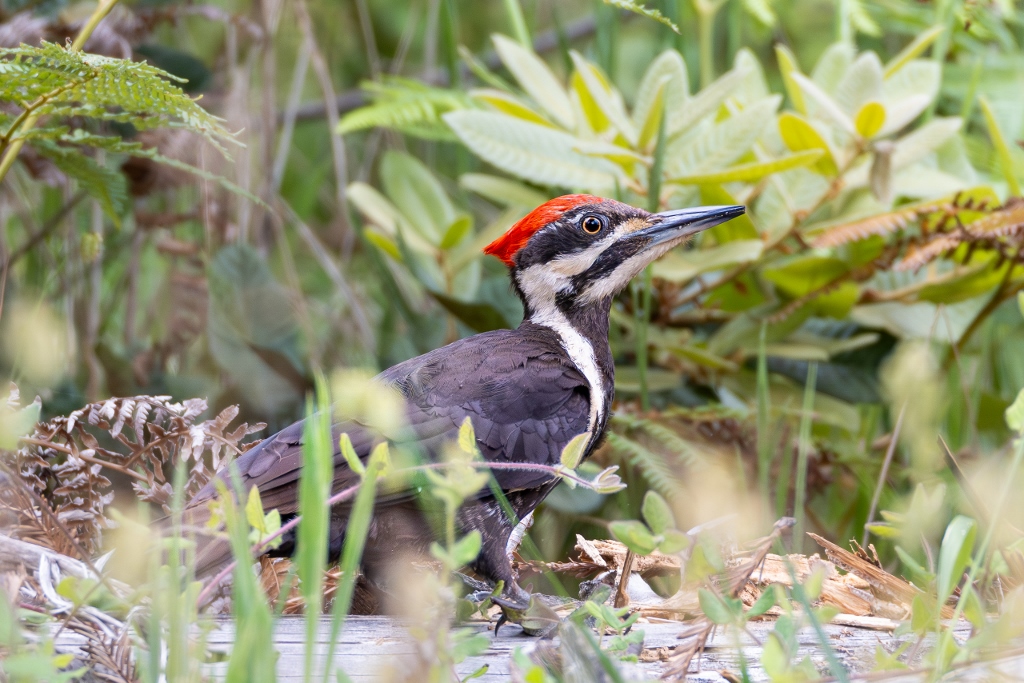
Such a treat to hear a Pileated Woodpecker and an even better treat to get a photo of the largest woodpecker on the Mendonoma Coast. Here's Michael's story:

"I first heard her on the prior Thursday night, never actually seeing her.  I spent the next five nights going back to the same spot. I heard her a few times and it wasn't until last Wednesday I actually found her."

MCOUSTIER@PROTONMAIL.COM

"It took me about six hours of standing in the same spot over those five nights with enhanced hay fever and three ticks.  She is the largest woodpecker in the USA and she was found behind RCMS.” RCMS is our medical clinic in Gualala.

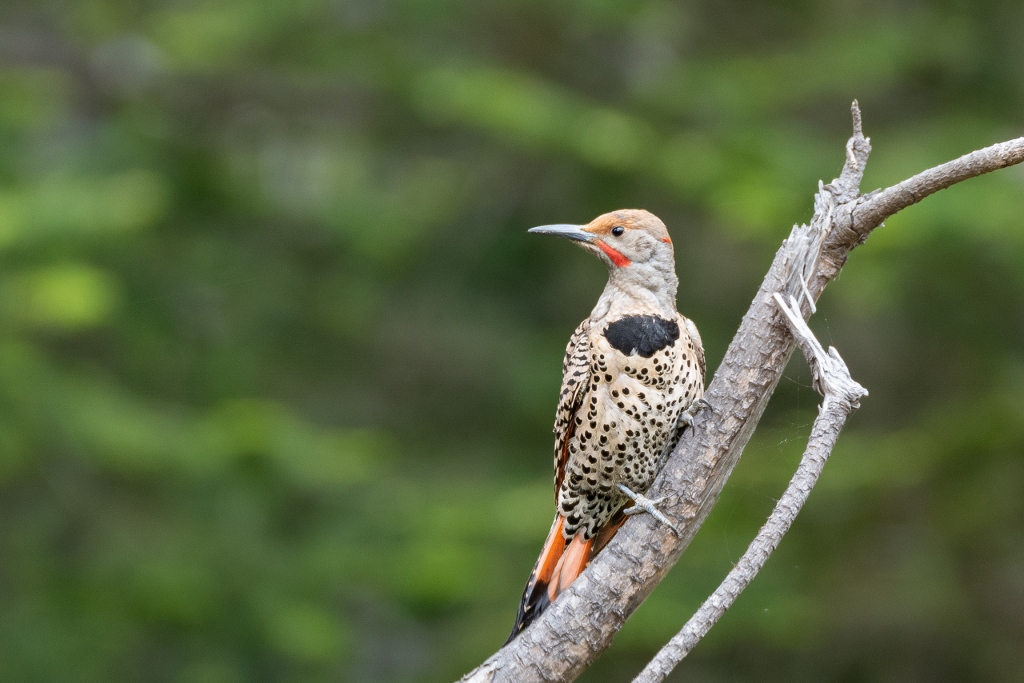
Michael got two other photos I'd like to share with you. The first is a Red-shafted Northern Flicker.

MCOUSTIER@PROTONMAIL.COM

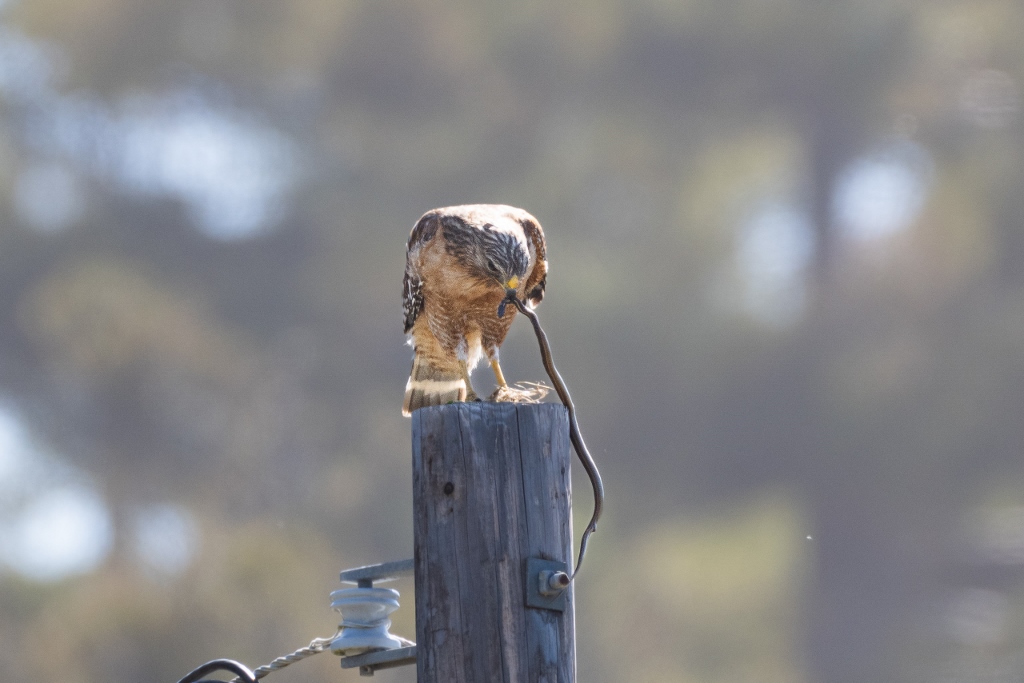
And here is a Red-shouldered Hawk with a juvenile Gartersnake for his/her meal.


Thanks to Michael for allowing me to share his photos with you here.

To hear the call of a Pileated Woodpecker - and it's impressive! - you can listen at this link to the Cornell Lab of Ornithology: https://www.allaboutbirds.org/guide/Pileated_Woodpecker/sounds

It's a beautiful day here today with gentle breezes. There are many, many visitors here for the holiday!

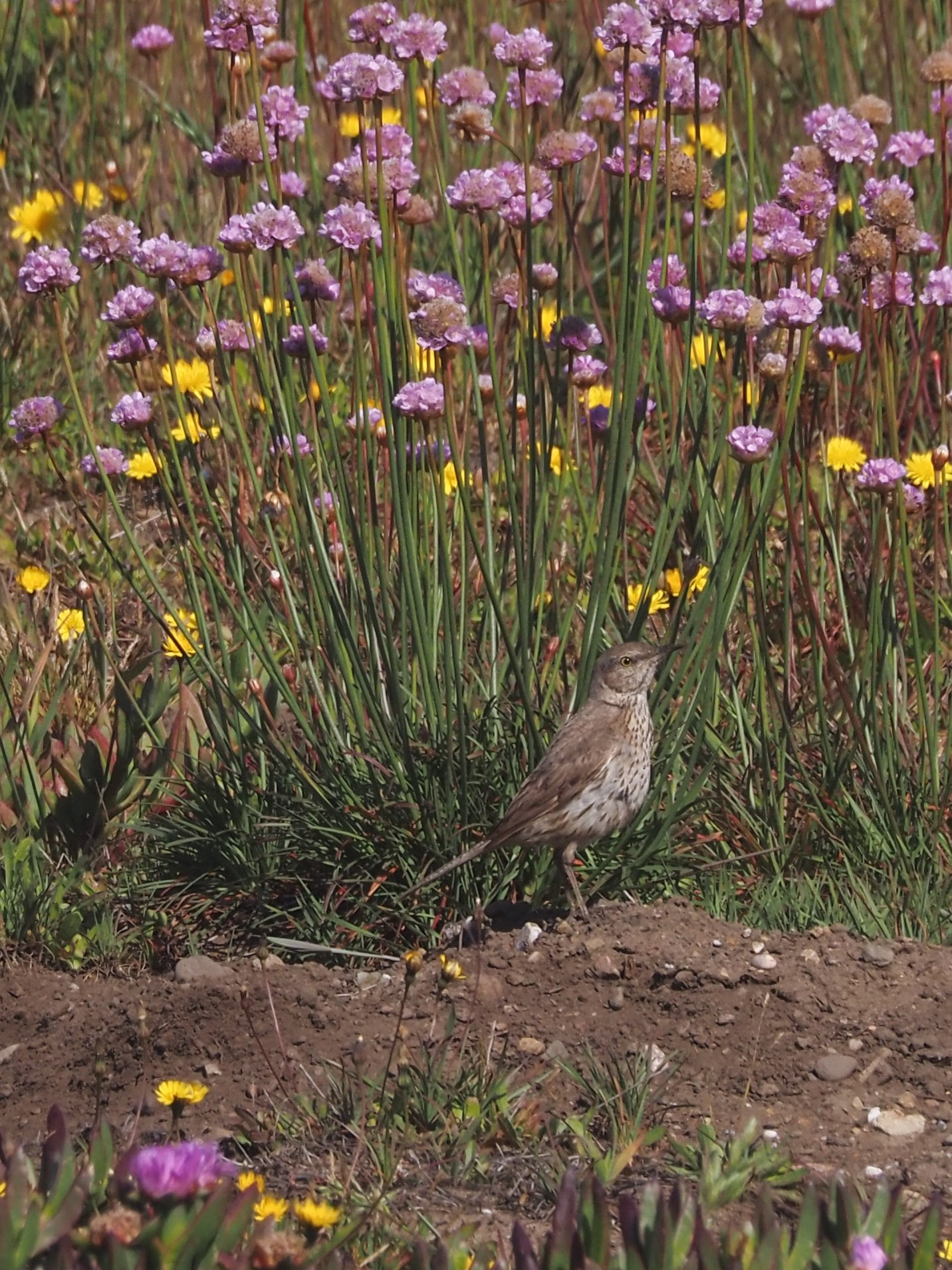
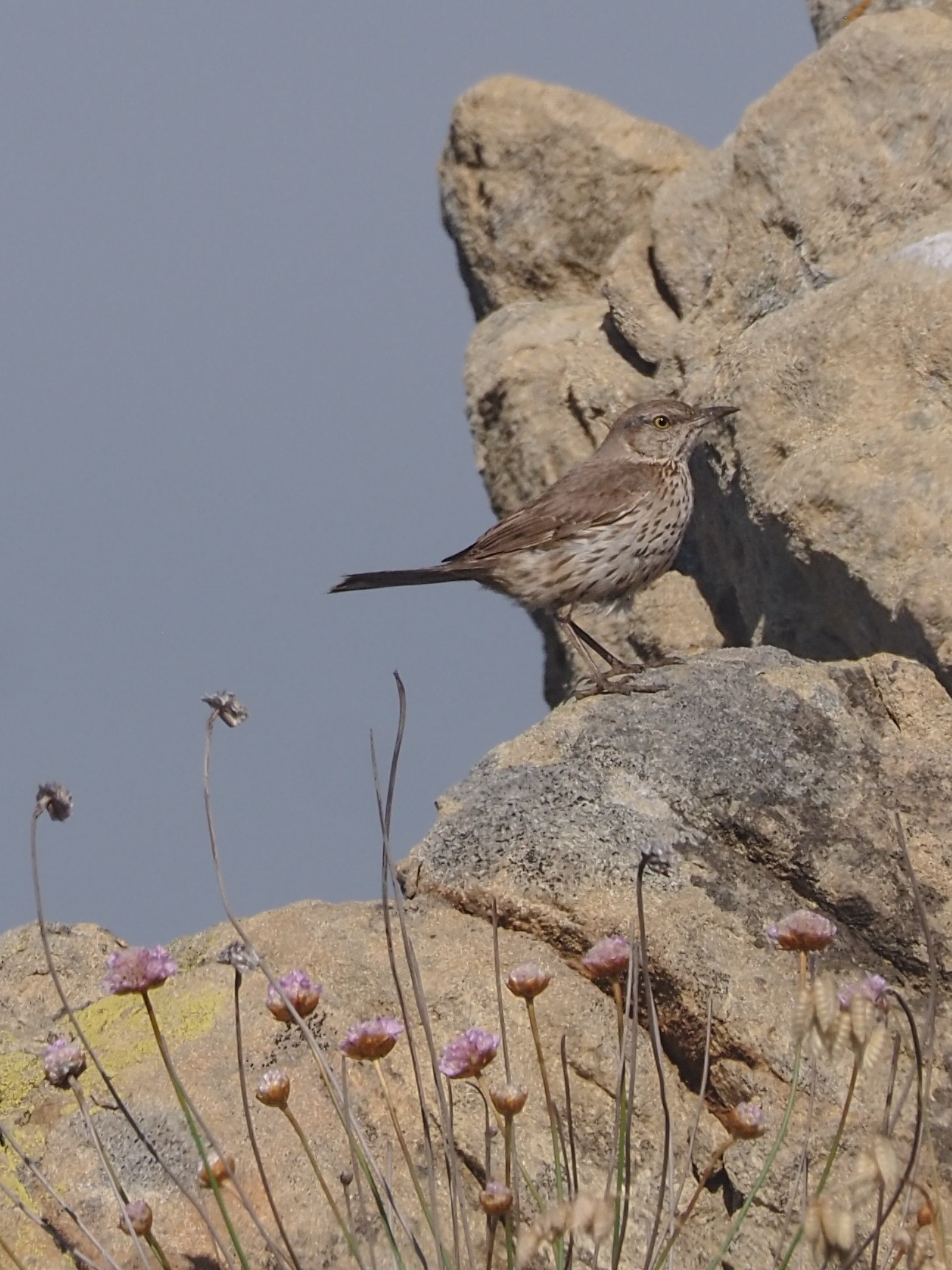
Karen Wilkinson had a rare sighting. Experts confirmed she had photographed a Sage Thrasher, a rare bird sighting here. She wrote, “It was a delightful but windy morning on the bluff and this sighting had me puzzling over an ID.  As I watched it for a while, its posture, behavior, and field marks sort of reminded me of three different birds (hermit thrush, mockingbird, rock wren), but none were right in the moment. I was stumped. After coming home and reviewing photos I'm fairly confident that I was looking at a Sage Thrasher - but I would really appreciate confirmation on this one, since I've certainly never seen one here on the coast.”

I sent Karen’s photos to Peter Pyle and Robert Keiffer who agreed with Karen’s ID. Robert wrote, “Yes, Sage Thrasher!  One of my nemesis species for Mendocino County, so the records are few and far-between for the county.  You cannot see the white wingbars, but the profile, mandible shape, light yellow eye, white tail tips evident, streaked breast, grayish-brown overall are all fitting characteristics. Do you enter your records on eBird?  You definitely should for this observation. Great find!” Karen’s sighting was in Sonoma County, where Diane Hichwa tells me there have been very few recorded sightings over the years. And Karen did post her sighting.

To hear the complex song of a male Sage Thrasher, here is a link to the Cornell Lab of Ornithology: https://www.allaboutbirds.org/guide/Sage_Thrasher/sounds

I read on their website that one male was recorded singing for 22 minutes straight!

Thanks to Karen for allowing me to share her photos with you here.

Fog over the ocean kept the immediate coast cool, but it heated up just a little ways away. Low 80's at Rick's and my place in Anchor Bay today!