Tag Archives: Peter Baye

On a hike with Peter Baye and Will Ericson last Sunday - two of my Sightings experts - Rick and I showed them the ancient, twisted Redwood tree on a neighboring property. Peter declared it a forest god and said it was perhaps 2000 years old. I will give you the link below to see photos I have previously posted of this glorious tree.

We then visited our neighbors Frank and Nan Drouillard who showed us the most unusual growths on the forest floor.
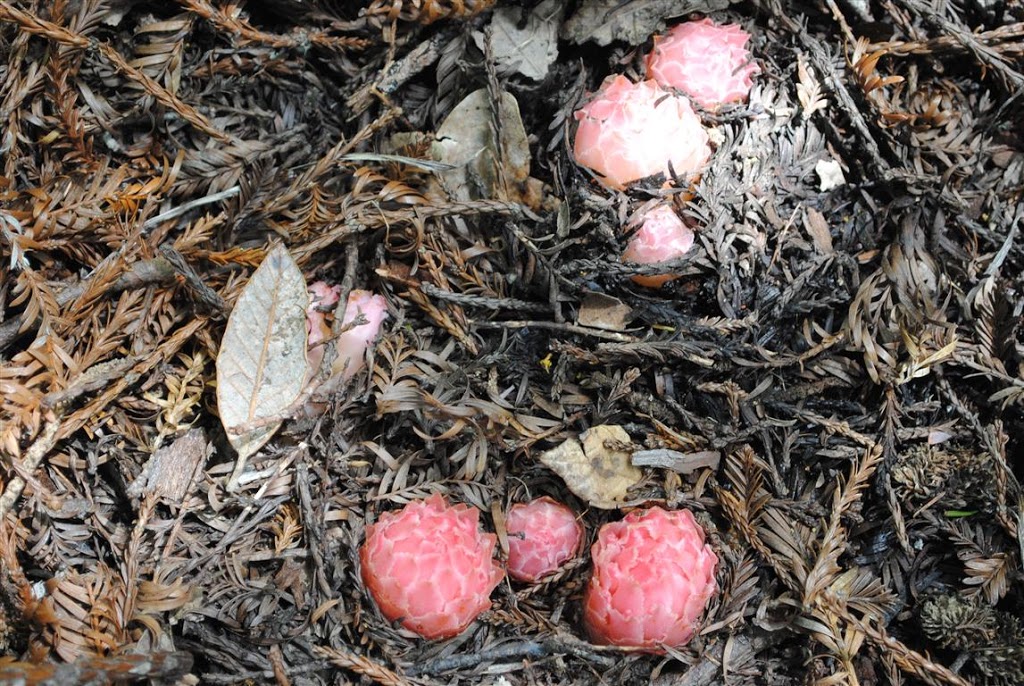
I thought they were a type parasitic mushroom but after some research Peter believes the first photo is California Groundcones, Boschniakia strobilacea, a parasitic plant. Both plants are members of the broomrape family  and live off the roots of Manzanita and Madrone, both of which are found on Frank and Nan's land. More study is needed to determine exactly what the white plants are.

Rick and I will hike down to this spot and monitor the progress in the weeks to come. And I will, of course, share the photos with you here.

Here is the link to see the "forest god" old-growth redwood tree: http://www.mendonomasightings.com/2011/05/26/old-growth-redwood-tree-that-survived-the-loggers-because-it-grew-in-a-twisted-shape/
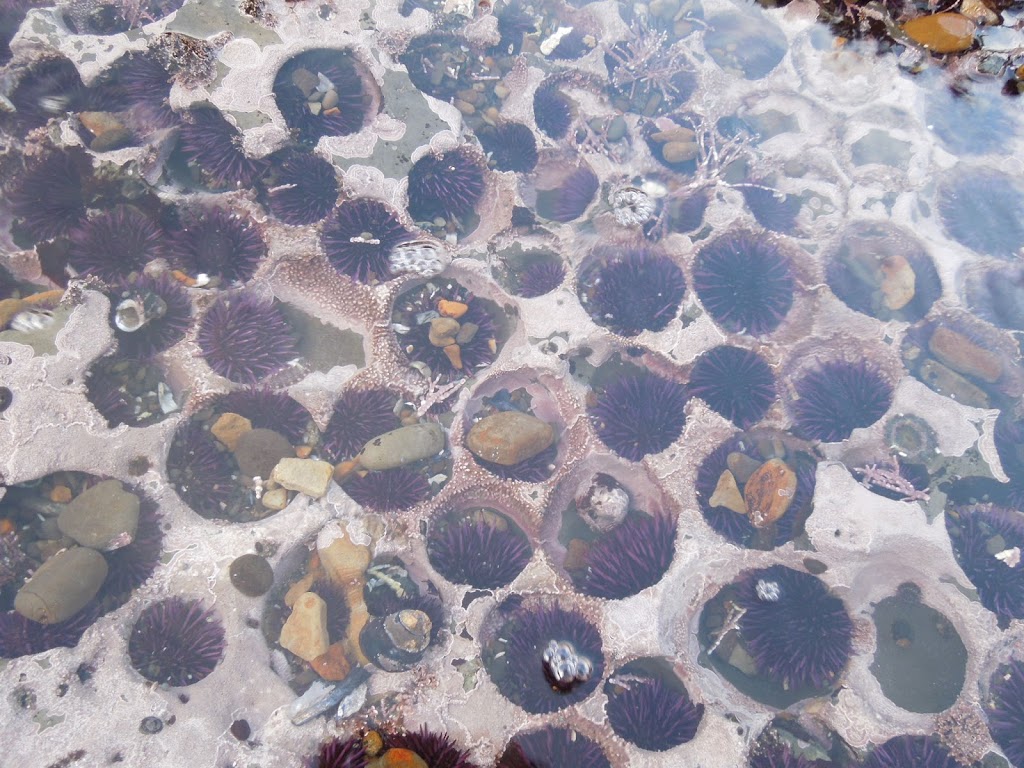
The Stornetta Public Lands bring us many wonders and here's another one - a Purple Sea Urchin "meadow." Peter Baye was exploring the tide pools of the Stornetta Lands at low tide recently when he photographed these underwater beauties.

These Sea Urchins have excavated pits in sedimentary rocks and live in a big community. They grow to about four inches across and can live up to 70 years. Their Latin name is a tongue twister - Strongylocentrotus purpuratus. They are found off the eastern edge of the Pacific Ocean, from Ensenada, Mexico to British Columbia, Canada.

Thanks to Peter for allowing me to share his photo with you here.

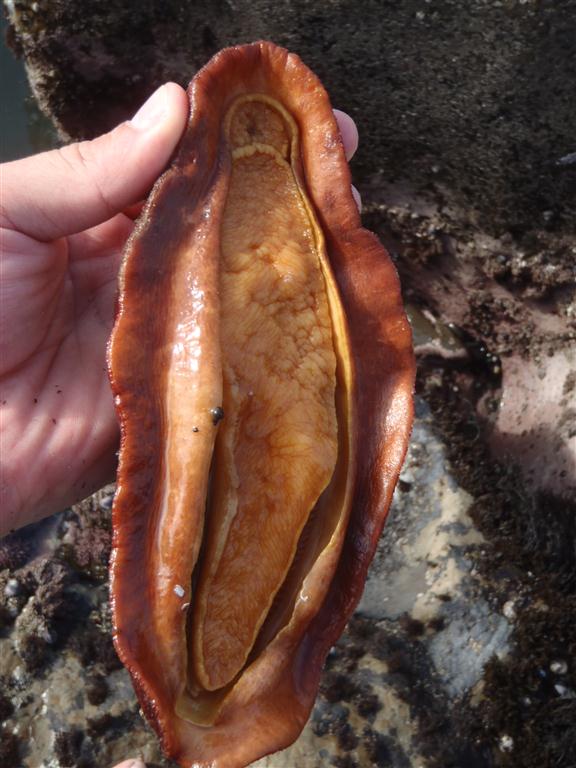
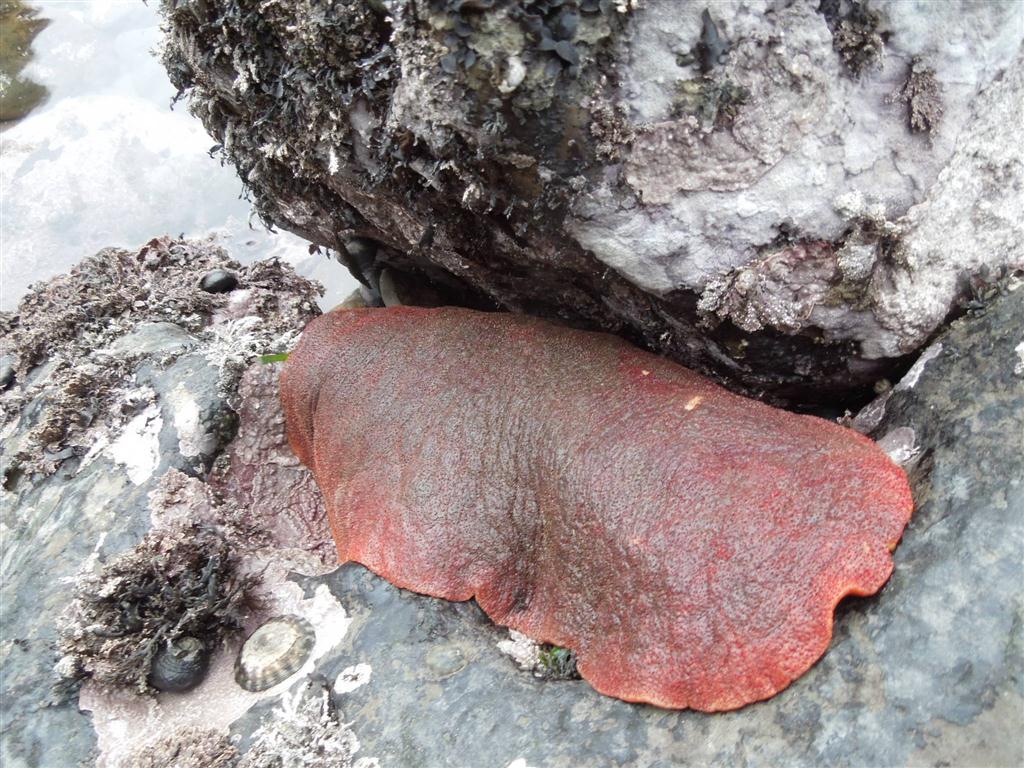
Peter Baye explored some of the tide pools at low tide at the Stornetta Public Lands. He found many wonders. One of them was a Gumboot Chiton, Cryptochiton stelleri, also called a Giant Pacific Chiton.

 And here is the underside of this large Chiton.

Gumboot Chitons eat algae, moving along rocks. They also eat sea lettuce and giant kelp. They can live up to forty years. It seems they have no predators to worry about. They are edible but apparently so unpalatable that one would have to be starving to eat it. "Rubbery" is how they are described.
To read about the wonderful Stornetta Public Lands, here's the link to a previous post: http://www.mendonomasightings.com/2012/02/18/low-tide-at-the-stornetta-public-lands-in-point-arena-breathtaking/

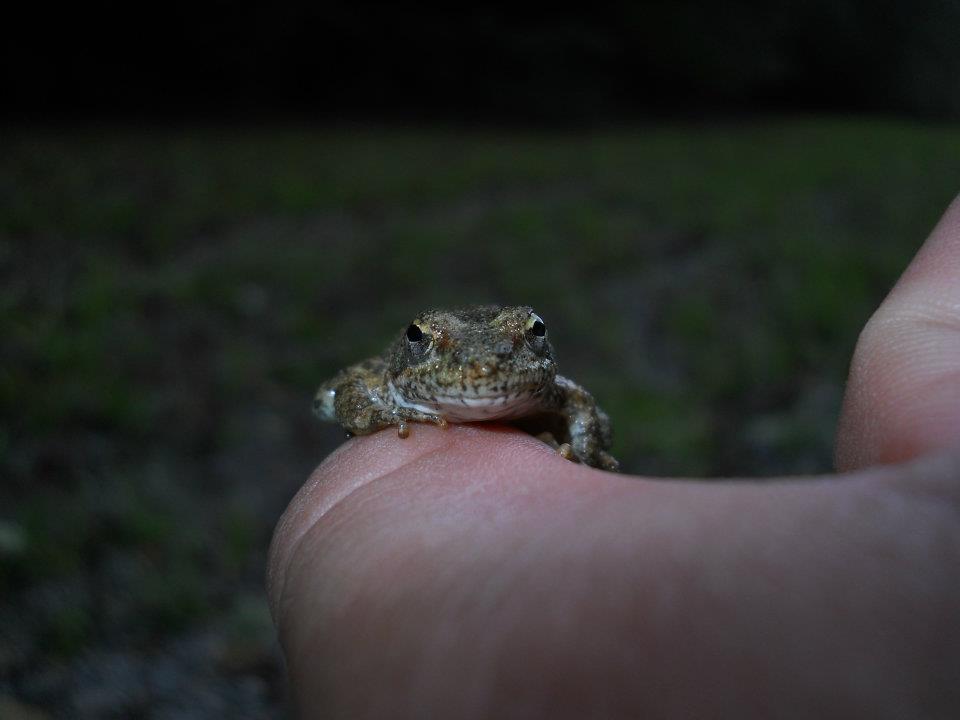
Will Ericson loves exploring the reaches of the wild Gualala River. A while back he discovered this juvenile frog, a Foothill Yellow-legged Frog, Ranas Boylii. You will see it is not much bigger than a quarter.

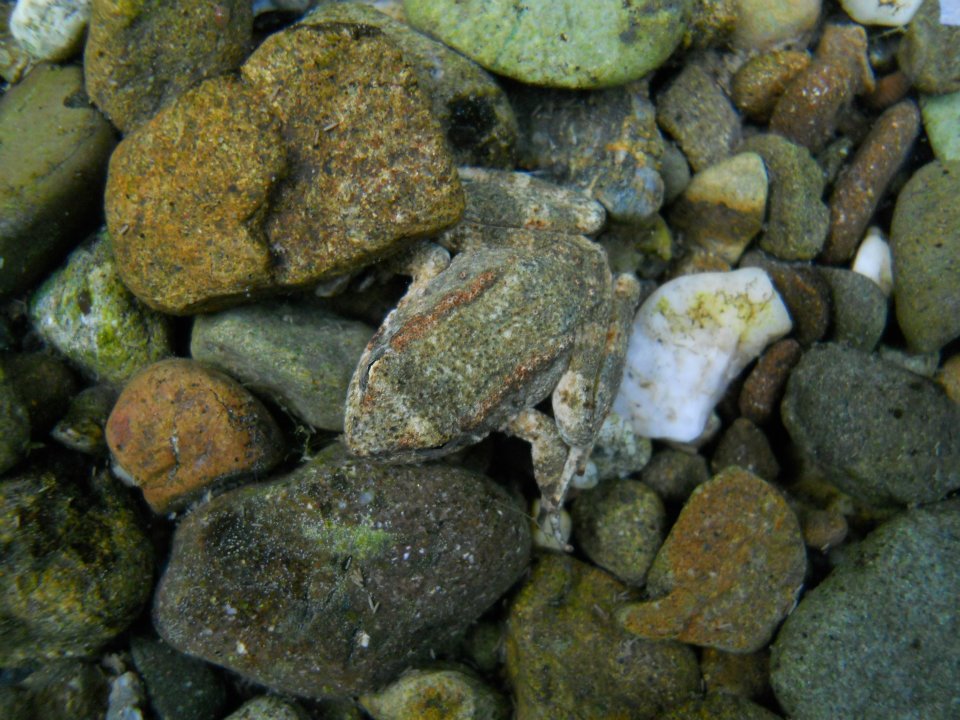
Here it is in one of the tributaries of the Gualala River.

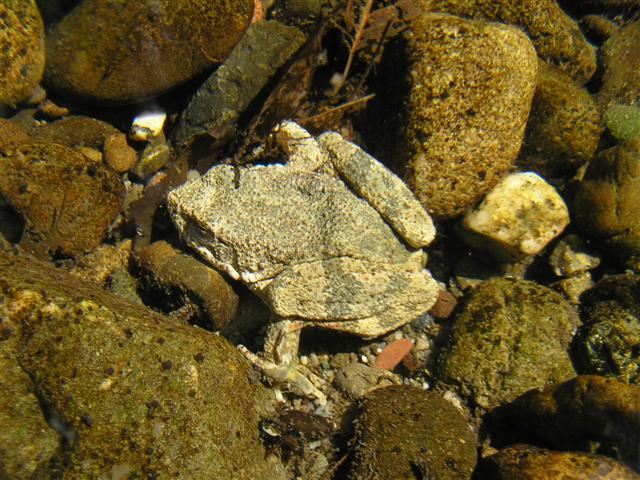
 And here is an adult Foothill Yellow-legged Frog photographed by Peter Baye. You can see that it blends in well with the rocks in the river.

They are found in Oregon, along the California Coast and down to Baja California. To see another frog, the Pacific Tree Frog, here is the link:
http://www.mendonomasightings.com/2011/10/21/a-tiny-frog-with-a-big-voice-meet-the-pacific-tree-frog/

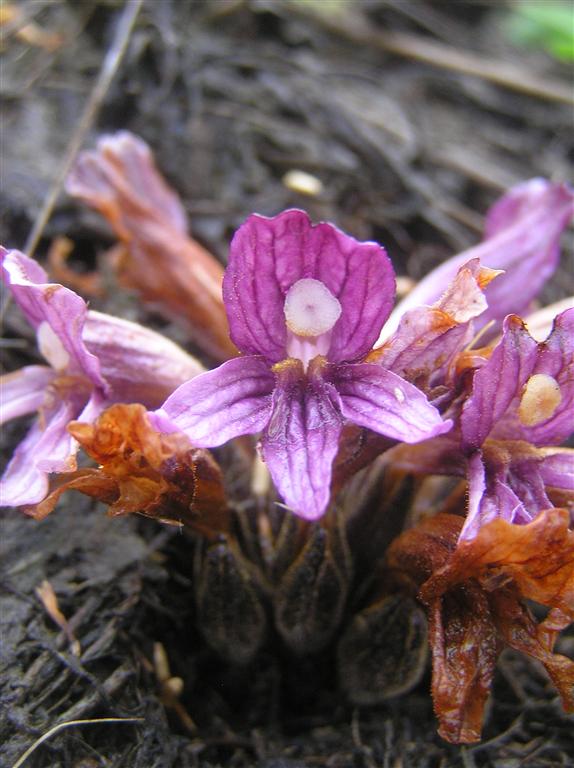
Peter Baye found this beauty in Mendocino County, specifically at the back of the beach at Alder Creek. It's Orobanche californica and its rather awful common name is California Broomrape. The color of the flower Peter found is unusual. Because of its extreme environment - salt spray from the Pacific Ocean and marshy sand - it has this lovely purple coloring.

Yes, it's a California native. And if you are a regular reader here you might not be surprised to learn it has medicinal qualities. A decoction of it can be used to treat colds and pneumonia.

 Thanks to Peter for allowing me to share this photo here.