Tag Archives: Monarch Butterfly

A Gulf Fritillary was spotted by Hilary Prentiss in her yard in Gualala.
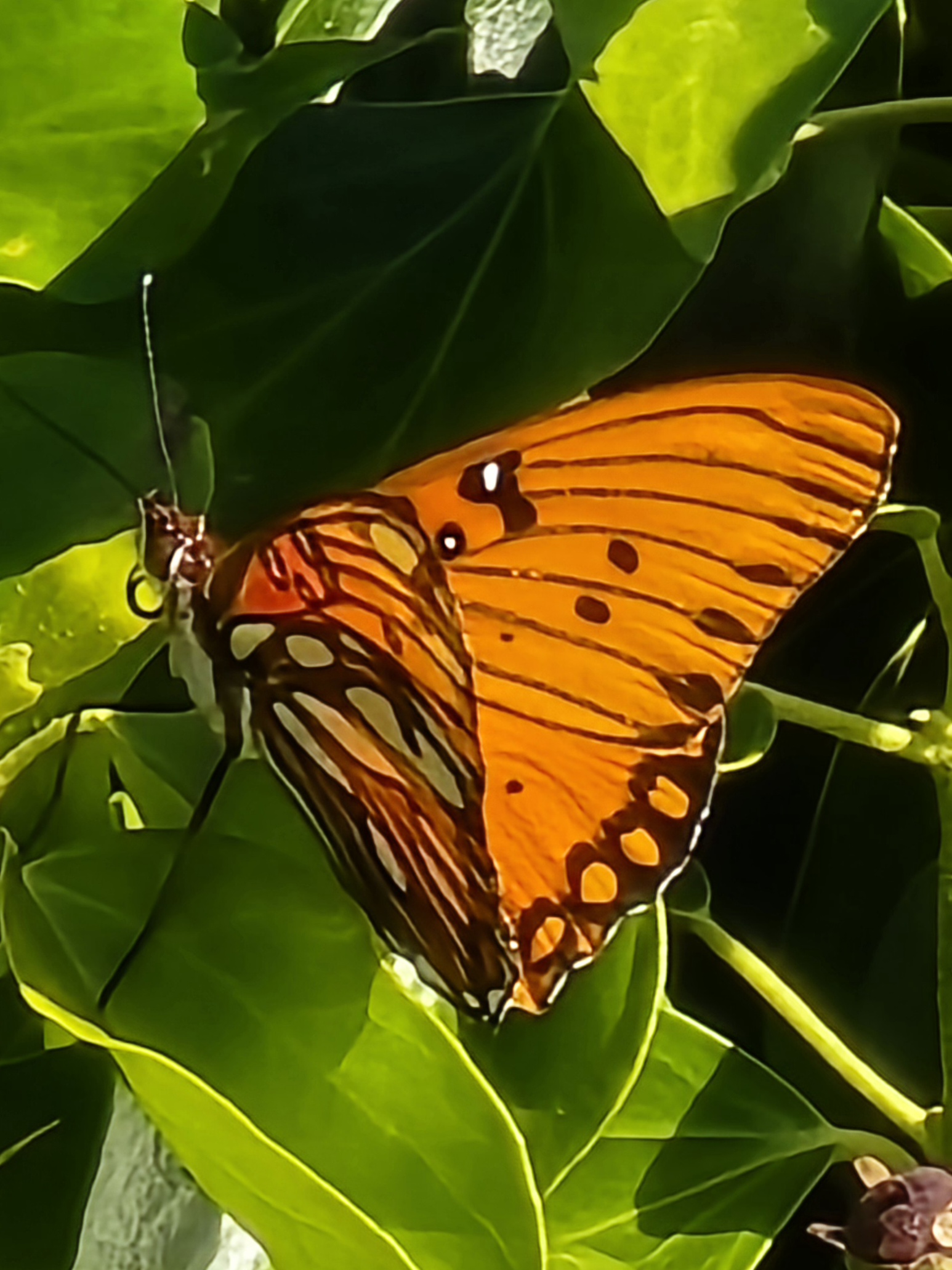
She wrote, “Fun facts about this butterfly: Their caterpillars feed exclusively on passion flower vines. Their bright orange color serves as a warning to predators that they are unpalatable due to the toxins in the passion flower vines they eat. And the underside of their wings have shiny spots that offer camouflage when their wings are closed.”

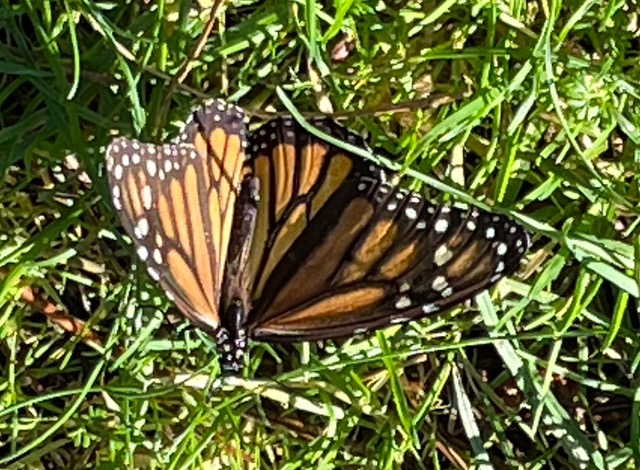
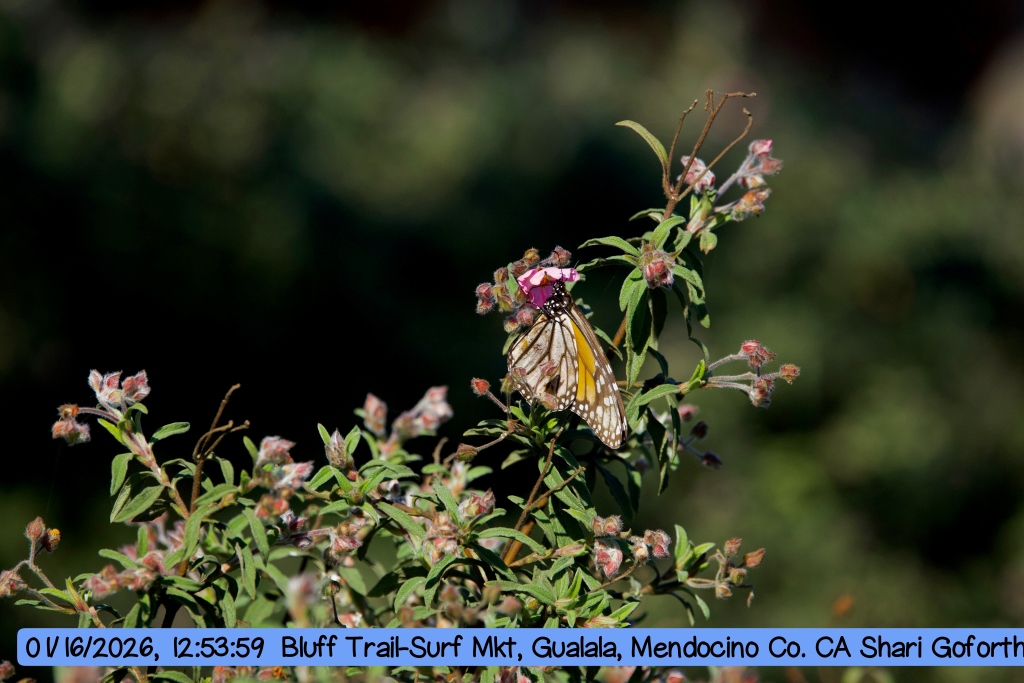
We've also had two Monarch butterfly sightings. One was quite tattered and photographed by Shari Goforth. Shari saw this butterfly near Surf Market in Gualala. It flew to the Gualala Bluff Trail where it then fed on rock rose blossoms.
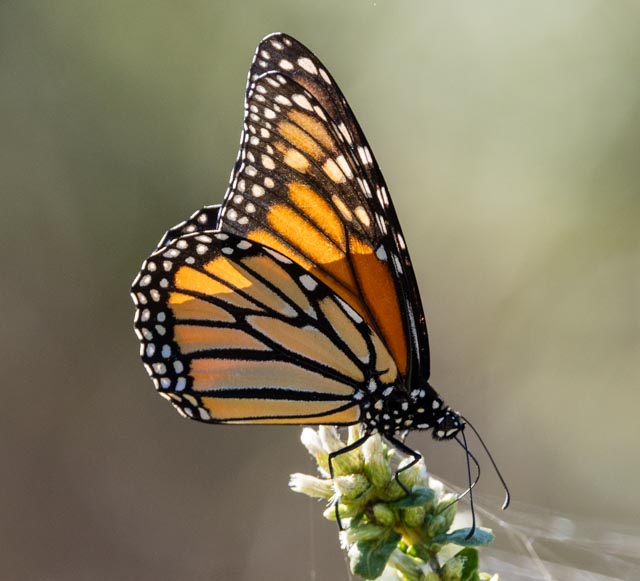
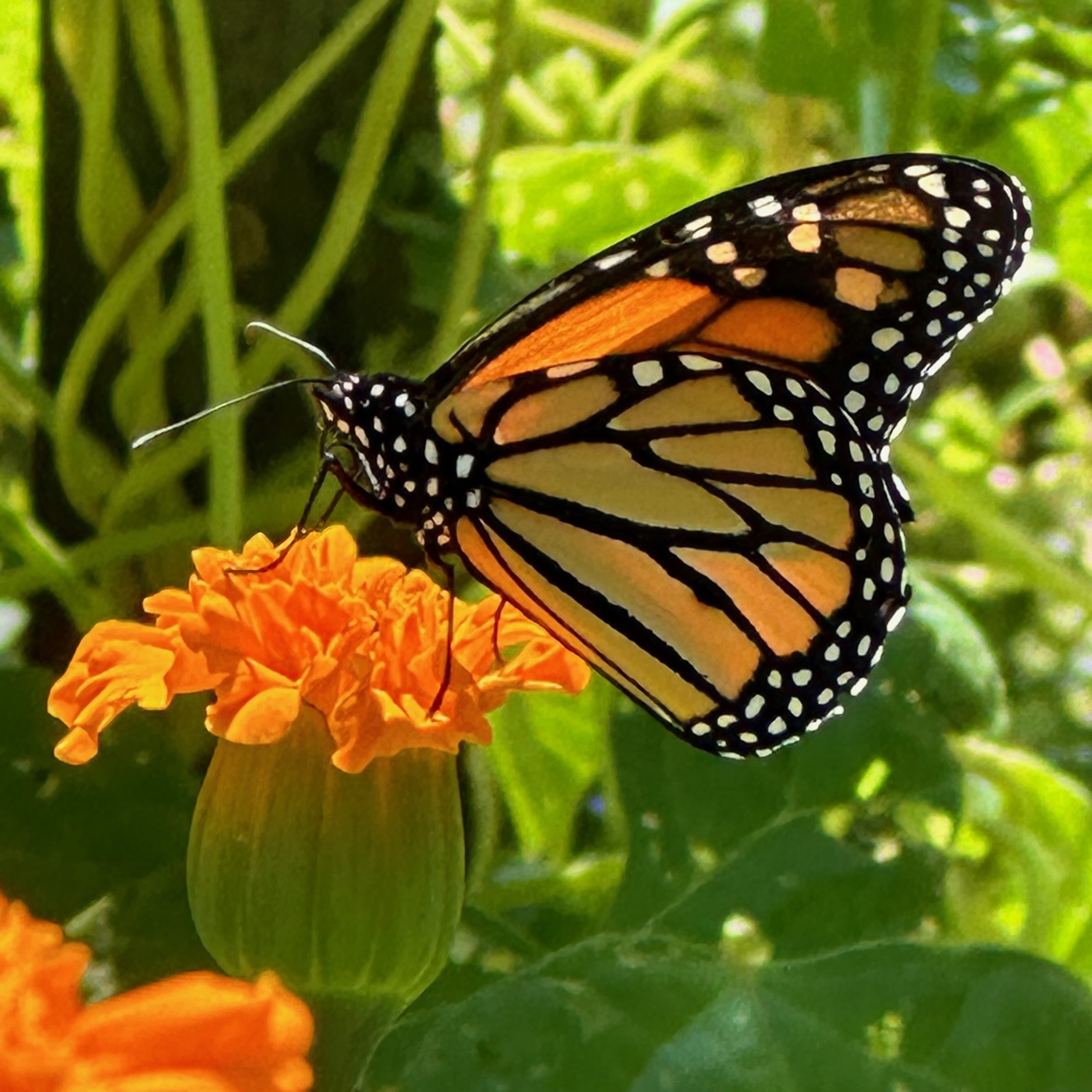
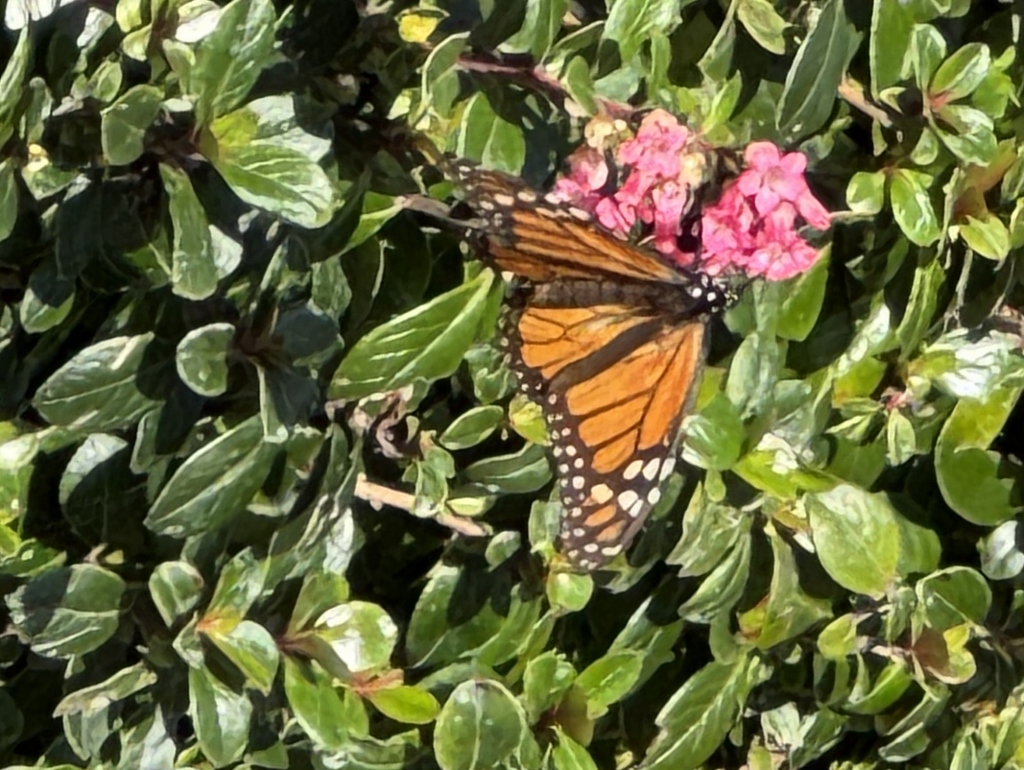
Ann Yeo saw a Monarch in much better shape, also in Gualala. Those who study these butterflies are very interested in what they are feeding on and where they are over-wintering. Mary Sue Ittner took a look at Ann’s photo and believes the plant could be Escalonia rubra, a non-native plant known to be popular with Monarchs as its flowers are nutrient rich.
We know Monarch butterflies are struggling so any sighting of one is precious. Gulf Fritillary butterflies were introduced to southern California before 1908. According to UCDavis' website: "This butterfly has no native host plant in California and is entirely dependent on introduced species of the tropical genus Passiflora (Passion Flower, Passion Vine), including the common Maypop (P. incarnata) and P. X alatocaerulea."

Thanks to Hilary Prentiss, Shari Goforth, and Ann Yeo for allowing me to share their photos with you here.

There must be butterflies today as the temperature was close to 70 degrees. While much of the country is experience extremely cold temps, it seems rather surreal to have this warm, dry weather.
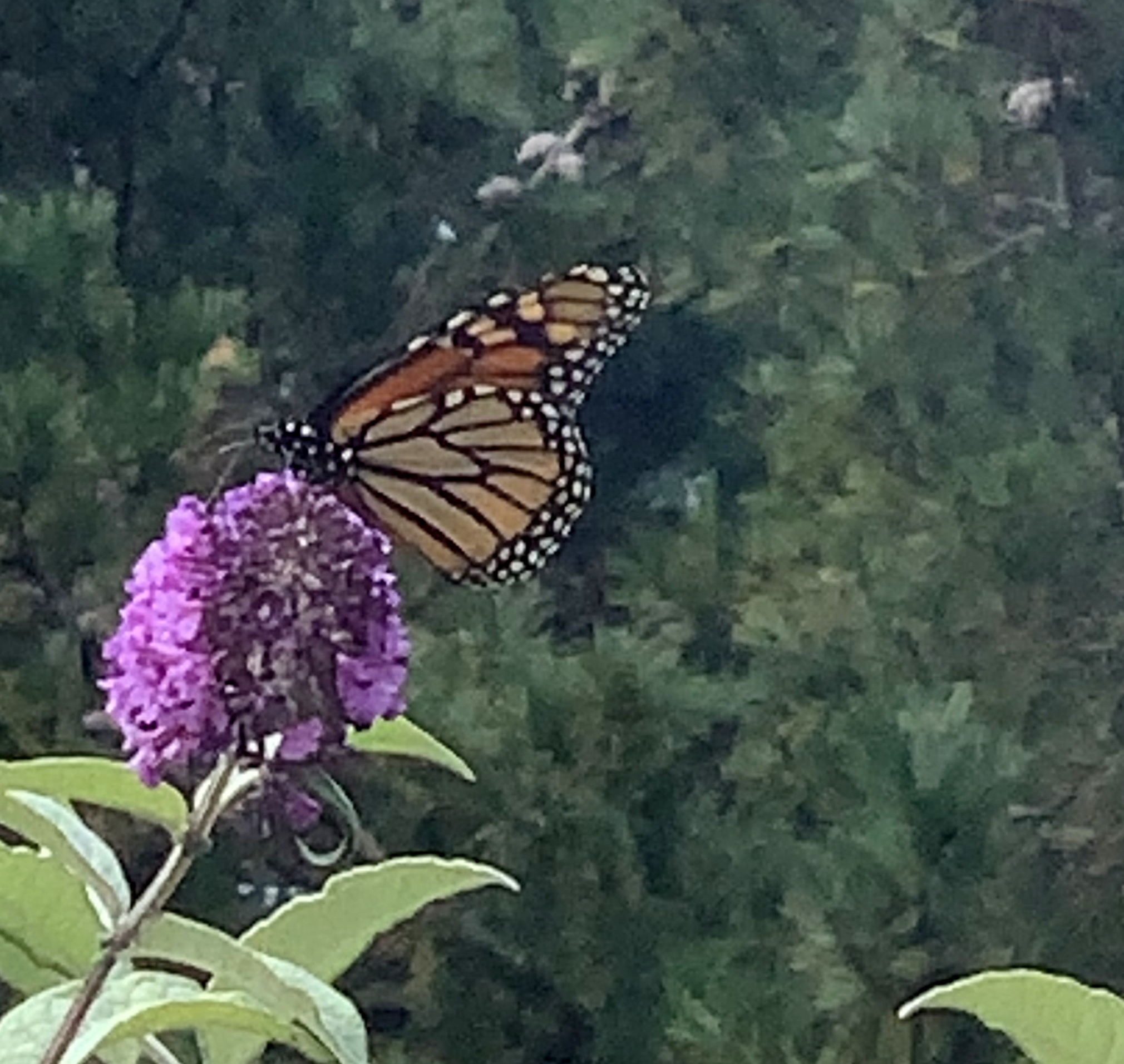


On Sunday Mel Smith found this Monarch nectaring on a butterfly bush in Point Arena.

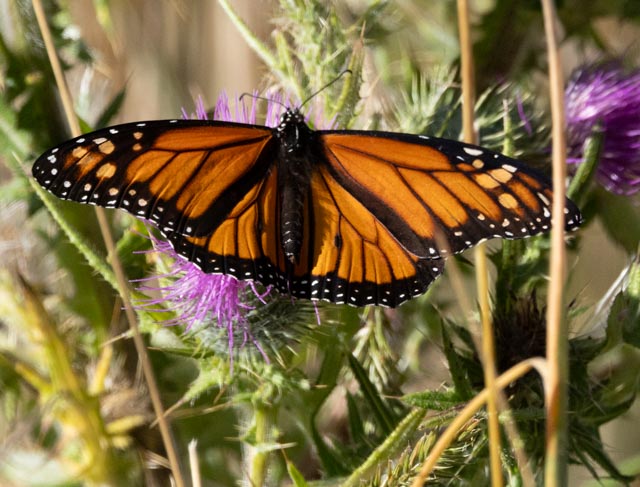
And Chris Pechal found two Monarchs at The Sea Ranch. In the photo on the left, you can tell it's a male Monarch because of the two black dots on its lower wings. He is nectaring on thistle. In the other photo, the beautiful Monarch is nectaring on Coyote Bush.

These Monarchs come to the coast to feed before their journey to their overwintering sites. They live approximately seven months, and are called the Methuselah generation. We hope to see many more Monarchs in the days ahead.

Thanks to Mel and Chris for allowing me to share their photos with you here.

Warm today - no fog at all. It's a spectacular autumn day!

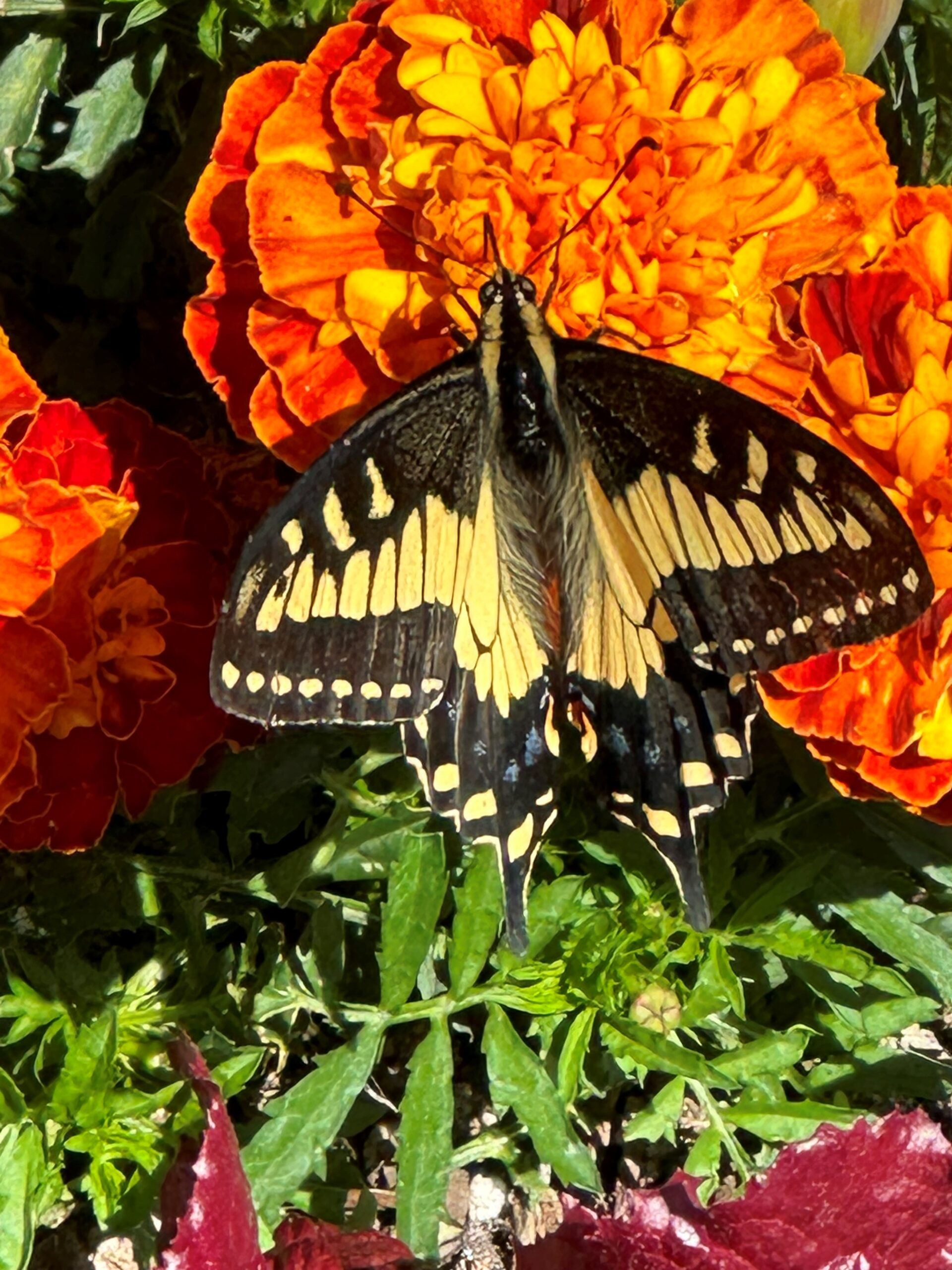
Adrian Adams photographed this beautiful Anise Swallowtail Butterfly feeding on marigolds in his The Sea Ranch garden - a vision of loveliness.

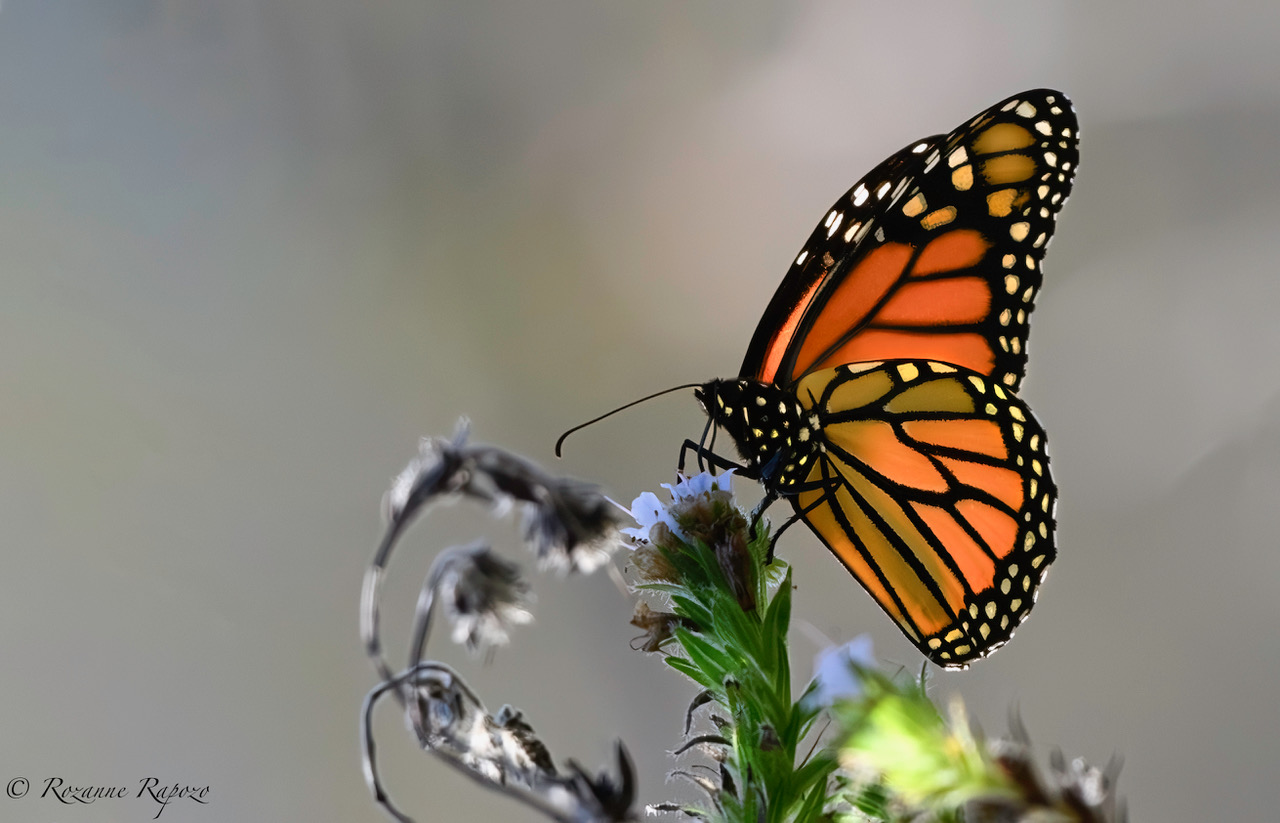
Monarchs continue to arrive on coast where they feed before migrating southward. Rozanne Rapozo recently photographed one of these magnificent butterflies.

Thanks to Adrian and Rozanne for allowing me to share their photos with you here.

We are having another warm autumn day, and the Pacific Ocean is roaring. On my drive down to the radio station, KGUA, in Gualala this morning for my monthly Sightings talk with host Peggy Berryhill, ocean mist was spilling across the highway. On the east side, the morning sun created multiple sunbeams through the trees. The combination was amazing to see.

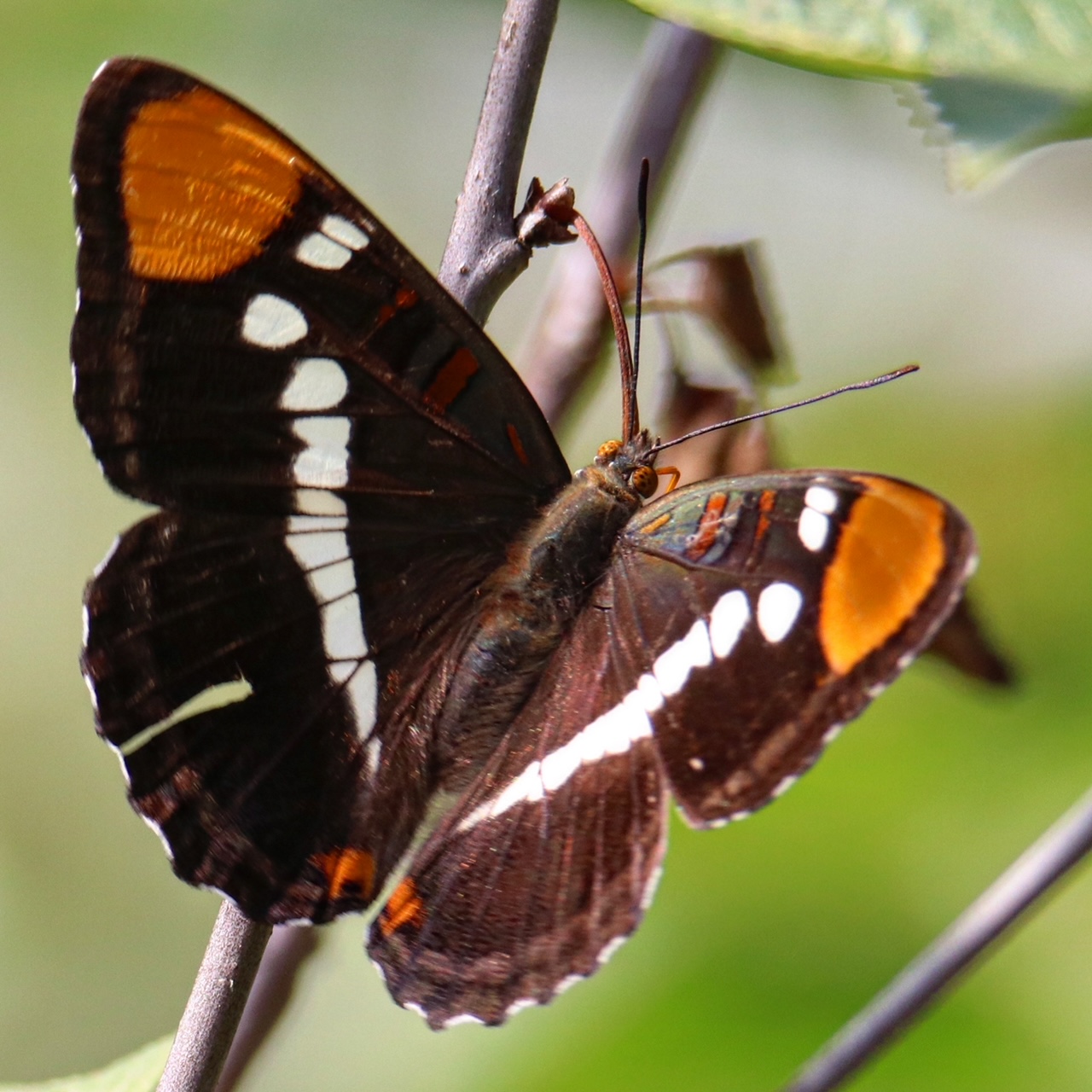
California Sisters seems to be having a good year, as sightings continue to pour in. I saw several this morning, feeding on various flowers on the deck. Perry Hoffman recently photographed one up on the Gualala Ridge.

Monarchs are arriving now, such a pleasure. Perry photographed one at the same location as the CA Sister.

Thanks to Perry for allowing me to share his photos with you here. Perry will be showing some of his varied artwork at the Coast Highway Art Collective. See below for info!

It's warming up today! The next few days will be quite warm. Should be a chance to see a green flash at sunset with no fog on the horizon.

To see a beautiful Monarch Butterfly in winter means we have a few overwintering Monarchs here, which is very good news. Judith Fisher recently spotted this Monarch at Gualala Point Regional Park.

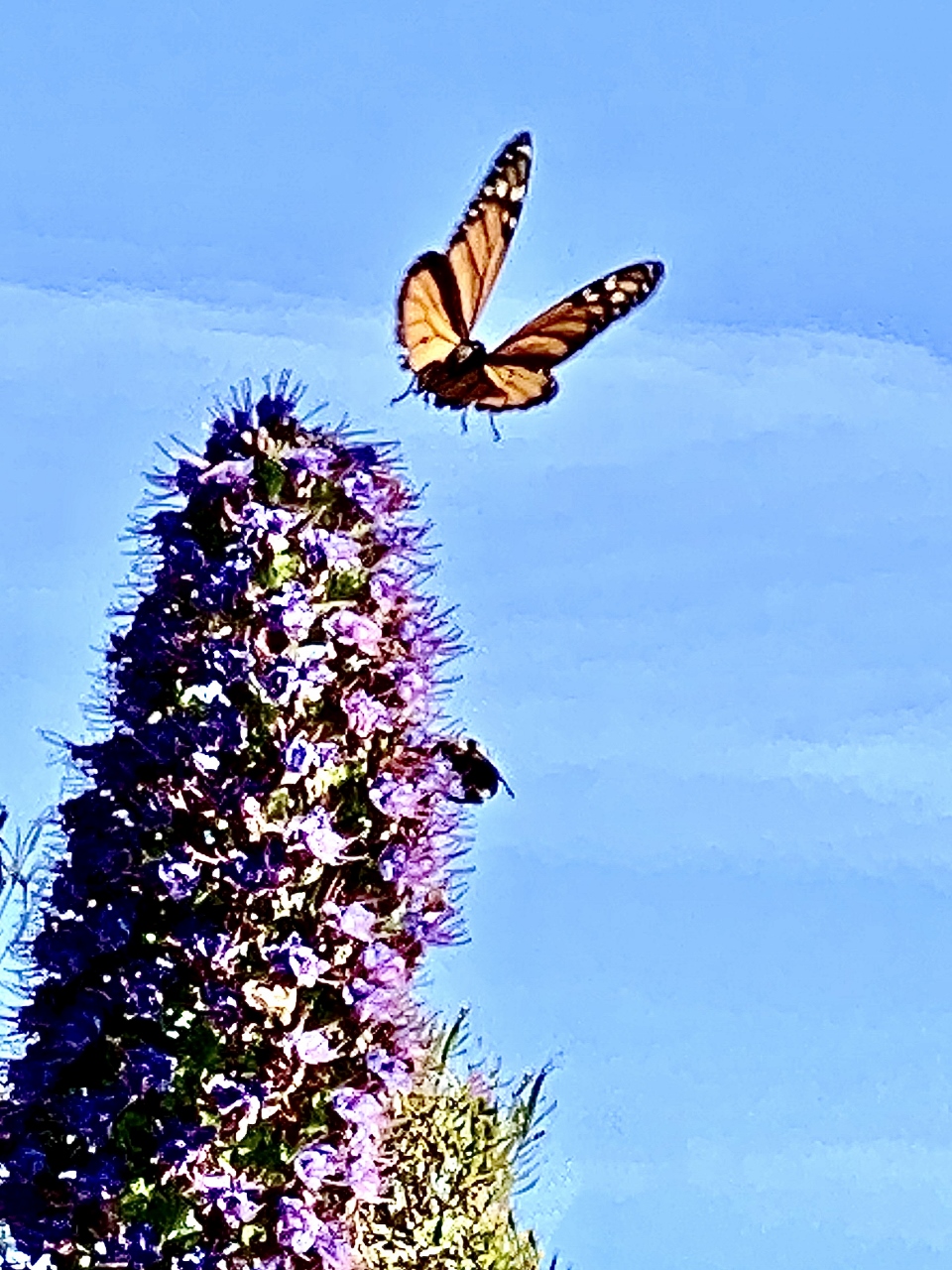
And in Timber Cove Grace O'Malley had this Monarch feeding on her Pride of Madeira bush.

Monarch Butterflies used to overwinter on the Mendonoma Coast but their numbers have been in a tailspin...until this past autumn/winter, where Monarchs have been seen in much larger numbers. Fingers crossed and recrossed that these beauties will thrive in the future.

Thanks to Judith and Grace for allowing me to share their photos with you here.

Unseasonably warm here today. 73 degrees this afternoon with low humidity. This isn't January weather...is it? Scott and Tree Mercer are seeing lots of Gray Whales headed south. They are a ways out, two to four miles, so binoculars are very helpful.