Tag Archives: Craig Tooley

Terry Pfardresher was hiking in a Redwood forest in Gualala when she heard a hissing sound. There on the edge of a Redwood stump was a Turkey Vulture chick. Terry took nature photographer, Craig Tooley, to the site and he got this photo.
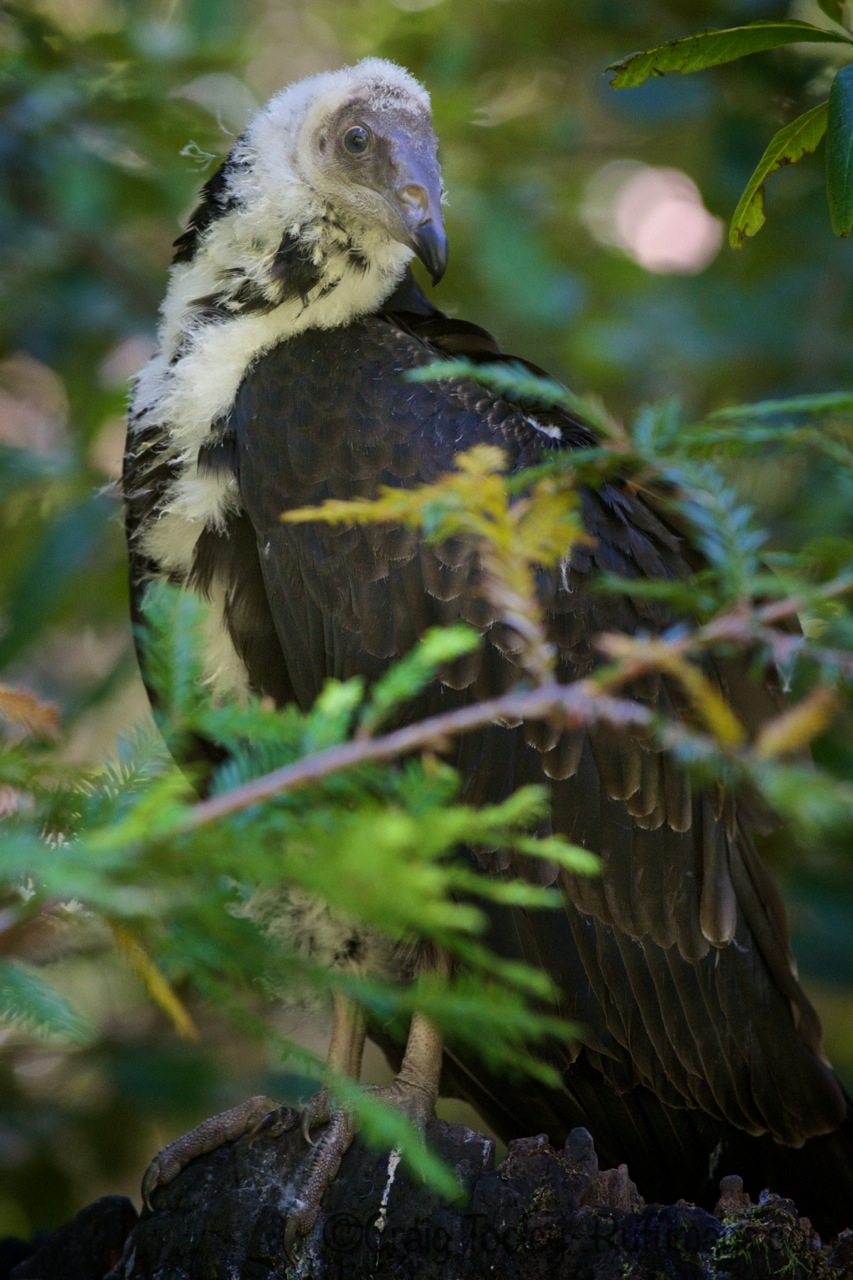
Fledgling Turkey Vulture by Craig Tooley

The Cornell Lab of Ornithology has this to say about their nests: "Turkey Vultures nest in rock crevices, caves, ledges, thickets, mammal burrows and hollow logs, fallen trees, abandoned hawk or heron nests, and abandoned buildings. These nest sites are typically much cooler (by 13°F or more) than surroundings, and isolated from human traffic or disturbance. While they often feed near humans, Turkey Vultures prefer to nest far away from civilization."

Here is the photo Terry took several days earlier. The young bird hopped down into the hollowed out Redwood stump just after she took this photo, so we're sure that's where the nest is.
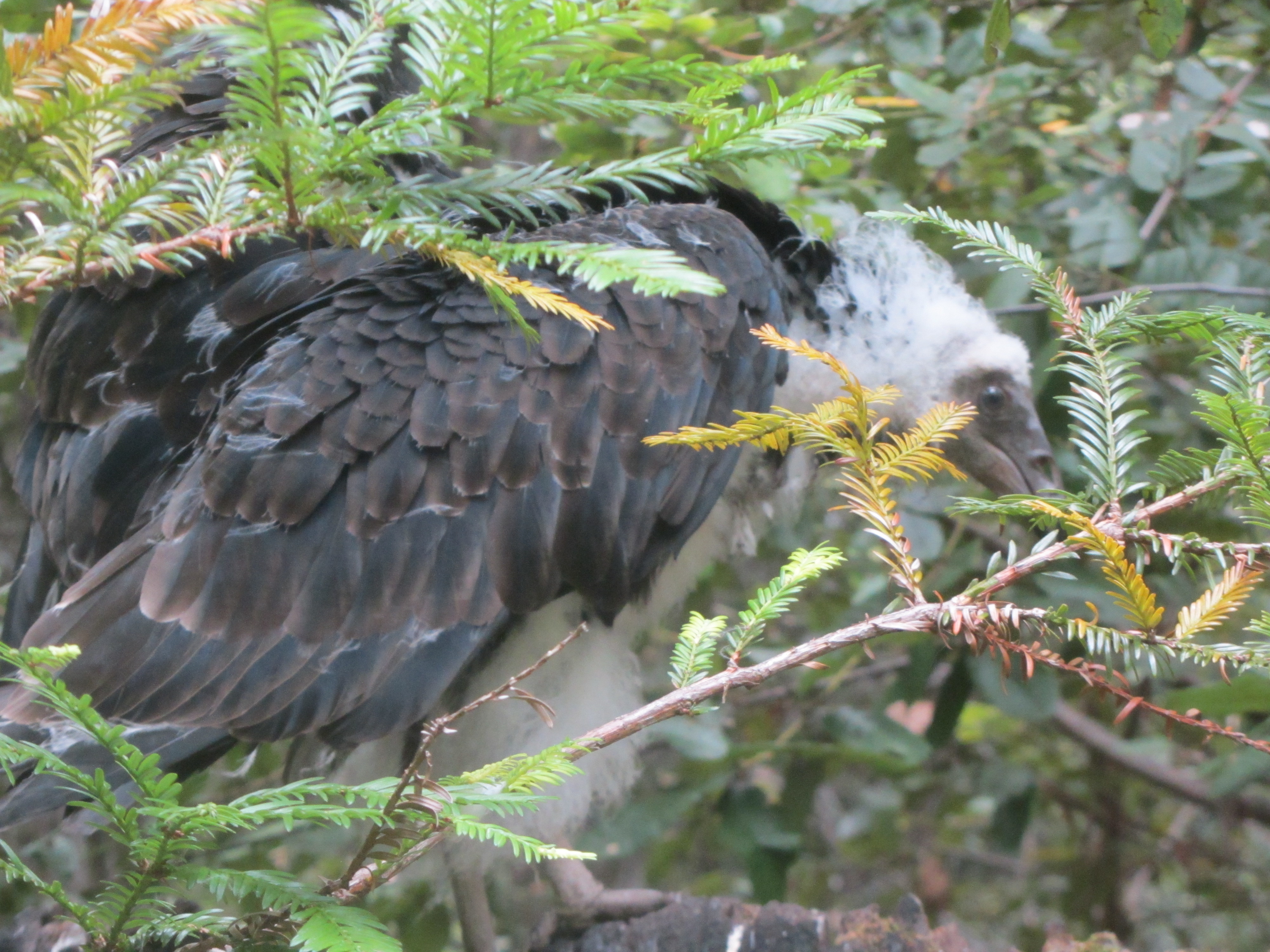
Fledgling Turkey Vulture by Terry Bold

This is a rare sighting and I thank Terry for sharing it with us. Thanks also to Craig for allowing me to share his photo with you here. To see much more of Craig's nature photography, here is his website: www.ruffimage.com
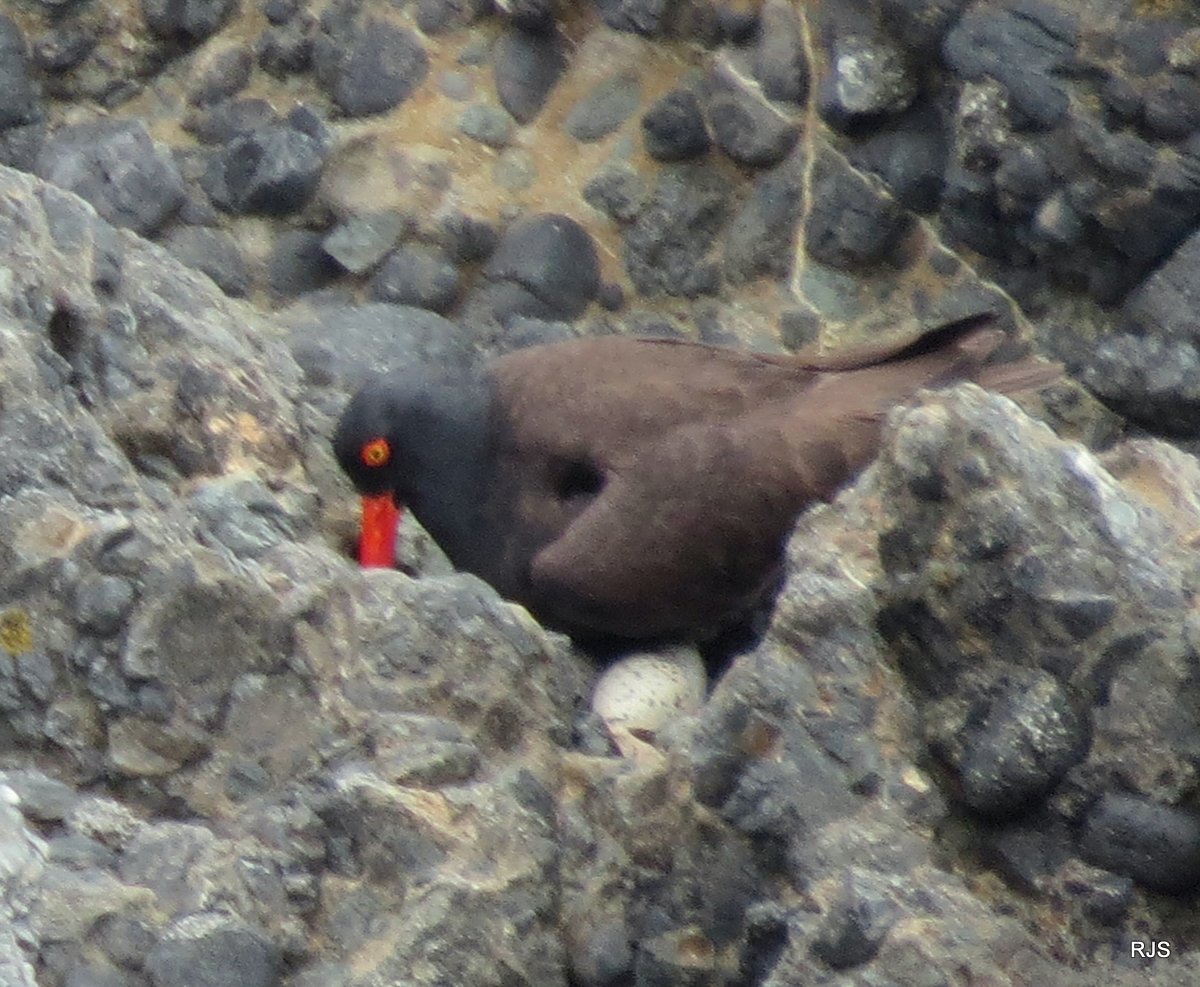
Black Oystercatchers nest on the Mendonoma Coast. Robert Scarola recently photographed an Oystercatcher with two eggs.

Black Oystercatcher  with 2 Eggs by Robert Scarola

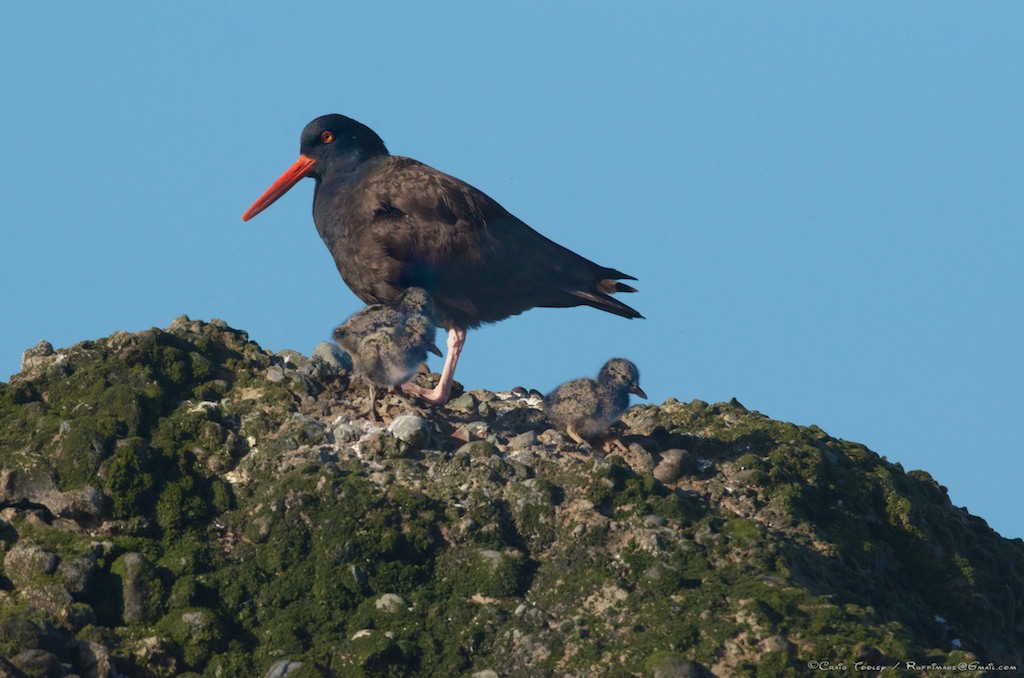
These eggs have hatched and fledglings have appeared. Here's a photo by Craig Tooley of fledglings.

Black Oystercatcher with three chicks by Craig Tooley

There are three chicks with this Black Oystercatcher. Can  you spot them?

These birds are quite noisy, even when flying. To hear their call, here is a link to the Cornell Lab of Ornithology: http://www.allaboutbirds.org/guide/Black_oystercatcher/sounds

Thanks to Robert and Craig for allowing me to share their photos with you here. To see much more of Craig's nature photography, here is his website: www.ruffimage.com
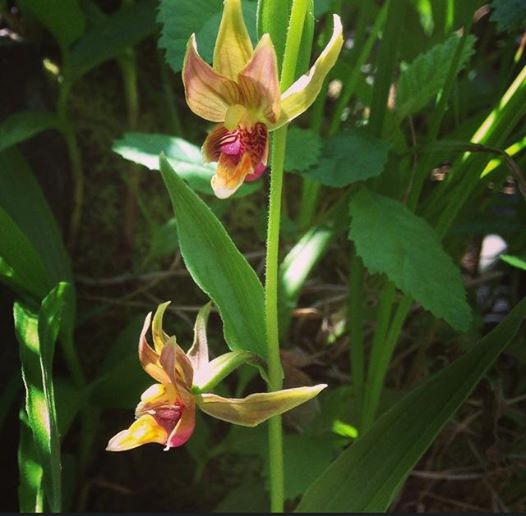
As their common name suggests, Stream Orchids grow near water. Holly McCarroll-Baker found some growing near a tributary of the Gualala River.

Wild Stream Orchid by Holly McCarroll-Baker

Their scientific name is Epipactis gigantean and they are also called Chatter Box Orchid. Why? Because the flowers are hinged. When a breeze hits them the petals move. Listen closely and you might hear what they are saying!

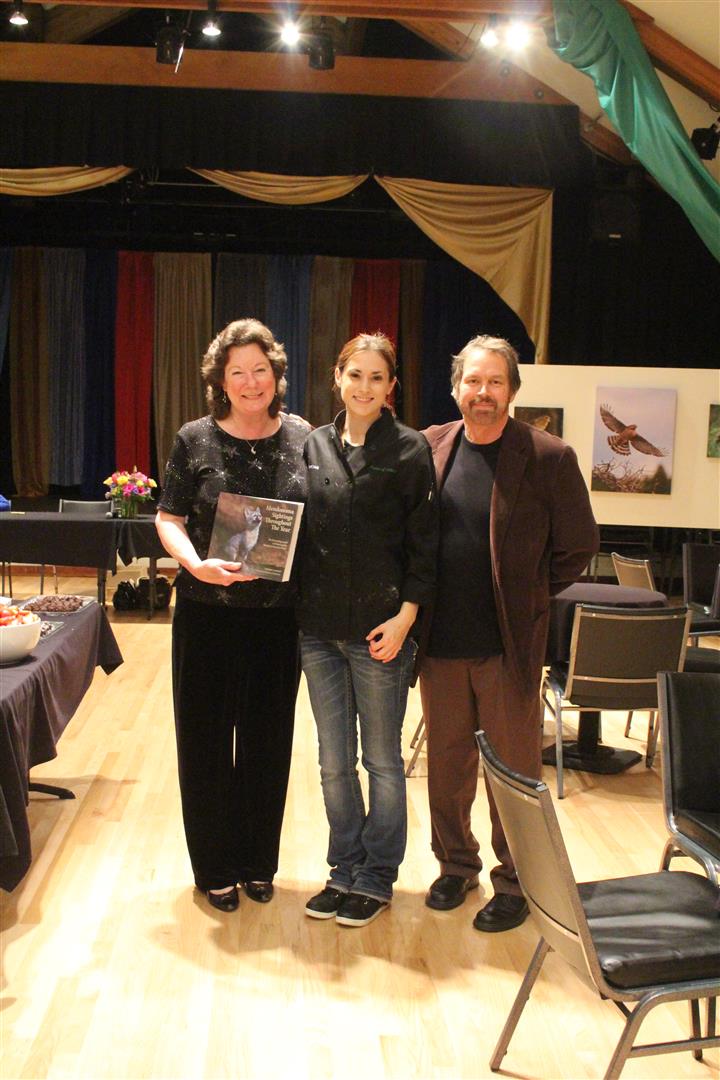
Holly is a caterer and owner of Peace of Nature Farms in Annapolis. She catered the book launch party for my book, Mendonoma Sightings Throughout The Year. Here she is with photographer Craig Tooley and me just before the doors opened.

Jeanne, Holly and Craig at book launch by Nan Brichetto (Large)


Along with quite a few appetizers, she made 1000 truffles, yes 1000 truffles! And not one remained.

Thanks to Holly for a great catering job and for allowing me to share her photo with you here.

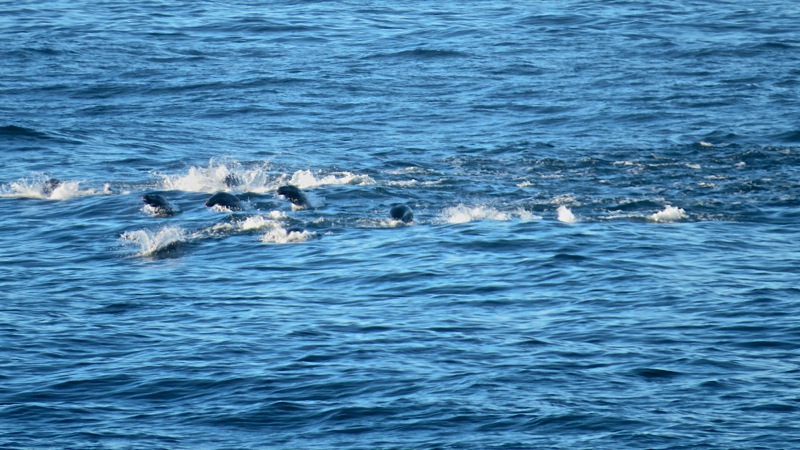
Sea Lions are fun to watch. They are a common sighting off the Mendonoma Coast. They are noisy, barking often. Killer Whales hunt them. Richard Kuehn got a photo of Sea Lions swimming hard and fast. Perhaps there was an Orca or two after them.

Sea Lions swimming hard and fast by Richard Kuehn

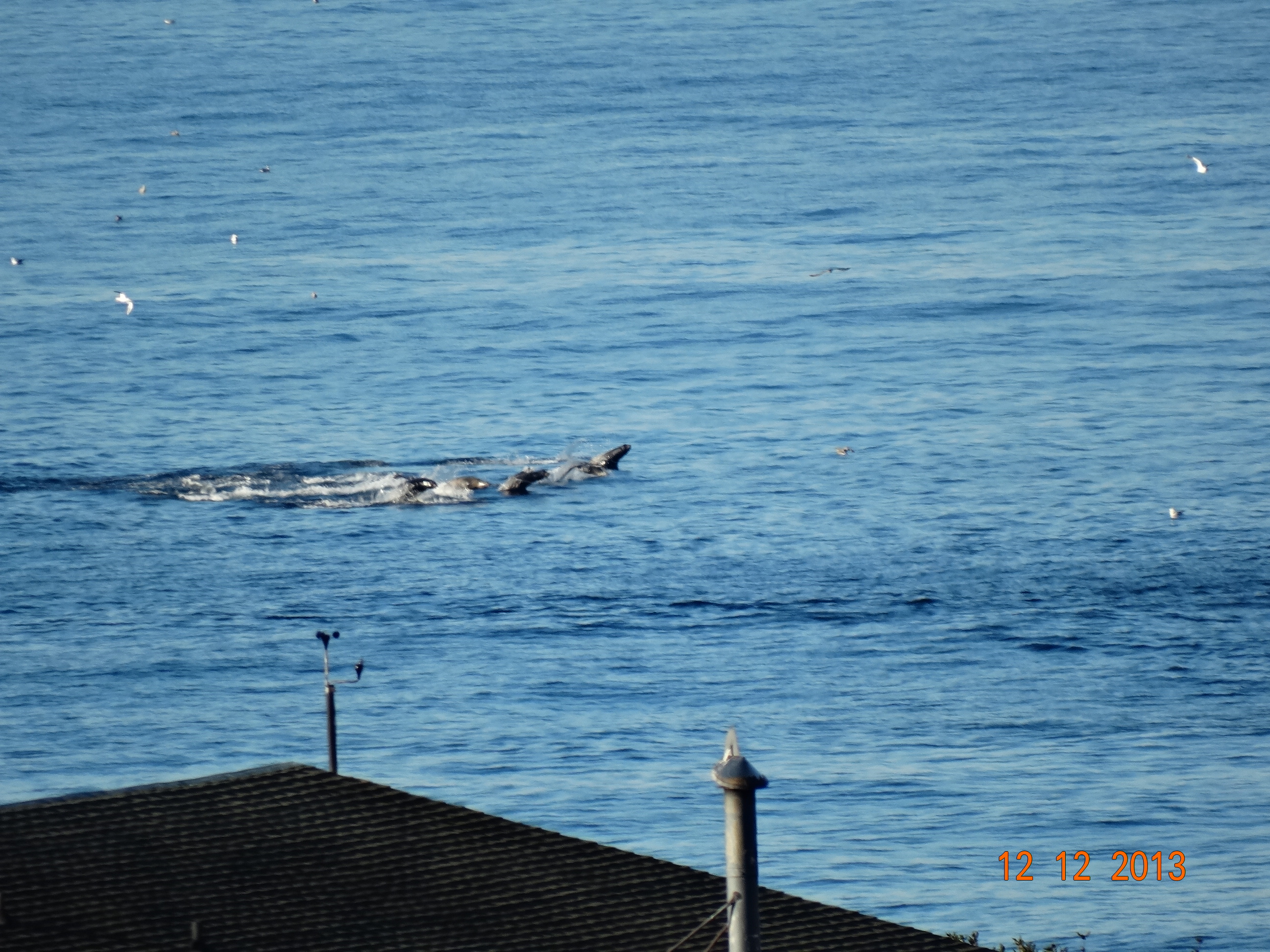
Sea Lions can look like porpoises, because when they swim fast they "porpoise" through the water. Jon Loveless photographed this action.

Sea Lions porpoising by Jon Loveless

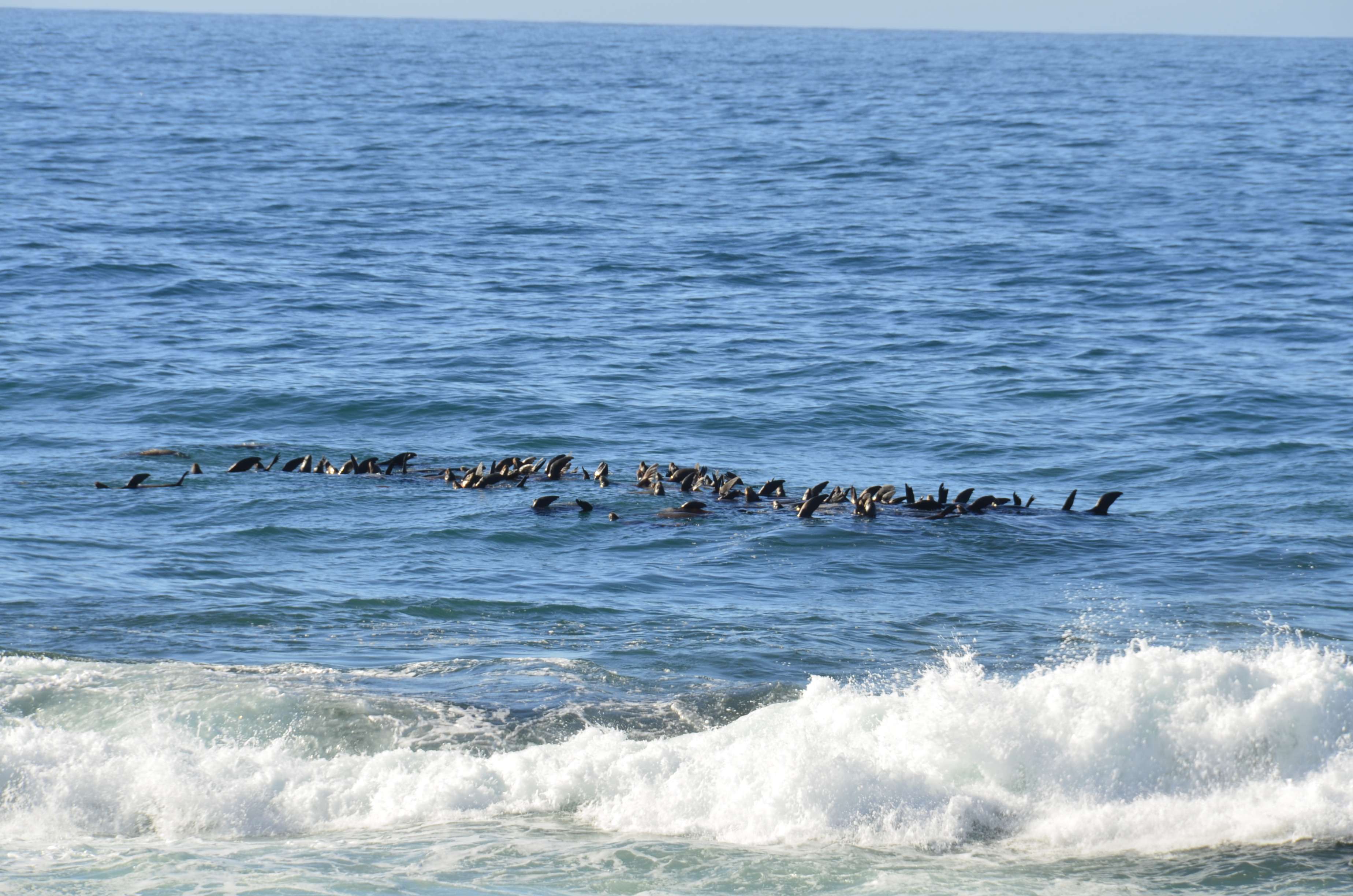
They also gather together in rafts, which is what Rozann Grunig photographed.

Sea Lions rafting off of TSR by Rozann Grunig

It is thought they raft together for protection. They hold a flipper up in the air to either warm up or cool down - thermoregulation.

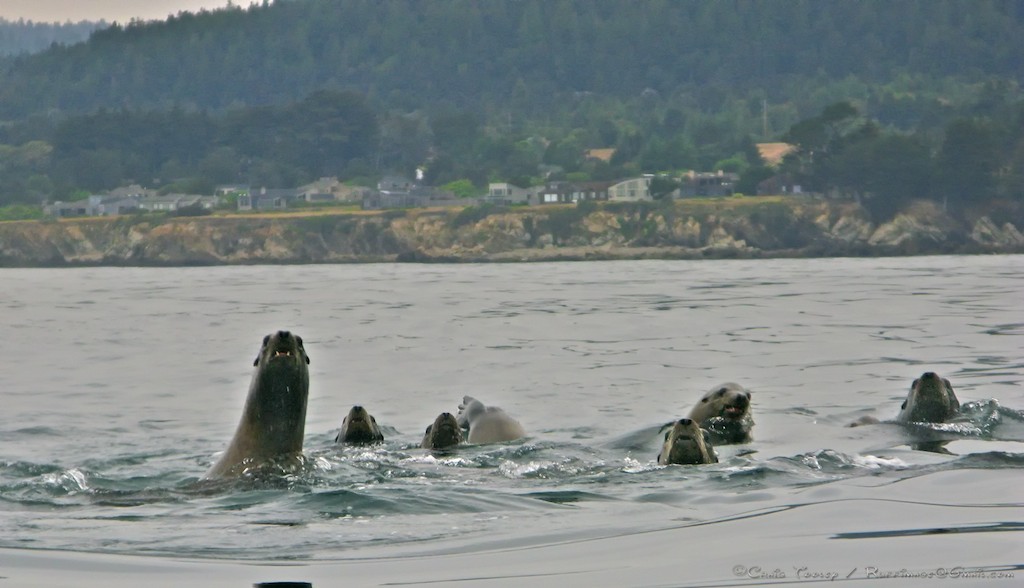
And lastly, Sea Lions are very curious. Craig Tooley was out kayaking when a group came in close to check him out.

Sea Lions seen from a kayak JUNE by Craig Tooley

Thanks to Rich, Jon, Rozann and Craig for allowing me to share their photos with you here. To see much more of Craig's nature photography, here is his website: www.ruffimage.com To see Rozann's nature photography, here is her website: www.highway1designs.com
Pelagic Cormorants nest on rocky bluff faces. There is a colony at The Sea Ranch and another at the north end of Hearn Gulch. Craig Tooley photographed a nest full of hatchlings off TSR.

Pelagic Cormorant nest with hatchlings by Craig Tooley

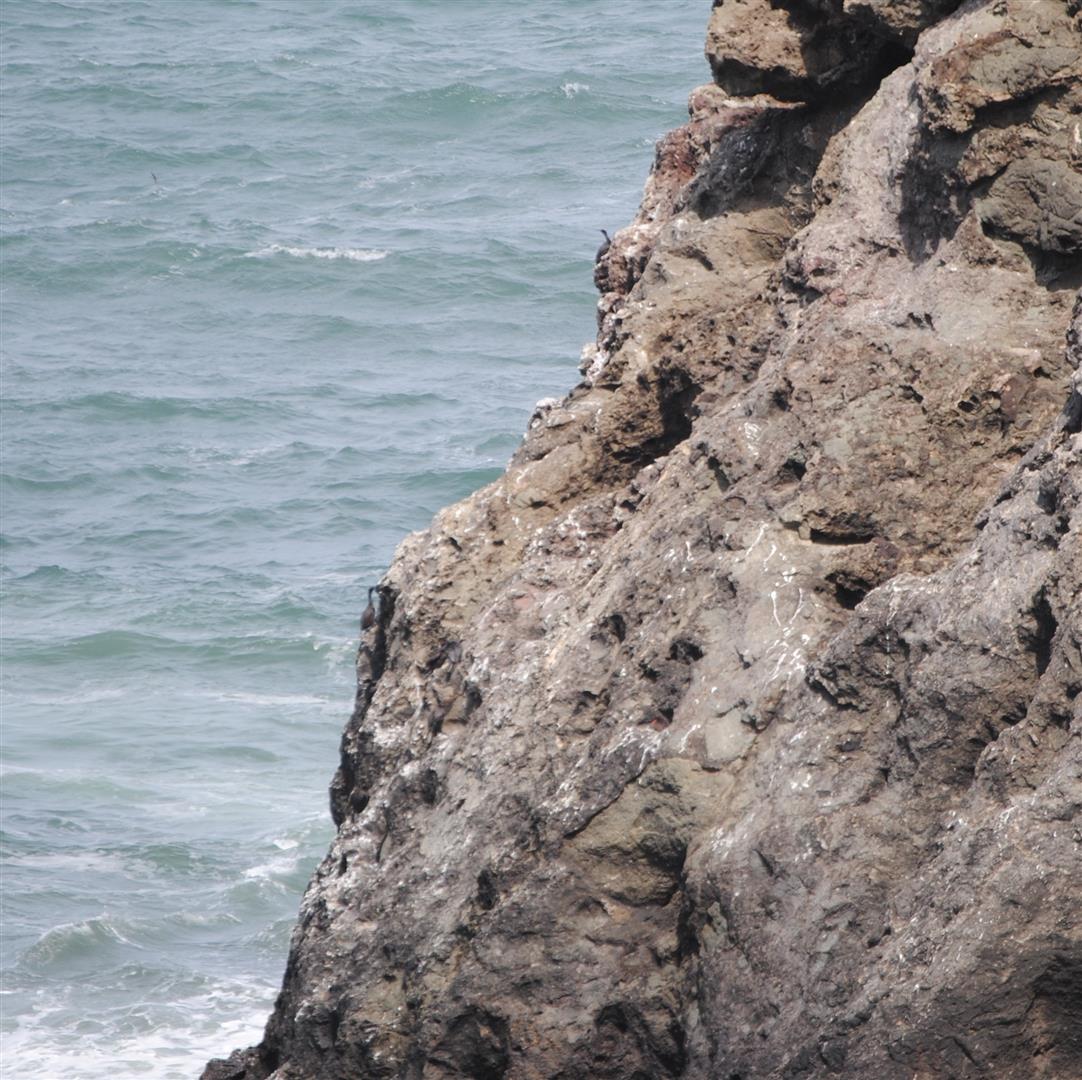
Rick and I didn't know Pelagic Cormorants were nesting at Hearn Gulch but when we hiked there recently we saw these black seabirds coming and going. If you look closely you can see two Pelagic Cormorants on the rock face. Other nests were obviously on the bluff facing west as the birds were flying to and fro.

Pelagic Cormorant nest at Hearn Gulch by Jeanne Jackson (Large)

Yes, it's too bad I don't have Craig Tooley's most excellent camera lens! To find Hearn Gulch, a fairly new public access gem, park at mile marker 10.0 just north of Iversen Road in Mendocino County. To learn more about new accesses, visit the Redwood Coast Land Conservancy website at: www.rc-lc.org

Thanks to Craig for allowing me to share his photo with you here. To see much more of Craig's nature photography, here is his link: www.ruffimage.com