Tag Archives: Bob Van Syoc

When there is a minus tide, some of us head to the beach to see what may be revealed. Cindy Morey did just that and found an animal rarely seen. She wrote, “I found something on our Irish Beach that I had never seen before and I have no idea what kind of crab it is. The body part was a reddish color with little bumps of white. The legs were like fur with nails at the end. I thought it was a piece of succulent until I picked it up and the legs moved. Looked more like a tarantula than a crab. It was like seeing an alien.”
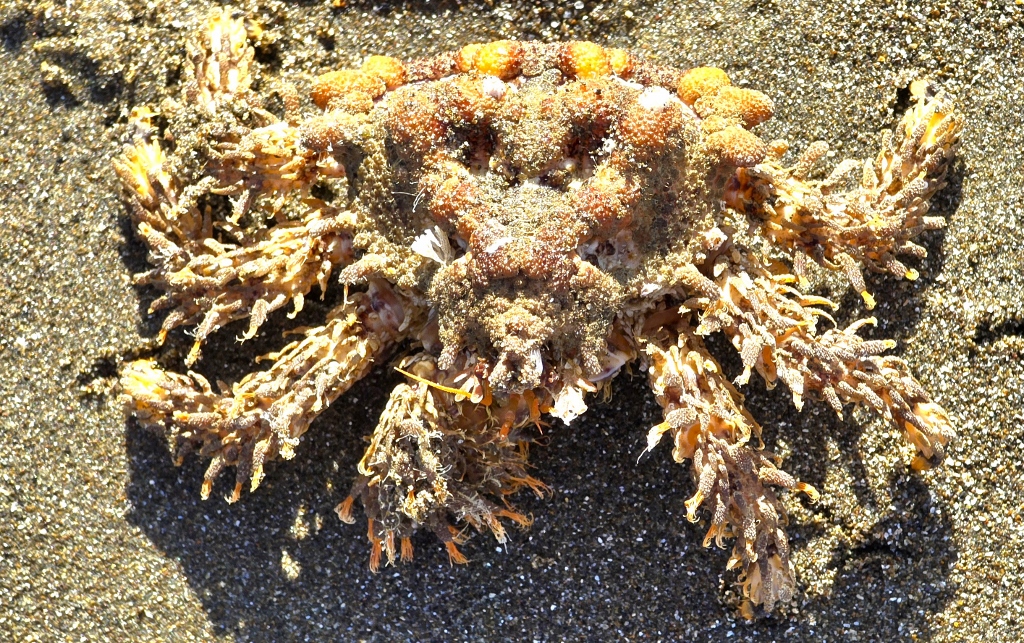
I sent Cindy’s photos to intertidal zone expert Bob Van Syoc. He wrote, “Ah, looks like a rhinoceros crab!  I’m not too fond of the common name, but easier to pronounce than Rhinolithodes wossnessenskii, perhaps.  Count the ‘walking’ legs.  Eight, four on each side.  It’s in the same family as King crabs, the Lithodidae.  This cryptic creature blends in with rocky rubble and sponge covered rocks.  Nice photos.”

Here is a look at the underside of this crab.
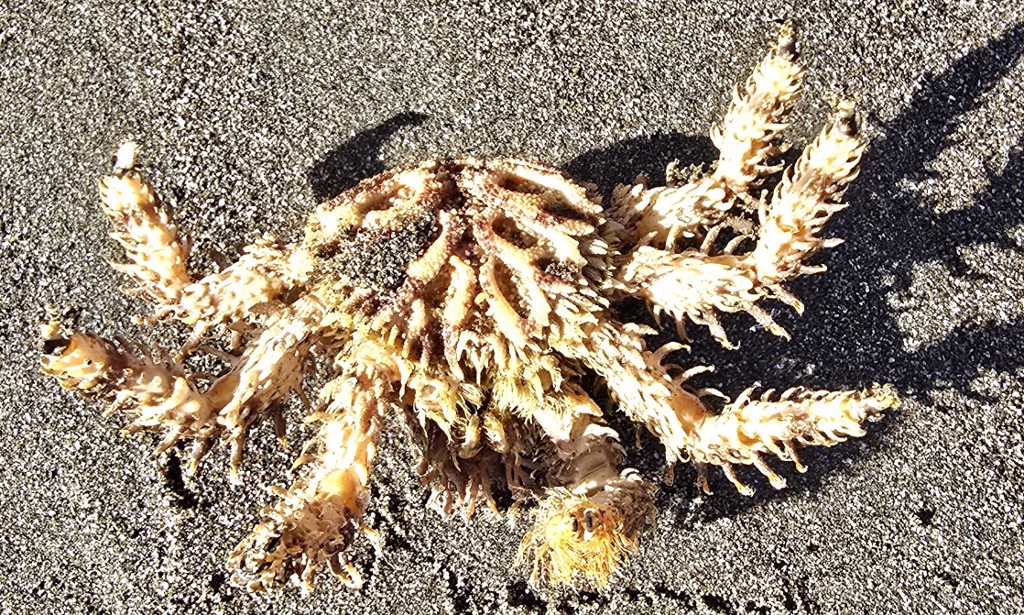
Cryptic is a good way to describe this crab that stays hidden most of the time. They live at depths of 20 to 240 feet on rocky seafloors, often hiding in deep crevices. They are common in Alaskan waters and their southern boundary is supposed to be Crescent City.

In the twenty years I've been writing my Mendonoma Sightings column, I have never received a sighting of this unusual-looking crab...until now! I did share Cindy's photos with the folks at NOAA and they were happy to learn about this.

Thanks to Cindy for allowing me to share her photos with you here.

It's raining here this afternoon! Yes, after over a week of sunny and warm weather, it looks like the pendulum has swung back to rainy and cooler, as it should be in winter!
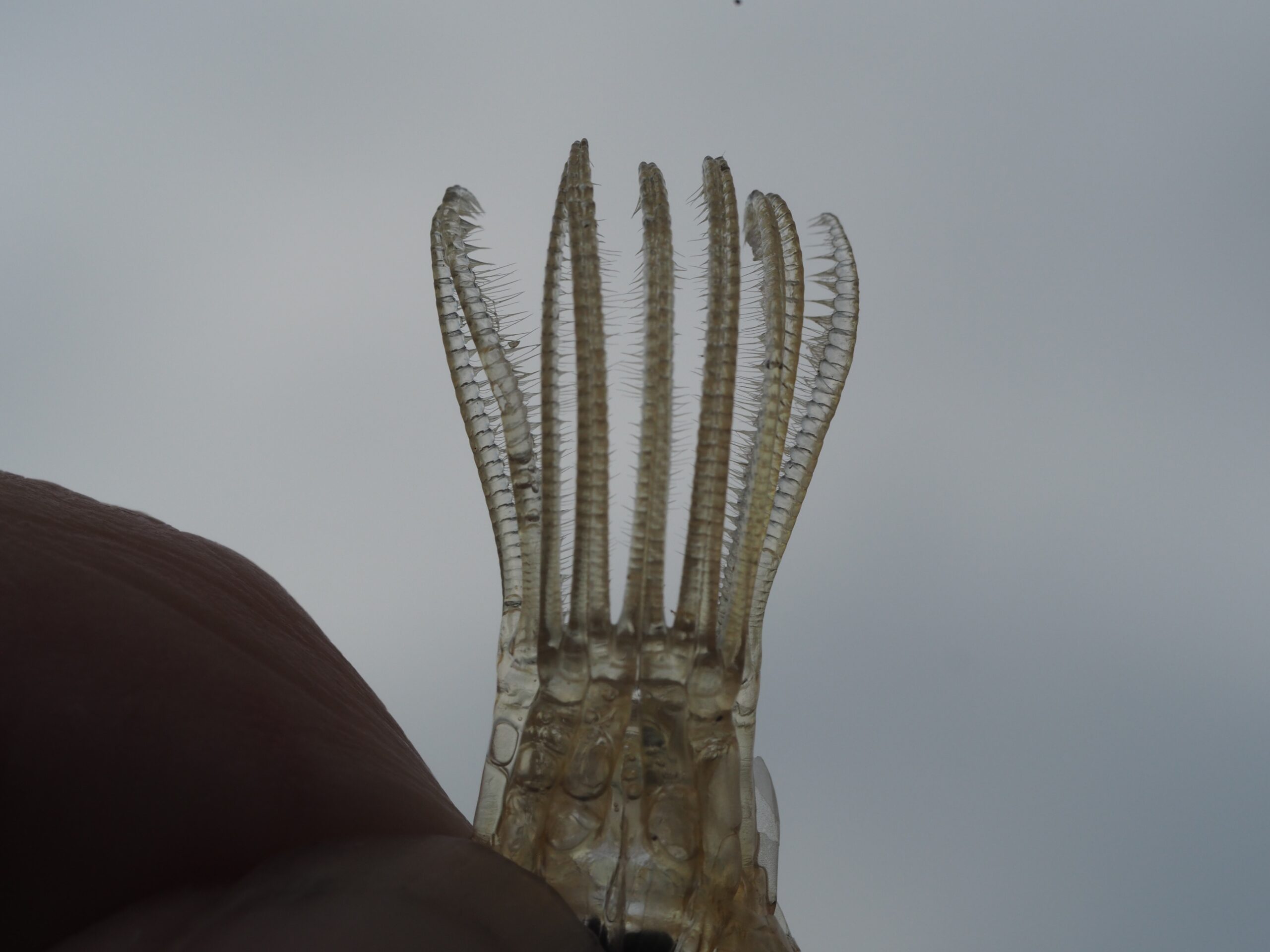
Marilyn Green found this object washed up on a beach at The Sea Ranch.

Bob Van Syoc knew what it was. I found it eerily beautiful. Bob wrote, “Very beautiful indeed! This is the shed exoskeleton of a Barnacle.  Barnacles live inside a permanent calcareous shell attached to the bottom, but inside of the shell they also have a chitinous exoskeleton (like crabs and shrimp) as they are crustaceans. To grow they must shed their old exoskeleton and then form a new larger one. The shed exoskeletons float around and some wash ashore.”

So, inside the Barnacles' shell is an exoskeleton. And they outgrow it and have to shed it. Who knew? Lucky for Marilyn and me, Bob knew!

Thanks to Marilyn for her ability to spot small, unusual items and for allowing me to share her photo with you here. Also thanks to Bob for his expertise.

Cool this afternoon, with a breeze. We have rain coming in starting tomorrow night. Happy first full day of spring!

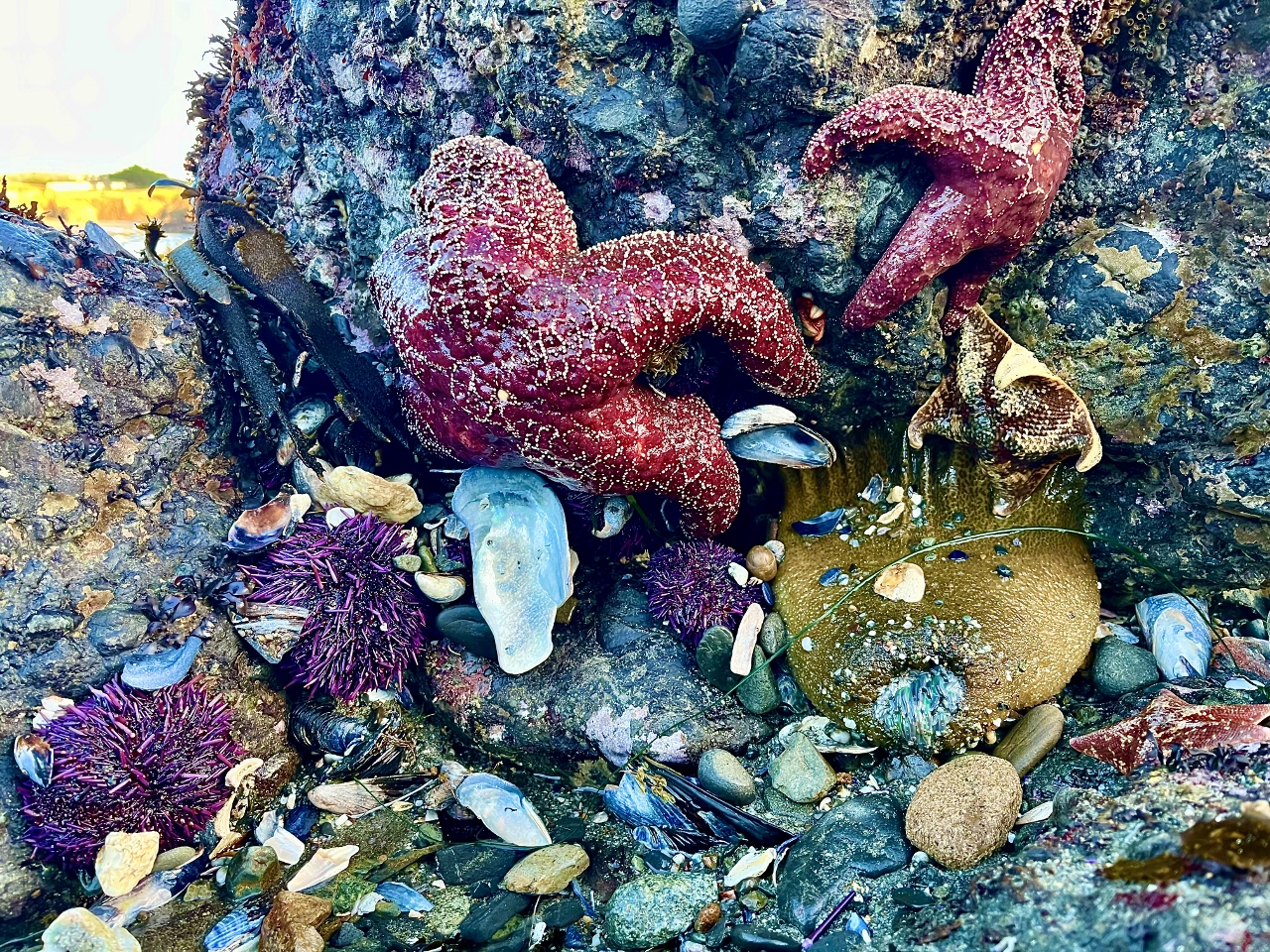
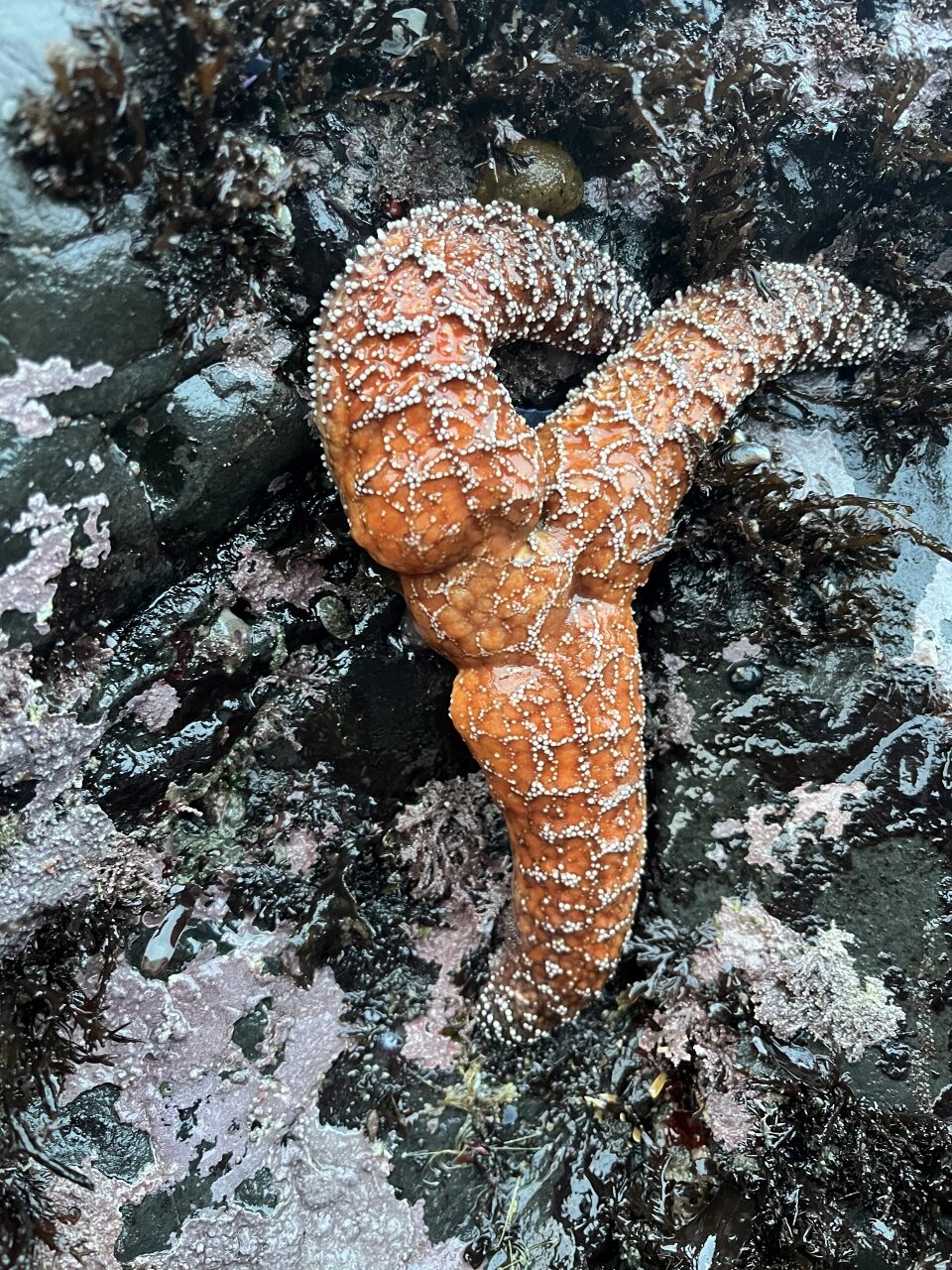
Roxanne Holmes wrote, “This Sea Star is alive and seems to be doing okay despite missing a couple of ‘legs,’ or whatever they’re called. I check on it every low tide, and it changes position but continues to do well. Do Sea Stars thrive without all their limbs? What destroys or severs their limbs? Will the limbs grow back?”

Bob Van Syoc to the rescue. He looked at Roxanne’s photo and wrote, “Yes!  Sea Stars can regenerate new arms as long as the center disc is intact.  Some can lose all but one arm and survive to regrow the other four arms.  In this state they are called ‘comets’ because of the smaller arms forming the star and the larger arm the ‘tail’ of the comet.  Arms may be lost by injury (crushed by a rock) or by predators attacking them, though our Stars have few predators.”

Here's a photo Roxanne took of a happier sight - two Ochre Stars (yes, they come in different colors!), a Bat Star, Sea Anemone, and several Purple Urchins and more. A kaleidoscope of colors!

Thanks to Roxanne for allowing me to share her photos with you here.

Cool, breezy with dark clouds now and then. More weather headed our way in a couple of days.

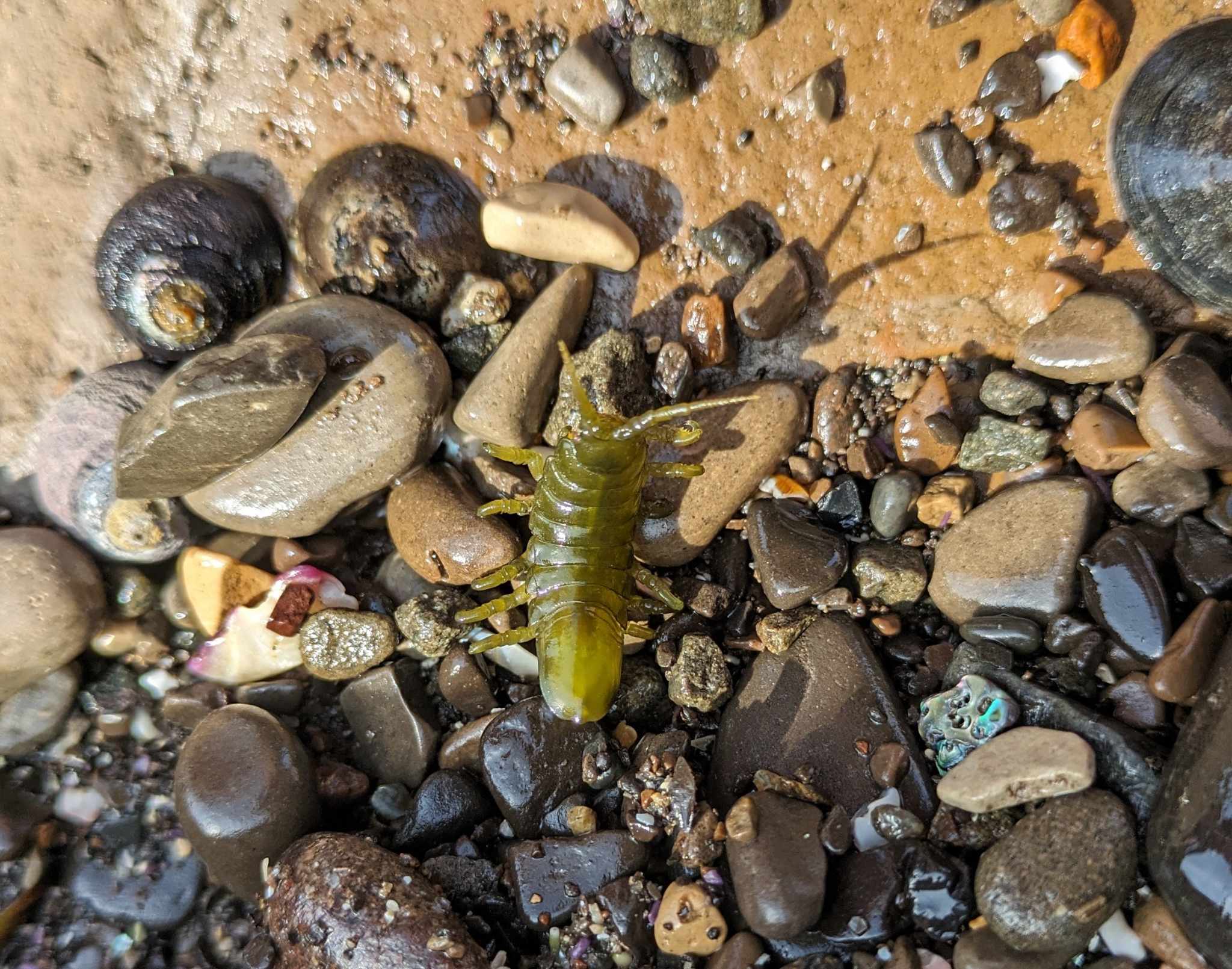
Emily Martinek and family were visiting parents Claire Skilton and Bill Ranseen. Claire wrote, “We had a very successful trip to the tidepools: Gulls feasting on Abalone, Sea Urchins with spines, the tiniest Hermit Crab ever, Chitons, Sea Anemones…thrills galore!”  Emily and her young daughters, Colette and Katherine, noticed an unusual creature. Claire wrote further, “Emily is sending you a photo of a strange-to-us tidepool critter. Maybe you know it.”

I didn’t know what it was, but Bob Van Syoc came to the rescue. He wrote, “The little green critter is an Isopod in the genus Pentidotea…probably Pentidotea resecata, the Eelgrass Isopod. They tend to take on the color of the plants they eat, so some are greenish, some reddish, and some brownish.  The sharp tips of their legs function nicely for gripping eelgrass or algae or your finger!”

I didn’t hear of any pinched fingers, so it sounds like Colette and Katherine were looking and not touching, a good idea when exploring the tidepools.

Thanks to Emily for allowing me to share her photo with you here.

It's sunny or foggy depending on where you are, but the constant today is the WIND!

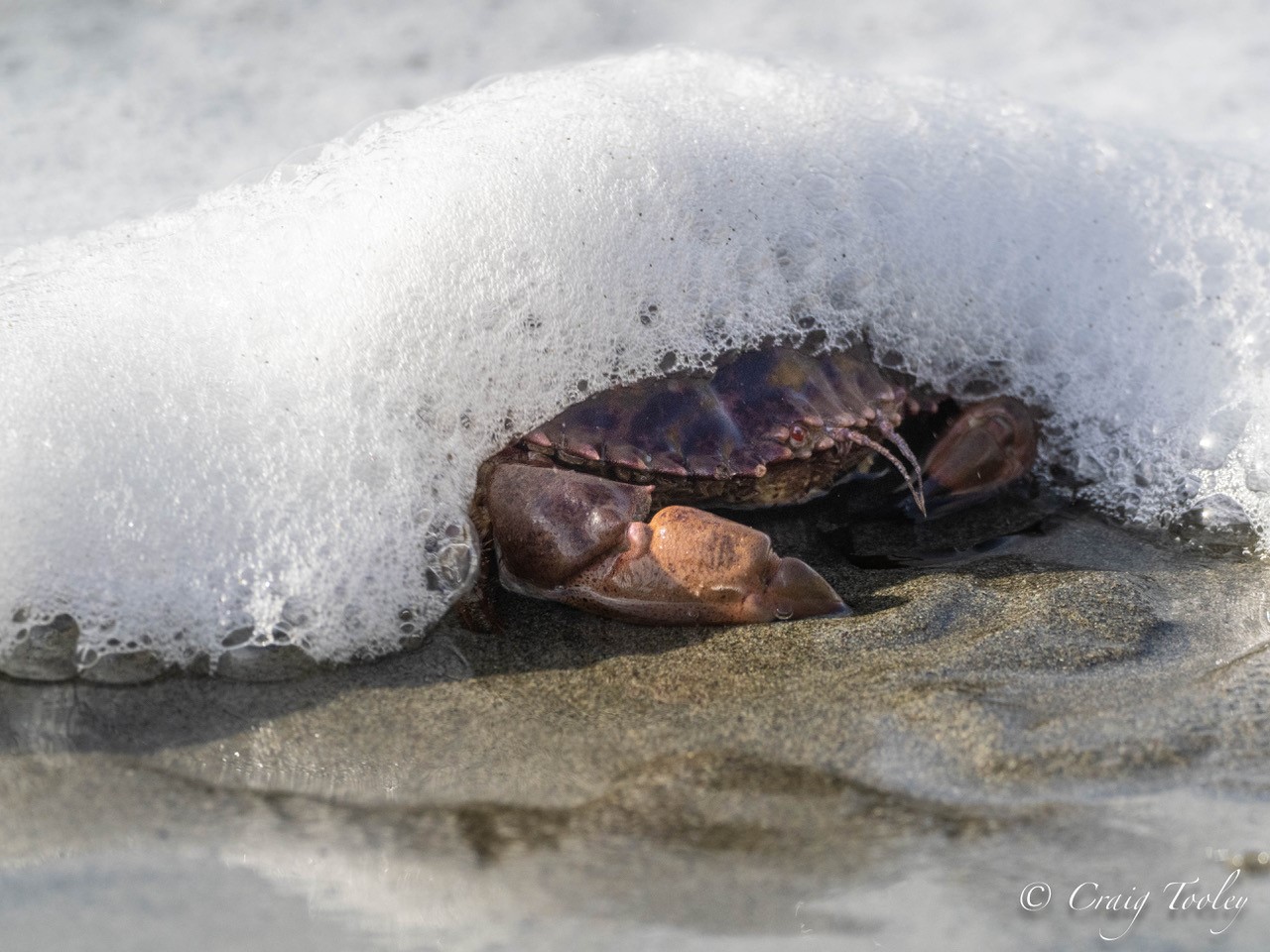
Craig Tooley and Rita Peck visited a local beach. Craig wrote, “We were walking along the beach and discovered this Crab, trying to escape from the big waves, I guess.”

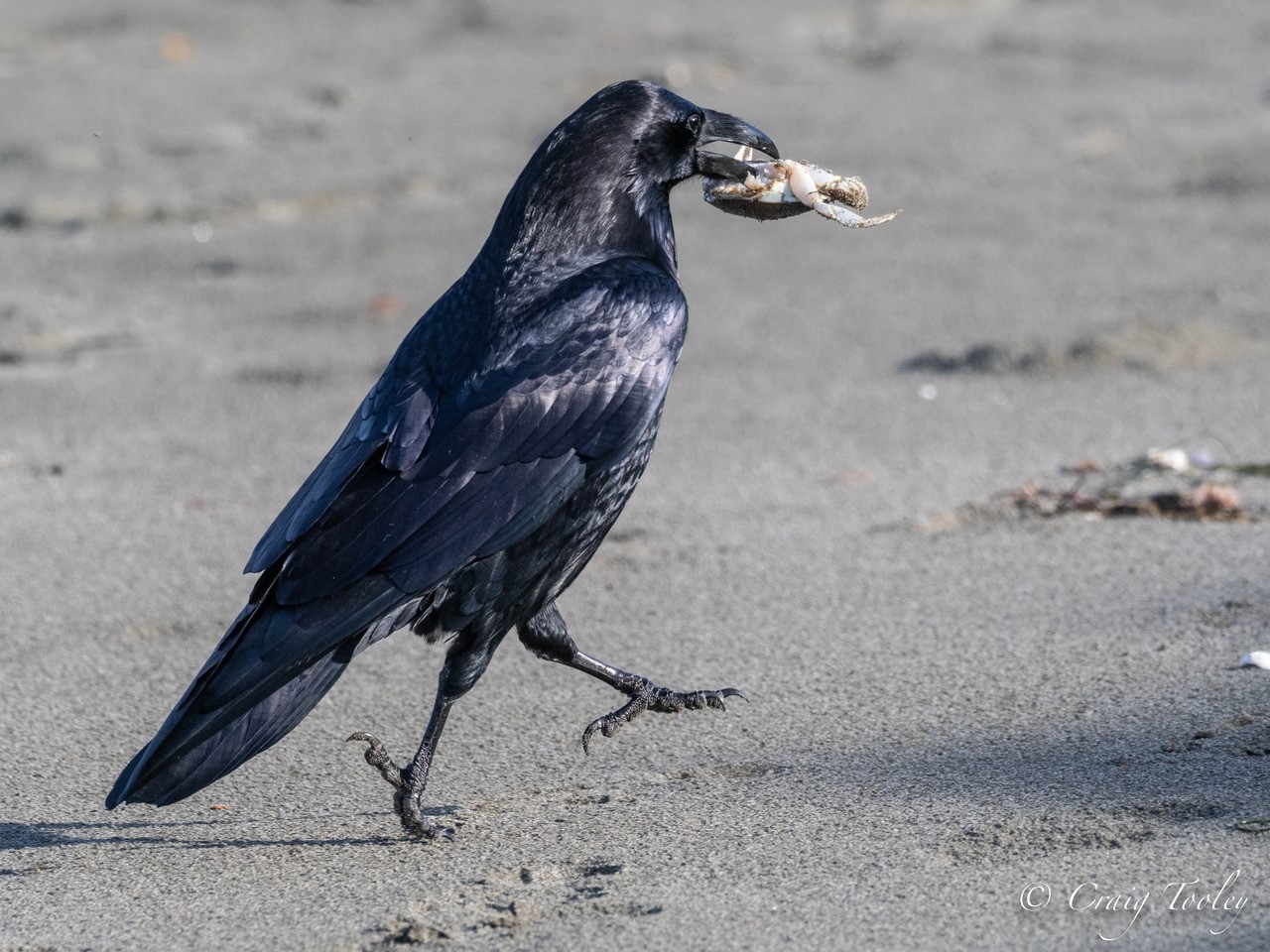
Then a bad boy or girl appeared, a Common Raven. The Raven spotted the Crab and nabbed the Crab for its dinner.

Craig wrote further, “I guess this Raven heard that crab was the thing to have as part of a New Year's celebration.”

I was curious as to what kind of crab Craig had photographed so I send his photos to Bob Van Syoc. Bob wrote, “The crab looks like Cancer antennarius, a Rock Crab that lives in rocky (duh) intertidal reefs.”

ah, the food chain in action. It's not always easy to watch!

Thanks to Craig for allowing me to share his photos with you here. To see much more of Craig's nature photography, here is the link to his website: http://www.ruffimage.com

A smaller storm is hitting the Mendonoma Coast this afternoon. When it is done, the forecast is for sunny and warmer weather. We need it to dry out!