• 4 Comments

I haven't seen these birds before, but I'm not the best birder in the world, that's for sure! The birdhouse is an old bluebird birdhouse that has remained empty through the years. Boy, were Rick and I surprised to see two Bewick's Wrens entering the birdhouse from an opening by the roof, and then exiting through the entrance/exit hole, a few minutes apart. Squeaks were heard from the chicks inside.

This wren, which is described as "noisy and hyperactive," has a distinctive call. It ends with a lispy "twee, twee, twee." I've been wondering what bird was making those calls, so I'm happy to come face to face with this little bird with the white eyebrows. Nice to meet you, Bewick's Wren! Glad you brought your entire family to our place in Anchor Bay.

To hear their call, here is a link to the Cornell Lab of Ornithology: https://www.allaboutbirds.org/guide/Bewicks_Wren/sounds

Salt Point State Park is know for its tafoni. Tafoni are also called "swiss-cheese" rocks. Beth Kattleman recently photographed tafoni with the wildflower, Seathrift, blooming in the foreground.

The natural rock cavities are caused, in part, by the salt spay of the ocean's waves.

Thanks to Beth for allowing me to share her photo with you here. We are getting a few drops of rain today, and then...and then...sunny, warm weather is the prediction for this weekend!

I'd say pretty darn wonderful! Paul Brewer was the lucky person who saw a Bald Eagle in the morning, and Gray Whales in the afternoon. I love the first photo where it looks like the eagle is skimming the sandbar with his wing.

And then the Gray Whale.

Paul also photographed a calf, but that photo will be shared another time. Thanks to Paul for allowing me to share his photos with you here. To see much more of Paul's nature photography, here is his website: www.capturingnatureswonders.com

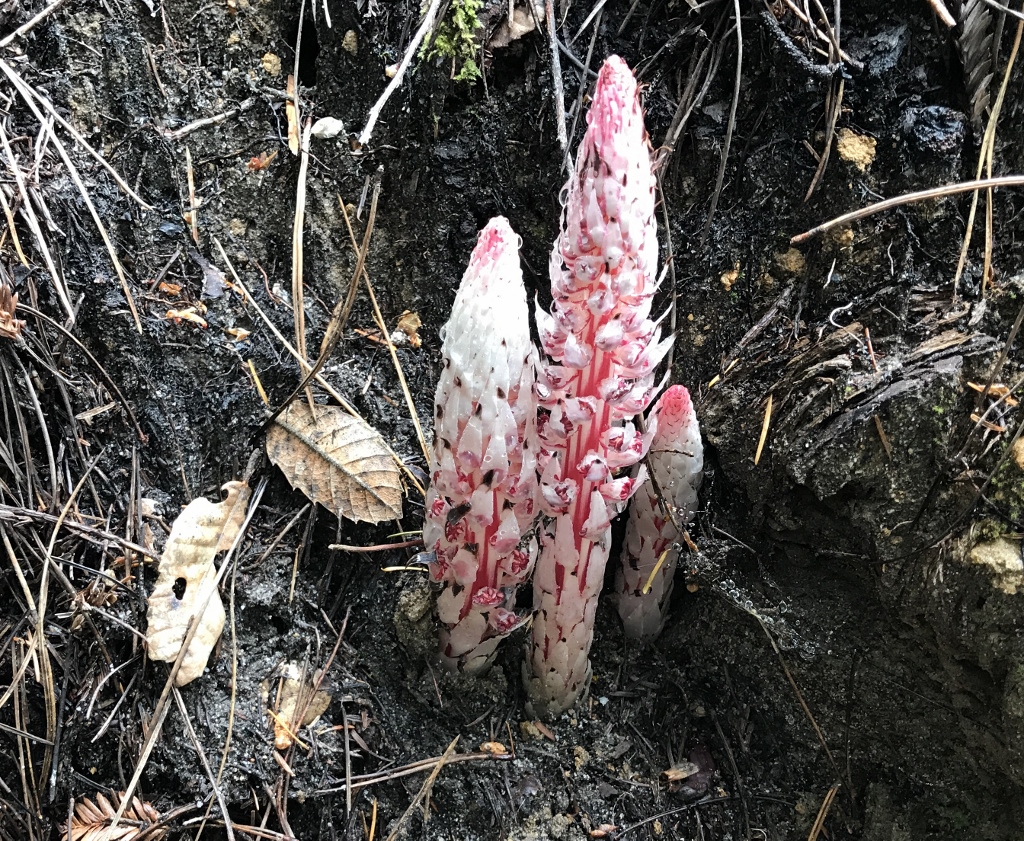
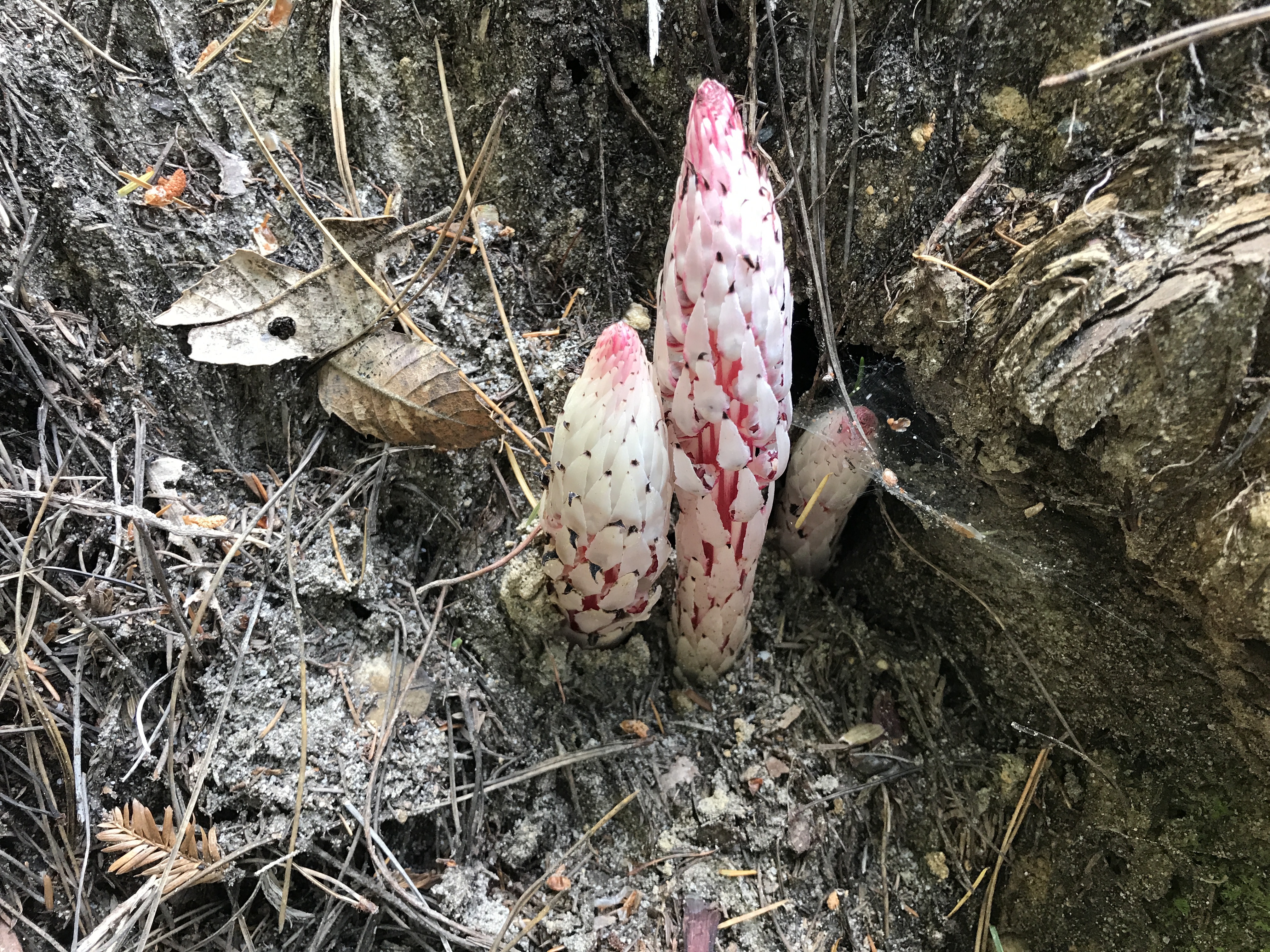
We have found a family of Gnome Plants, more than fifteen of them, growing by a trail we use every day. There were three plants growing nearby on the side of the trail that we thought were gnome plants too. But they grew into something quite different - Sugarstick, Allotropa virgata. The first photo was taken on May 11th and the second on May 6th. You can see the bigger one is just beginning to bloom.

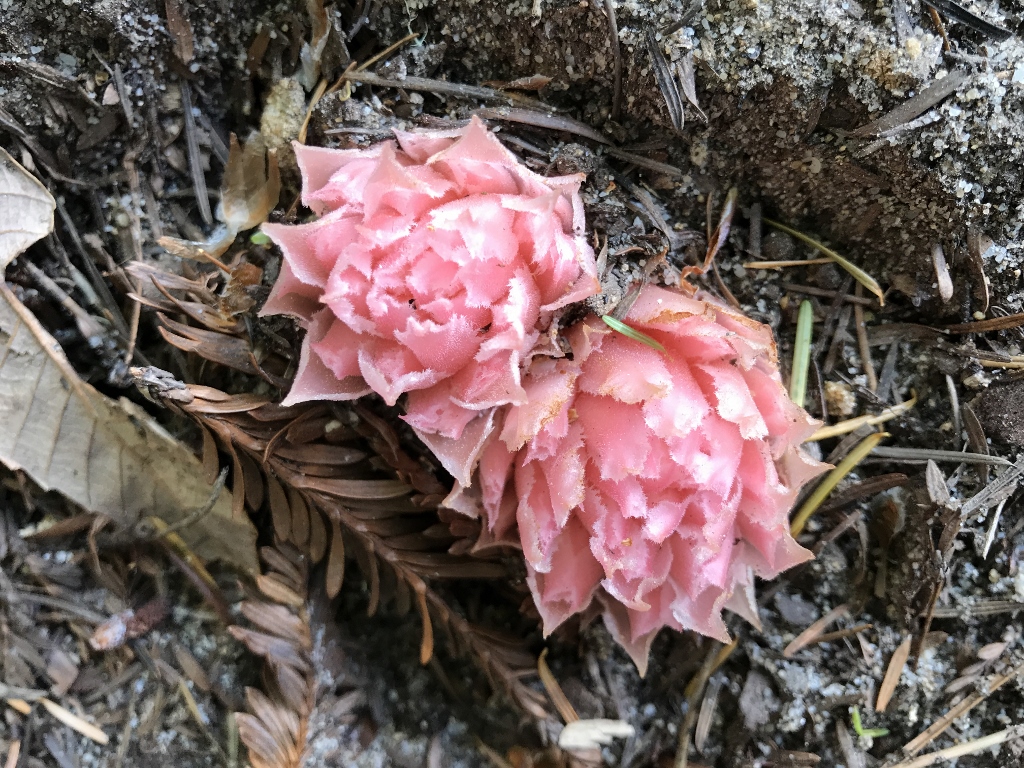
And here's a look at two of the Gnome Plants, Hemitomes congestum.

Both of these plants get nutrients from underground fungi, which are on the roots of nearby trees. A fun look at something unusual for you today!

The Black-tailed Deer usually begin birthing their fawns around the first of May. Clay Yale photographed twins, quickly following their mother down a road on The Sea Ranch.

Pam Powell photographed a Doe in the process of molting. This time of year, Deer lose their winter coat and grow in a summer coat. They can look quite patchy for a while, as the hair doesn't grow in evenly.

And, my, what big ears this Doe has! Thanks to Clay and Pam for allowing me to share their photos with you here.

It is cool, sunny and breezy on the coast today, after overnight showers. Beautiful clouds are scooting across the sky, making it hard to turn away from the show.