Craig Tooley photographed the sun yesterday. The terrible fires that began Sunday night inland from the coast have brought smoky skies. This was taken in the middle of the afternoon.

The smoke is less today, but we can't relax until the first rains come. Steve Paulson of KTVU TV said the long range forecast shows rain possible Oct. 20th. May it be so!

Thanks to Craig for allowing me to share his photo with you here.

Pacific Wrens are hard to photograph, at least for me! They used to be called Winter Wrens, but their name was changed a few years ago. This little bird with the upright tail was foraging near a small pond in our creek. Our neighbor, Karen Tracy, pointed this bird out to me. Thanks, Karen!

Also seen was another inconspicuous bird, a Brown Creeper.

In the bottom photo, the Creeper caught a bug!

We are having a warm day here on the Mendonoma coast today. With the clear horizon last night, Rick and I saw a small green flash at sunset, bringing feelings of gratitude and happiness.

Doug Forsell just sent this in:

"I was out on Manchester Beach yesterday (Friday Oct. 6) at about 5:30 PM walking south from the Stoneborough Road entrance, and about 500 yards from the mouth of the river, I came upon a raccoon feeding at the edge of the surf. Wanted to get a picture so I slowly walked towards it.  Kept expecting it to run away, but even after it saw me it continued to feed. I was about to walk away when it finally turned towards me, hunched its back and began acting very aggressive. It even made a couple of charges towards me, of about 5 feet.

I continued south and every once in a while looked back with my binoculars and the animal remained vigilant with his back raised watching me for about five minutes until I disappeared from sight. Any normal animal would certainly have run for the dunes so I suspect this animal may have rabies or some serious mental issues.
Thought you might want to put a notice on your blog to let people know that there may be a rabid raccoon in that area. Especially important for those who take their dogs to the beach. While of course dogs are supposed to be on leashes, most of the dogs I see there are not on leashes.  I think that raccoon could do serious damage to the biggest dog."

***Please keep your dog on leash while on Manchester Beach until this Raccoon is found and tested.***

Thanks to Doug for the warning and his photo too.

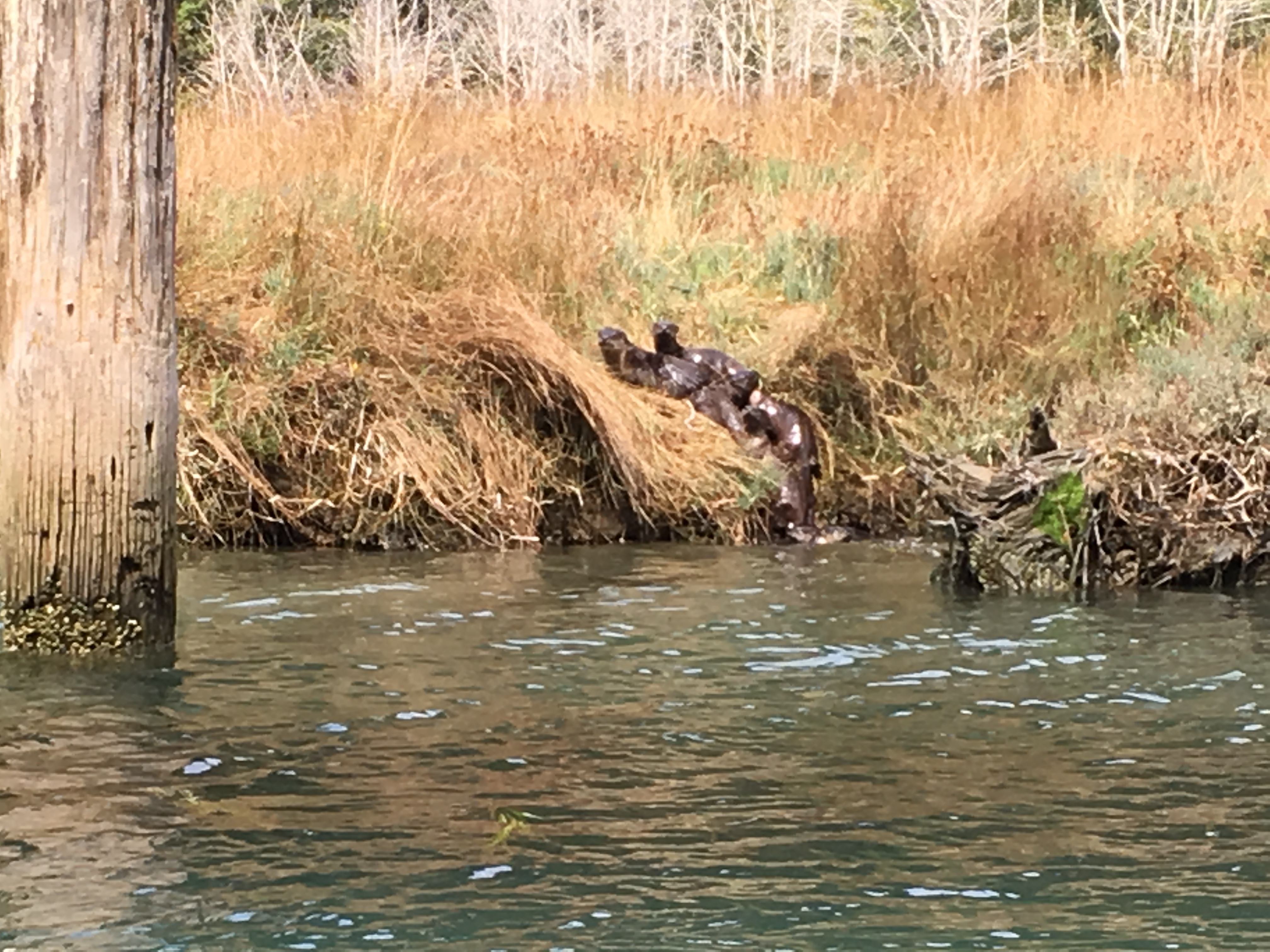
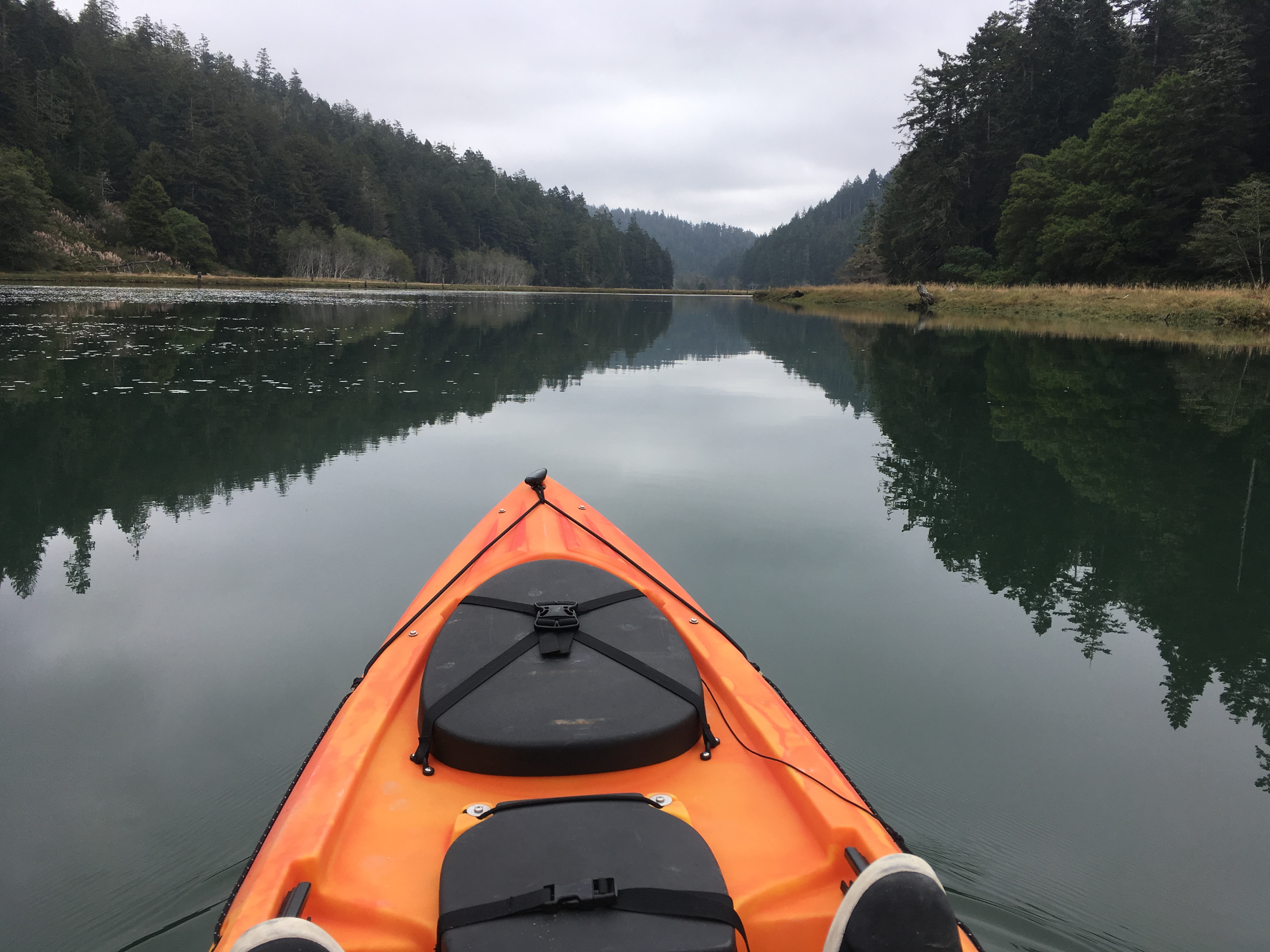
Loren Adrian wrote, "Here are a couple of shots from Big River right after the big heat wave. There was a family of [River] Otters on the lower end of the river, a mother and her four offspring. My wife and I paddled up the river about two hours, then returned after we came across a log jam. It was a nice day on Big River.”

If you haven’t explored the trails at Big River, you are in for a treat. The Mendocino Land Trust acquired over 7000 acres in 2002. There is a ten-mile trail, formerly a haul road, that connects Big River Beach to Mendocino Woodlands State Park. You can hike or bike there, with the river flowing gently by your side. It is now part of California State Parks.

To learn more about the Big River Trail, here is the link to the Mendocino Land Trust: https://www.mendocinolandtrust.org/trails/central-coastal-trails/big-river-trail/

Thanks to Loren for allowing me to share his photos with you here.

• 2 Comments

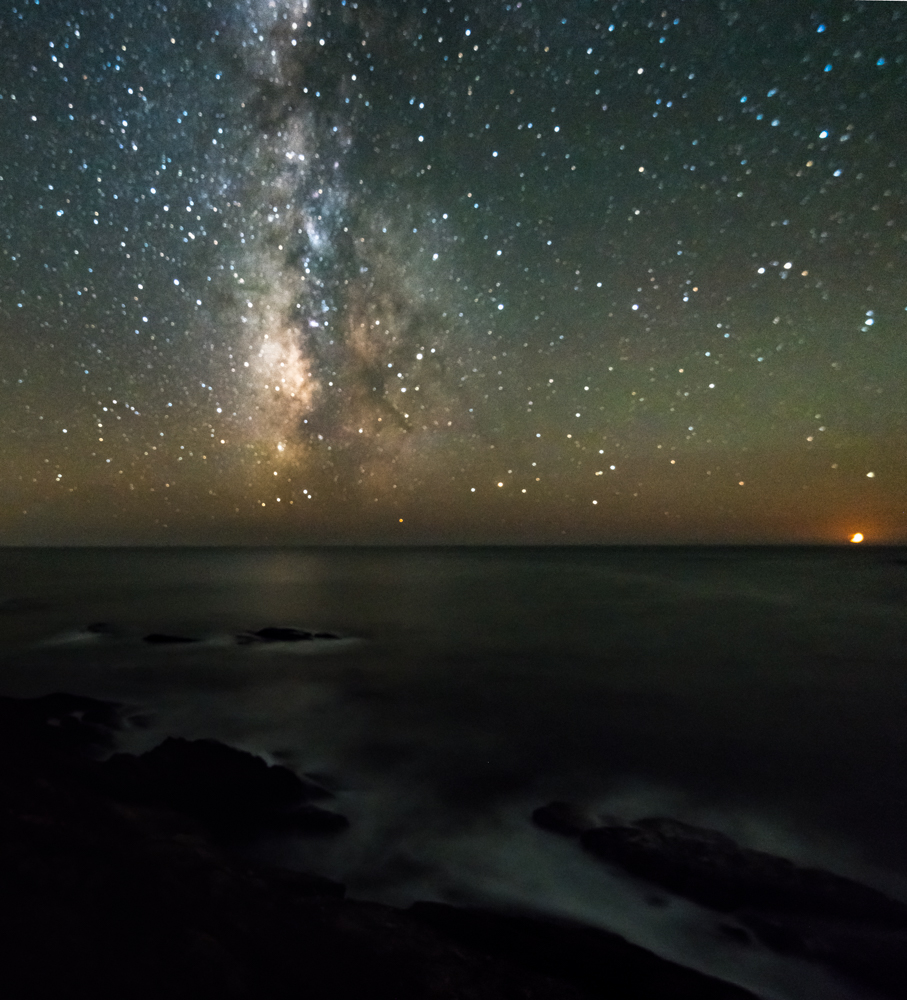
Paul Brewer photographed this majestic sight - the Milky Way. See the setting moon on the right.

We are lucky to have a lack of light pollution on the Mendonoma coast. May it ever be so!

I asked Paul how he photographed this. He wrote, "Simple answer, long exposure (20-30 seconds) at high ISO and maximum aperature available on a wide angle lens, with tripod."

For those interested in a more detail explanation, Paul wrote, "Two parts to the answer. To shoot the milky-way like this you need to gather light for an extended time. The time depends on the aperature of the lens. Fast lenses with F 2.8 or faster is preferred. Mine is only
f/4 and would benefit with a faster lens. The faster the lens the
shorter the exposure or lower the ISO to obtain good results. Low ISO
and short exposure time both reduce the noise in the photo. The wider
the lens the longer you can expose without the stars becoming streaks
instead of points. Rule of thumb is divide 500 by the focal length of
the lens. In my case 500 divided by 16mm allows a 30 second exposure
which is what I used. My settings were ISO 4000 F/4 for 30 seconds.
You also need to be locked down on a tripod for those long
exposures, preferably shooting with mirror up on a DSLR to reduce
vibration. It is also helpful to shoot with long exposure noise
reduction turned on."

Thanks to Paul for allowing me to share his photo with  you here, and for the photography lesson. To see more of Paul's nature photography, here is his website: http://www.capturingnatureswonders.com/