Craig Tooley photographed these two Bucks practicing their fighting skills using their antlers.

The mating season of the Black-tailed Mule Deer begins around the start of autumn - it's called the rut. For now peacefulness reigns. But all bets are off during the rut!

Thanks to Craig for allowing me to share his photo with you here. To see much more of Craig's nature photography, here is his website: www.ruffimage.com

The Mendonoma coast is draped with cool, moist fog this morning. It's suppose to clear up and warm up for the coming weekend. For now, we celebrate the moisture the fog brings.

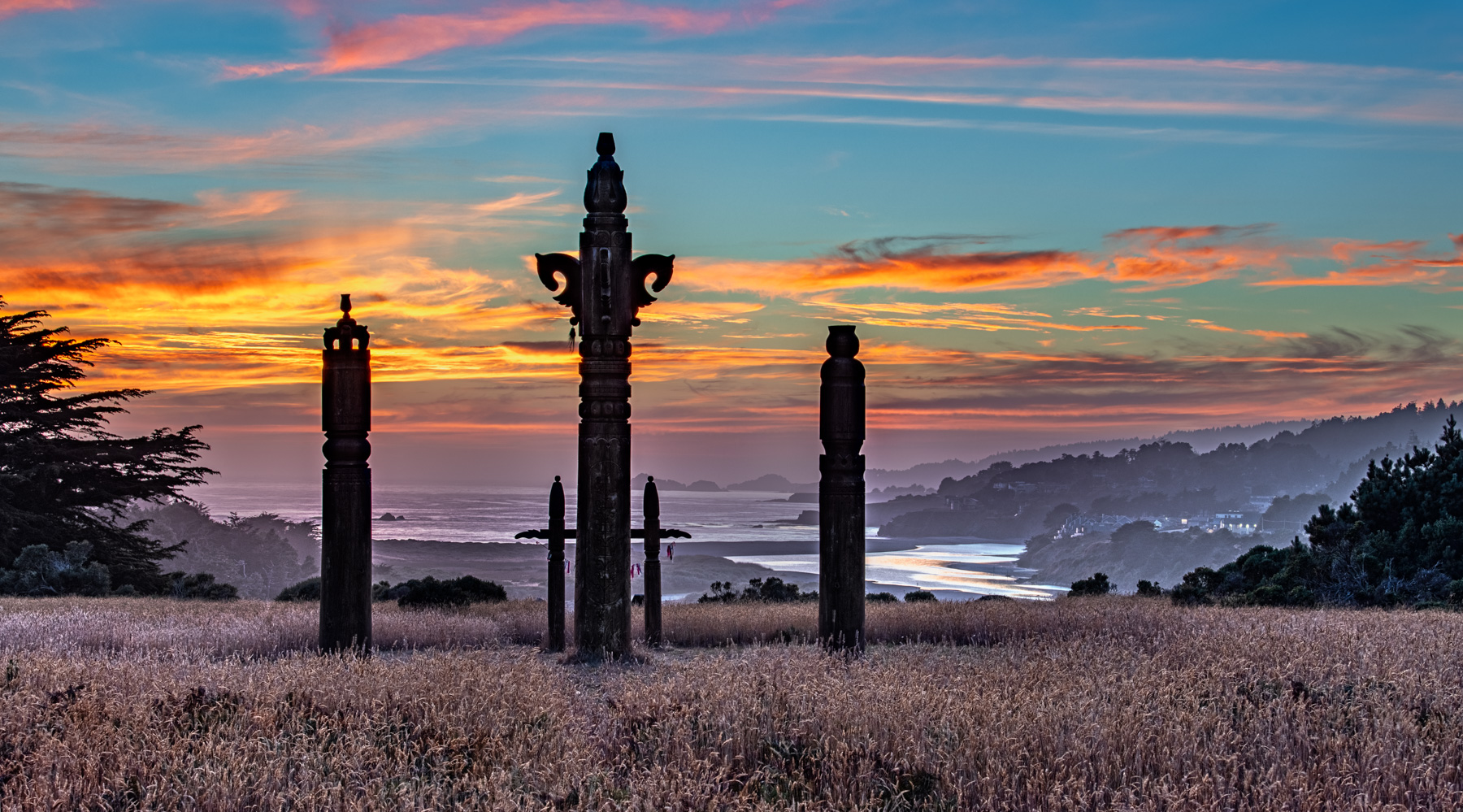
With the Serge, a ceremonial hitching post structure, in the foreground, the sunset is beautifully framed behind it. Paul Brewer captured this lovely sight.

Gualala Point Regional Park is such a treasure. The Gualala River is just to the north of the park, and the town of Gualala just north of the river.

Thanks to Paul for allowing me to share his photo with you here. To see much more of Paul's nature photography, here is his website: http://www.capturingnatureswonders.com/

It's a beautiful, cool day here today, with lots of visitors celebrating the Labor Day holiday.

Hundreds of young Brown Pelicans have been migrating northward. These hatched-this-year pelicans have brown heads and white underparts. They are accompanied by a few older pelicans. The adult pelicans have white heads and brown underparts. They are also accompanied by dark gulls, Heermann’s Gulls. These smart gulls let the pelicans find fish for them, sometimes even stealing it out of a pelican’s mouth.

When there is forage fish in the water, many birds feast. Craig Tooley photographed a feeding frenzy by Gualala Point Island with Brown Pelicans and several types of Gulls. Brown Pelicans plunge dive, beak first, for fish. It’s quite a sight.

Brown Pelicans also rest in rivers and on offshore rocks. Paul Brewer wrote, “There was a congregation of Brown Pelicans behind Breaker’s Inn having a spa day [on the Gualala River.] I got a few interesting shots from the Gualala Bluff Trail when they all decided to fly at once. They did that twice while I was there. They enjoyed their spa day, but all headed north about 6:30 pm.”

We almost lost Brown Pelicans due to the pesticide DDT, which made their eggshells so thin that they broke when the mothers sat on them. Since DDT was banned, the pelicans have recovered in numbers. To see them flying just over the bluffs is a thrilling sight.

Thanks to Craig and Paul for allowing me to share their photos with you here. To see much more of Craig's nature photography, here is his website: www.ruffimage.com. And to see more of Paul's nature photography, here is his website: http://www.capturingnatureswonders.com/
Karen Wilkinson noticed this Black Oystercatcher taking a vigorous bath.

It was a VERY thorough bath as you can see below.

Karen said it made her laugh to see this. It makes me smile to see her photos!

Thanks to Karen for allowing me to share her photos with  you here.

• 2 Comments

Whimbrels are large, beautiful shorebirds, They nest far to our north in tundra. Non-breeders can been seen occasionally on the Mendonoma coast. Perhaps that is what Rusty Babcock photographed recently at Elk.

Just look at that long decurved beak! They use that beak to get small crabs and other invertebrates. You can hear their twittering call at this link: https://www.allaboutbirds.org/guide/Whimbrel/sounds

Thanks to Rusty for allowing me to share her photos with you here. And thanks to her brother, Tom Reidenbach, for sending them to me.