Nik Epanchin recently photographed the beautiful scene at Irish Beach.
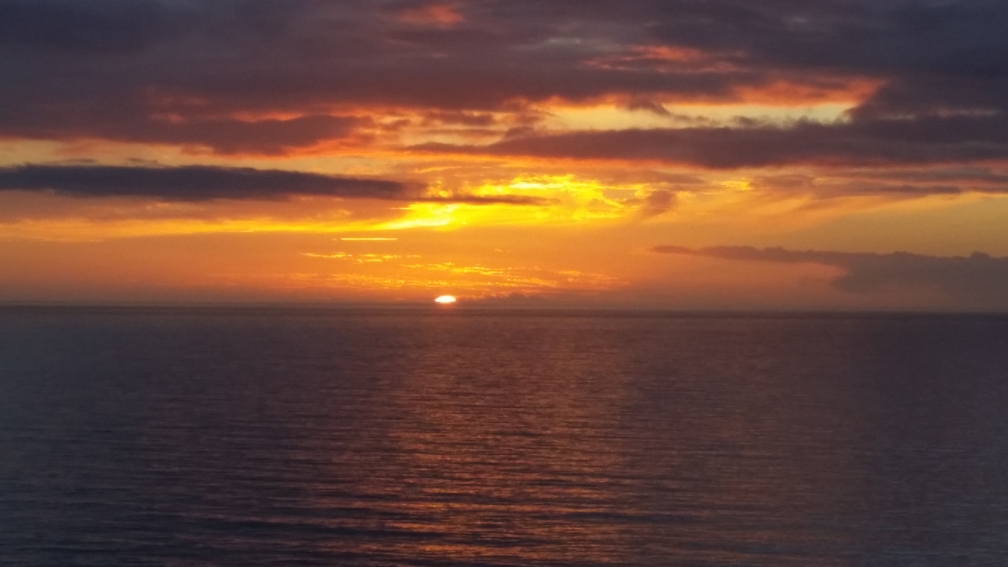
Just lovely. Thanks to Nik for allowing me to share his photo with you here.
Nik Epanchin recently photographed the beautiful scene at Irish Beach.
Just lovely. Thanks to Nik for allowing me to share his photo with you here.
Many Mendonoma residents went to the ridge to view the eclipse of the moon, Rick and me included. It was wonderful to see the red moon rising in the eastern sky. Paul Kozal captured this evocative photo of the event.
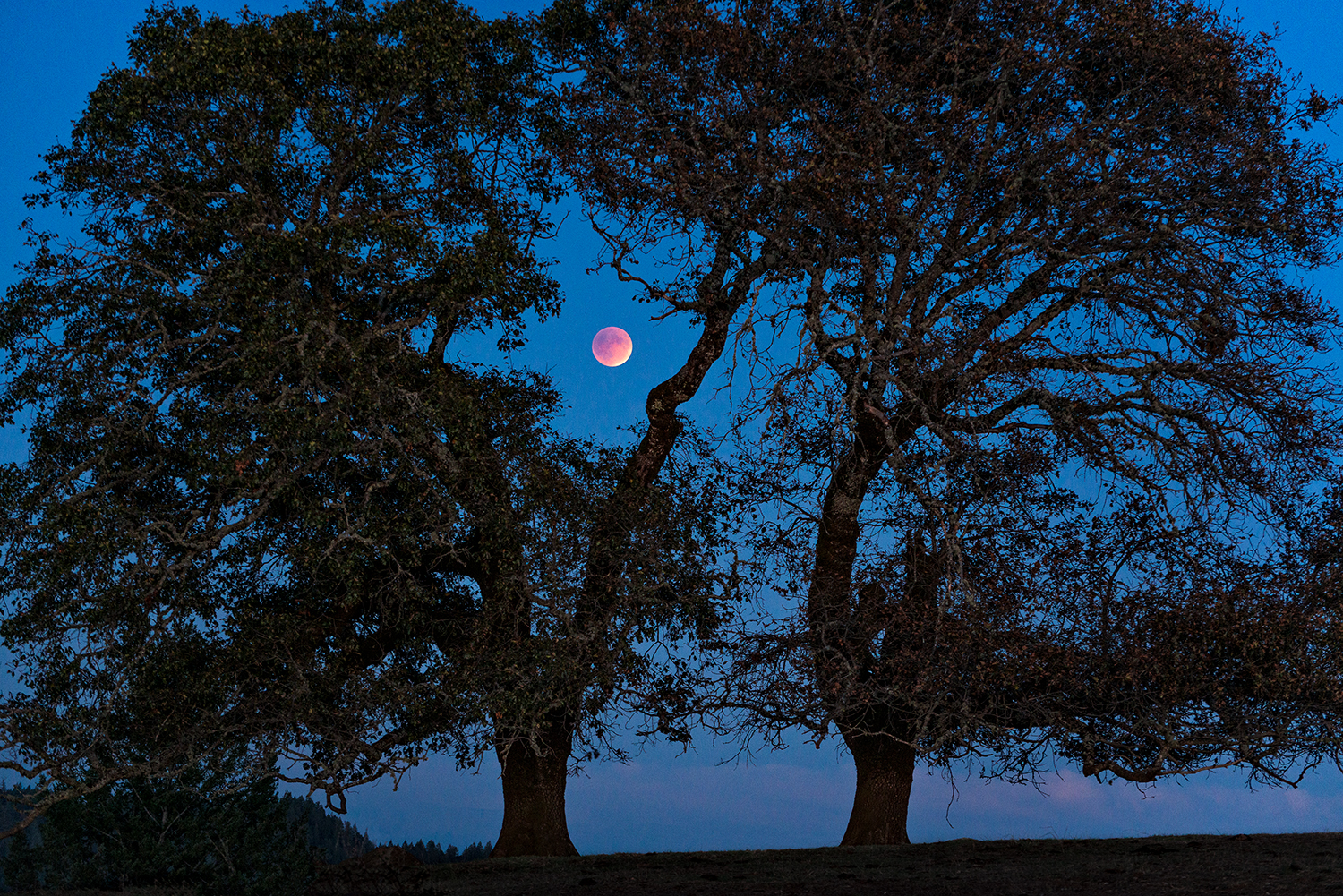
It was quite a spectacle with the moon being full. It was a Super Moon because the moon is closest to earth right now. It was a Harvest Moon because it was the full moon closest to the autumnal equinox. And it was also a Blood Moon - quite an event!
Many thanks to Paul for allowing me to share his photo with you here. To see much more of Paul's nature photography, here is the link to his website: http://www.paulkozal.com/
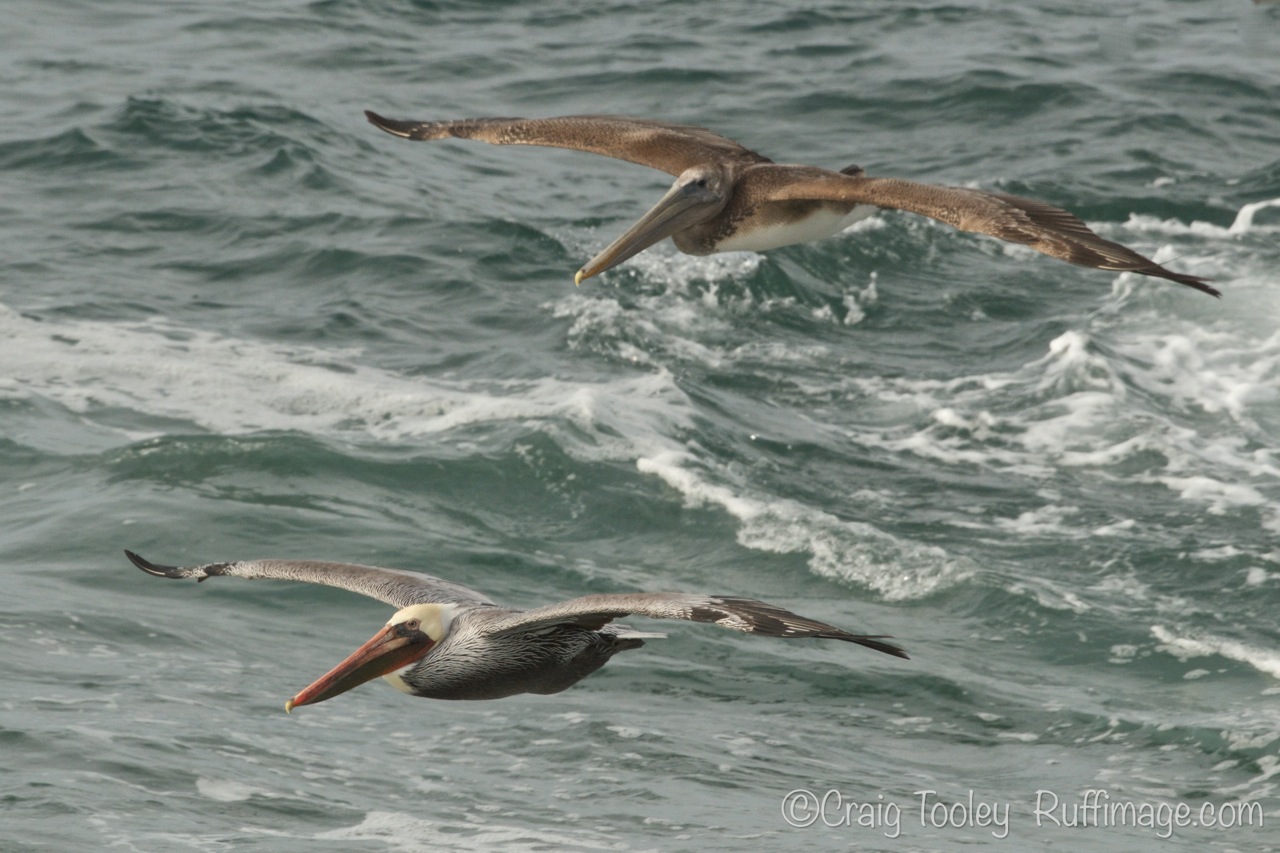
Juvenile Brown Pelicans have brown heads and white underparts. Adults have white heads and brown underparts. Here's a photo showing you an adult and a juvenile, taken by Craig Tooley.
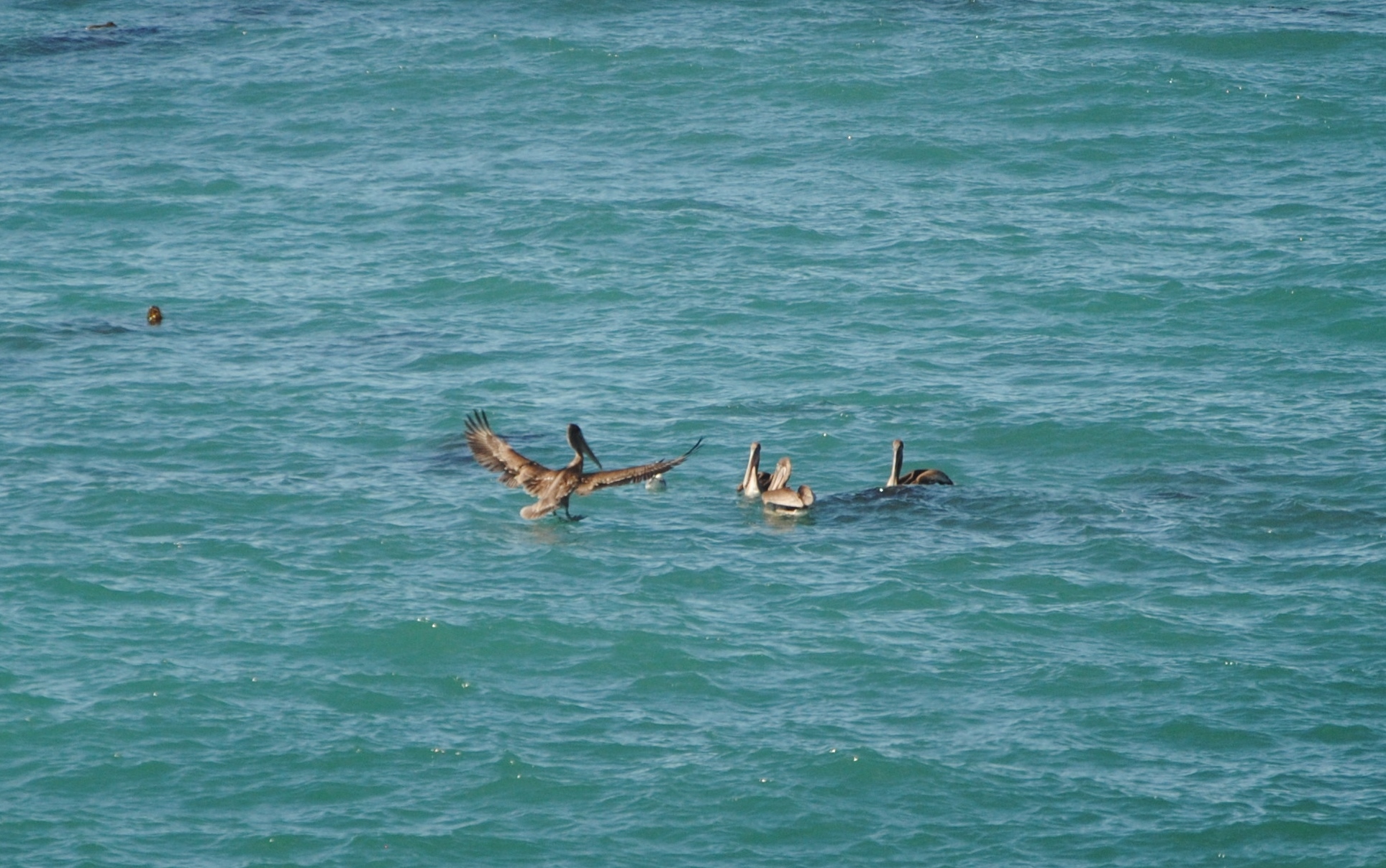
On Thursday Rick and I were walking the bluffs at Gualala Point Regional Park. We saw a few Brown Pelicans on the water, accompanied by an opportunistic Western Gull. Then another Brown Pelican approached. We fantasized we could hear it shout, "I'm coming in, I'm coming in!"

They sure are graceful flyers but they don't have the most controlled landing. Here it's saying, "Brakes! Brakes!"
Brown Pelicans plunge dive for fish. Here is one of my favorite photos showing plunge diving. It was taken by Patrick Killen.
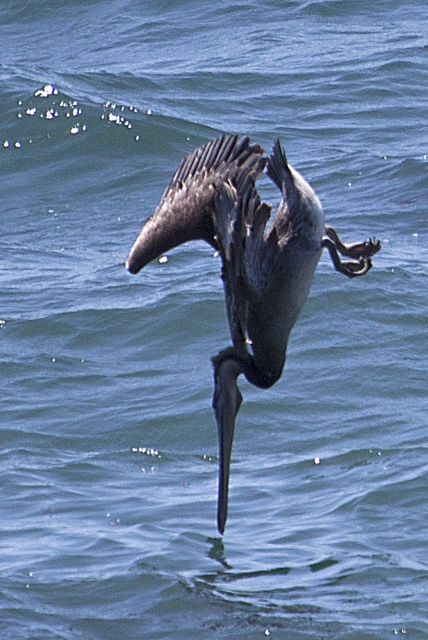
Thanks to Craig and Patrick for allowing me to share their photos with you here. To see much more of Craig's nature photography, here is his website: www.ruffimage.com
Nocturnal Western Spotted Skunks are the smaller cousins of the ubiquitous Stripped Skunk. Some people call them Civet Cats, but that is incorrect. In ten years of doing my column in the Independent Coast Observer, this is only the third photo of one that has been sent in. Shannon Hughes was the lucky photographer.
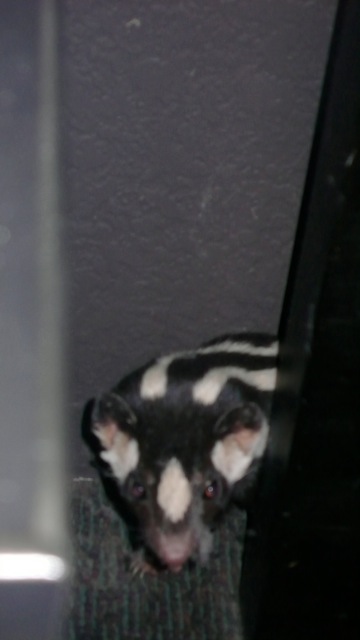
The evening had been warm. This little skunk entered Shannon's home and wandered around for a bit. Like the bigger Stripped Skunk, it can spray. But this little one just ambled back out, most likely looking for its favorite food - insects, mice and berries.
One other photo was taken by John Bower a few years ago. A Spotted Skunk was trapped in a garbage can. Looking at this photo, I now wonder if this was a young one.
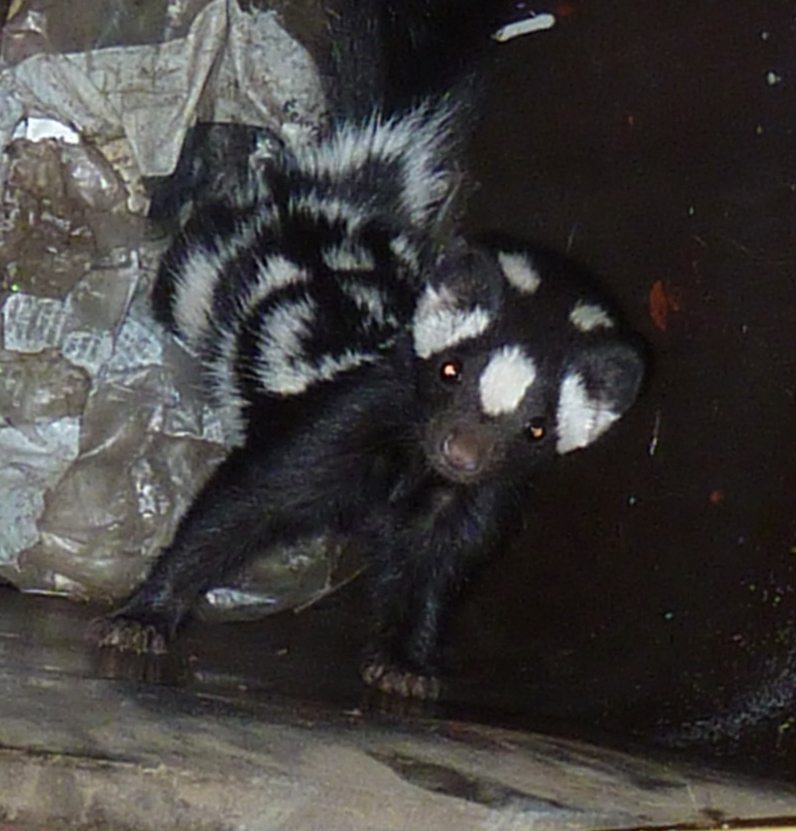
The white patch on its face between the eyes is distinctive to this species of skunk.
Thanks to Shannon and John for allowing me to share their photos with you here.
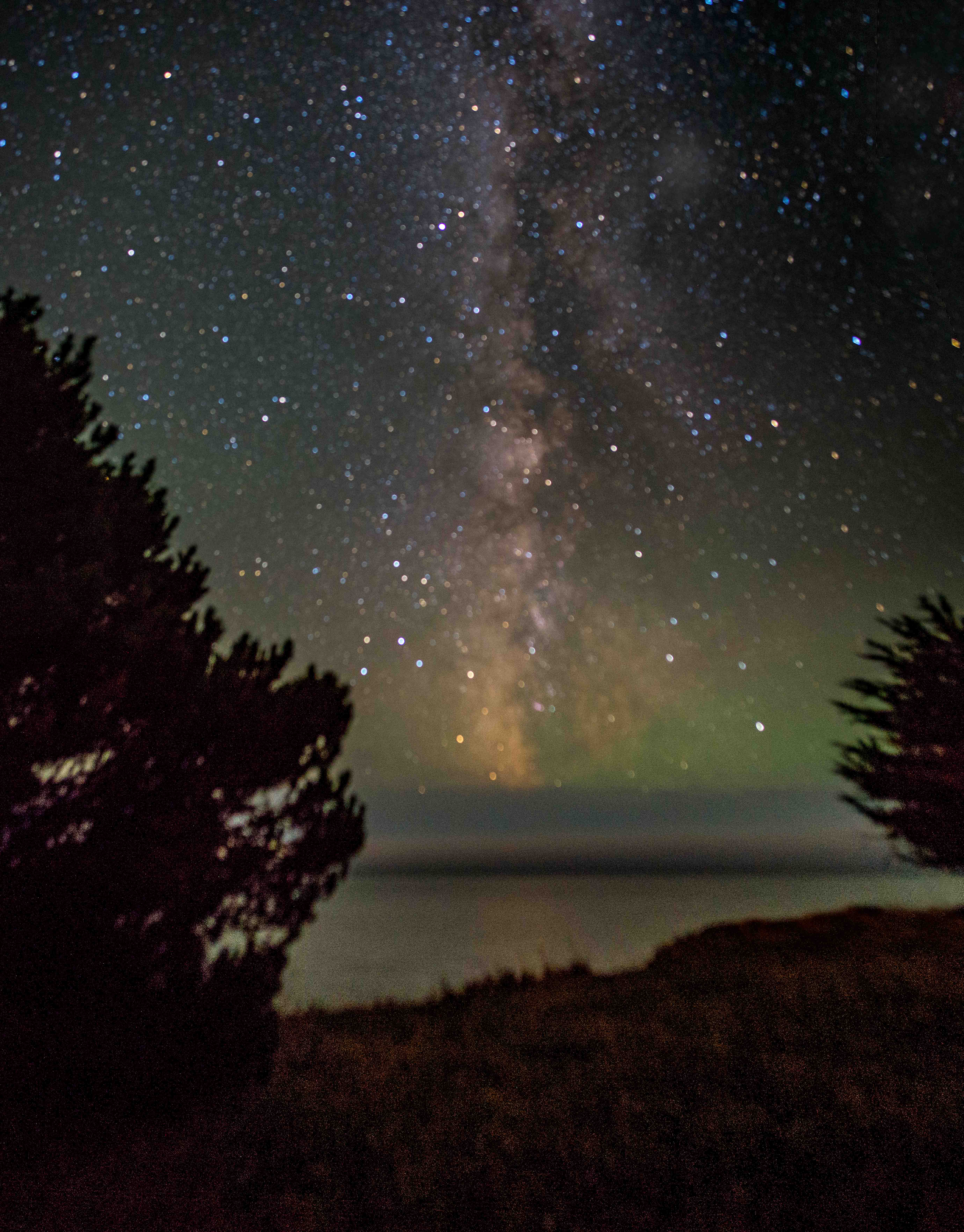
Paul Brewer has been photographing the night sky. Just look at this beautiful photo of the Milky Way and the starry skies, with a fog bank hovering over the Pacific Ocean.
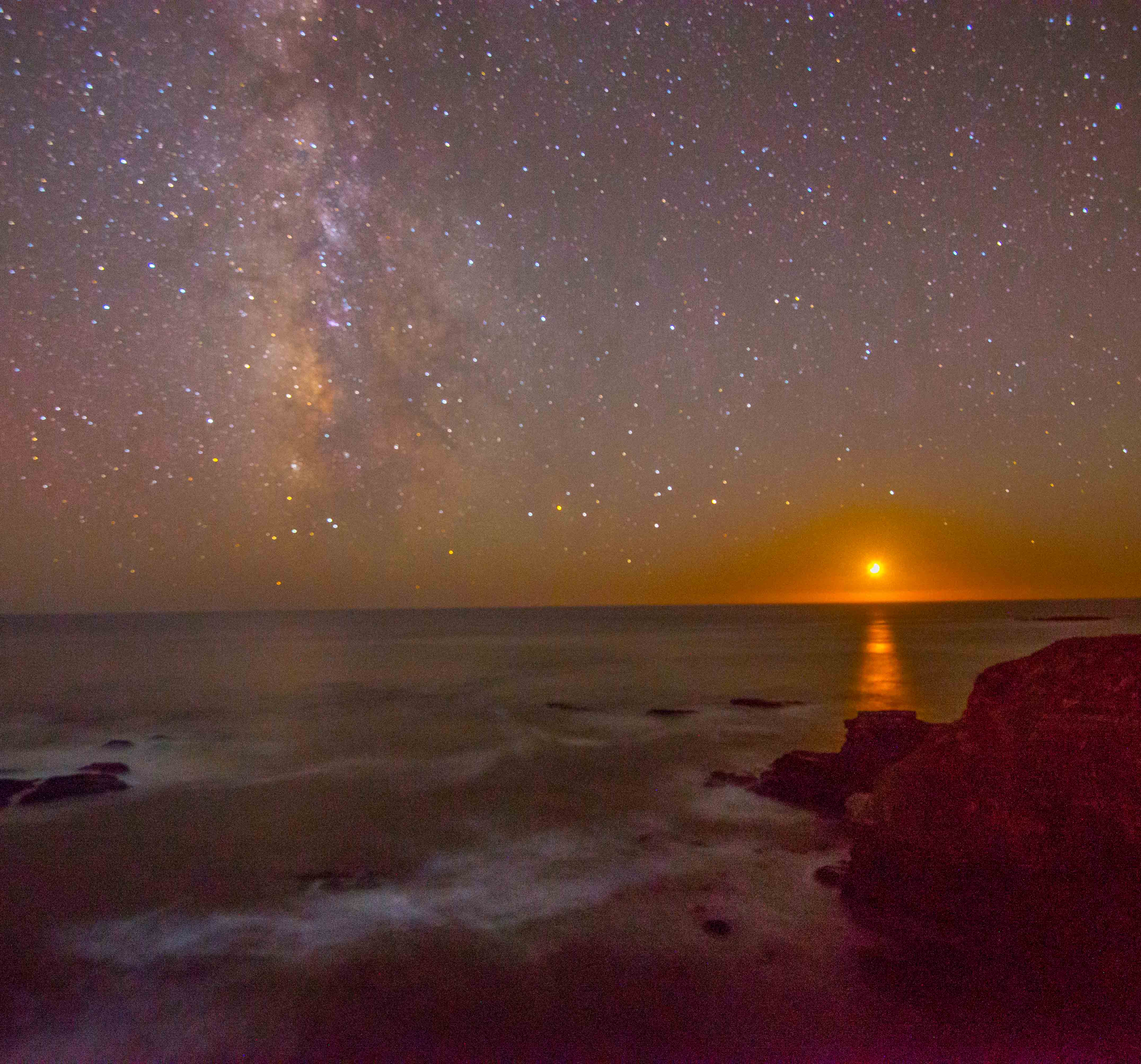
And if that wasn't beautiful enough, a few nights ago Paul photographed the Milky Way with the setting moon.
I asked him how he was able to get photos like these. This is what he wrote, "Basically, and most important you need to be looking for
opportunities and have a camera ready. It is really nice to have all
these opportunities where you live so you can run out the door and take
a shot.
"When stars are involved, you have to shoot with a big aperture,
little number, like f/2.8. The shots also are long exposures but not to
long or the stars become streaks instead of points. The rule of thumb is
no longer than 500 divided by the focal length of the lens. Example 500
divide by 20mm lens equals 25 second exposure maximum. Focusing at
infinity is also difficult at night so I use live view plus trial and
error to get it sharp. You have to then adjust your ISO up high enough
to expose the stars/milky-way.
"In other words you really need to know
your equipment which takes practice. It is essential to shoot off a
solid tripod using a remote shutter release so camera shake is minimized.
"Milky-way shots are best achieved in summer months within a couple
of days either side of a new moon. Having a friend like [photographer] Craig Tooley also helps as yesterday he advised that I turn on the Long exposure noise reduction feature in my camera and shoot with the mirror up. It really made a difference."
Thanks to Paul for allowing me to share these beautiful photos. To see much more of Paul's nature photography, here is the link to his website: http://www.capturingnatureswonders.com/