Author Archives: Jeanne Jackson

• 2 Comments

Amy Ruegg had a rare sighting and a touching experience recently. She wrote, “Sydney [the dog] and I visited Pebble Beach  an hour or two before sunset. The tide was fairly low and several sea creatures were visible. We shared the beach with only one other, a young woman by herself. She had stopped and was looking very closely at something as I approached. She excitedly pointed at the water’s edge—a squid! There it was about six inches long, swimming along looking up at us with a surprising intelligence. We couldn’t believe it!"

“We chatted as we took pictures with our phones and enjoyed watching the lovely creature zip up and down with the wave action. She introduced herself, Pam, and shared she was on a solo journey to nourish herself after her husband filed for divorce. She said she almost drove past the beach access but something told her to turn around. She was entranced by the beauty and abundance of life on Pebble Beach. The squid kept looking up at us. I felt the special little squid was trying to tell her that magic happens! She was on the right path. It’s not just the sightings that bring us joy, but the deeply meaningful moments when Nature speaks to us like a guardian angel.”

I do believe there is great healing in Nature. From walks in the forest, which is sometimes referred to as forest bathing, to an encounter with a special squid, there is comfort to be had.

After searching my database for a previous squid sighting, I came up empty. This is the first squid sighting in the 17 years of writing my Mendonoma Sightings column in the Independent Coast Observer! I sent Amy’s photo to Bob Van Syoc. He wrote, “ Wow, that’s a very special sighting.  It’s Doryteuthis opalescens, sometimes called the market squid here.  I think the name “opalescens” is more descriptive of them in life as they can neurologically activate chromatophores (color and light producing areas) on their skin to  produce pulsating waves of color and light up and down their bodies!  One of the most captivating things I’ve seen was pairs of mating squid making those lovely color and light patterns.  The females lay finger-sized capsules of eggs masses in bunches after mating.  Like all cephalopods, they die soon after mating and reproducing a single time.  Doryteuthis opalescens does tend to reside further south, they are common around Monterey Bay.  But it’s not unheard of for them to show up on our coast.  Thanks for sharing the photos and the special experience Amy had with her new friend.”

This squid’s other common name is Opalescent Inshore Squid, which I’ve chosen to use rather than Market Squid.

Thanks to Amy for allowing me to share her photos with you here. What a great sighting!

Today is sunny, warm and calm, ie, no wind! This is forecast to be the warmest day of the next seven days. The Pacific Ocean looks to be flat calm, which can be deceptive, I know.

Several coast photographers have photographed Belted Kingfishers lately. Eric Zetterholm caught one just taking flight.

Here Ron Bolander photographs one flying.

And Craig Tooley found one resting on a branch.

Here's what the Cornell Lab of Ornithology has to say about these birds:

"With its top-heavy physique, energetic flight, and piercing rattle, the Belted Kingfisher seems to have an air of self-importance as it patrols up and down rivers and shorelines. It nests in burrows along earthen banks and feeds almost entirely on aquatic prey, diving to catch fish and crayfish with its heavy, straight bill. These ragged-crested birds are a powdery blue-gray; males have one blue band across the white breast, while females have a blue and a chestnut band."

So Craig's photo shows a female, as does Eric.

Here is a link to their rattling calls: https://www.allaboutbirds.org/guide/Belted_Kingfisher/sounds

Thanks to Eric, Ron and Craig for allowing me to share their photos with you here.

The rain is over though everything is nice and damp from the deluge. Sunny skies have returned. I checked the lagoon of the Gualala River yesterday and it has filled up from the rain - nice!

A group Pygmy Nuthatches has been arriving at dusk, and leaving at dawn, from a birdhouse outside Rick's and my home in Anchor Bay. They have been doing so for two or so months. There were eight to start, and then seven for some weeks. Last week there were eight again, and yesterday there were seven. Here's a close-up of Pygmy Nuthatch for you to see, taken some years ago by the late Ron LeValley. Ron was always so generous sharing his photos with us.

This morning they were very late in leaving. I set my iPhone up on a tripod and video through the window, so the quality isn't great, that's for sure. But you still can get a feeling for what it's like to see them exit every morning. But it was raining hard this morn, and the wind was fierce. Being in the open wasn't very appealing as this video shows.

IMG_1045 (1)

As I reported in my other post, we have received a little over four fabulous inches of early rain, a real blessing. Tomorrow I will report on the status of the seasonal creek that crosses our land. Perhaps it came to life???

We spotted this juvenile California Toad (Anaxyrus boreas halophilus).  We admired how beautiful its camouflage. It was hard to keep track of it as it moved among the rocks because it so perfectly blended in among the river stones.”

California Toads are a subspecies of Western Toads. This camouflaged toad is one of the many reasons why you should never drive in a river.

Thanks to Laura for allowing me to share her photo with you here.

It's raining cats and dogs and toads today, over 4 inches at our place in Anchor Bay!

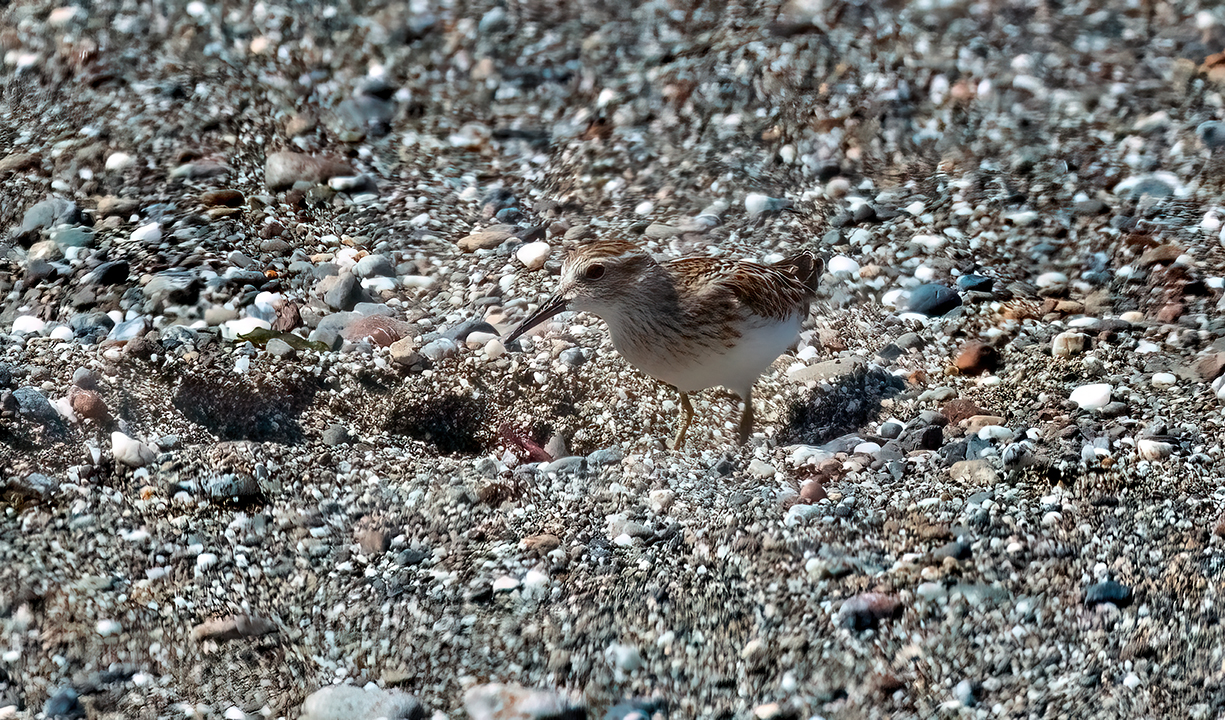
Ron Bolander used the new Merlin bird ID app to try and identify a shorebird but it steered him wrong. Ron wrote, “While I was on the beach, mid Tuesday afternoon, I got some pictures, that "Merlin" identified as Semipalmated Sandpipers.  Checking on the Cornell site for information, these are not supposed to be here.  They migrate from the Arctic to South America, but the migration is east of the Rocky Mountains.”

I sent Ron’s photos to Diane Hichwa, who in turn sent them to a shorebird expert, Lisa Hug, who wrote, “It is a Least Sandpiper - yellowish legs, dark streaking on chest.” Diane commented, “Shorebirds are SELDOM easy, and in transitions from breeding plumage to winter plumage, they are even more challenging.”

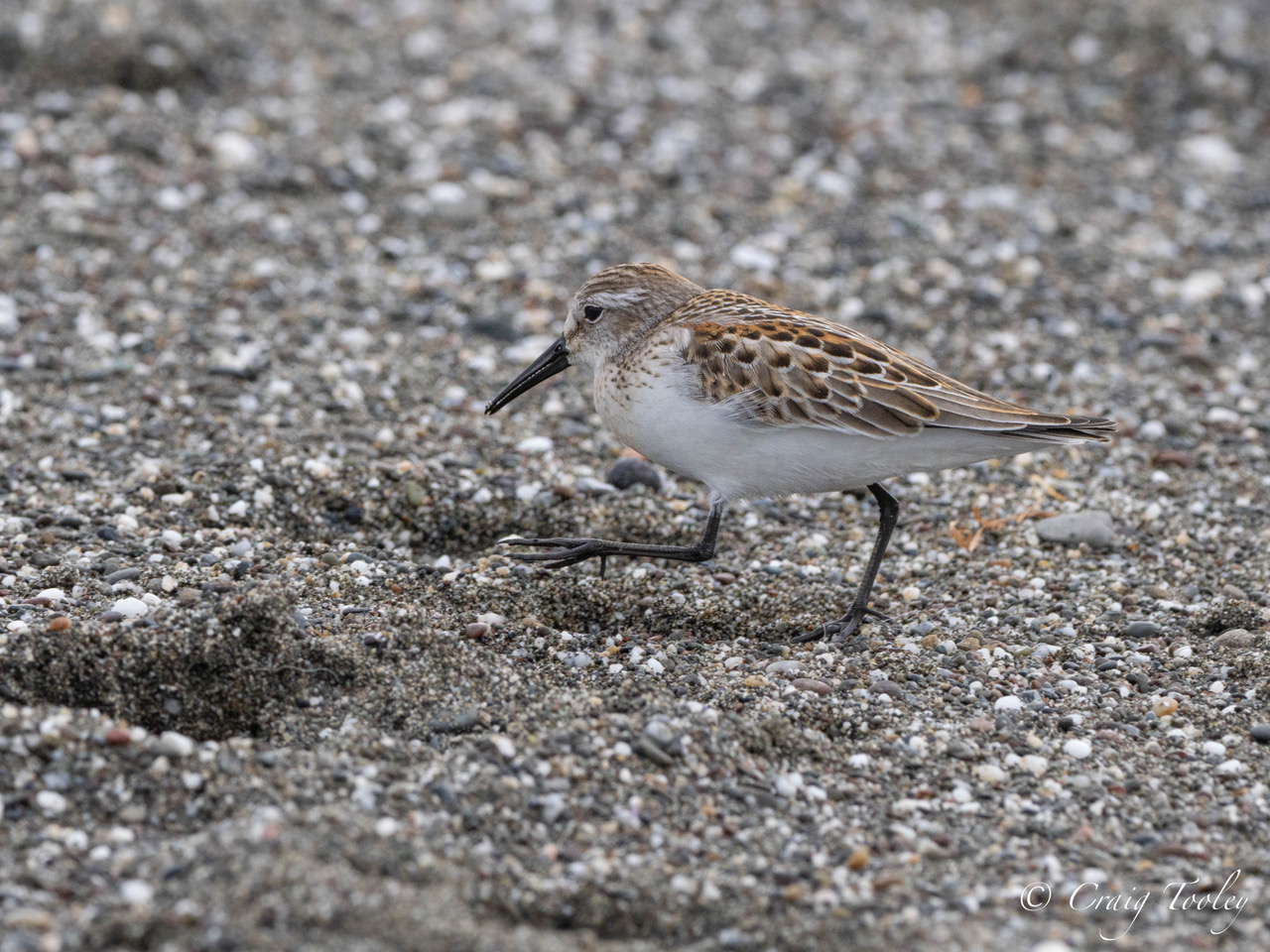
Ron also photographed a Western Sandpiper.

Such beautiful birds plying our beaches! Thanks to Ron for allowing me to share his photos with you here.

The weather is changing! We actually have some rain headed our way beginning Saturday evening.  Today it is windy and mild. It feels very good to know rain is in our near future!