Tag Archives: Monarch Butterfly

A visit from Monarch Butterflies is always a treat. Tom Eckles had two chasing each other around his garden in Gualala.

Monarch Butterfly by Tom Eckles

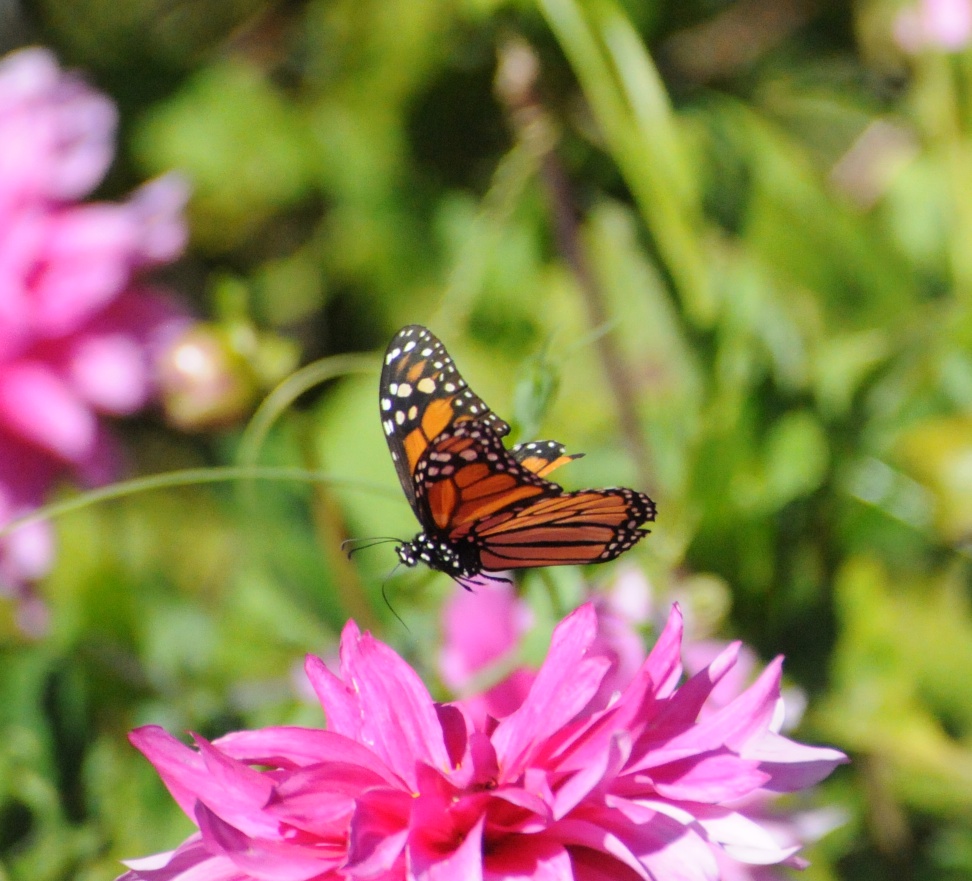
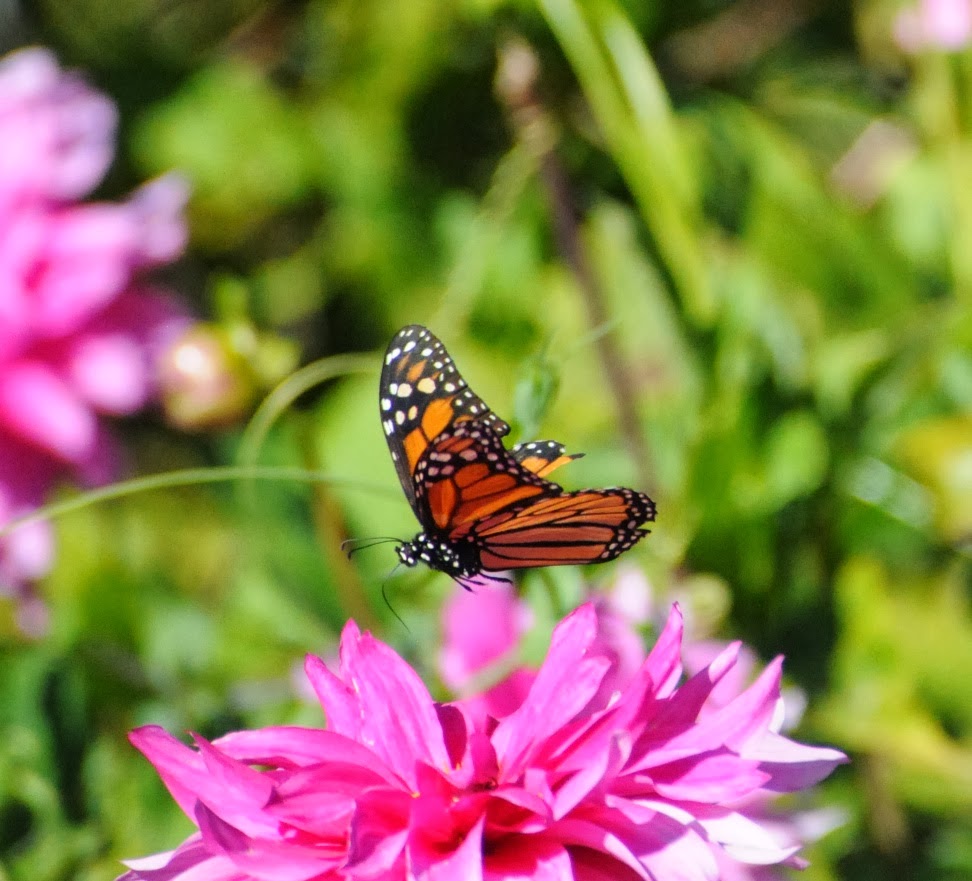
Here is a photo Tom took last year of a Monarch on a Dahlia blossom.

Monarch Butterfly feeding on a dahlia by Tom Eckles

The fall migration of Monarchs doesn't begin until next month. But we always welcome a visit from these exquisite creatures. Journey North tracks the migration of Monarch Butterflies, along with Gray Whales and various other migratory events. Their website is: https://www.learner.org/jnorth/

Thanks to Tom for allowing me to share his photos with you here. To see much more of Tom's photography, here is his website: www.tomeckles.com

It's always a special moment when we see Monarch Butterflies appear. This is the long-lived generation, the Methuselah generation. They have migrated many miles and the females will soon migrate inland to lay their eggs on native milkweed. Here on the Coast, where milkweed isn't native, these beautiful butterflies are feeding on other native plants, such as Manzanitas.

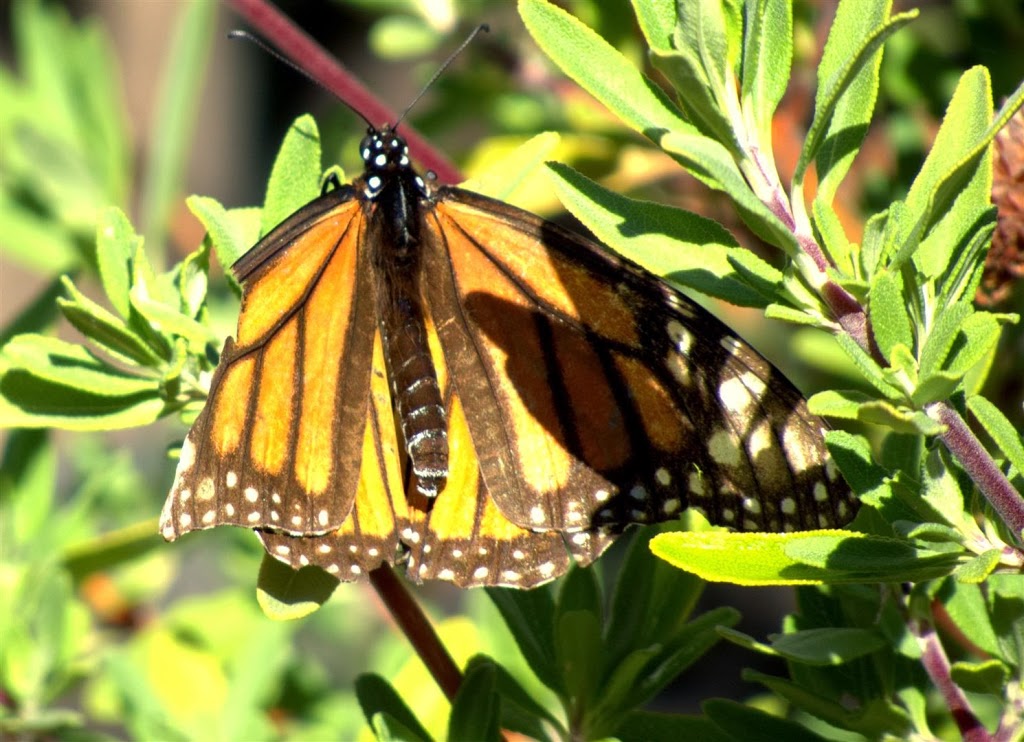
Nancy Scarola noticed one in her Sea Ranch garden last week and her husband, Robert, photographed it. Notice its tattered wings from the many miles it has traveled.

I saw one in my garden today - my first one of the year. Journey North tracks these butterflies. If you would like to participate in this citizen science project, or just see the sightings that other people have posted, here is their link: http://www.learner.org/jnorth/maps/Maps.html You will see they track many other migrations, including Gray Whales.

Thanks to Robert for allowing me to share his photo with you here.

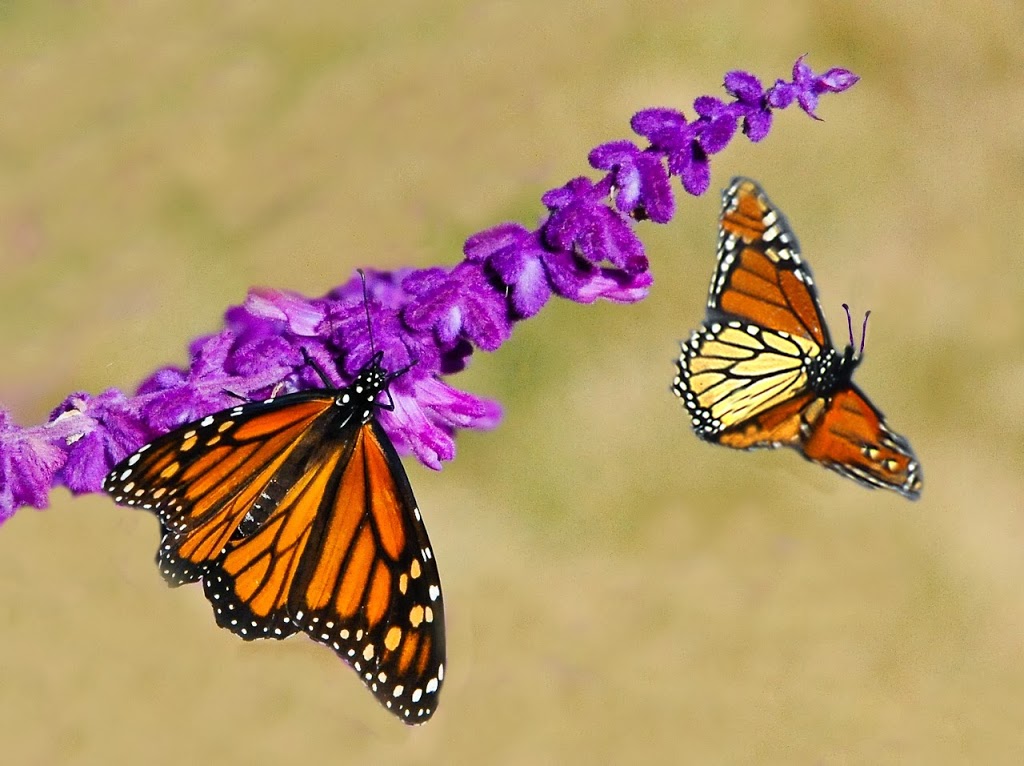
Beautiful Monarch Butterflies migrate through the Mendonoma Coast in the autumn. Several weeks ago Siegfried Matull captured this photo of two Monarchs feeding on his sage plant.

These Monarchs are of the Methuselah generation, the generation that lives for seven months or so.

Barbara Rice studies these butterflies. She wrote, “The overwintering Monarchs, which travel through our area in the fall, will not be laying eggs on their way. In the spring they head inland to look for milkweed and lay the first eggs of the three to four generations. Native milkweed species in Sonoma County are found further inland, such as Lake Sonoma.”

What is important here on the Coast is to plant native nectar plants for butterflies. Barbara advises that long blooming species in the Mint – Sage comes to mind - and Aster families are beneficial. Even better are our native Manzanitas, as they bloom in the winter. Erysimum, also called Wallflower, is very beneficial.

Barbara adds, “Coyote Mint is a great butterfly and hummingbird plant. In a garden you can keep it blooming a long time if you ‘deadhead’ the spent flowers. Coast Goldenrod is also a good late fall Monarch plant and two local Manzanitas – Hairy Manzanita and Fort Bragg Manzanita.”

Monarch Butterflies are down in numbers due to pesticide use and loss of habitat. Anything we can do to help them is well worth doing.

Thanks to Siegfried for allowing me to share his photo with you here. And thanks to Barbara for her good advice.
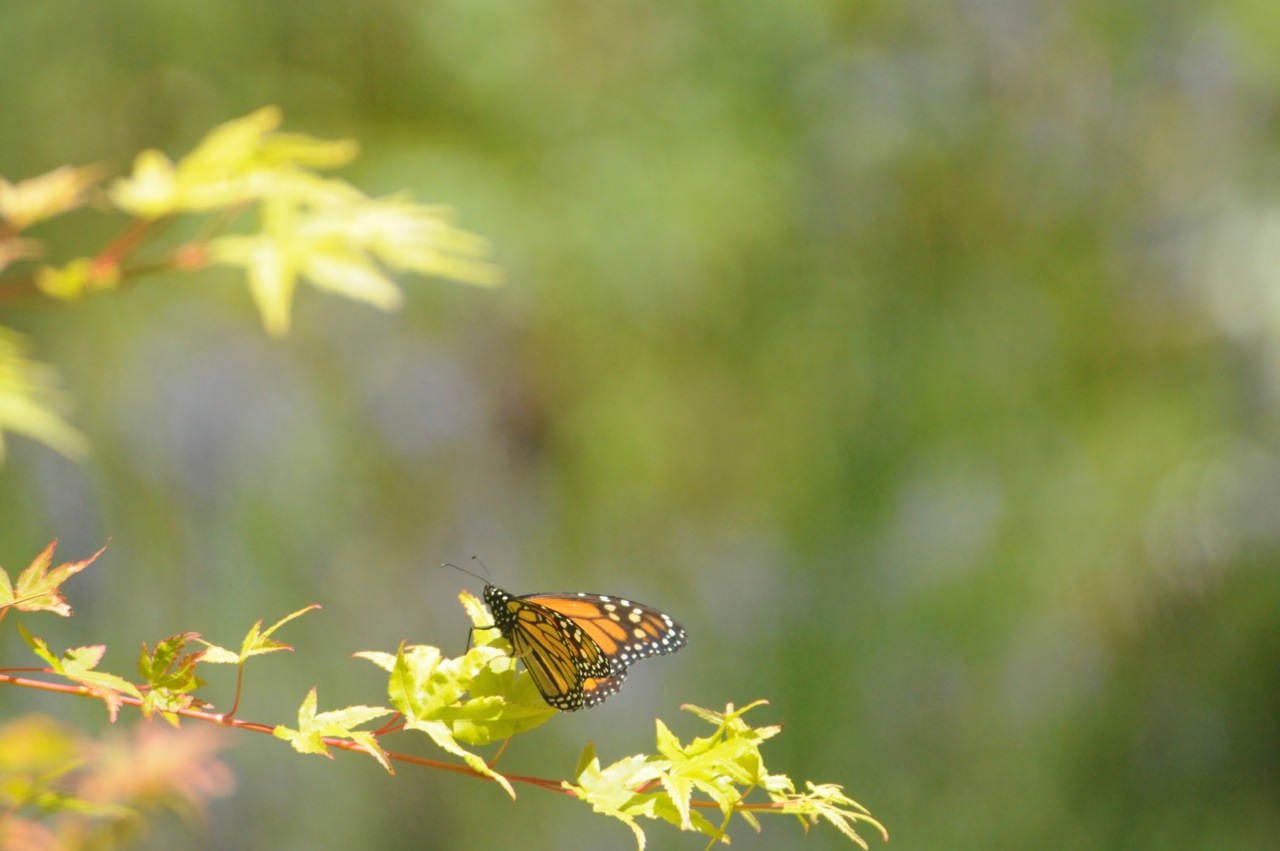
They are the essence of beauty - Monarch Butterflies have been seen recently. Tom Eckles photographed this one feeding on a dahlia.

I have seen perhaps a half dozen in the past two weeks. Their numbers are declining dramatically due to pesticide use and loss of habitat. Planting native milkweed would be a great idea - it's Monarch Butterflies host plant.

Thanks to Tom for allowing me to share his photo with  you here.

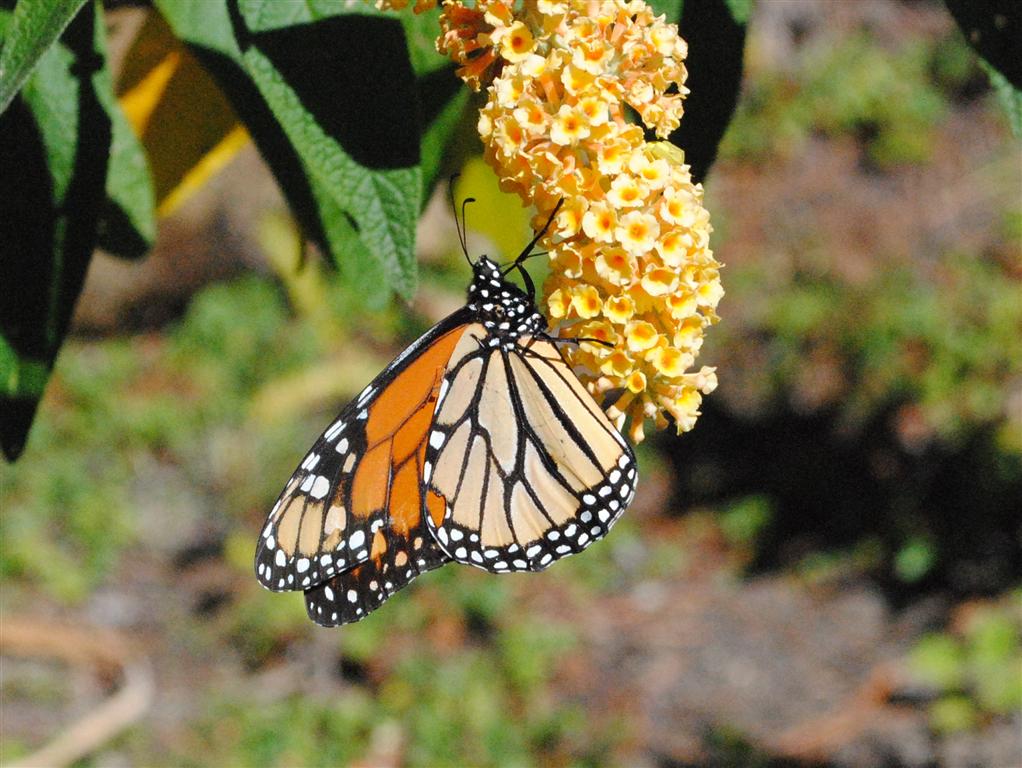
Earlier this week a Monarch Butterfly visited my garden. A butterfly bush paid dividends when this beauty came to feed on it.

Monarch Butterflies are Mother Nature's stained glass creation - a vision of loveliness to brighten our day.