Tag Archives: granary tree

Acorn woodpeckers have been busy gathering up their namesake nuts and storing them in granary trees. Jon Shiu wrote, “I observed a couple acorn woodpeckers in Little River."
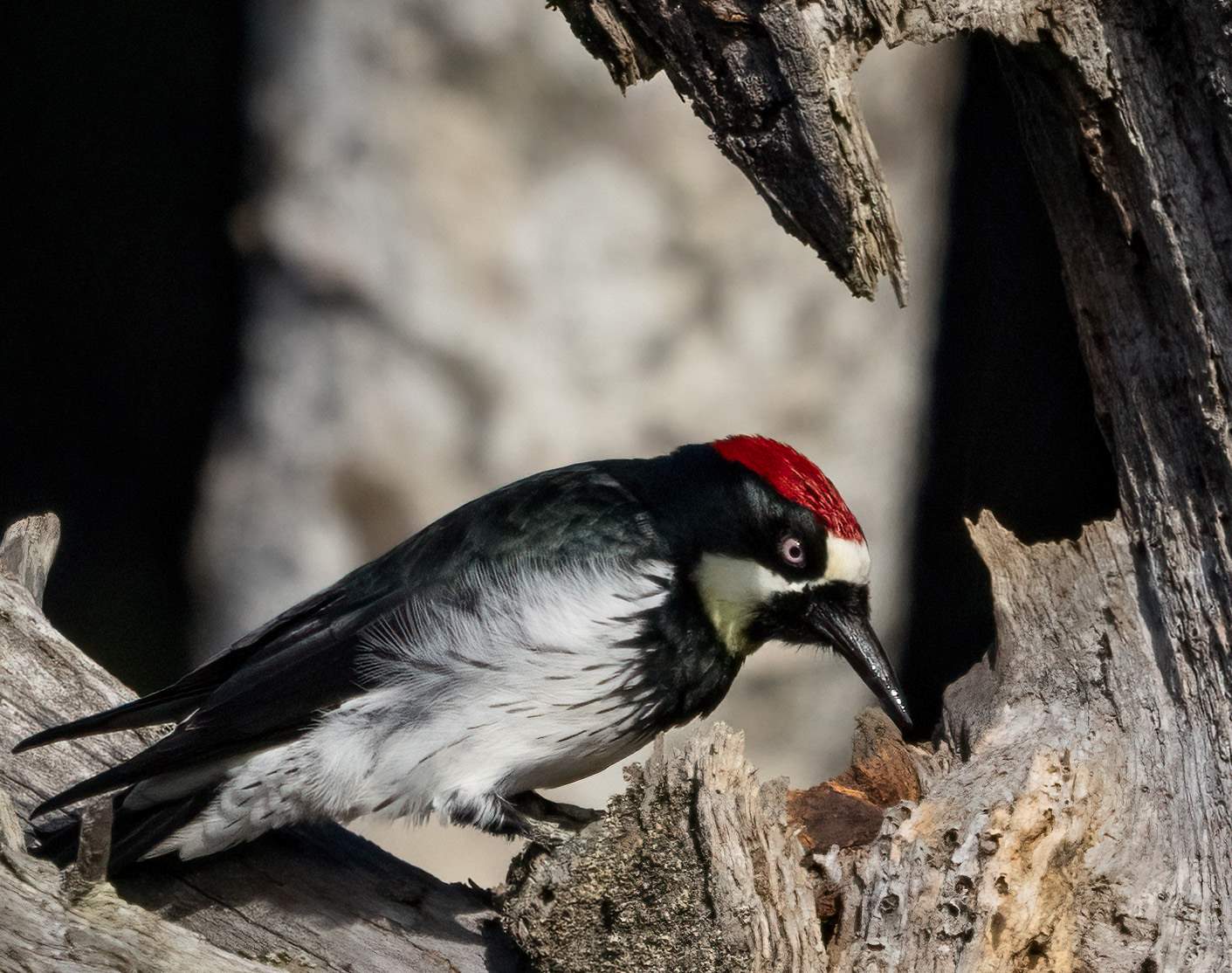
[At first] I have not seen them with any acorns. But I looked a little closer and could see the acorns.” Jon photographed a granary tree, a dead upright tree where they drilled holes to store their acorns.
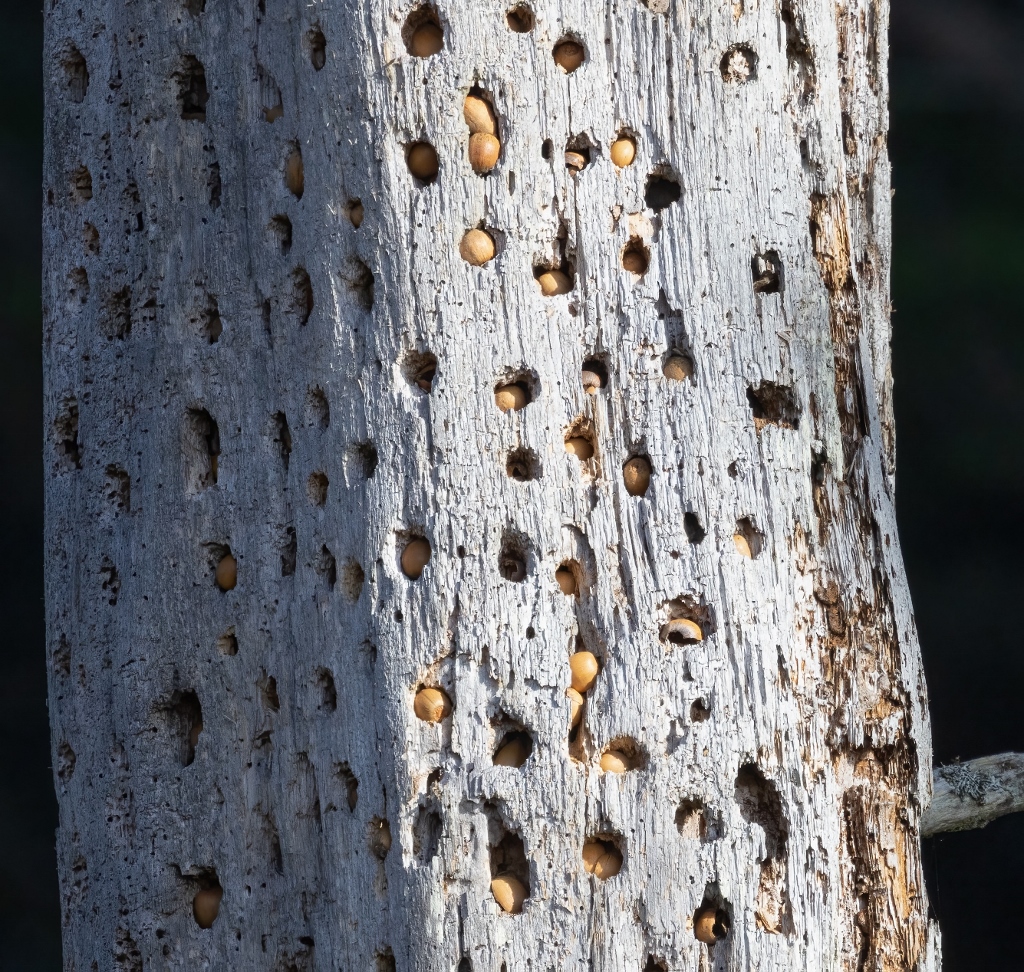
These woodpeckers drill thousands of holes in dead trees, utility poles, and other wood, filling them with harvested acorns. The whole group constantly monitors and moves drying acorns to smaller holes to keep them secure from theft by other animals.

When my research mentioned “other wood,” I had no idea these birds would use an empty birdhouse for storage in Gualala. Mark Escajeda wrote, “We enjoy our delightfully noisome year-round neighbors, a community of acorn woodpeckers. They fly around and chat among themselves as if they own the place, which we guess in many ways they do. This year they've taken advantage of the idled birdhouses we have on our side of the fence. We'll clean the houses in late winter for springtime nesting by violet-green swallows and western bluebirds, but in the meantime, we're happy to help.”
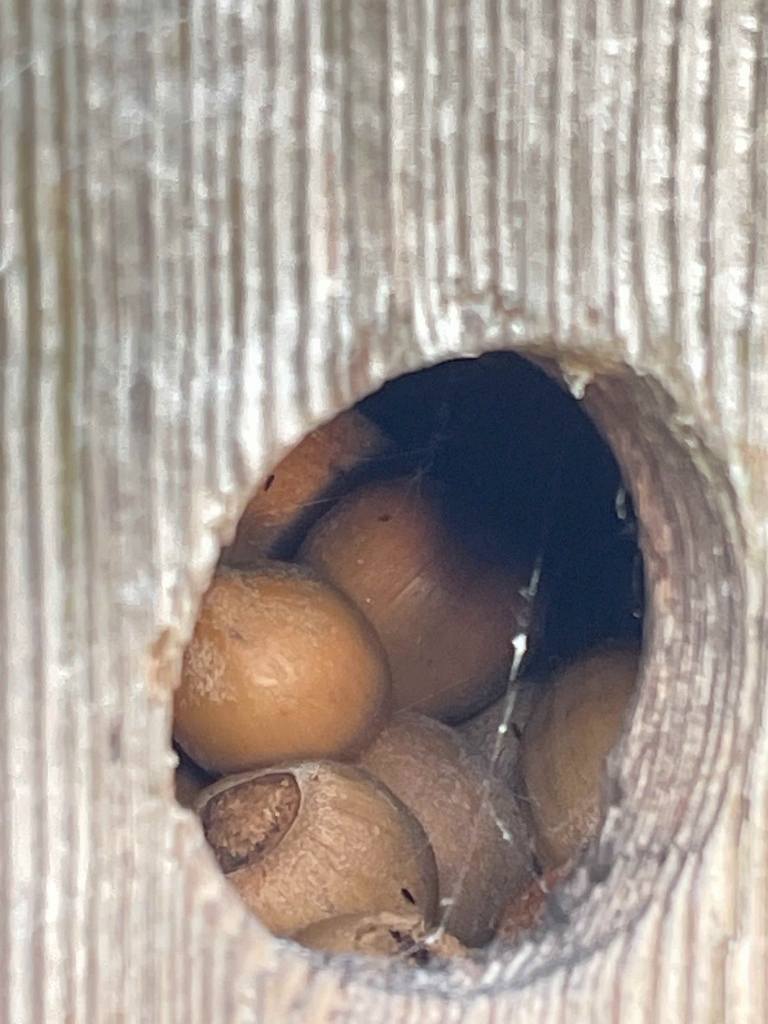
Watching Nature is fascinating! Thanks to Jon and Mark for allowing me to share their photos with  you here.

We received 1.14 inches from the first storm, 25.27 season to date. Next storm is about to hit!
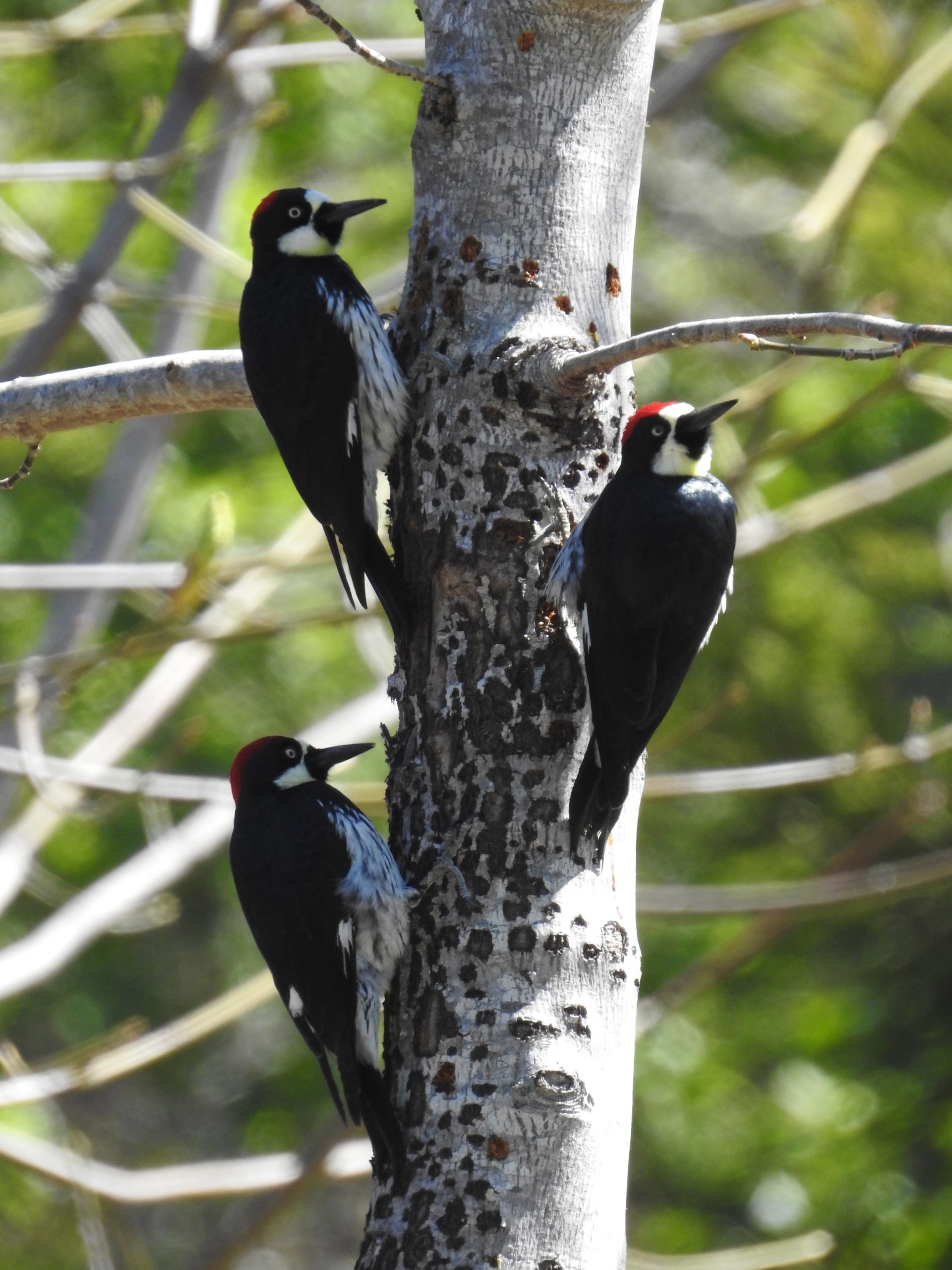
Acorn Woodpeckers are year-round residents of the Mendonoma Coast. Eric Zetterholm recently photographed three perched on a tree trunk.

Eric thought they were drilling holes into the tree. These woodpeckers do that. In the fall, they put acorns in granary trees, dead snags. They don't store the acorns to eat them. The acorns attract insects, which the woodpeckers then eat. Pretty smart, don't you think?

I have a Sunday bonus photo Eric took of the sunset and a spouting Gray Whale. Just lovely.

Thanks to Eric for allowing me to share his photos with you here.

We are having a cool, sunny day, with plenty of clouds to make things interesting. Tonight's sunset could be beautiful!

Spring doesn't know...and the first fawn was seen today.

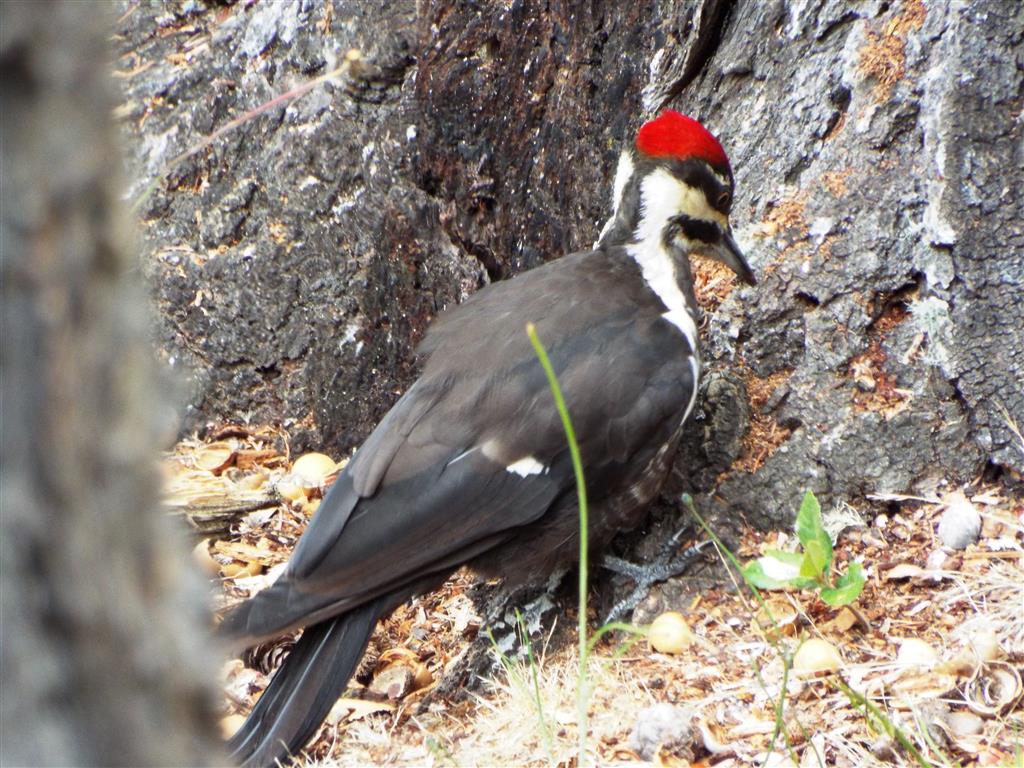
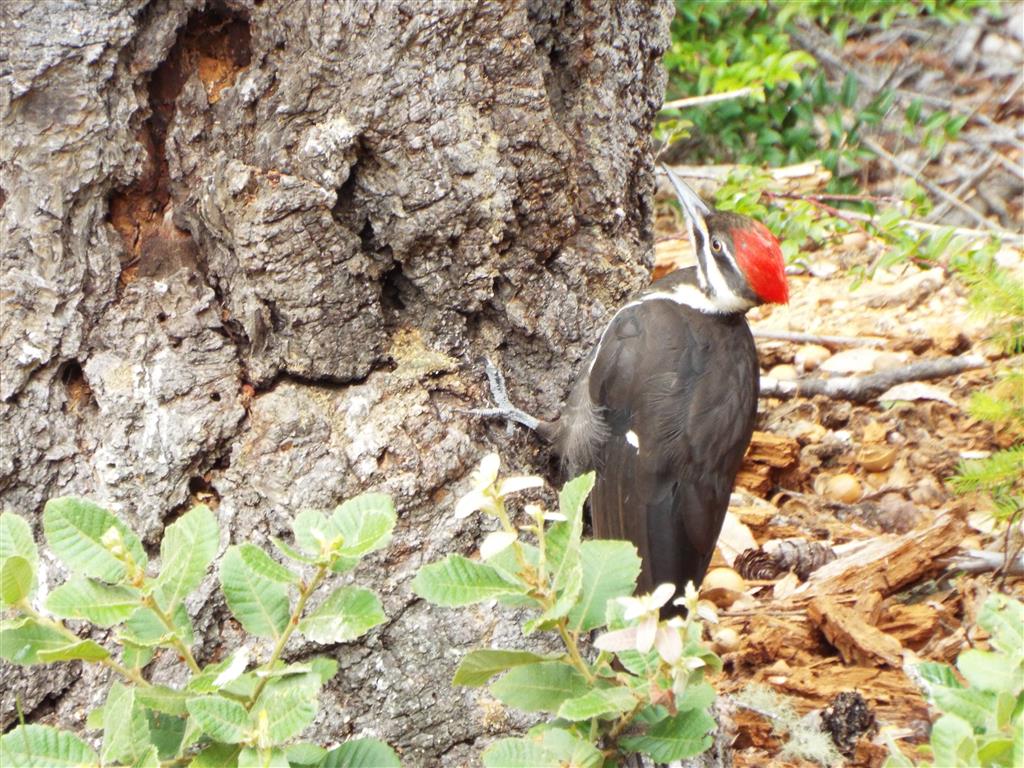
I often hear the unique call of a Pileated Woodpecker as they travel through the forest. Yesterday two of these distinctive birds landed on a tree in front of our house. Darla Buechner had one land just off her deck and she got some great photos.

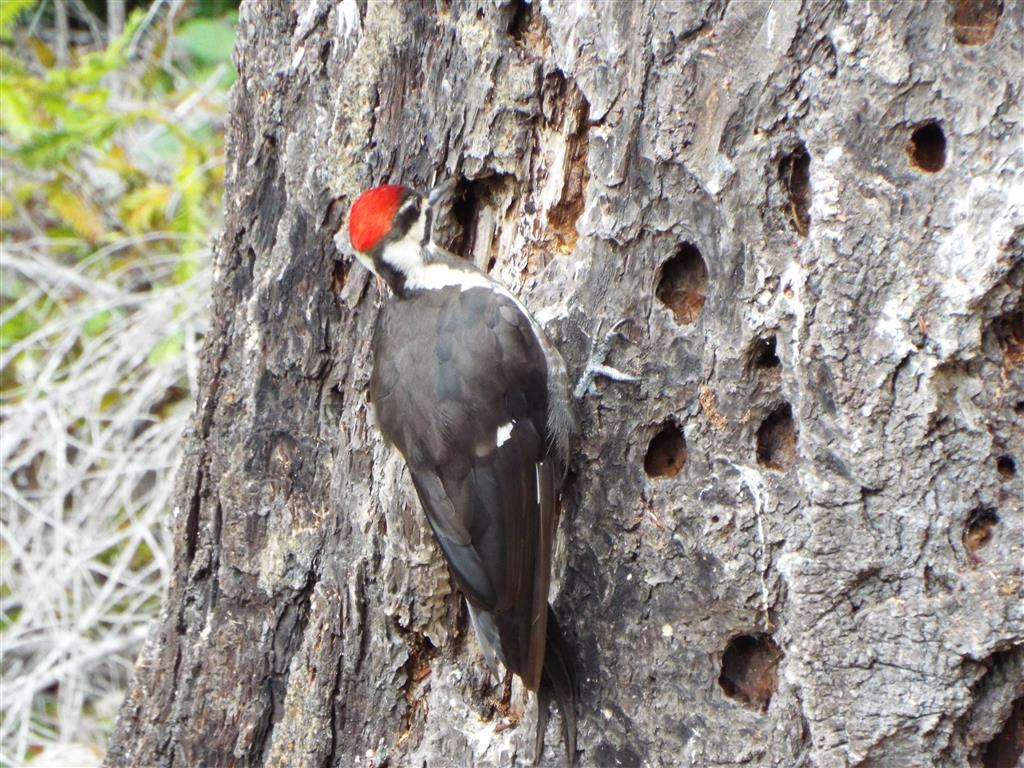
Pileated Woodpeckers eat ants and other insects, drilling away in dead wood. They make rectangular holes, which is unique to them.

You can see pieces of wood to the right of the photo above. This is indicative of a Pileated hard at work.

In the photo above the Pileated is on a granary tree, a snag that Acorn Woodpeckers are using to store acorns in the round holes. Darla thought the Pileated might be stealing the acorns and I guess that could be true. But I think it more likely this bird was snacking on bugs attracted to the acorns.

Thanks to Darla for allowing me to share her photos with you here. To hear the sounds of a Pileated Woodpecker, here is the link to the Cornell Lab of Ornithology: http://www.allaboutbirds.org/guide/pileated_woodpecker/sounds

And to see a cavity nest with two juvenile Pileateds taken by Nan Brichetto, here is the link: http://www.mendonomasightings.com/2011/05/31/pileated-woodpecker-feeding-two-babies-a-fantastic-photo-taken-over-the-weekend/

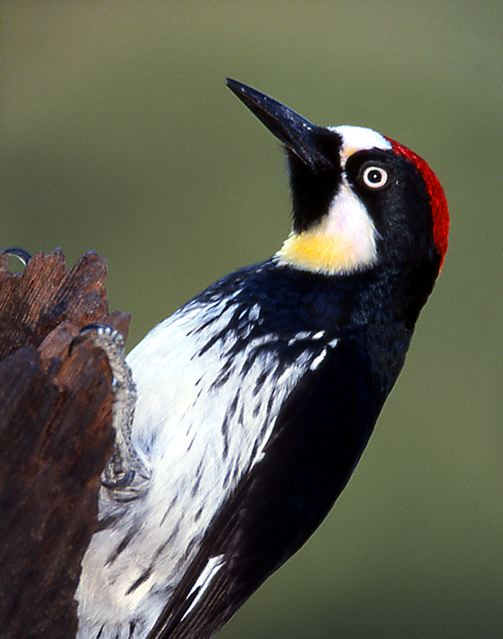
It's okay to play favorites, isn't it? I love the Acorn Woodpeckers that share the Mendonoma Coast with us. They are beautifully marked, have a unique call and have great swooping flights as they come to our feeder. They particularly love sunflower seeds. Their main food source, though, is acorns and there are many Tan Oaks on our property.

Siegfried Matull photographed a male Acorn Woodpecker and has kindly allowed me to share his photo with you here. You can tell it's a male because there is no black between the white and red on its forehead.

Below is a photo I took of our bird feeder. I entitled it, "Are you done yet?" These are two females. Note the black in-between the white and red on their foreheads.

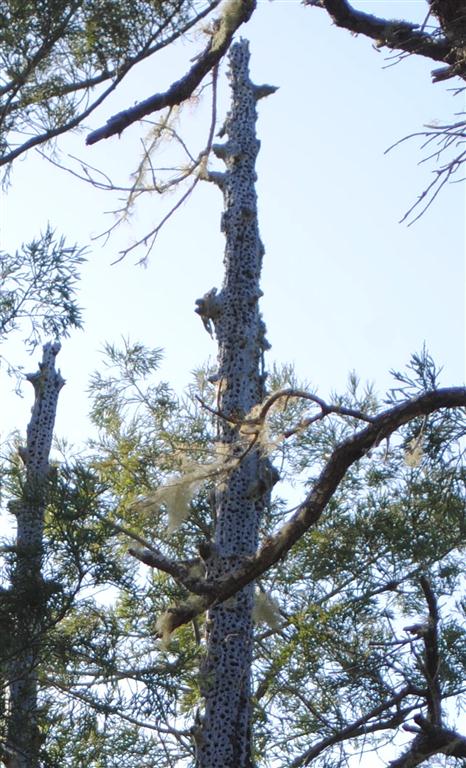
Acorn Woodpeckers work hard to store acorns in a granary tree. Here are two such trees on my neighbor's property. There are hundreds of holes in these trees. I was only able to photograph the top 1/3rd of the tall tree so you'll just have to imagine how big these granary trees are. Each hole will have an acorn stuffed in it in the fall. They will have to defend their food from raiding Jays.

It would have been a hardship for our Acorn Woodpeckers if my neighbor had taken these dead trees down. Thank goodness she didn't! They are serving a higher purpose.