Tag Archives: Cornell Lab of Ornithology

Sara Bogard was at the bluffs of the Point Arena Lighthouse and the Point Arena-Stornetta Lands counting Harbor Seals, as she usually does once a week. Citizen science at it's best! She saw this American Kestrel.
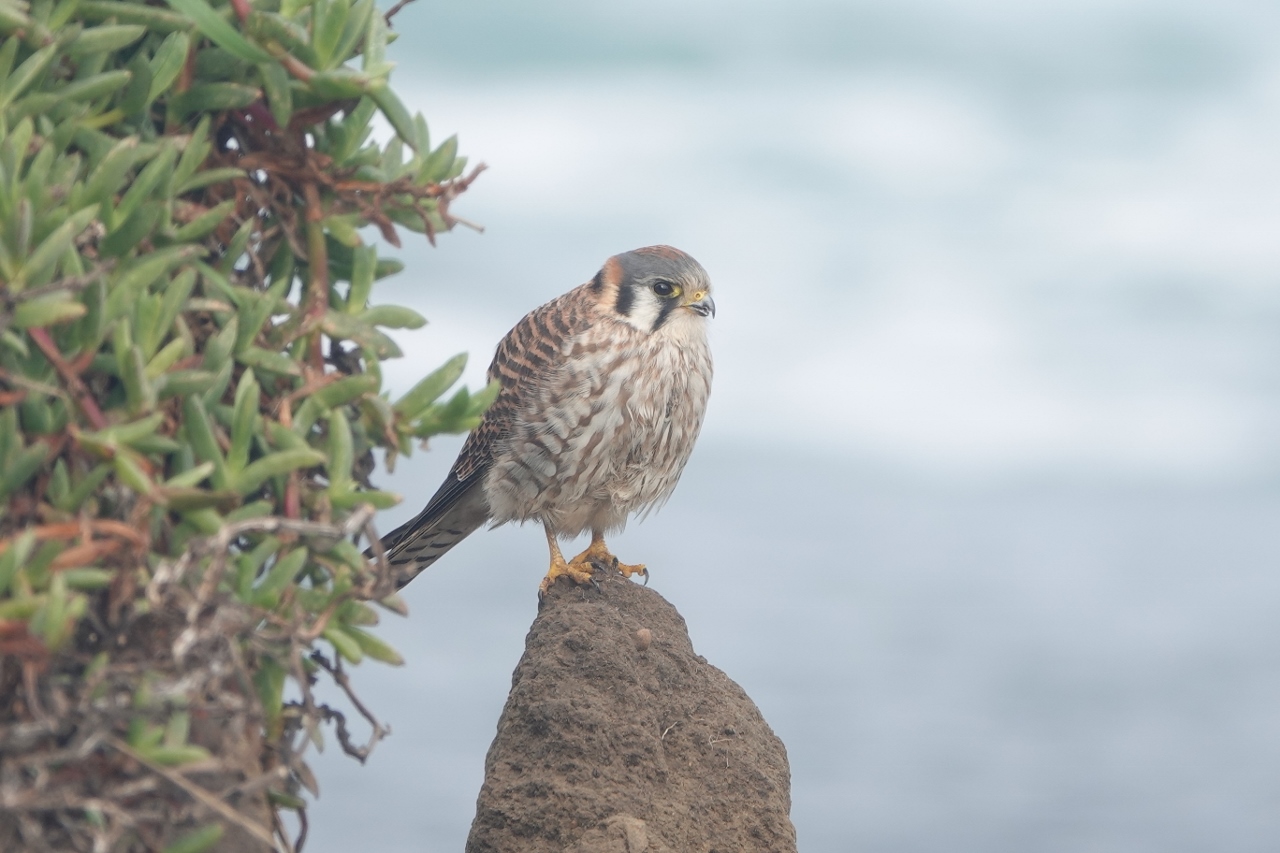
These Kestrels are the smallest falcons in North America. They are fierce hunters, though, of insects and small prey. The Cornell Lab of Ornithology says their numbers are declining and you can help them by putting up a nesting box. You can learn about how to do so at this link: https://nestwatch.org/learn/all-about-birdhouses/?__hstc=75100365.3ba4c962035e2b46bef5a13526048f2b.1532470093277.1578698034623.1579993283940.72&__hssc=75100365.2.1579993283940&__hsfp=942012614#_ga=2.46727719.1805588219.1579993283-500012005.1532470093

American Kestrels have a distinctive call that can help you identify them. You can listen at this link: https://www.allaboutbirds.org/guide/American_Kestrel/sounds

Thanks to Sara for allowing me to share her photo with you here.

Bonus sighting - a pod of Orcas, Killer Whales, was seen off our coast yesterday!

As I type this at 3 o'clock Saturday afternoon, it has begun to pour!

2 Comments

Ruby-crowned Kinglets are small birds, smaller than a warbler or a chickadee. The males have a patch of red feathers at the top of their heads. However that flash of red isn't often seen. Michael Reinhart recently photographed a male showing off those dramatically-colored feathers.

Notice the yellow toes! These birds constantly flick their wings, giving you a clue as to what you are seeing. Their calls are quite distinctive too. You can listen at this link: https://www.allaboutbirds.org/guide/Ruby-crowned_Kinglet/sounds

Thanks to Michael for allowing me to share his photo with you here.

ooo, we are going to have a big, wet, wonderful storm today and tomorrow. We need it, that's for sure. It's also turned quite cold - cold for the North Coast, that is. It's only 45 degrees at noon today.

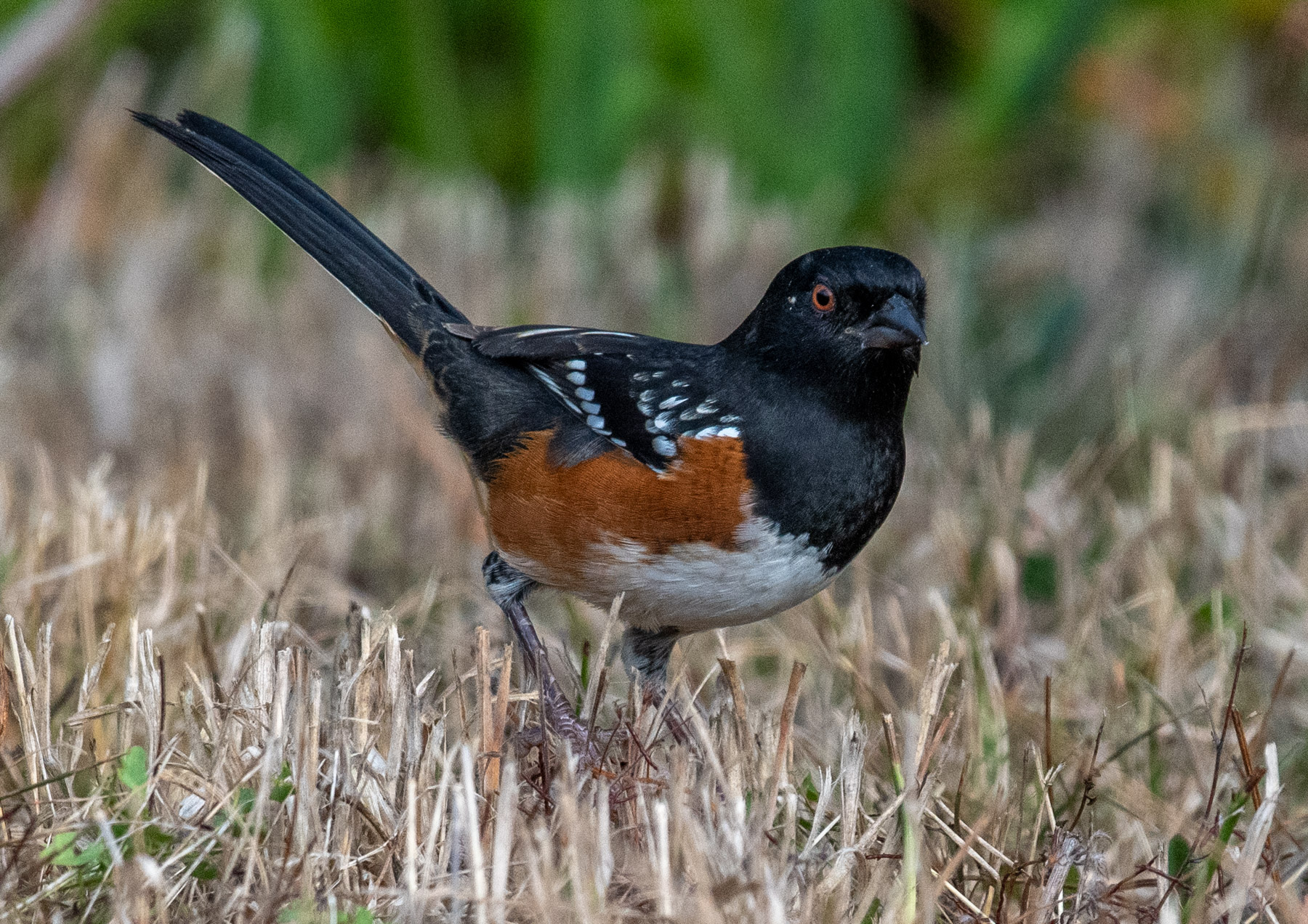
Rick and I often see a Spotted Towhee or two foraging for seeds under our bird feeder. They are very beautiful birds. Paul Brewer recently trained his camera onto one.

Their calls are rather quiet compared to other birds. You can hear their call at this link at the Cornell Lab of Ornithology: https://www.allaboutbirds.org/guide/Spotted_Towhee/sounds

Spotted Towhees used to be called Rufous-sided Towhees. They scratch for bugs and seeds on the ground with a two-footed backward-scratching hop. It's quite fun to watch.

Thanks to Paul for allowing me to share his photo with you here. To see much more of Paul's nature photography, here is his website: http://www.capturingnatureswonders.com/

Things are back to normal after the four day power outage. It's quite a beautiful day here on the Mendonoma coast.

I don't know how he finds such a wonderful sighting, but Michael Beattie once again photographs a beautiful scene. Here is a nest with the mother Great Horned Owl and her two chicks, seen north of Point Arena.

Great Horned Owls are powerful predators. They are able to take down birds and mammals bigger than themselves! But they  usually hunt for rodents. This is the owl that hoots. You can hear their call at this link to the Cornell Lab of Ornithology: https://www.allaboutbirds.org/guide/Great_Horned_Owl/sounds

Thanks to Michael for allowing me to share his photo with you here. You can see much more of Michael's photography at this link: https://www.facebook.com/Michael-Beattie-Photography-1856278251324808/

Sunny, breezy, simply beautiful here today.

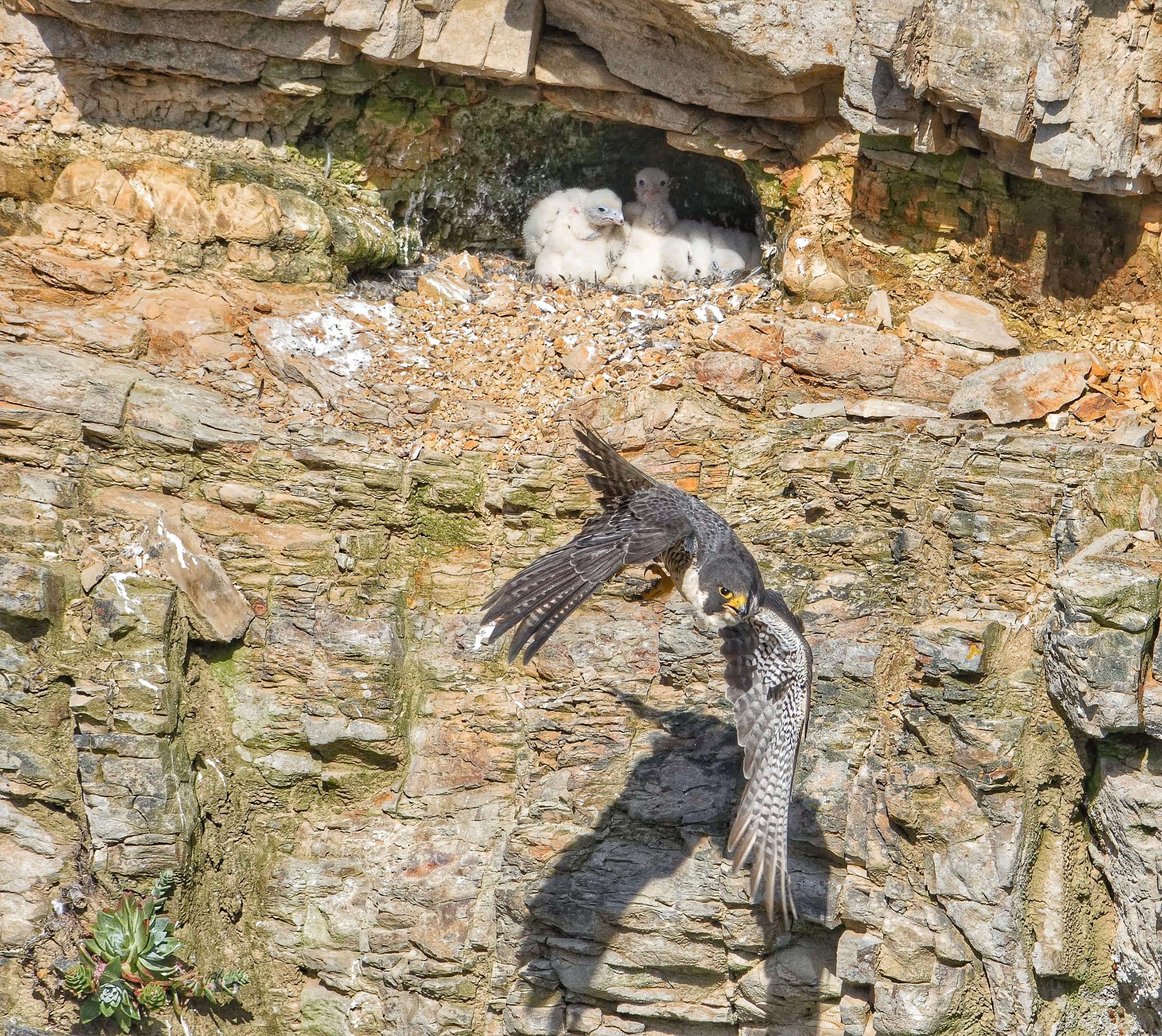
This year there are two nests in southern Mendocino county that I know of. Each has three white puffballs, chicks, in the nests. Michael Beattie watches one of the nests with his long lens. Here the mother has fed her chicks and is flying away to hunt for her family.

It will be fun to watch the chicks mature. That opening in the rocks looks to be a safe place for the Peregrines.

Fun Fact: A Peregrine can reach speeds of up to 200 mph when diving down on its prey, which are medium-sized birds. To hear the "kak, kak, kak" call of a Peregrine, here is a link to the Cornell Lab of Ornithology: https://www.allaboutbirds.org/guide/Peregrine_Falcon/sounds

Thanks to Michael for allowing me to share his photo with you here.

The heavy, wet fog of this morning has lifted, bringing us sunshine this afternoon.