Tag Archives: Cornell Lab of Ornithology

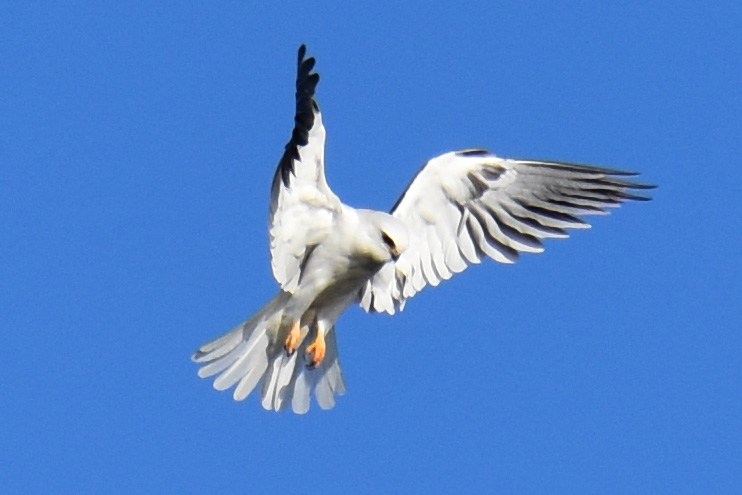
It's a treat to see a White-tailed Kite hovering in the air as she searches for a tasty rodent. Allen Vinson recently photographed a beautiful kite against an oh-so-blue sky.
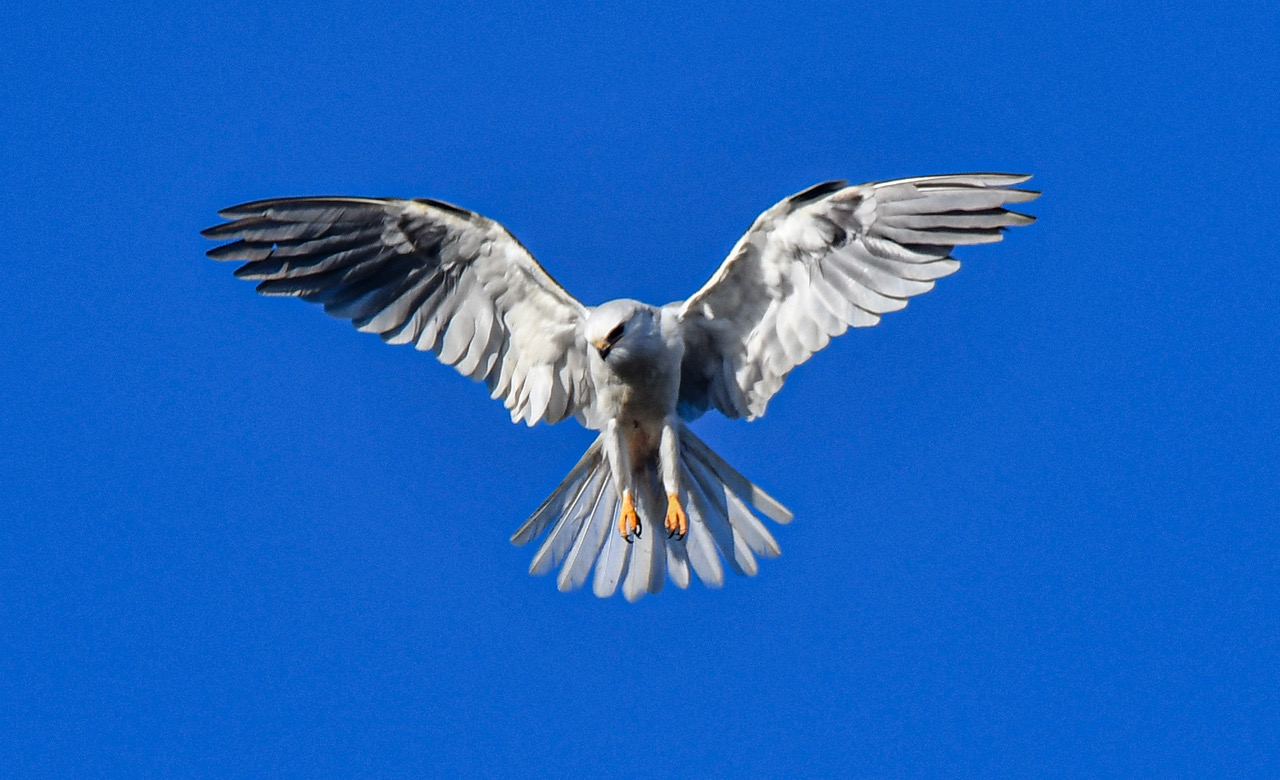
These small raptors are year-round residents of the West Coast. Look for them in grassy meadows. I've seen them at Gualala Point Regional Park, a great place to see wildlife.

The calls of White-tailed Kites are rather soft. You can listen to them at this link to the Cornell Lab of Ornithology: https://www.allaboutbirds.org/guide/White-tailed_Kite/sounds

Thanks to Allen for allowing me to share his photo with you here. To see much more of Allen's nature photography, here is the link: http://allenvinson.smugmug.com/

It's another sunny, warm, breezy day on the Mendonoma Coast today!
2 Comments

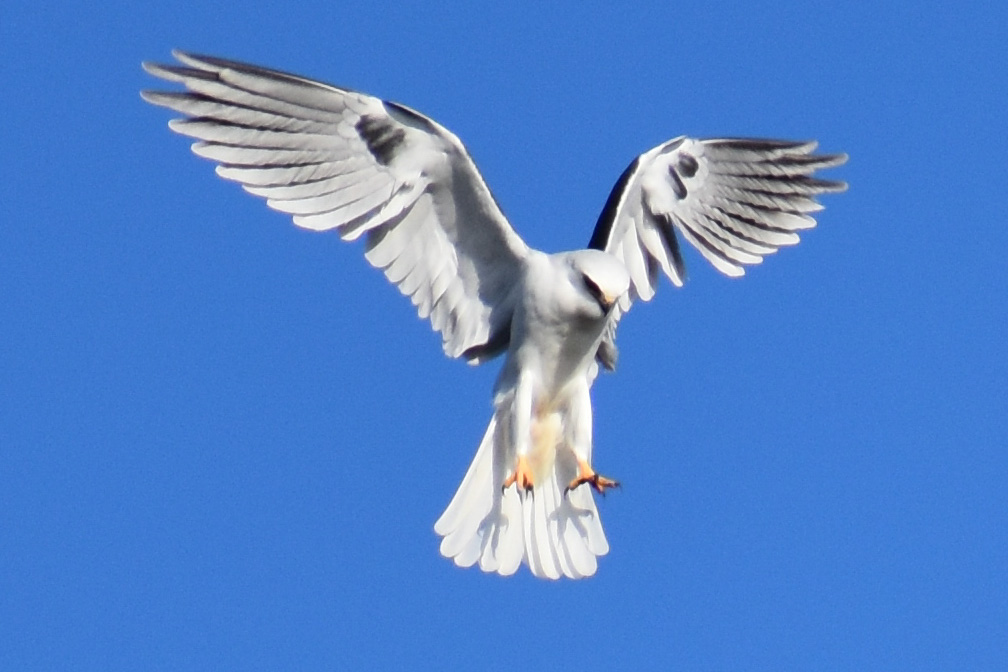
If I'm allowed to have favorites, White-tailed Kites are some of my favorite birds. Jennifer Massey photographed one hovering in air, getting ready to nab his dinner.

These kites hunt small mammals, and they can be seen hovering over grassy meadows.

During non-breeding season, White-tailed Kites are known to roost together in groups of up to a hundred or so birds. To hear their quiet, whistle-like calls, here is a link to the Cornell Lab of Ornithology: https://www.allaboutbirds.org/guide/White-tailed_Kite/sounds

Thanks to Jennifer for allowing me to share her photos with you here. In her photos, the sky is oh-so-blue. Not so today as cool fog  moved in.

Spring doesn't know...

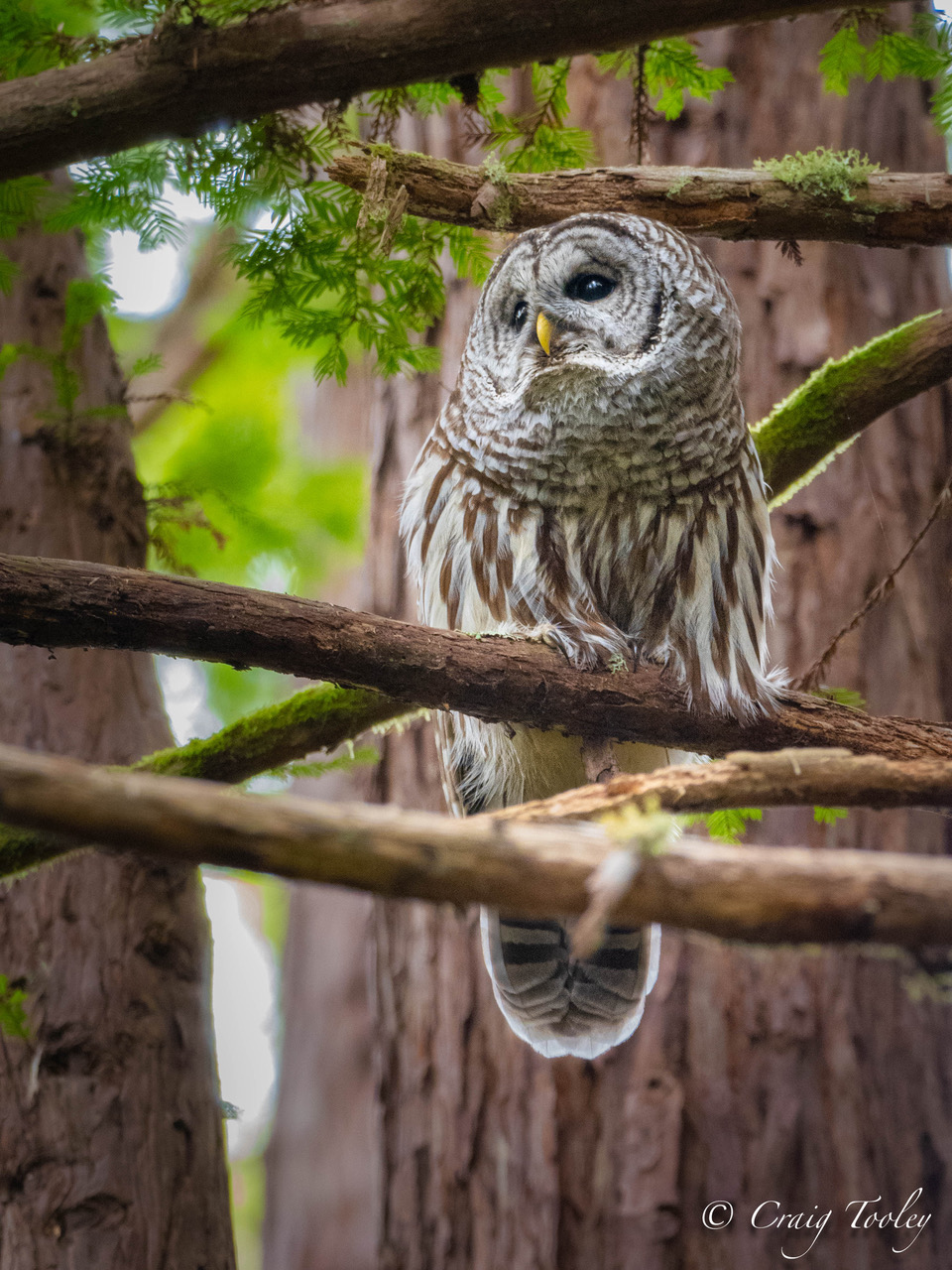
Craig Tooley recently photographed a Barred Owl, a large owl native to Eastern North America. It has, however,  made its way to the Pacific Northwest in recent years.

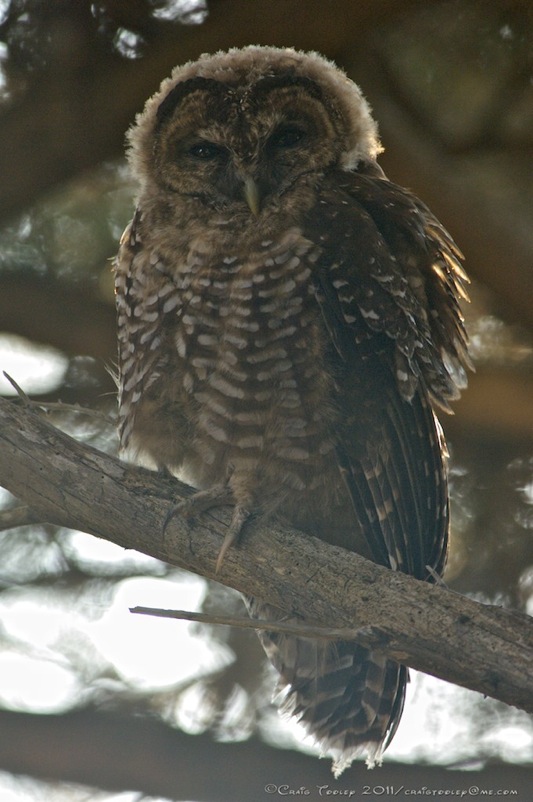
There is concern that Barred Owls will negatively affect the native Spotted Owls. The Barred Owl’s hooting call is described as, “Who cooks for you? Who cooks for you-all?” You can hear it for yourself at this link to the Cornell Lab of Ornithology: https://www.allaboutbirds.org/guide/Barred_Owl/sounds

To compare a Barred with a Spotted Owl, here is a look at a Spotted that Craig photographed some time ago.

I love owls, I admit it. I heard the hooting of a Great Horned Owl a few nights ago and it brought me comfort!

Thanks to Craig for allowing me to share his photos with you here. To see much more of Craig's wonderful nature photography, here is the link to his website: http://www.ruffimage.com

It's sunny today with a northwest wind - more upwelling in the ocean! Rain coming in for the weekend.

2 Comments

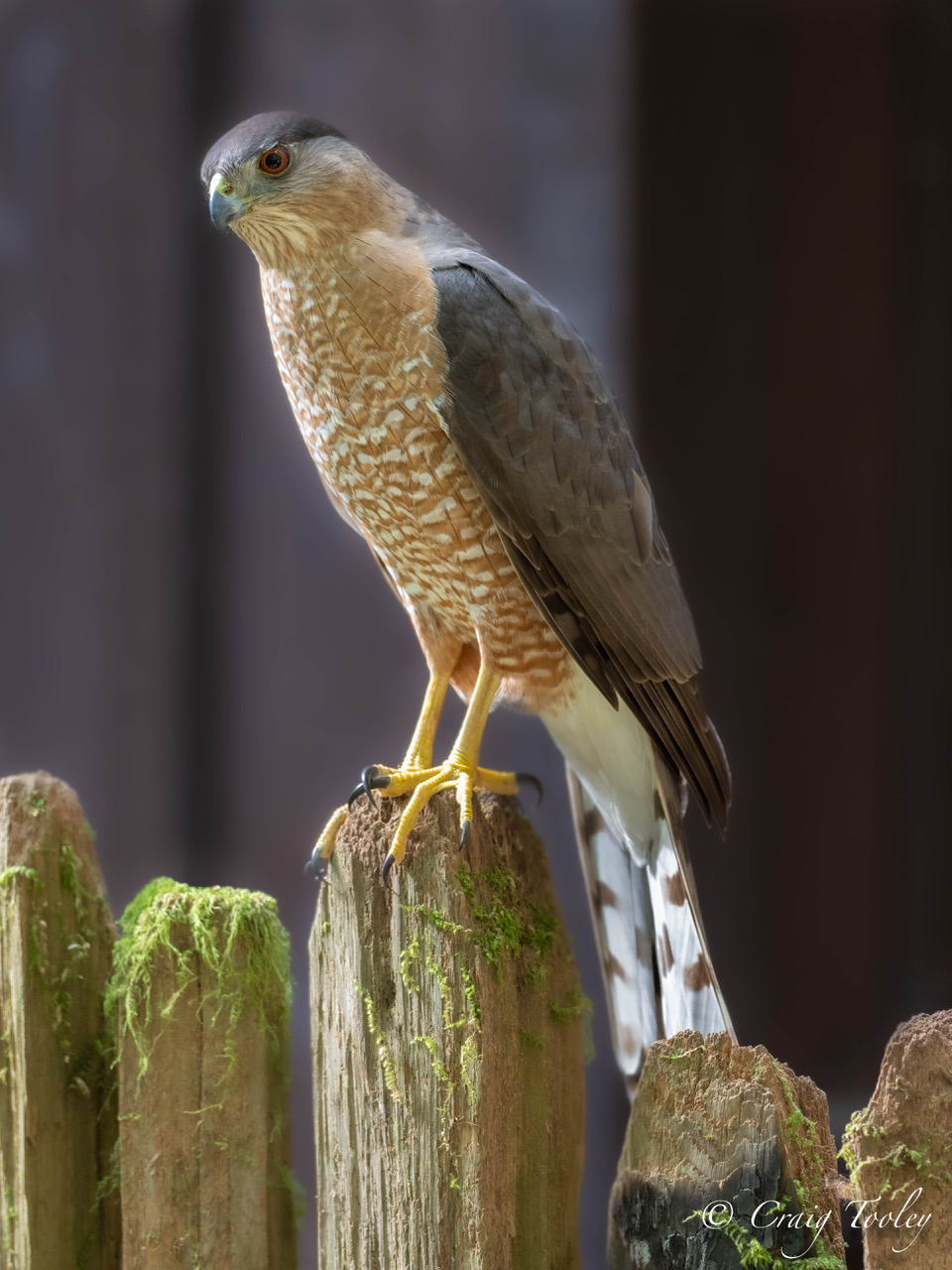
Craig Tooley spotted this beautiful hawk recently. We first thought it was a Sharp-shinned Hawk but it turns out the experts agree it's a Cooper's Hawk.

Here's what the Cornell Lab of Ornithology says about these hawks:

"Among the bird world’s most skillful fliers, Cooper’s Hawks are common woodland hawks that tear through cluttered tree canopies in high speed pursuit of other birds. You’re most likely to see one prowling above a forest edge or field using just a few stiff wingbeats followed by a glide. With their smaller lookalike, the Sharp-shinned Hawk, Cooper’s Hawks make for famously tricky identifications. Both species are sometimes unwanted guests at bird feeders, looking for an easy meal (but not one of sunflower seeds)." Yes, they eat smaller birds.

To hear their call, here is the link to the Cornell Lab of Ornithology: https://www.allaboutbirds.org/guide/Coopers_Hawk/sounds

It's not a musical call, is it?  Thanks to Craig for allowing me to share his photo with you here. To see much more of Craig's nature photography, here is the link to his website: http://www.ruffimage.com

Feels like a storm is coming in this afternoon!


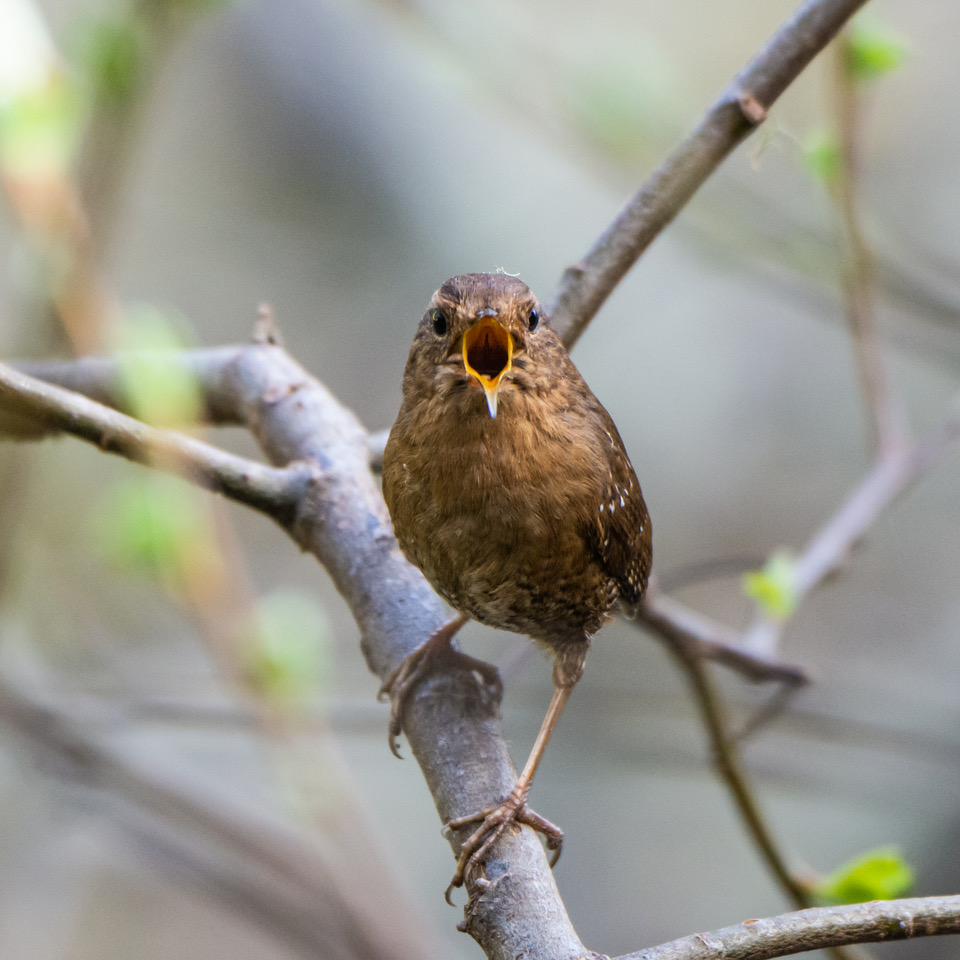
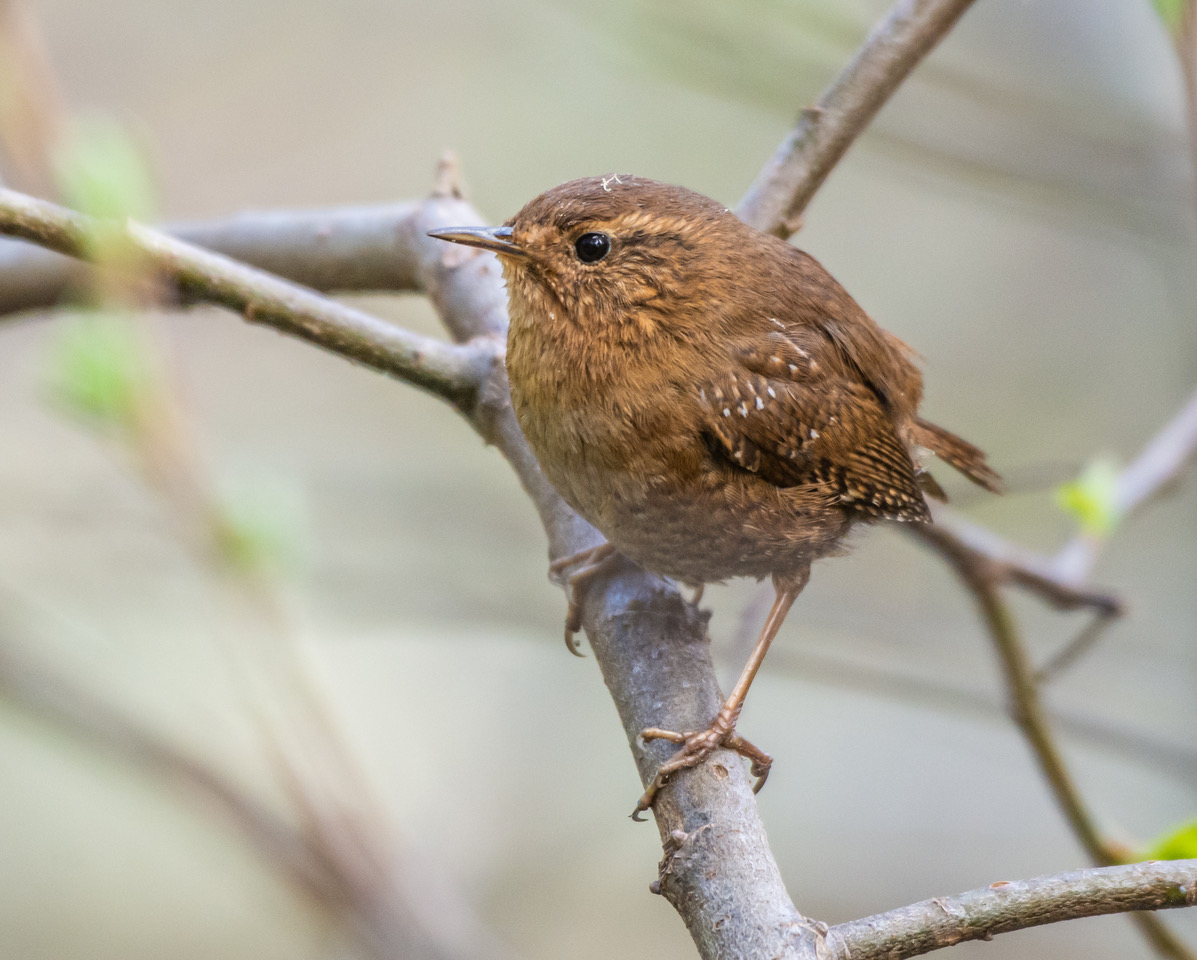
Michael Reinhart was photographing Pacific Wrens last week. I often hear them but rarely see these tiny birds. Mike's first photo here made me laugh - the male has his mouth open wide, like an opera singer!

The Cornell Lab of Ornithology describes their songs thusly: "Their song is a sweet series of tumbling, trilling notes with a staccato quality. Pacific Wrens have a large catalog of complex songs. Males sing for 5 to 10 seconds, stringing together as many as 50 different phrases." You can listen to their calls at this link: https://www.allaboutbirds.org/guide/Pacific_Wren/sounds

In these days when we are filled with worry, it's good to remember that life goes on, and that male Pacific Wrens are singing for mates.

Thanks to Mike for allowing me to share his photos with you here.

We are having a "wait five minutes" type of day. Sometimes brilliant sunshine, sometimes a little rain, with dramatic clouds drifting in. It's quite lovely.