Tag Archives: Allotropa virgata

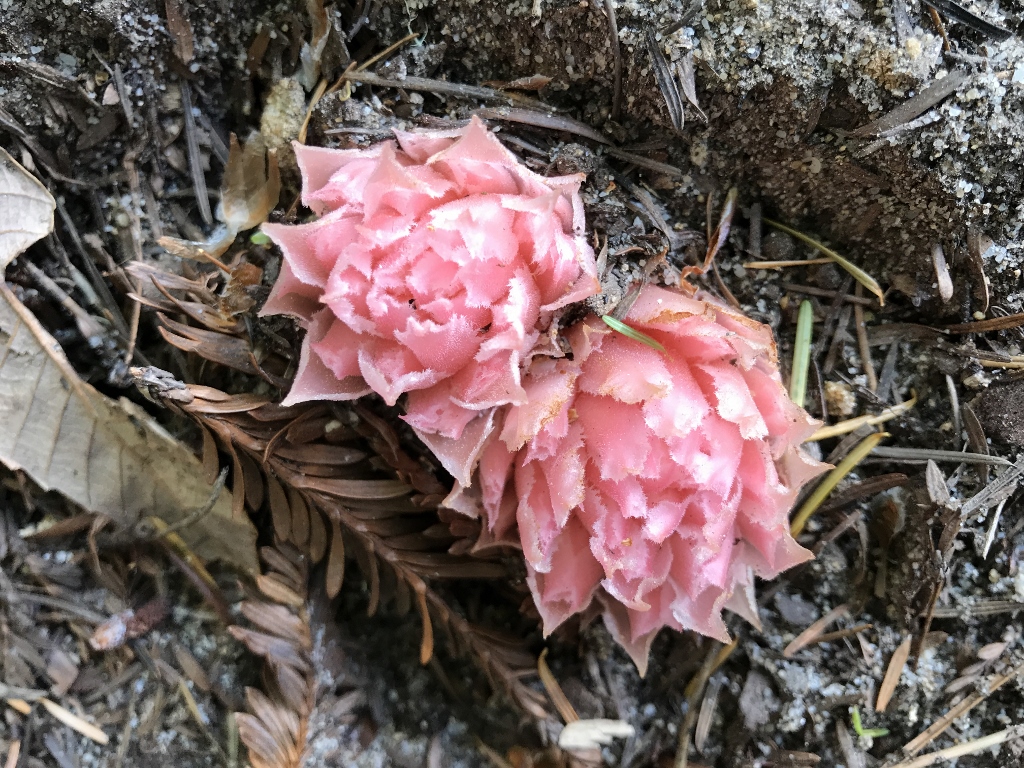
Our property in Anchor Bay has sandy soil. Matsutake mushrooms thrive in it and so do two very interesting and rare plants. The first is Gnome Plant, Hemitomes congestum. In years past, we have had a handful of them appear. This year we have a village of them! Gnome plants have no stem or leaf, and they produce no chlorophyll. They get their nutrients from decayed matter
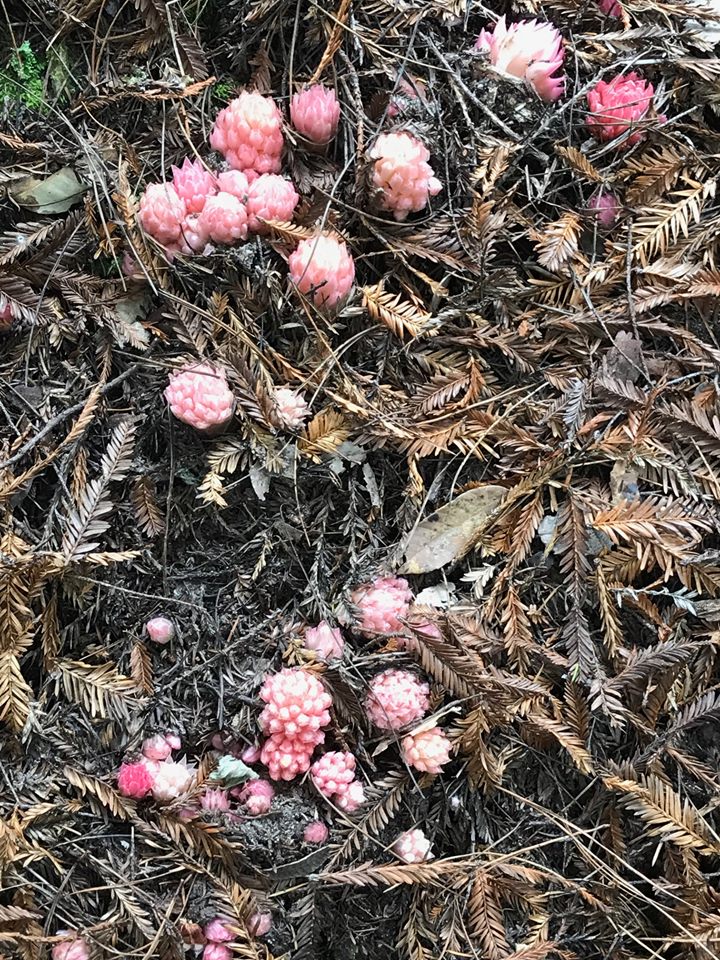
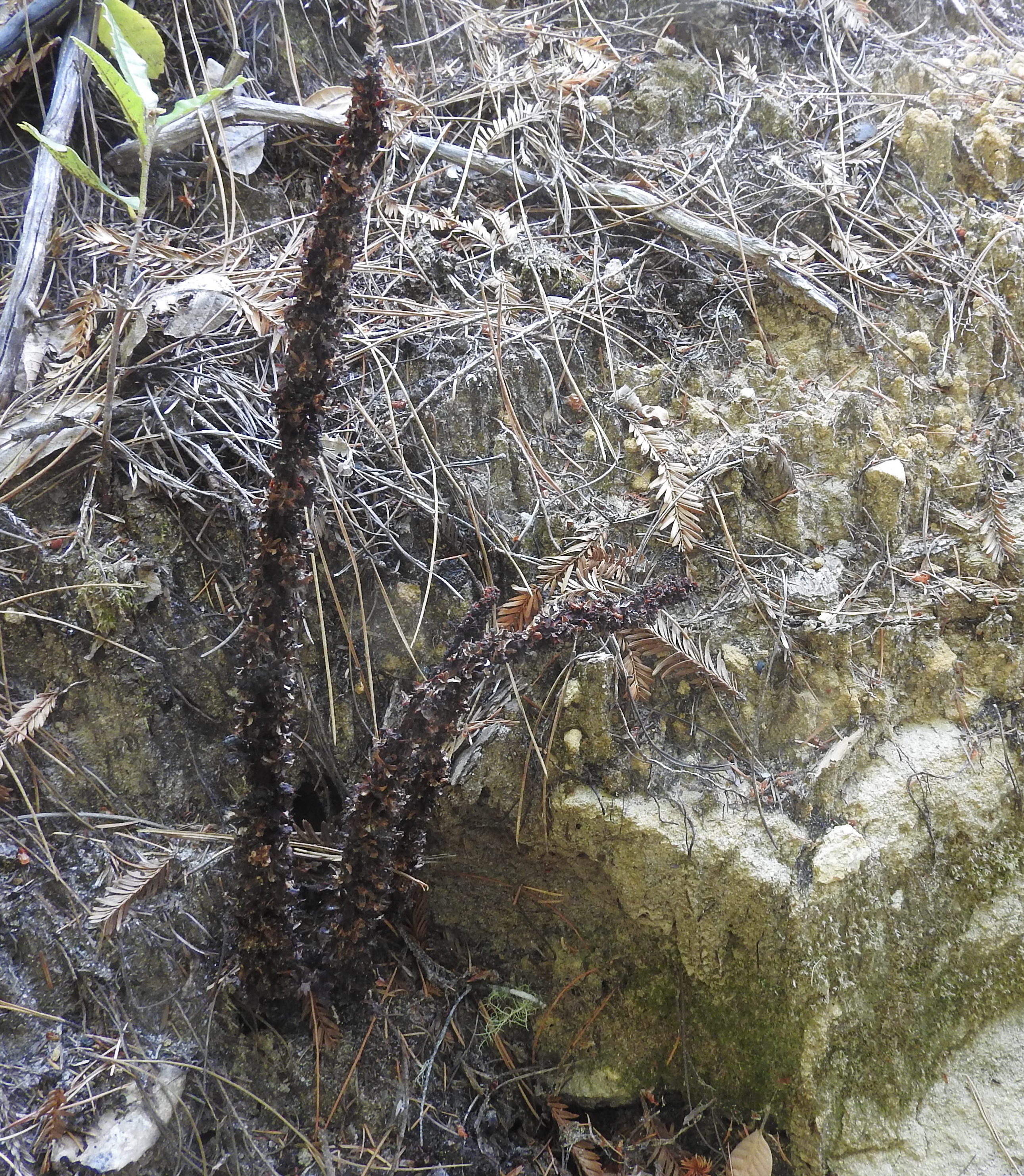
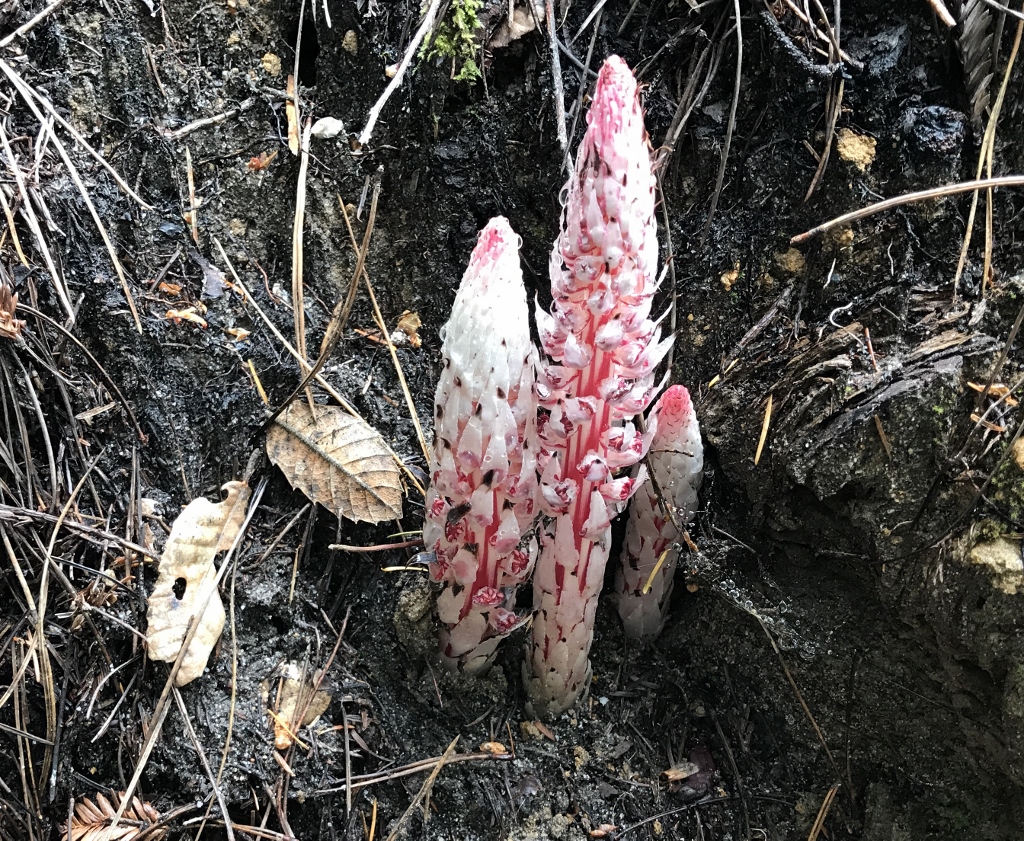
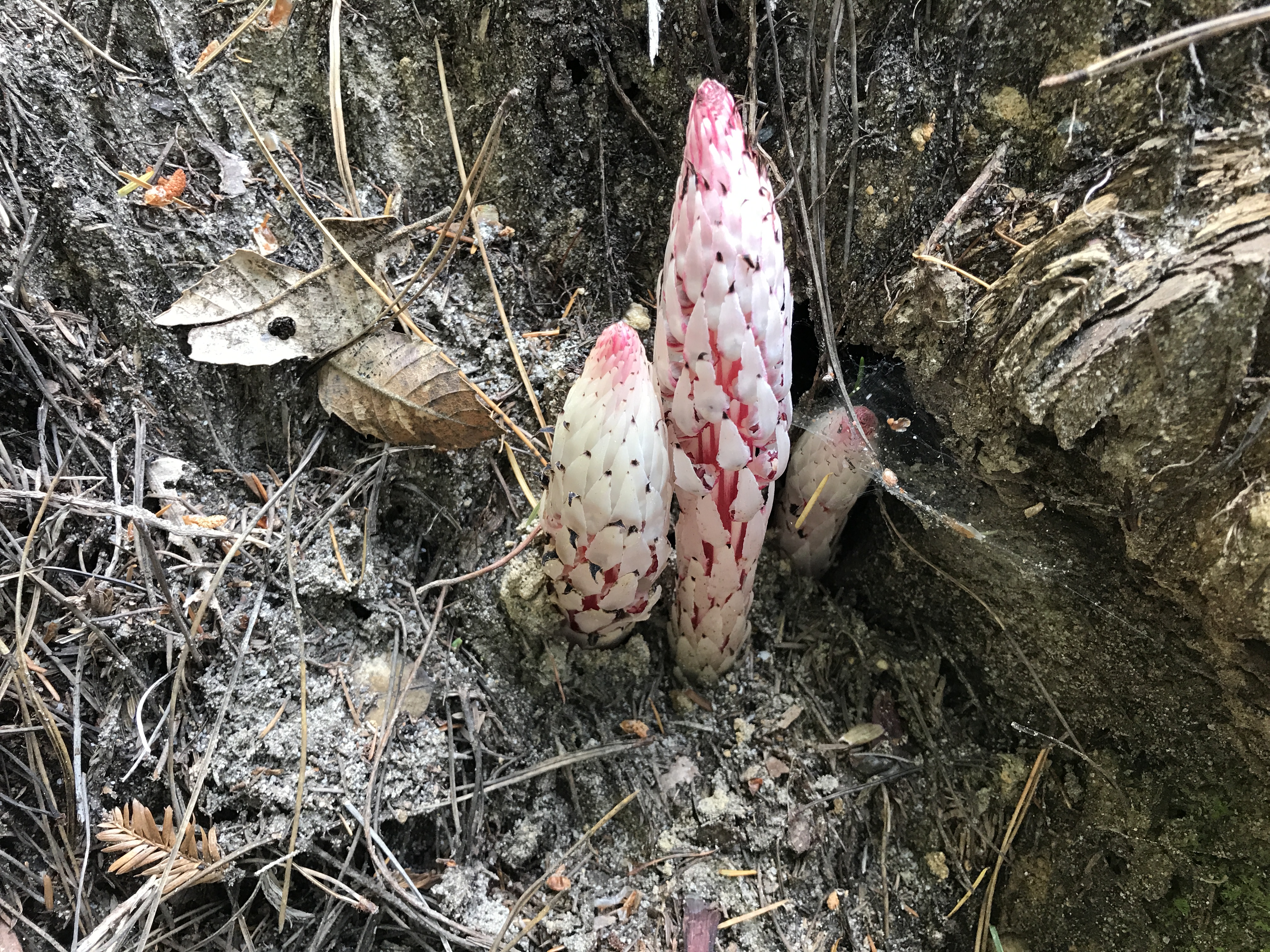
Sugarstick, Allotropa virgata, is quite rare. Here are two emerging. On the far right are stalks of Sugarstick that bloomed two years ago. Amazing that after two winters worth of storms that the stalks are still standing. These plants also produce no cholrophyll. They get their nutrients from fungus.
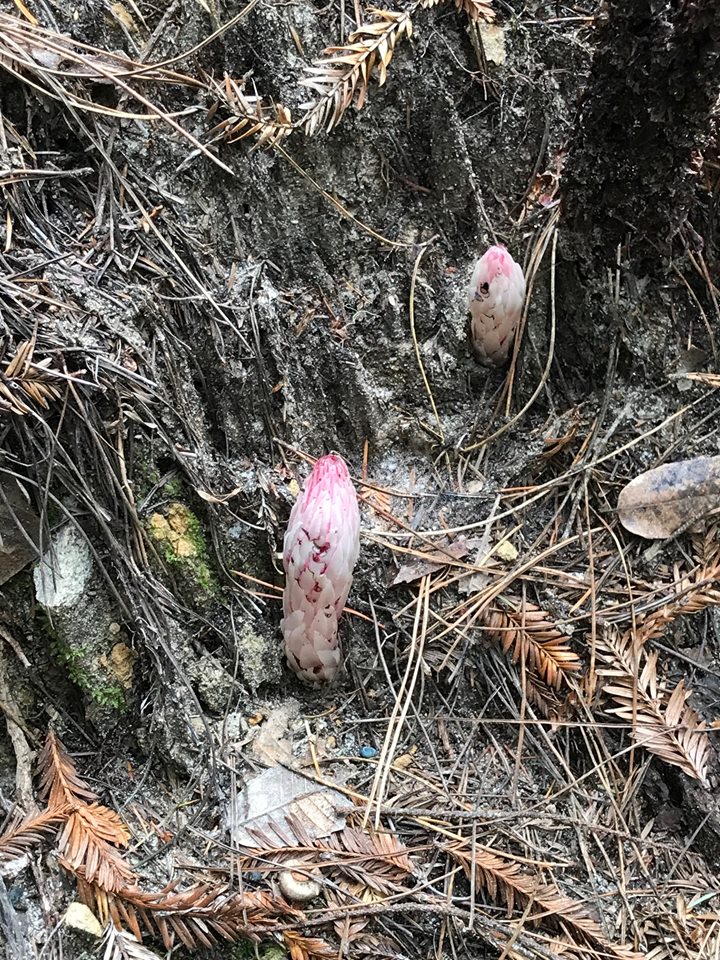
The Gnome Plants and Sugarsticks are growing in the same area. And, yes, we find Matsutakes in the same area.

It will be fun to show you how these Sugarsticks evolve.

We are having a beautiful sun-splashed day today. Happy Mother's Day to all women who make an impact on children's lives.
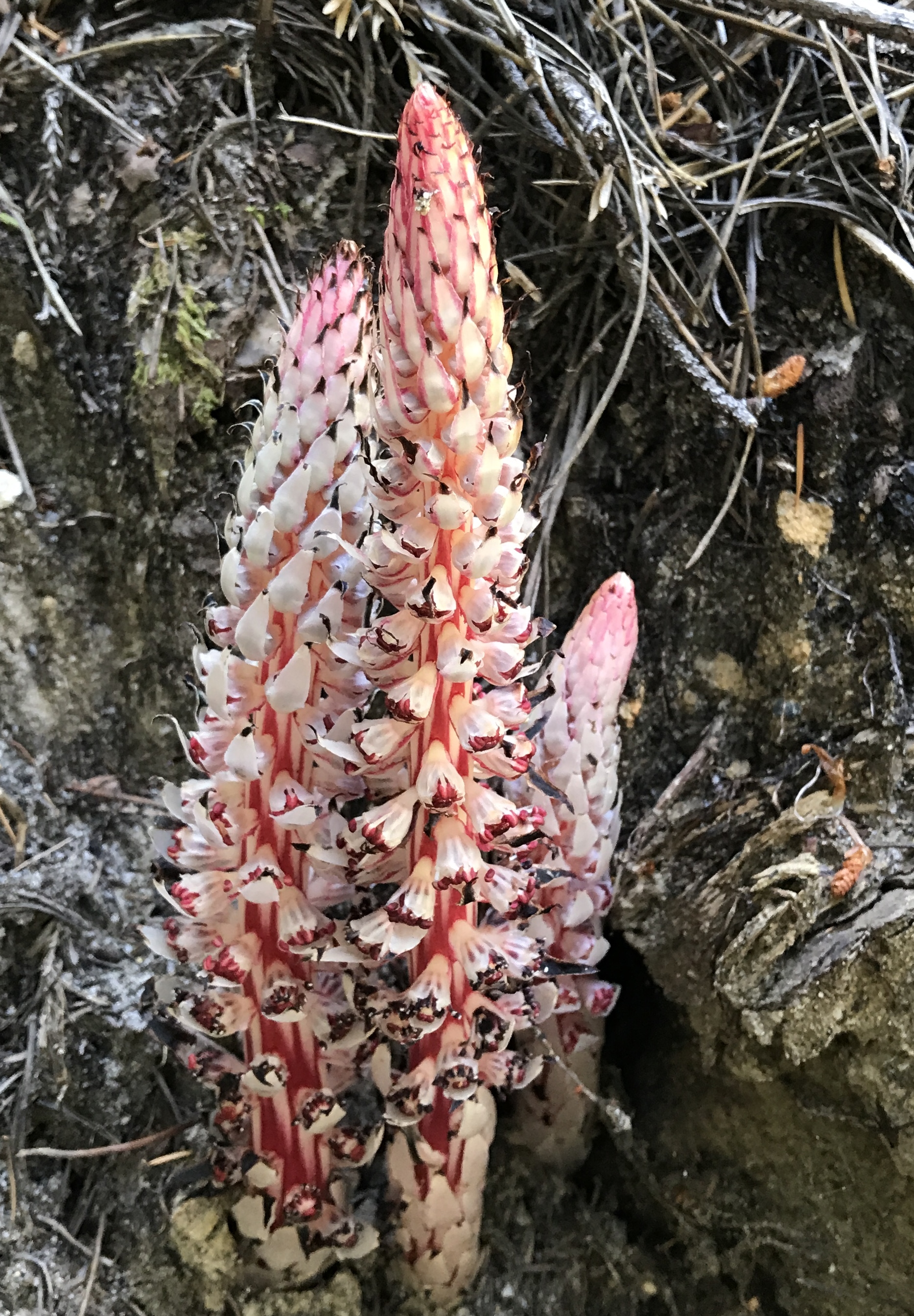
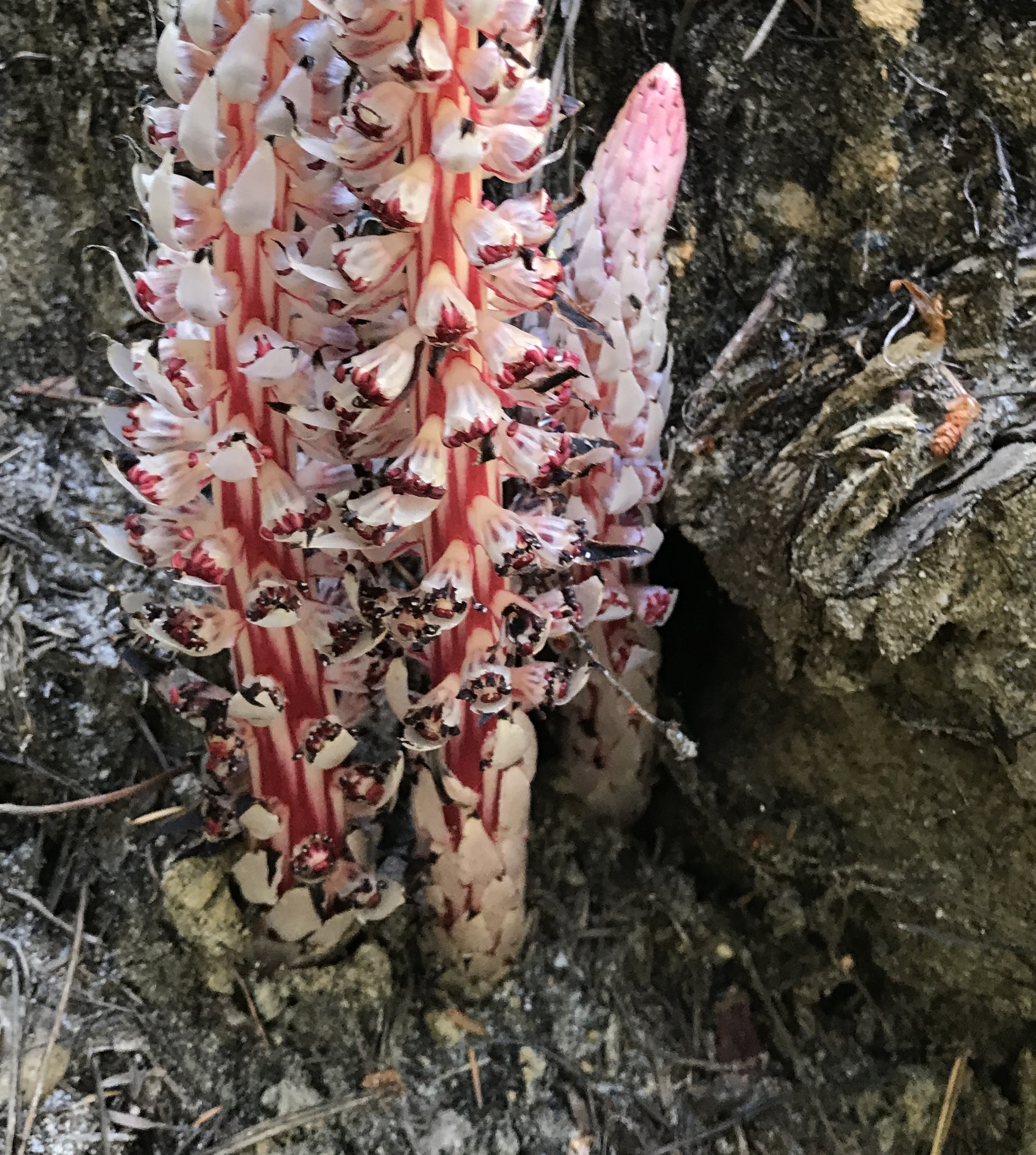
A rare plant has bloomed near Rick’s and my home in Anchor Bay, last year and this year too. We took wildflower aficionados Mel Smith and Linda Bostwick to see the spiky maroon and white flower last weekend. There, growing in sandy soil and forest duff, was a Sugarstick, Allotropa virgata.

Here's a closer view of the flowers - they are quite beautiful.

Sugarsticks, also called Candysticks, are parasitic plants. They feed on fungi in the soil. The two places I’ve found them have Matsutake mushrooms in the fall. If you have known Matsutake spots, look and see if you might also have Sugersticks. Last year’s flowers are still standing as leathery thin stalks.

Interesting that they seem to be associated with Matsutake fungus!

We have had cool, foggy weather on the Mendonoma coast this week. The sun finally appeared mid-afternoon. There are lots of people here with their fancy cars, as there is a car show on Saturday at Gualala Arts. It's free and lots of fun. Here is a link to the Gualala Arts Center about the event: http://gualalaarts.org/2018/07/10th-annual-gualala-arts-auto-show-8th-annual-pinewood-derby/

We have found a family of Gnome Plants, more than fifteen of them, growing by a trail we use every day. There were three plants growing nearby on the side of the trail that we thought were gnome plants too. But they grew into something quite different - Sugarstick, Allotropa virgata. The first photo was taken on May 11th and the second on May 6th. You can see the bigger one is just beginning to bloom.

And here's a look at two of the Gnome Plants, Hemitomes congestum.

Both of these plants get nutrients from underground fungi, which are on the roots of nearby trees. A fun look at something unusual for you today!

1 Comment

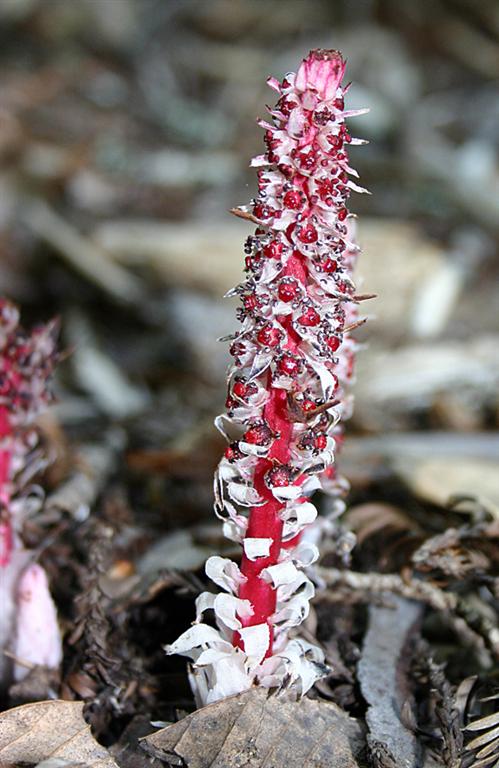
Sugarstick, also called Candystick, is a very unusual plant that grows on the West Coast. Its Latin name is Allotropa virgata. "Allotropa" means turned differently and refers to the flowers that turn outward or upward on this plant. It's unusual in that it doesn't have chlorophyll and is incapable of photosynthesis. So how does it survive? It obtains its food from fungi that are associated with host trees such as Douglas-Fir and Tan Oak.

It's a rare treat to find one. Nan Brichetto photographed this beauty and I thank her for allowing me to show it to you here.