Sightings

Nocturnal Western Spotted Skunks are the smaller cousins of the ubiquitous Stripped Skunk. Some people call them Civet Cats, but that is incorrect. In ten years of doing my column in the Independent Coast Observer, this is only the third photo of one that has been sent in. Shannon Hughes was the lucky photographer.
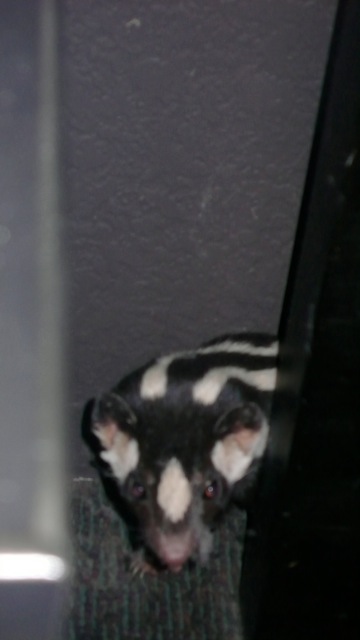
Western Spotted Skunk by Shannon Hughes

The evening had been warm. This little skunk entered Shannon's home and wandered around for a bit. Like the bigger Stripped Skunk, it can spray. But this little one just ambled back out, most likely looking for its favorite food - insects, mice and berries.

One other photo was taken by John Bower a few years ago. A Spotted Skunk was trapped in a garbage can. Looking at this photo, I now wonder if this was a young one.
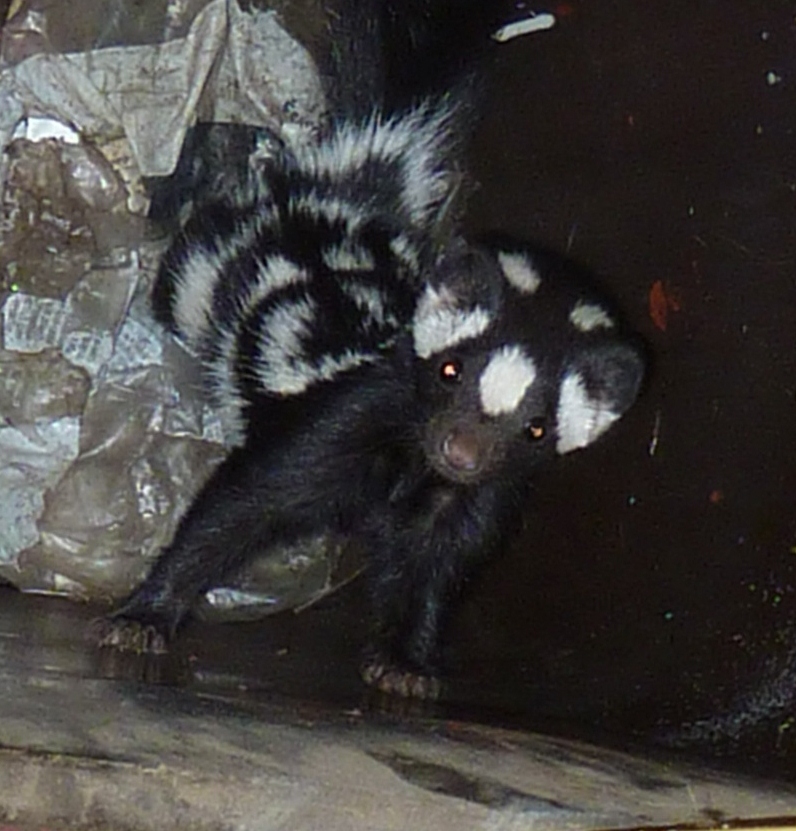
Spotted Skunk by John Bower

The white patch on its face between the eyes is distinctive to this species of skunk.

Thanks to Shannon and John for allowing me to share their photos with you here.
• 2 Comments

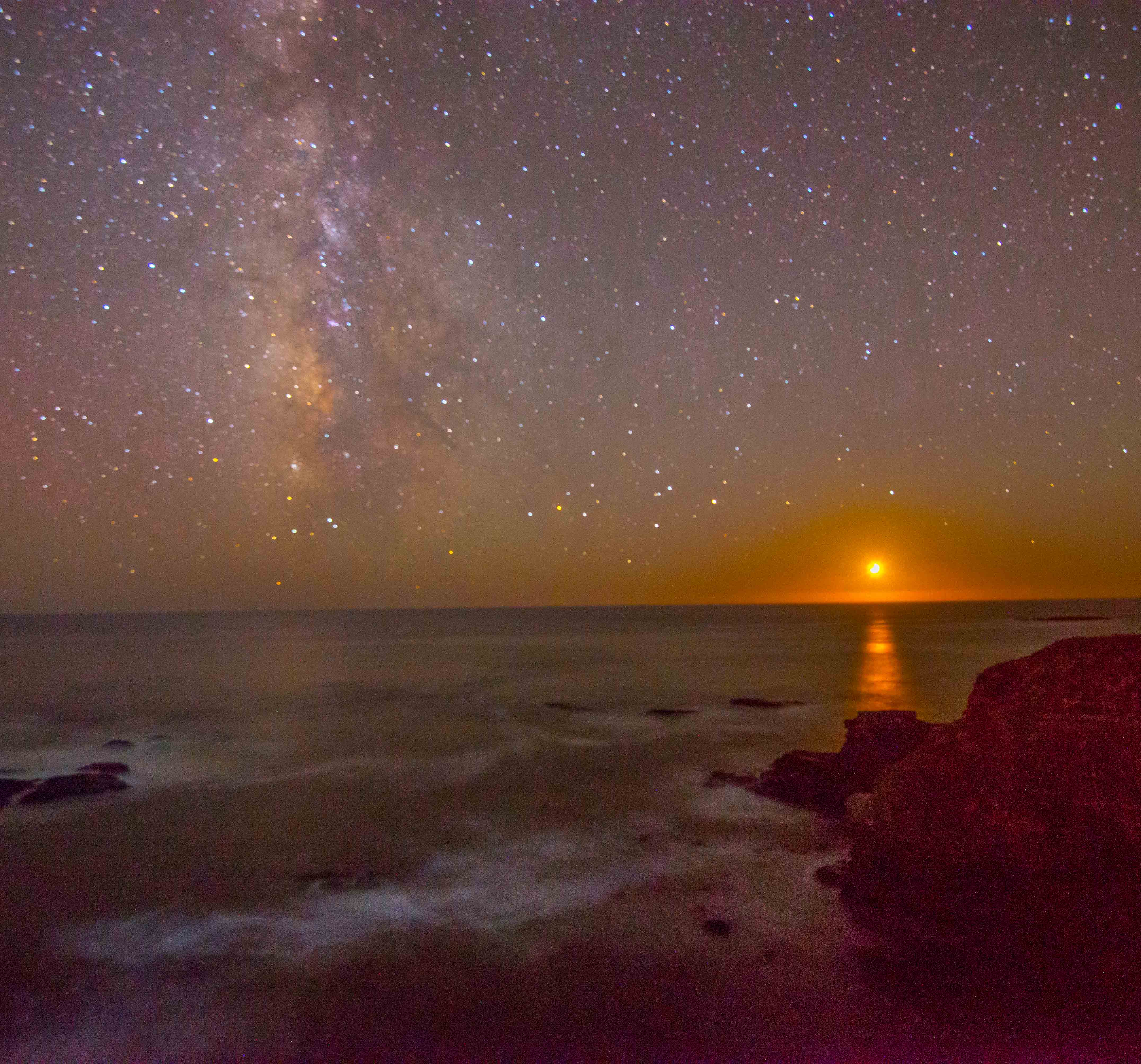
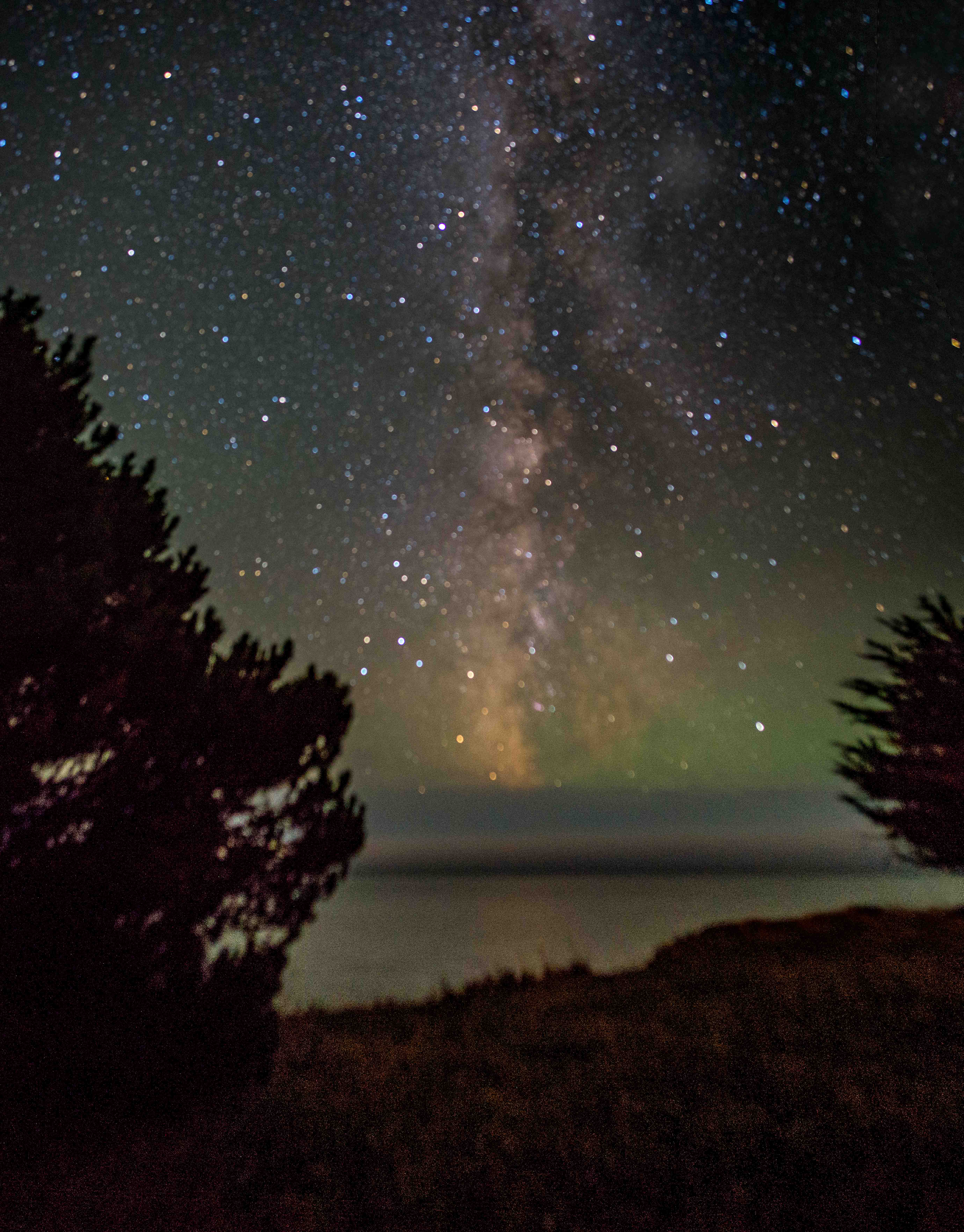
Paul Brewer has been photographing the night sky. Just look at this beautiful photo of the Milky Way and the starry skies, with a fog bank hovering over the Pacific Ocean.

Milky Way by Paul Brewer

And if that wasn't beautiful enough, a few nights ago Paul photographed the Milky Way with the setting moon.

Milky Way and the setting sun by Paul Brewer

I asked him how he was able to get photos like these. This is what he wrote, "Basically, and most important you need to be looking for
opportunities and have a camera ready. It is really nice to have all
these opportunities where you live so you can run out the door and take
a shot.

"When stars are involved, you have to shoot with a big aperture,
little number, like f/2.8. The shots also are long exposures but not to
long or the stars become streaks instead of points. The rule of thumb is
no longer than 500 divided by the focal length of the lens. Example 500
divide by 20mm lens equals 25 second exposure maximum. Focusing at
infinity is also difficult at night so I use live view plus trial and
error to get it sharp. You have to then adjust your ISO up high enough
to expose the stars/milky-way.

"In other words you really need to know
your equipment which takes practice. It is essential to shoot off a
solid tripod using a remote shutter release so camera shake is minimized.
"Milky-way shots are best achieved in summer months within a couple
of days either side of a new moon. Having a friend like [photographer] Craig Tooley also helps as yesterday he advised that I turn on the Long exposure noise reduction feature in my camera and shoot with the mirror up. It really made a difference."

Thanks to Paul for allowing me to share these beautiful photos. To see much more of Paul's nature photography, here is the link to his website:  http://www.capturingnatureswonders.com/

Margaret Lindgren is the owner of Unbeaten Path Tours. She recently took clients out to the Point Arena-Stornetta Lands. This is what they found - a fogbow or white rainbow.

Fogbow by Margaret Lindgren September Fogbow by Margaret Lindgren

They are pretty rare. Look for one in the morning hours when the fog is about bluff high. Perhaps you will see a fogbow too.

Thanks to Margaret for allowing me to share her photos with you here. To learn more about Margaret's hiking tours, here is the link to her website: http://www.unbeatenpathtours.com/index.html

Sierran Treefrogs, tiny green frogs, are fun to spot. Karen Tracy found one alongside the Gualala River recently.

Sierren Treefrog on the banks of the Gualala River by Karen Tracy

These frogs can change color to match their surroundings, but mostly we see them in their green form. They used to be called Pacific Treefrogs, but their name was changed recently.

Thanks to Karen for allowing me to share her photo with you here.

We have a lovely bush growing against the house called abelia. It flowers for months. Bees love it, as do hummingbirds. And the Monarchs love it too. I saw a Monarch fly to it earlier today.

Monarch Butterfly nectaring on abelia by Jeanne Jackson

Monarchs are migrating through our area now, heading south. These are the long-lived generation, the Methusalah generation.

Here is a close-up of a Monarch, taken by Clay Yale.

First Monarch of the season by Clay Yale

To track the migration of Monarchs, here is the link to Journey North: http://www.learner.org/jnorth/  This is a citizen science website where people like me and you can share our sightings. They track many creatures, including hummingbirds and gray whales. Join in the fun!

Thanks to Clay for allowing me to share his photo with you here.