Sightings

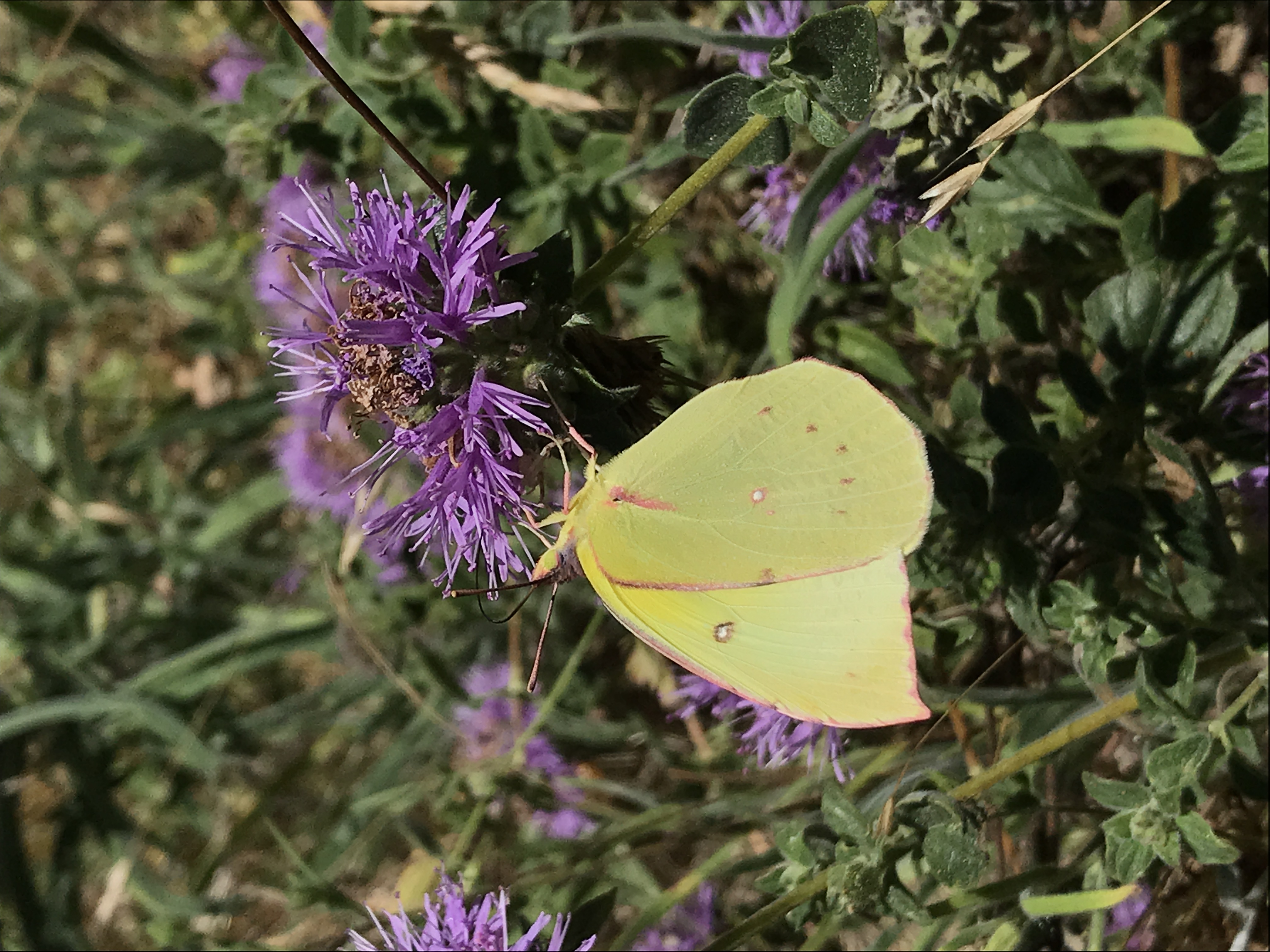
Will Ericson had a rare sighting of a California Dogface Butterfly near Annapolis.

He wrote, “They had been hilltopping on the mountain and pollinating almost exclusively purple-colored flowers. I almost never see them.” Hilltopping, also spelled hill-topping, is a mate location behavior where the males fly up to the top of a hill to try an attract a female.

Thanks to Will for allowing me to share his photo with you here.

It's a lovely day today on the Mendonoma Coast.

2 Comments

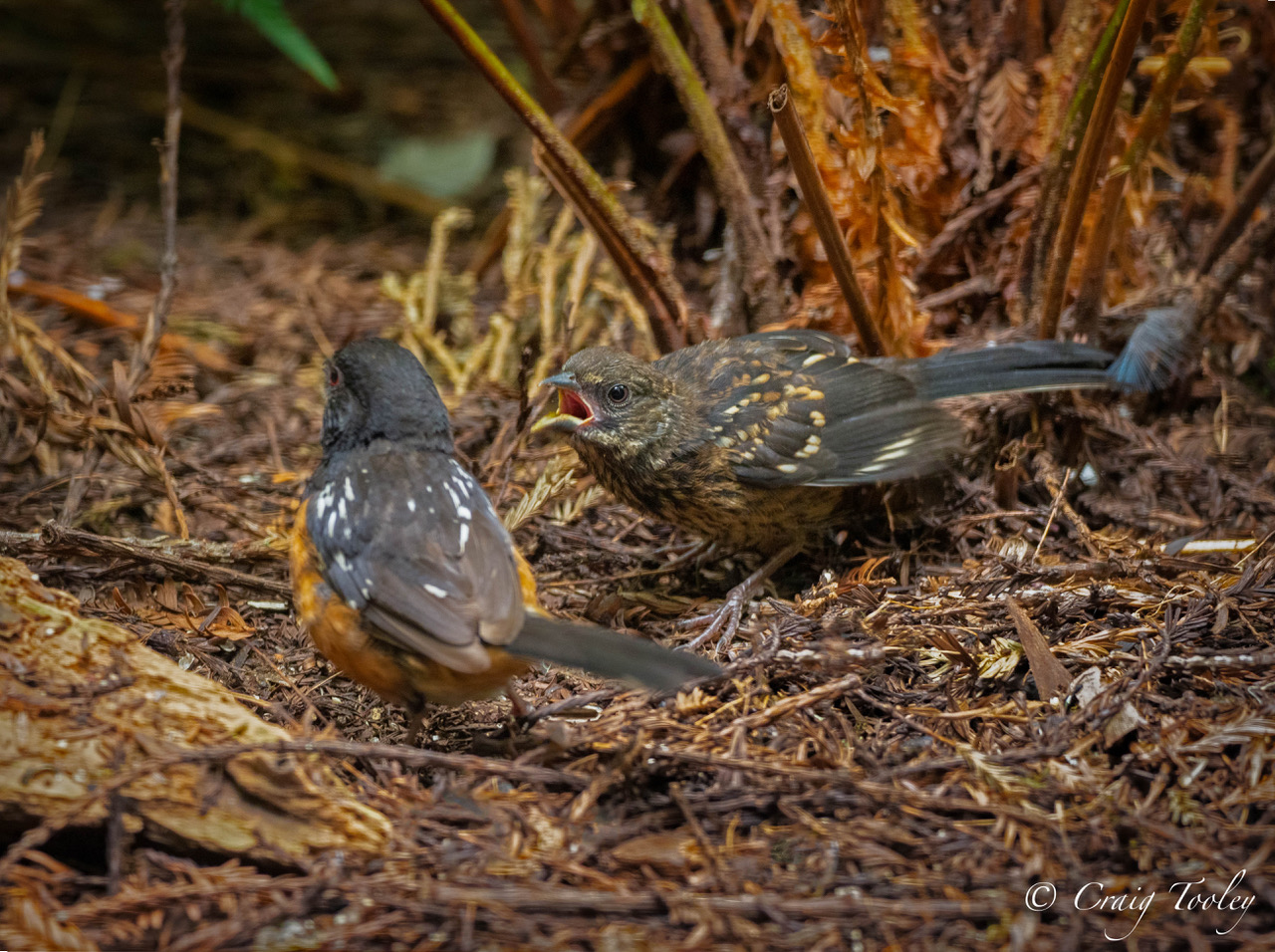
Craig Tooley spotted this Spotted Towhee feeding her hungry chick. The chick is on the right, with its beak open wide.

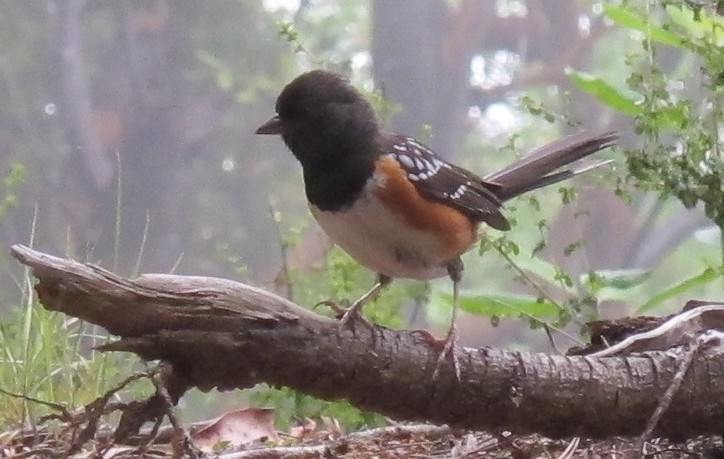
Here's a photo of a Spotted Towhee taken some years ago by Bill Frizzell. They are beautiful birds that love to search for seeds, berries and insects on the ground. We often see them at our place, underneath the bird feeder. The Steller's Jays often knock seed out of the feeder, thus helping out the Spotted Towhees.

To hear their various calls, here is a link to the Cornell Lab of Ornithology: https://www.allaboutbirds.org/guide/Spotted_Towhee/sounds

The third call on their list, the California recording, is what I often hear.

Thanks to Craig and Bill for allowing me to share their photos with you here. To see much more of Craig's nature photography, here is the link to his website: www.ruffimage.com

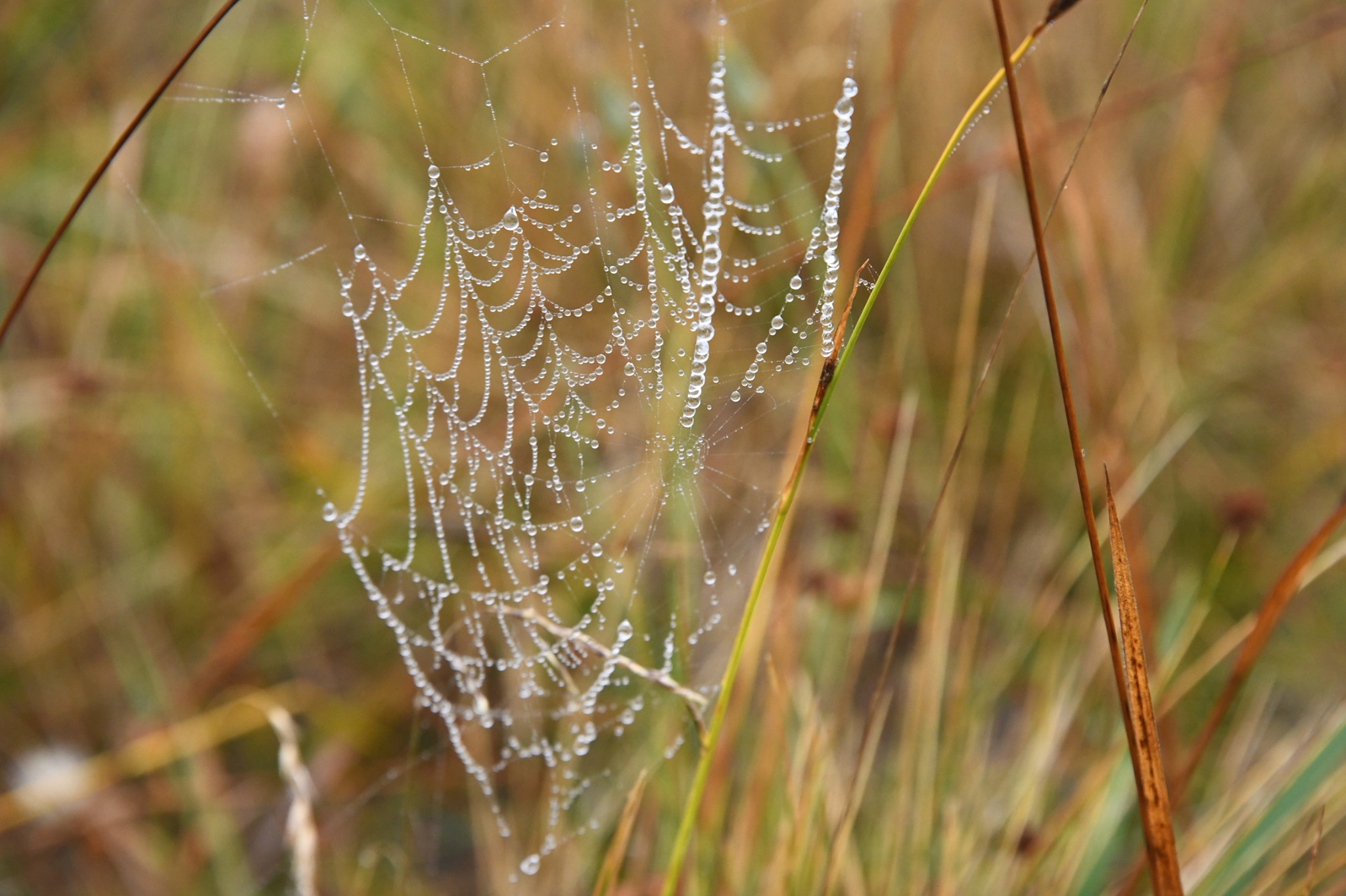
It's fun to see spiderwebs covered in dew or wet fog. Karen Wilkinson recently photographed one.

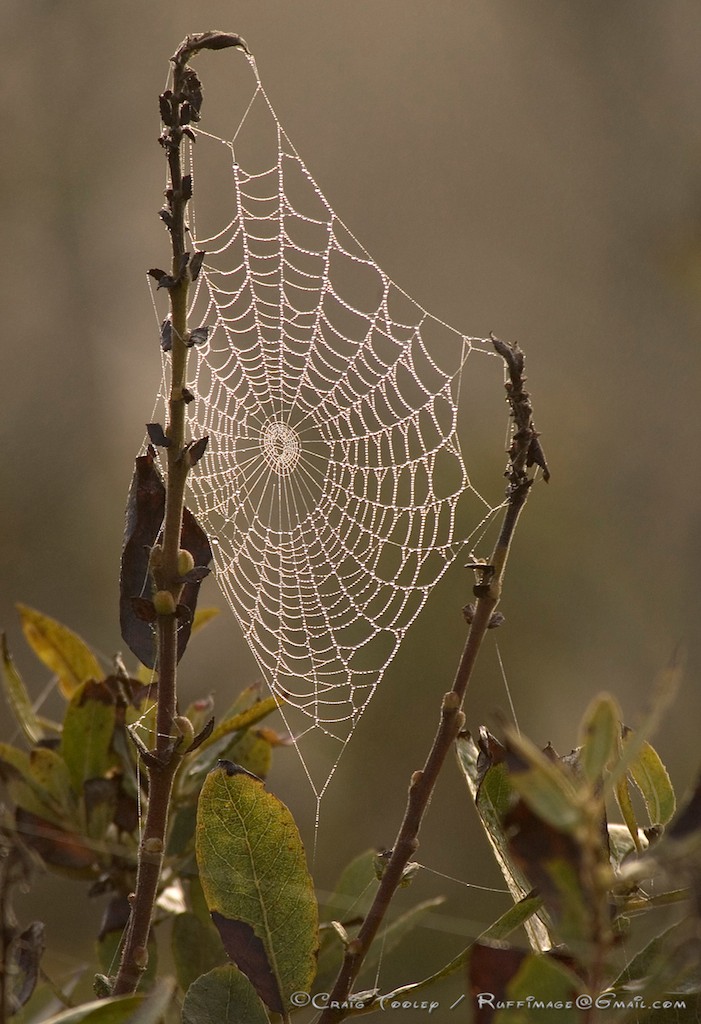
Craig Tooley photographed one that we used in our book, Mendonoma Sightings Throughout the Year.


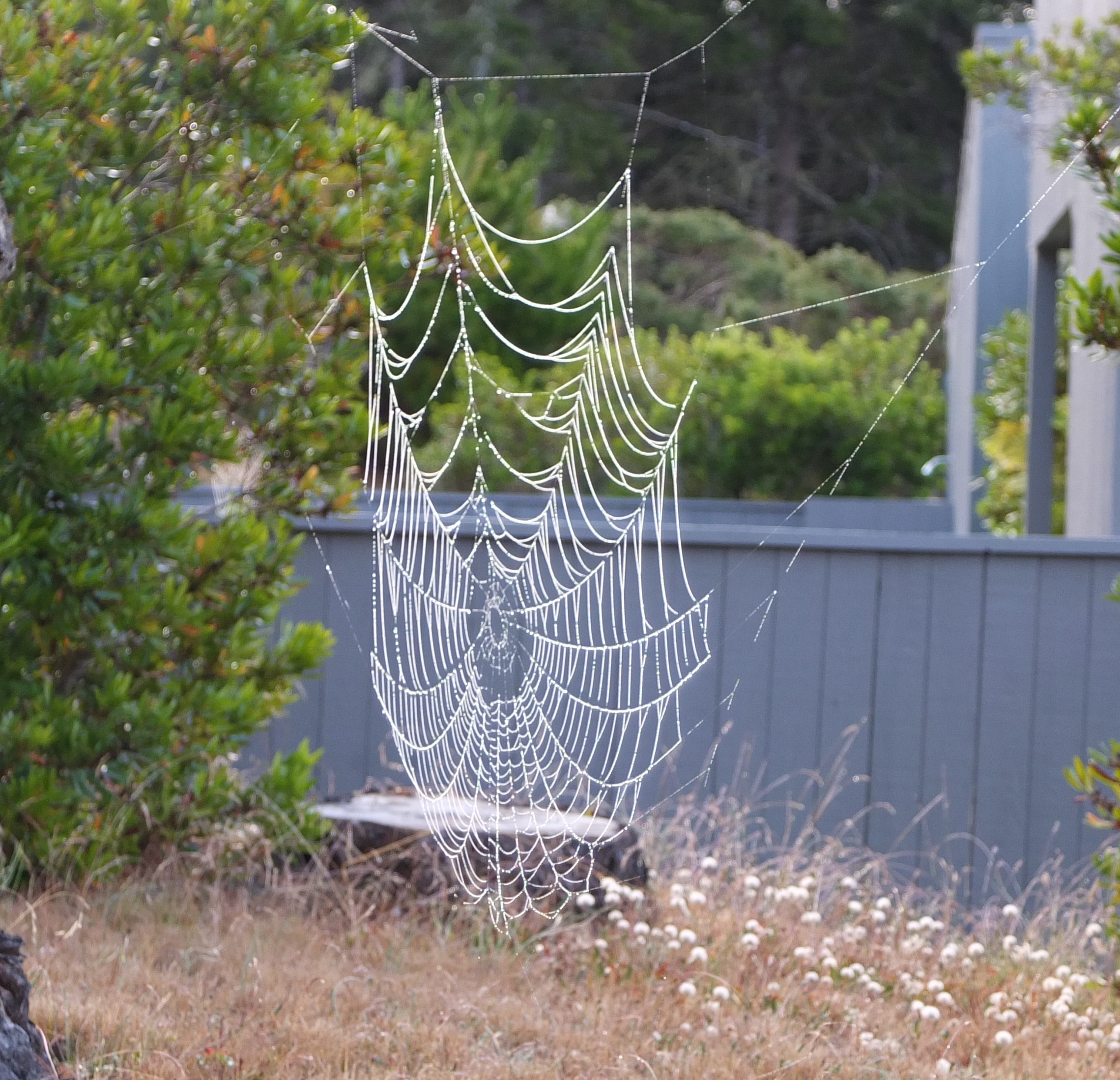
And Peter Cracknell found one too.

Orb-weaver spiders spin the most intricate webs, so perhaps all three of these were created by Orb-weavers. When a spider begins to build her web, she waits for a breeze that sends her from one spot to another. As the breeze moves her, she lays down the first strand. She secures it and then carefully crosses it, laying a second strand. Learning more about the process makes me appreciate spiderwebs. I try to leave them intact and admire them for the amazing creations they are.

Thanks to Karen, Craig and Peter for allowing me to share their photos with you here.

Sunny and breezy today!

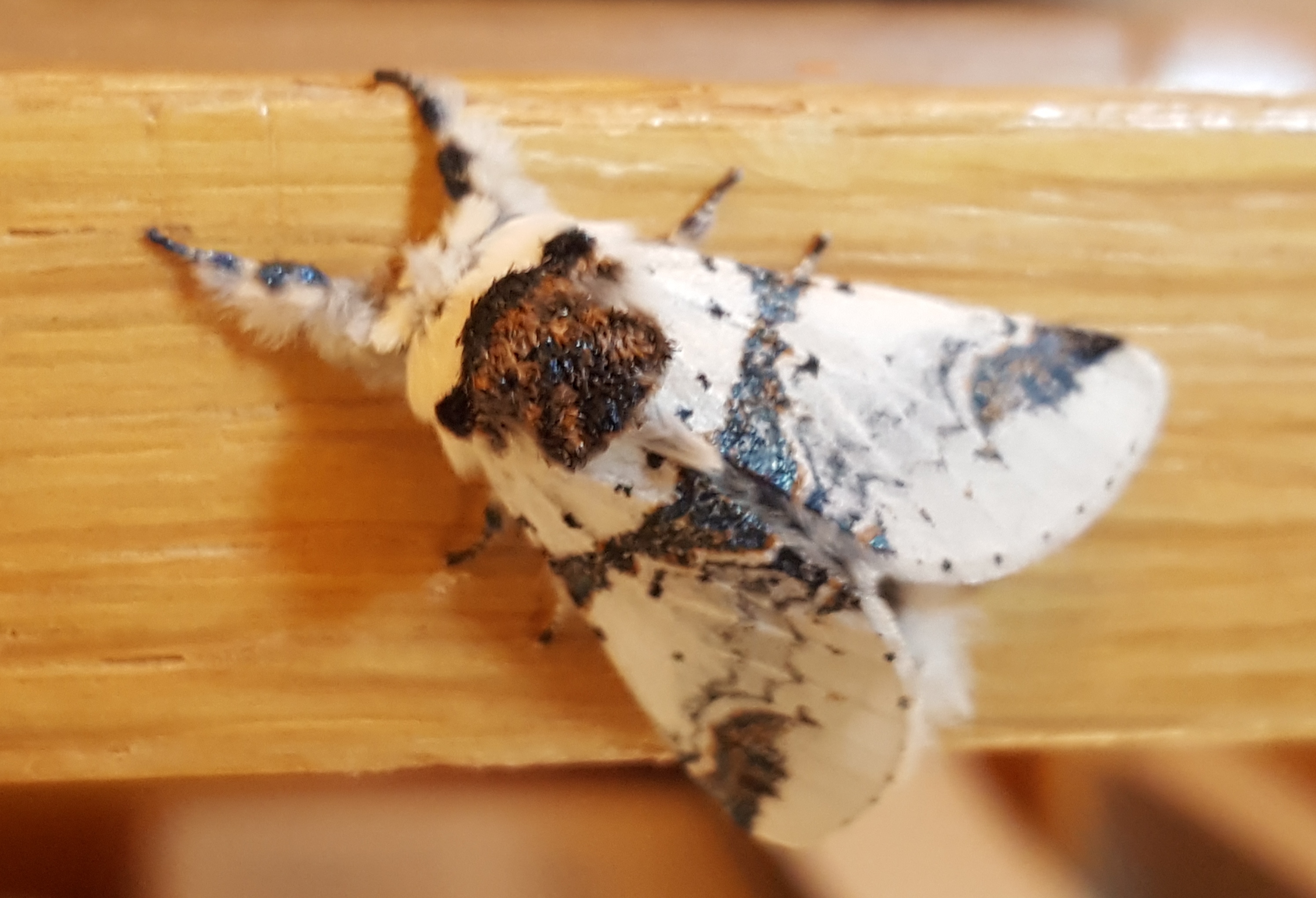
Linda Bostwick noticed an unusual moth. She wrote, “I discovered this beautiful moth but was unsuccessful in looking it up. We call it the Monkey Face Moth. Check out the beautiful blue iridescent scales, and the great brown face on its back.”

Laura Baker helped find the ID, which is surprisingly enough not the Monkey Face Moth, but a Zigzag Furcula Moth. Its host plants are willows, cottonwoods and birch.  It is also called a Poplar Kitten Moth.

Thanks to Linda for allowing me to share her photo with you here.

Fog over the ocean, sunny a little inland - sounds like summer on the Mendonoma coast!

4 Comments

It was a mystery. About three or four weeks ago Mary Heibel was hiking at the Point Arena-Stornetta Lands, near the Field Station. She found approximately 12 broken shells right near the bluff edge. She brought one to me. It’s bigger than a chicken egg, tan with gray and dark brown splotches, almost as if an artist had thrown paint at the shell. Osprey eggs comes closest in looks, but 12 eggs? There was no discernable nest according to Mary. I wondered what birds might produce a dozen eggs and an egg quite large. Wild Turkey eggs were not a match.
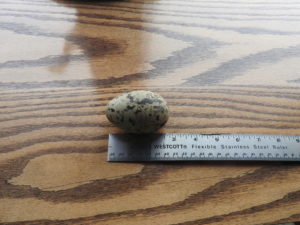
Diane Hichwa provided the first clue. She theorized that the spot was an eating place rather than a nesting spot. Dave Jensen suggested looking at Western Gull and Common Murre eggs as a reference. Dave suggested Common Ravens could have been egg thieves. He wrote, “They often work in pairs, one to distract and the other to snatch. Their increasing population proves the point.”

The eggs were a match for Western Gulls. Doug Forsell had more insights. He wrote, “For at least four years now a pair of Ravens have been taking the eggs from the Cormorant colonies along the cliffs and on the island near the Field Station. Last year, during the Discover the Coast event, I watched the ravens taking both Pelagic Cormorant and Western Gull eggs.”

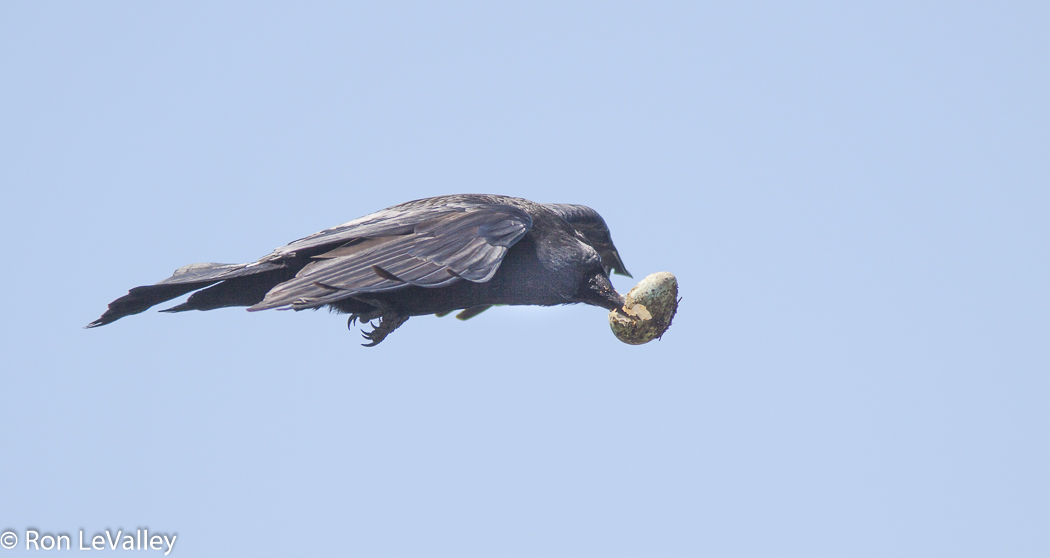
Ravens also steal Common Murre eggs. Ron LeValley sent along a photo of a raven flying with one in its beak.

Seabirds are shy in comparison with ravens. Doug shared a video where a raven flew to a Pelagic Cormorant’s nest and pushed the nesting mother off the nest. The raven the stole the lone egg. https://youtu.be/Upw4D0OamEc

Common Ravens eat everything, including carrion. We have an overabundance of ravens here and one of the reasons is that we humans are feeding them. For the sake of the seabirds, we must stop.

Thanks to Ron for allowing me to share his photo with you. Quite a mystery tour this ended up to be. I appreciate everyone who helped solve it.