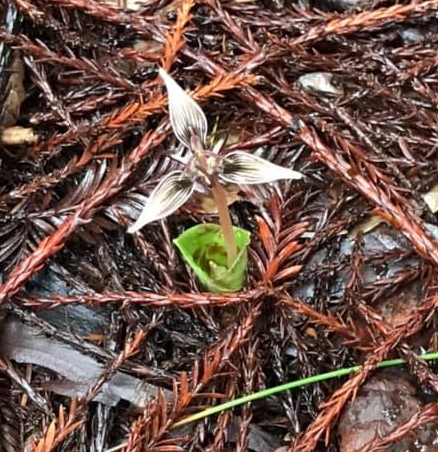
Every winter, beginning around Christmas, Rick and I look for Slink Pod, Scoliopus bigelovii, also called Fetid Adder's Tongue. This year we found our first one mid-January.
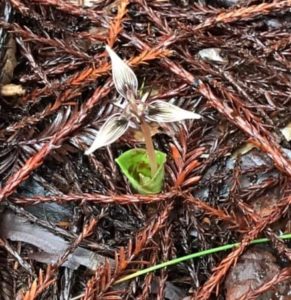 They can be very hard to spot, as they are quite tiny. They are members of the Lily family and the two leaves you can see just peeking up through the forest duff, will grow in the weeks ahead to be quite large. These leaves are oblong and mottled and if you see them later in the year, then next winter look for the tiny orchid-like bloom in the same spot.
Amy Ruegg found the first blooming Douglas Iris, Iris douglasiana.
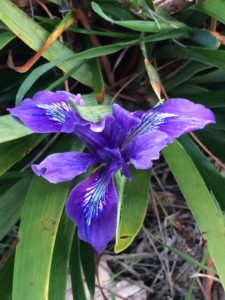 Now that does seem early! I am looking for Milkmaids, Cardamine californica. The first leaf has appeared in spots but no sign of the flower stalk yet.
Thanks to Amy for allowing me to share her photo with you here.
Another dose of rain overnight, along with a few showers today. Coastal streams are full, creating beautiful waterfalls when they spill over bluffs. The weather forecast calls for sunny, warm days. Pretending to be spring?
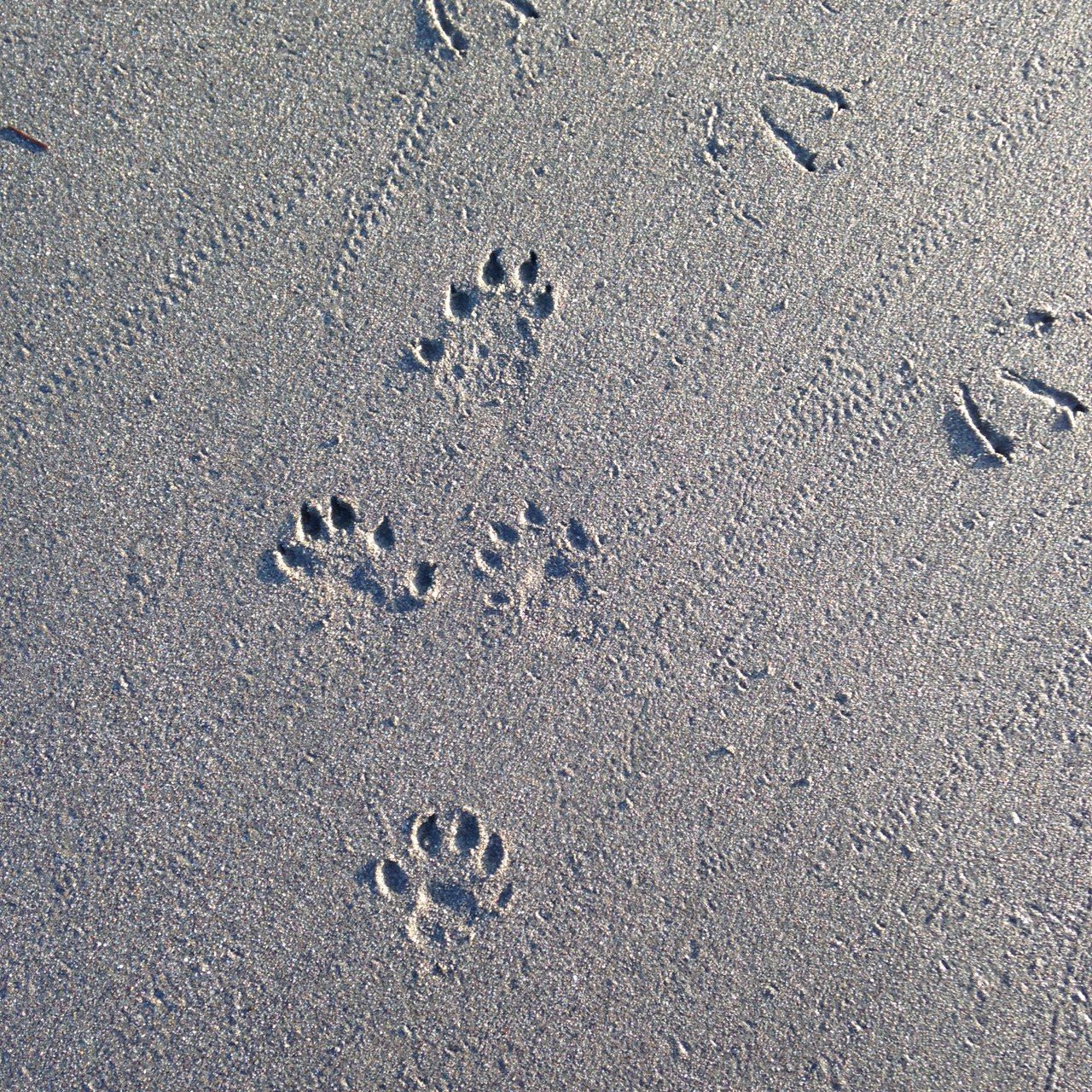
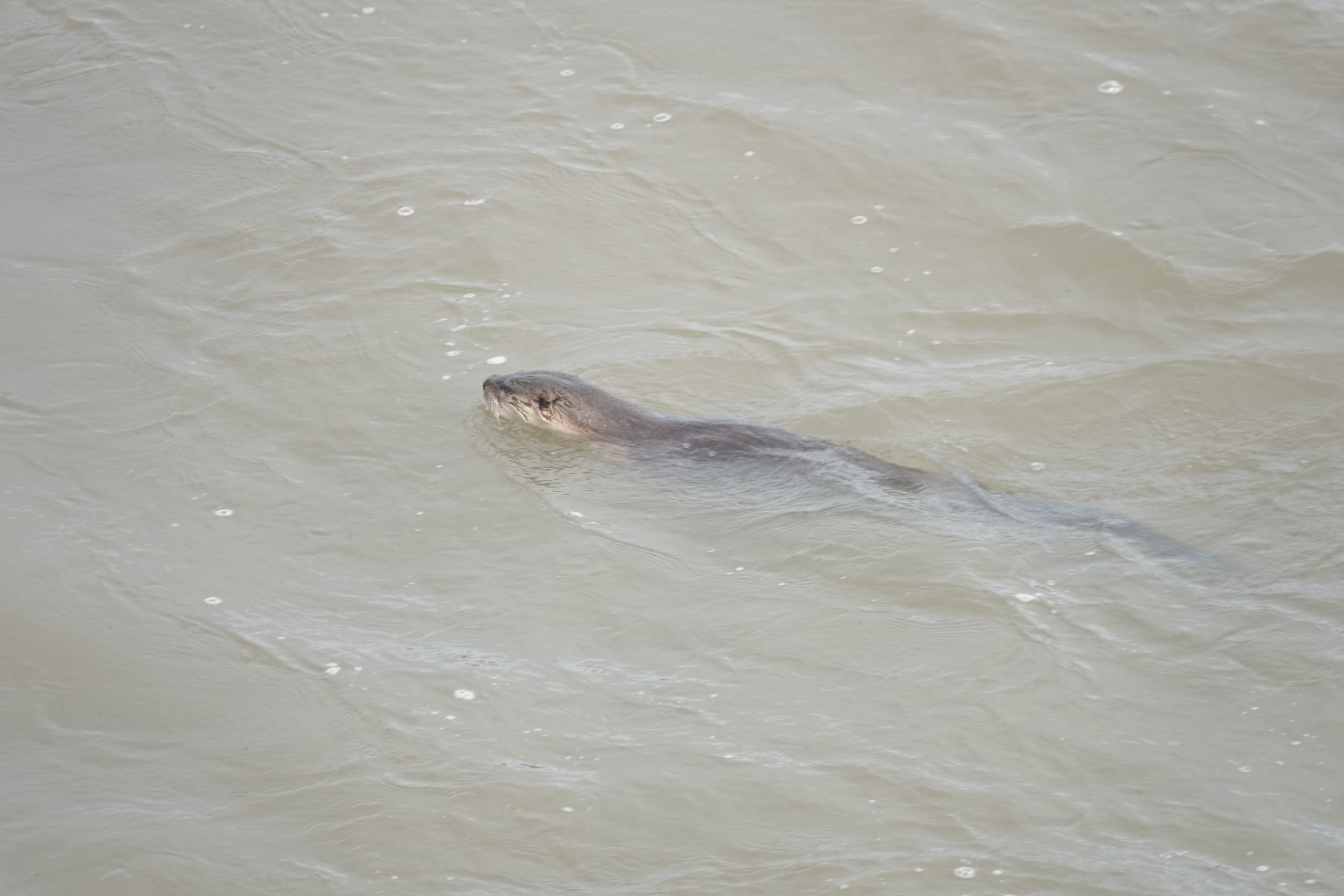 Yes, North American River Otters swim in the ocean, in rivers and creeks, and can walk on land. Here's a photo of of River Otter tracks taken by Catherine Miller - five toes!
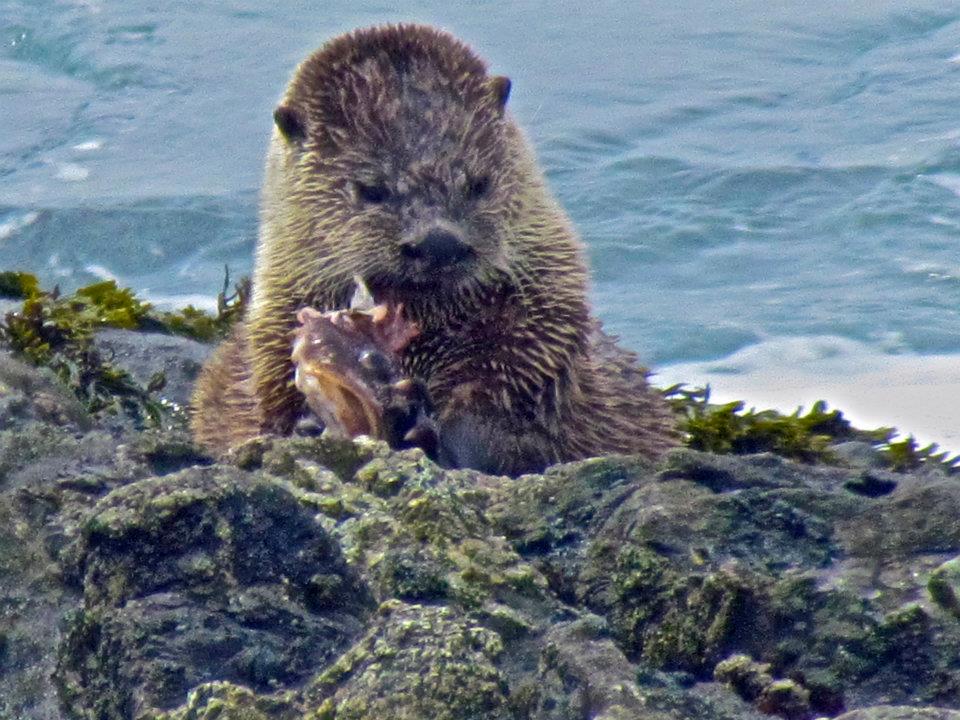
 And a favorite photo taken by Rich Kuehn of a River Otter eating octopus.
 Thanks to Sara, Catherine and Rich for allowing me to share their photos with you here.