Author Archives: Jeanne Jackson

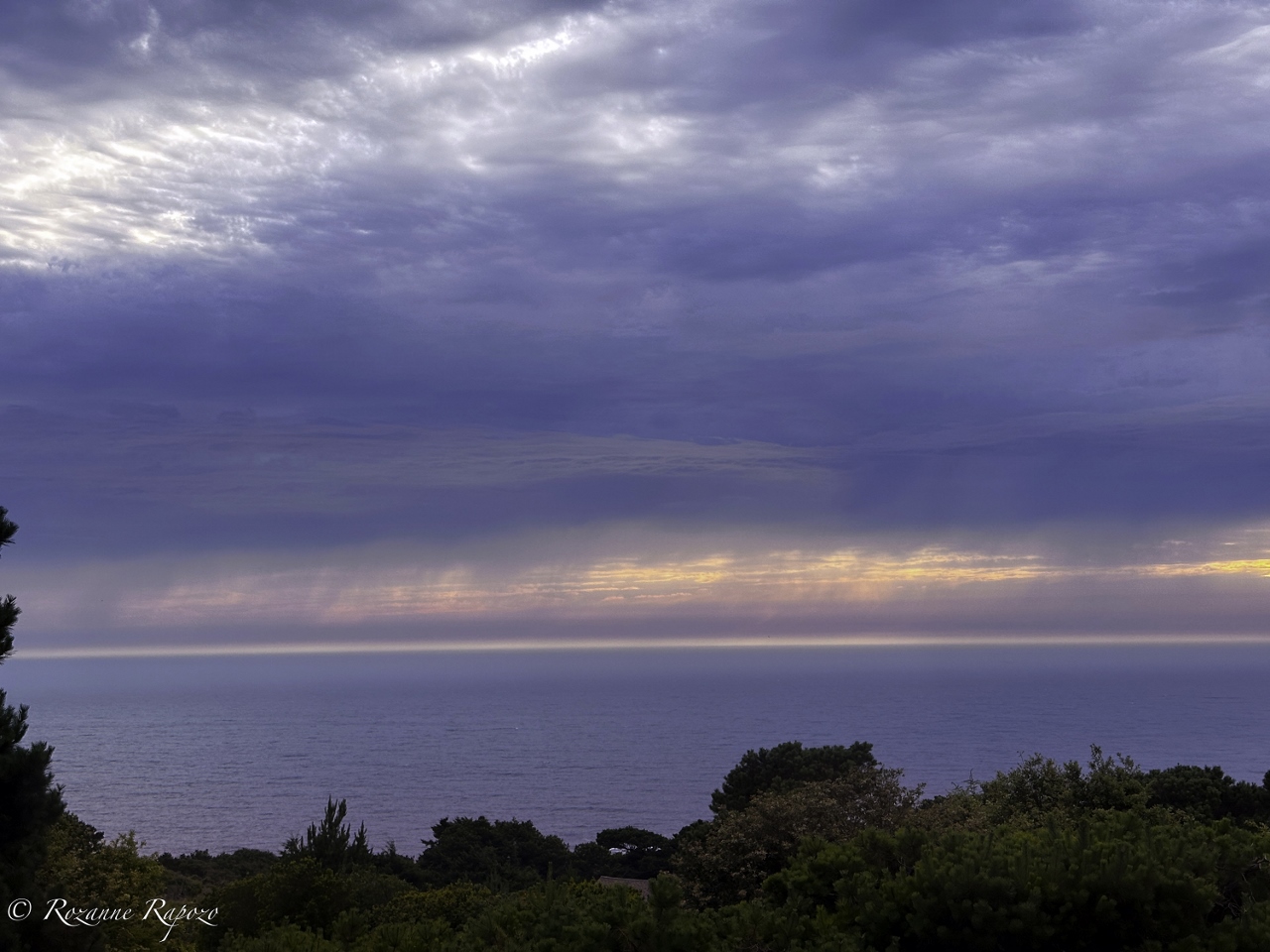
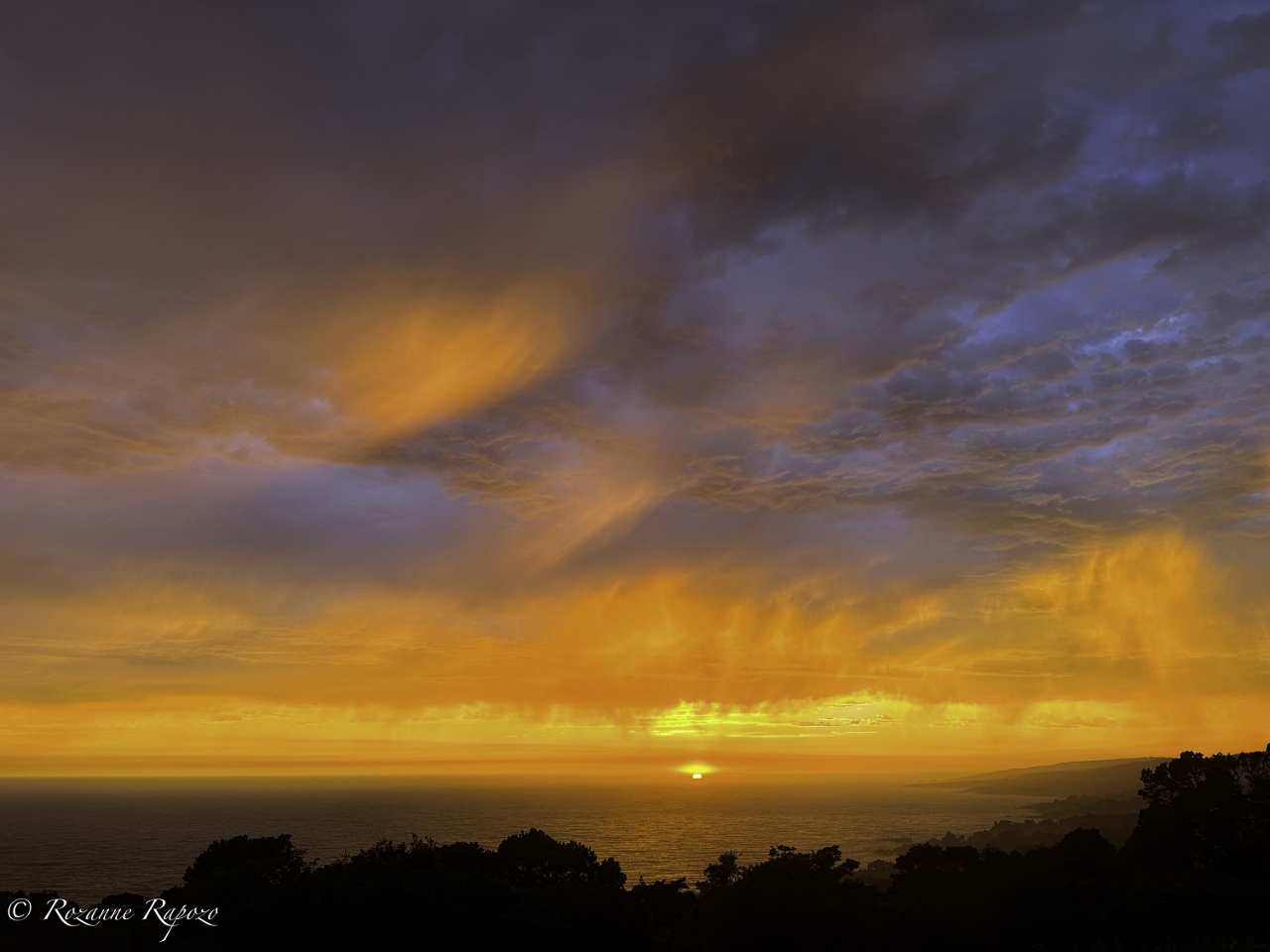
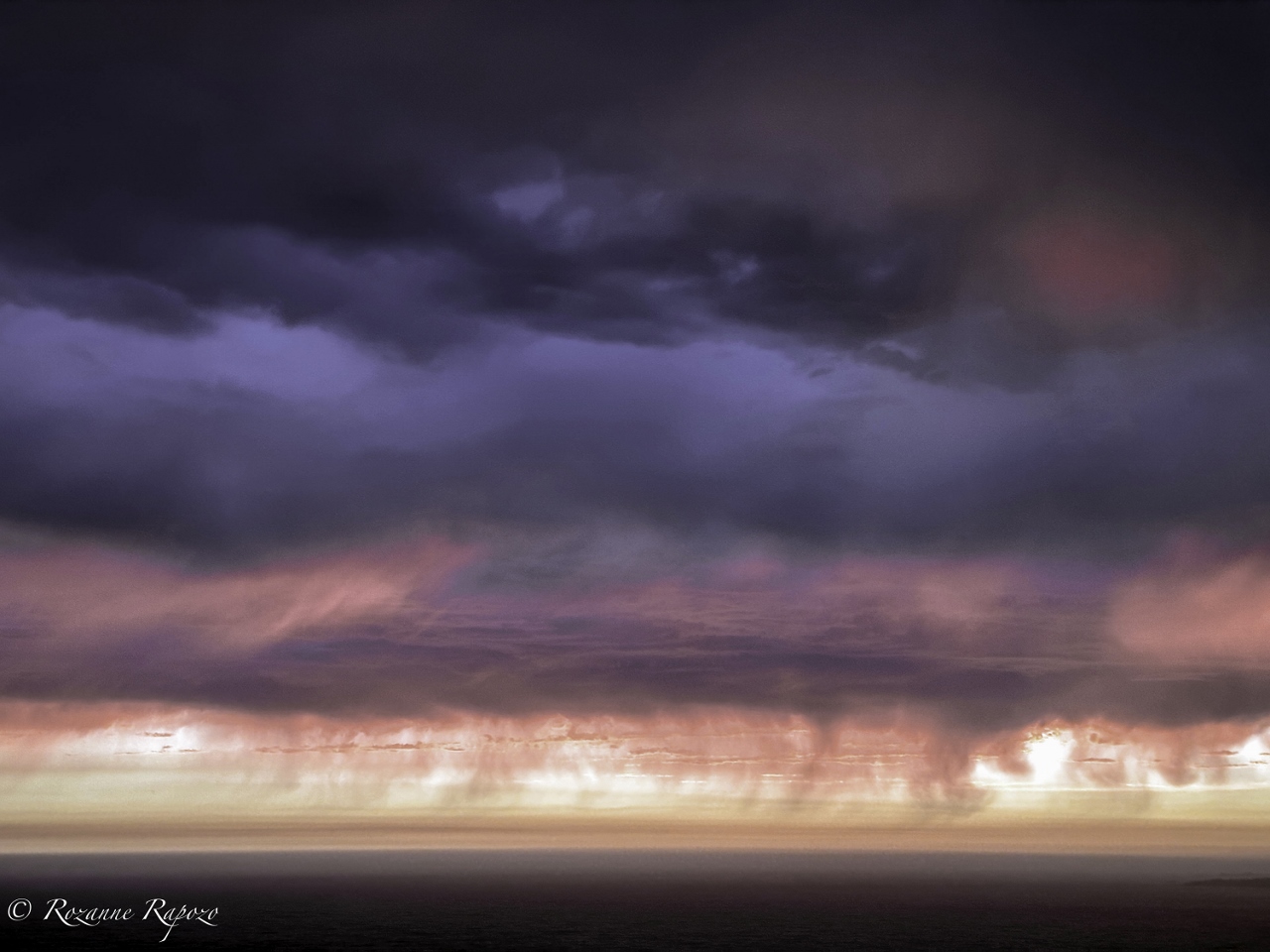
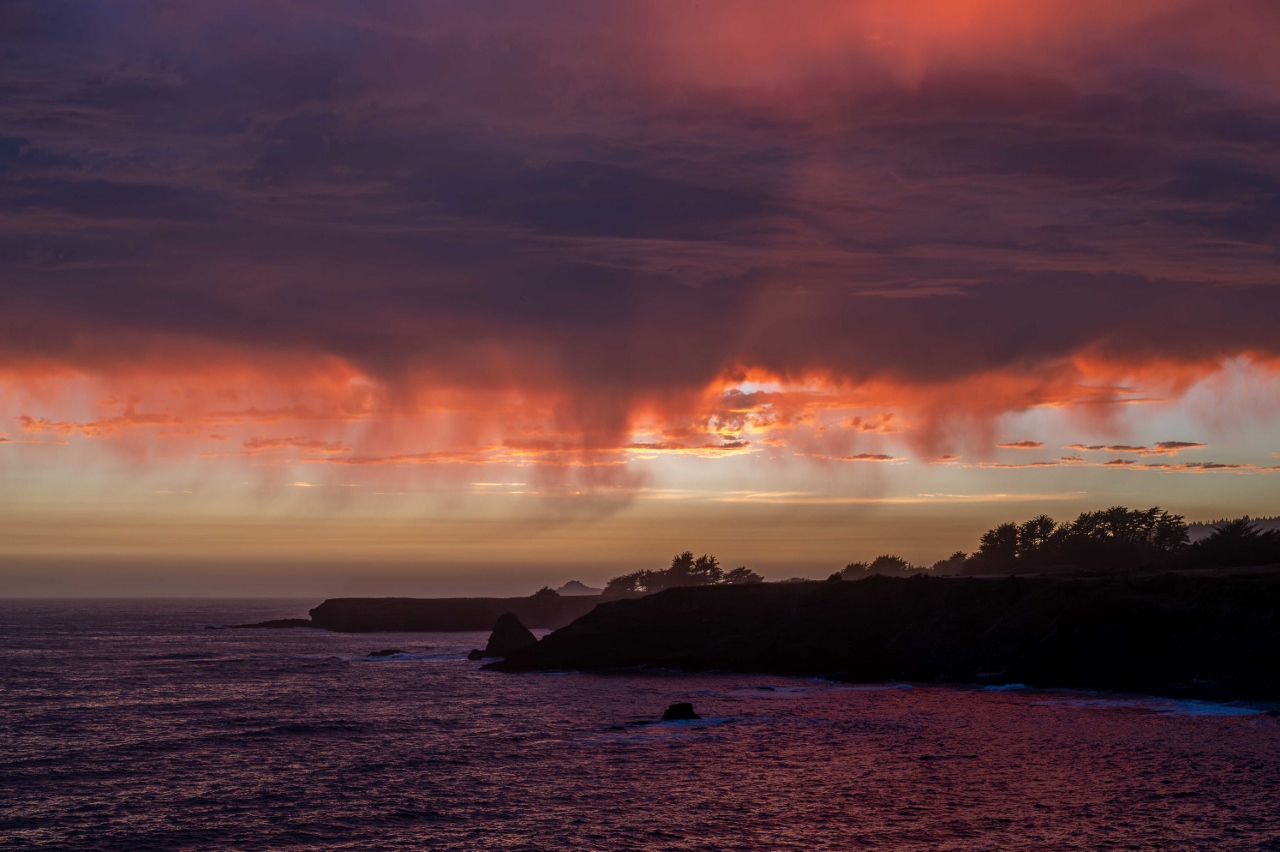
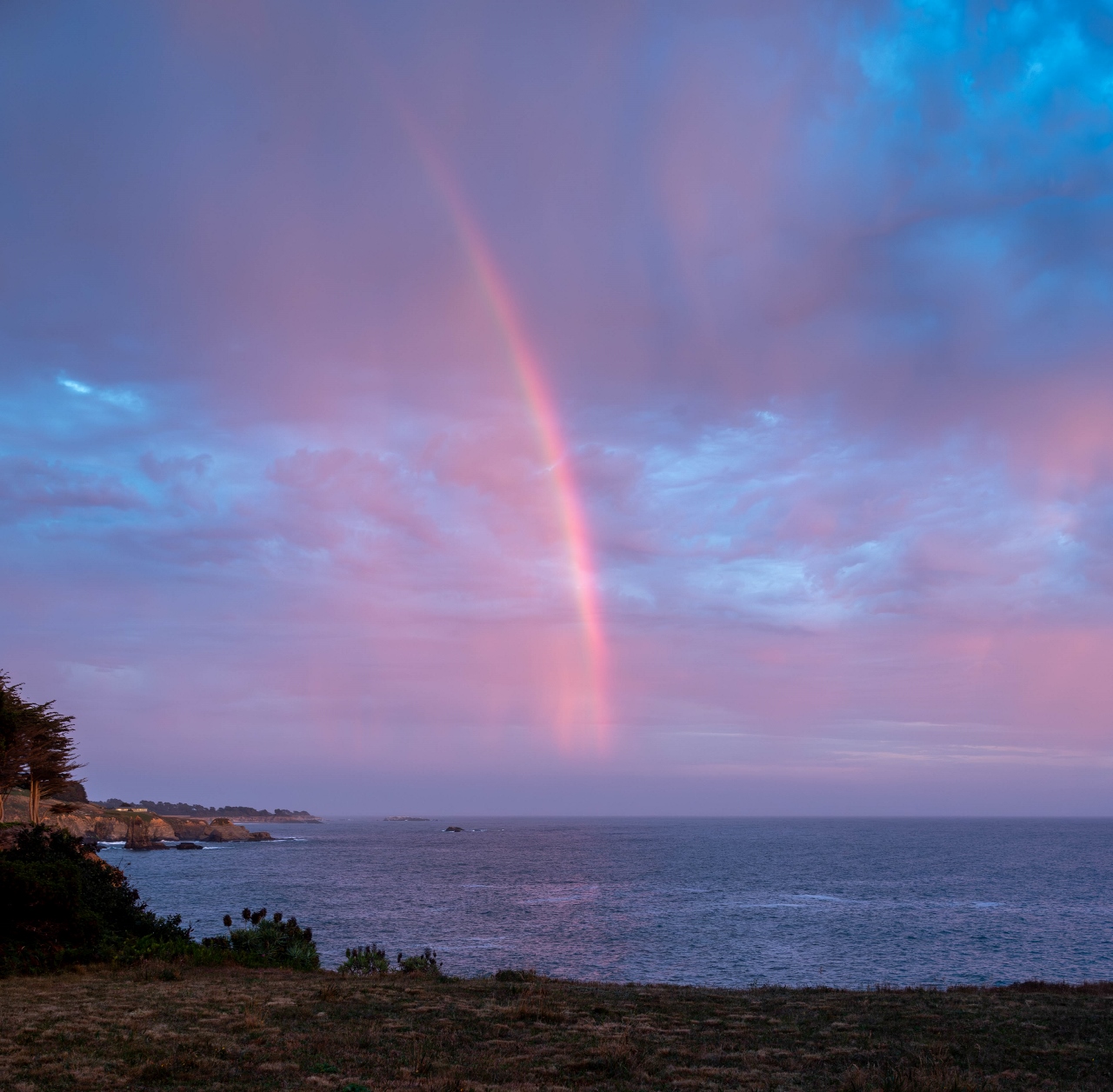
Rozanne Rapozo photographed the evolving sky as a low-pressure system swept across the Mendonoma Coast. It brought thunder and lightning, and virga - rain that evaporates before hitting the ground. The colors in the sky were amazing.

The first photo is pre-sunset.

Then the sunset - those streaks are virga.

And finally post-sunset, which really shows off the virga.

What a spectacular show we had that evening!

Thanks to Rozanne for allowing me to share her photos with you here.

It's cooler today, sunny and quite breezy.

Paul Brewer photographed virga, rain evaporating before it hits the ground, or in this case, hits the Pacific Ocean!

There were rare evening rainbows, which Paul also photographed.

I have many more photos of last Sunday's event and I'll share some more tomorrow.

Thanks to Paul for allowing me to share his photos with you here. Many of Paul's nature photos are on display at the Dolphin Gallery in Gualala. It's directly across from Trinks restaurant.

Mild and quite windy on the bluffs today, warm when you get away from the ocean.

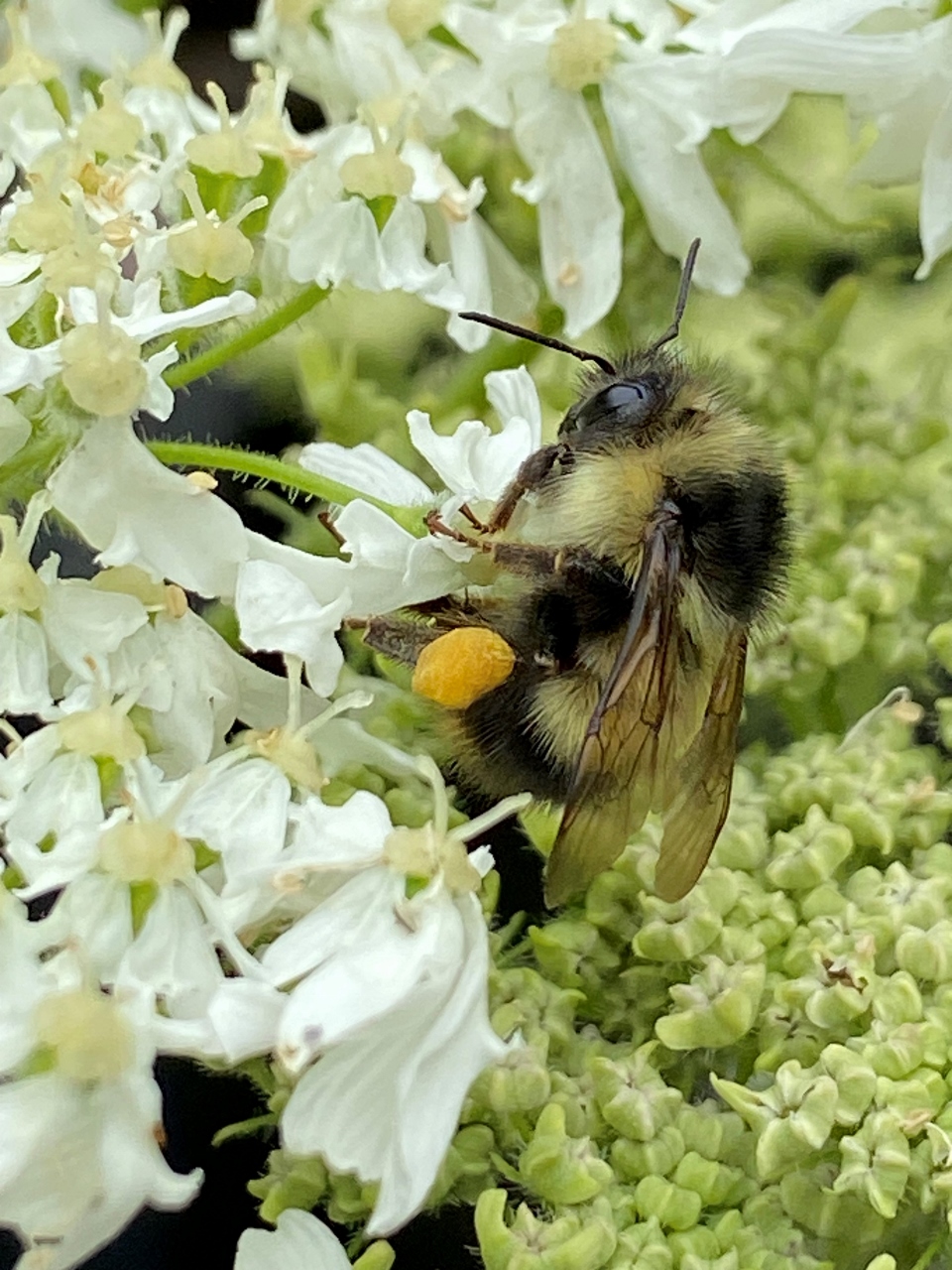
Last month Laura Baker found a Black-tailed Bumblebee with a nice yellow pollen packet.

Laura wrote, "Here's a photo of a Black-tailed Bumblebee (Bombus melanopygus) on Cow Parsnip. This is a female worker with pollen packed into the corbicula along her hind leg which she'll take back to her colony.  I've seen many of these bees this spring - they are some of the earliest bumblebees to appear.”

These Bumblebees love Ceanothus too. Another of our native pollinators, gathering pollen from various flowers.

Thanks to Laura for allowing me to share her photo with you here.

No fog today - it's warm, even close to the ocean. At my place, it's hot today!


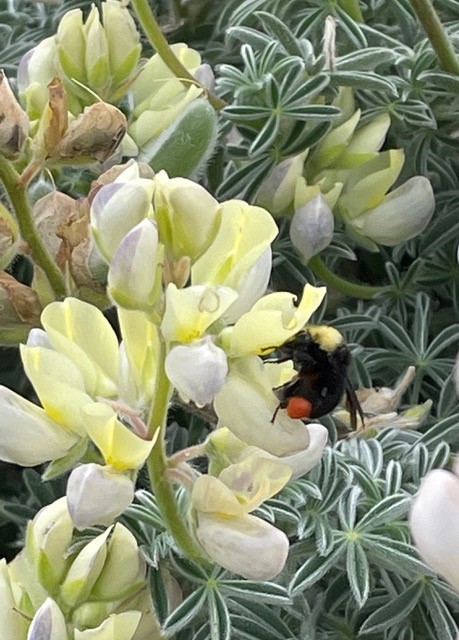
The most common bumblebee seen here is the hard-working Yellow-faced Bumblebee, Bombus vosnesenskii. Judith Fisher saw one of these important pollinators gathering pollen on Lupine at Gualala Point Regional Park.
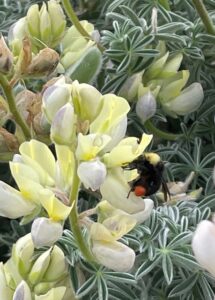
Judith’s photo shows that the Yellow-faced Bumblebee has a nice packet of orange pollen in one of her corbiculae,  aka pollen basket, which are grooves in her hind legs. Inside the corbiculae are specialized branched hairs called scopae.

I wondered which flowers provided her with orange pollen. The most likely suspects are the Lupine Judith observed the bumblebee feeding on, an obvious clue. Also California Poppies, which are blooming in abundance, offer orange pollen to our native pollinators.

It’s interesting and fun to know that the color of the pollen varies from flower to flower. Black pollen is rare, but I read Beekeepers always know when Oriental poppies are in flower, because homecoming bees are dusted with black pollen.

Thanks to Judith for allowing me to share her photo with you here.

It's sunny and warm here today. Lots of visitors here, escaping the inland heat!

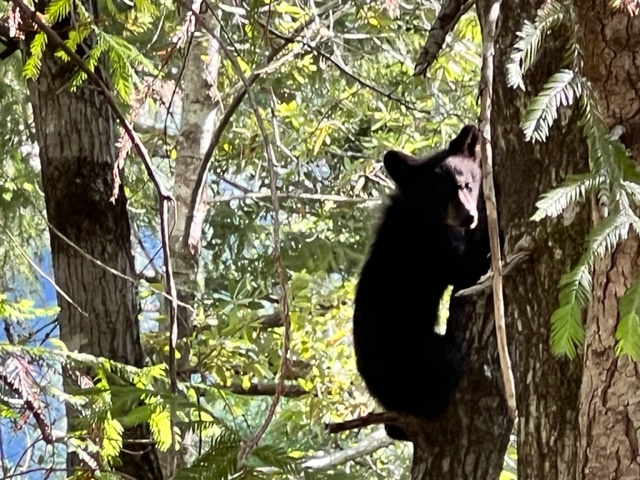
Kenny Jowers wrote, “I was traveling over Mountain View from Manchester to Booneville about 9 o’clock in the morning recently, and spotted these two black things on the left side of the road. As I approached a little closer, one of them stood up, and I realized at that point that it was two Bear cubs. As I stopped in the middle of the road on Mountain View, they both went down the hill, but then this one climbed up a tree by the road, and I was able to get some really great photos."

"At first, I thought I would jump out of my car and go to the edge of the road and look down the hill for the other one but then it hit me that the mother had to be close, so I just admired from afar.”

Kenny was smart not to try to get closer to the cubs. American Black Bears are pretty mellow, but you never want to be between a mother and her cubs. Fun Facts: Black Bears are fast: they can reach 30 mph when running. And they are excellent swimmers.

Thanks to Kenny for allowing me to share his photo with you here.

Very foggy this morning but the sun has prevailed. It's sunny and calm this afternoon..