Author Archives: Jeanne Jackson

2 Comments

On Thursday Gray Whales were seen off the Mendonoma Coast. A few were seen headed north, but most were headed south. It is the time of the southward migration, when the mother whales head down to Mexico's Baja California to give birth in protected lagoons.

Here is a picture of a Gray Whale's tail taken by Rozann Grunig near the Point Arena Lighthouse. Noting the shape of the tail can tell you what kind of whale you are seeing.
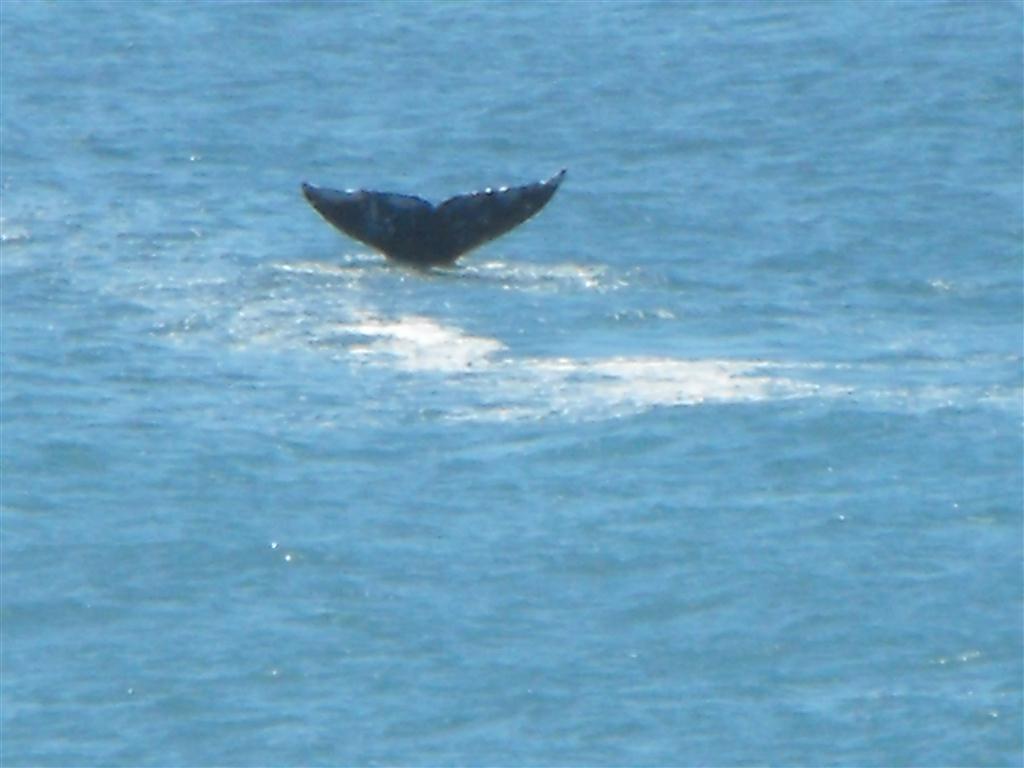
Fun fact: The Gray Whales have the longest migration than any other migratory mammal on Earth. They travel 5000 to 6000 miles, twice a year!

Here's a fun web site to learn more about these magnificent creatures:
http://www.learner.org/jnorth/tm/gwhale/AnnualFall.html

Thanks to Rozann for allowing me to share her photo here with you.
3 Comments

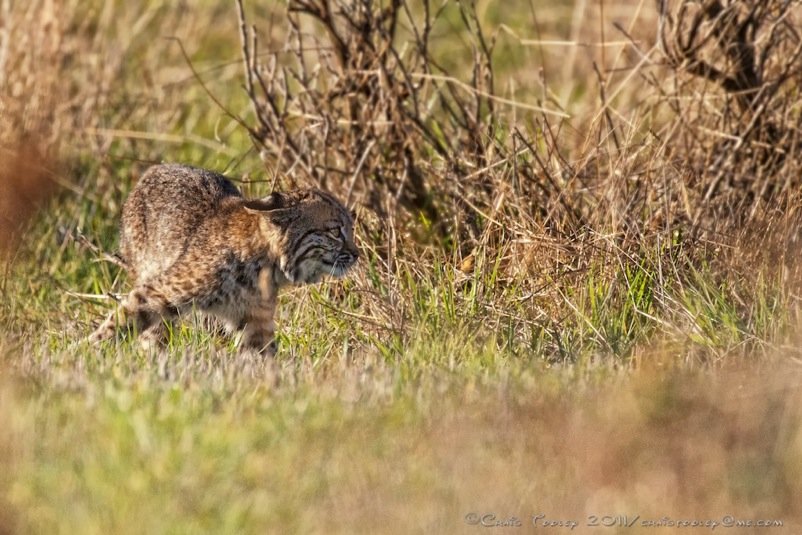
Craig Tooley saw this young Bobcat in a stand-off with a Buck. The Bobcat seemed to be calling the Buck's bluff and that's the moment Craig captured this photograph. But the Bobcat's bravado was in vain. All it took was one step forward by the Buck and the Bobcat thought better of the situation. It quickly disappeared into the brush. Sometimes retreat is the best option!

Craig has five other photos posted of this Bobcat on his web site. Here is the link: http://ruffimage.smugmug.com/Nature/bobcat/20081541_L39Gkt#1583984126_2H4nQFD

And to see Drew Fagan's photo of a leaping Bobcat, click here: http://www.mendonomasightings.com/2011/06/09/bobcat-caught-in-mid-air-by-drew-fagan-in-gualala/

And to see a Bobcat walking a labyrinth photographed by Emily Nelson, click here: http://www.mendonomasightings.com/2011/04/21/bobcat-walking-a-labyrinth-an-amazing-sight-on-the-gualala-ridge/

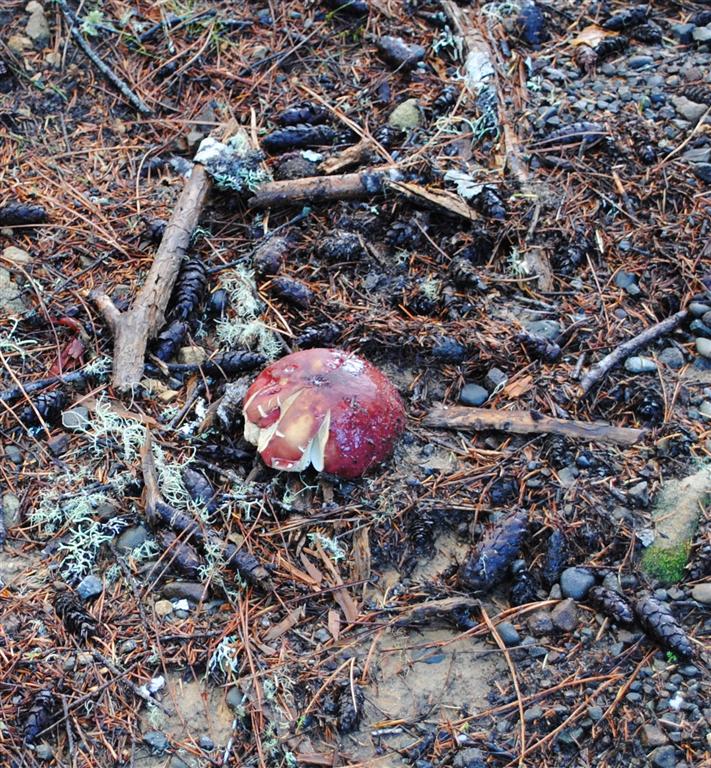
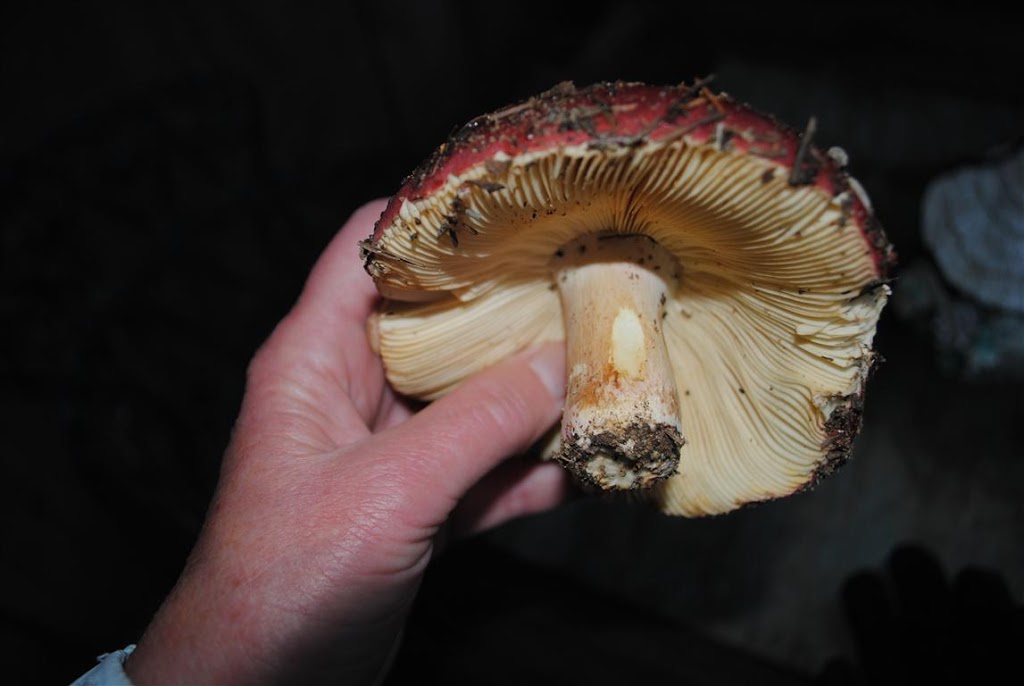
On a mushroom forage with David Arora several weeks ago, he introduced us to the Shrimp Russula, Russula xerampelina. When David visited us the next day he immediately spotted a nice big one growing on the edge of our forest.

The first thing to look for is the dark red cap. This is substantial mushroom, unlike some of the inedible russulas. Next look for a rosy blush on the stem. Then scratch the stem and see if it turns yellow. For a final test you can do what Bev Vogt taught me. Take a tiny bite, chew and then spit it out. If its peppery it is NOT the Shrimp Russula.

Arora writes in Mushrooms Demystified, "(they are) edible and unforgettable - one of the least appreciated of our edible fungi."

I have a new edible mushroom to add to all the others I have learned to love.

To see more of the Arora mushroom forage, click here: http://www.mendonomasightings.com/2011/11/mushroom-forage-with-author-david-arora.htmlveTo

4 Comments

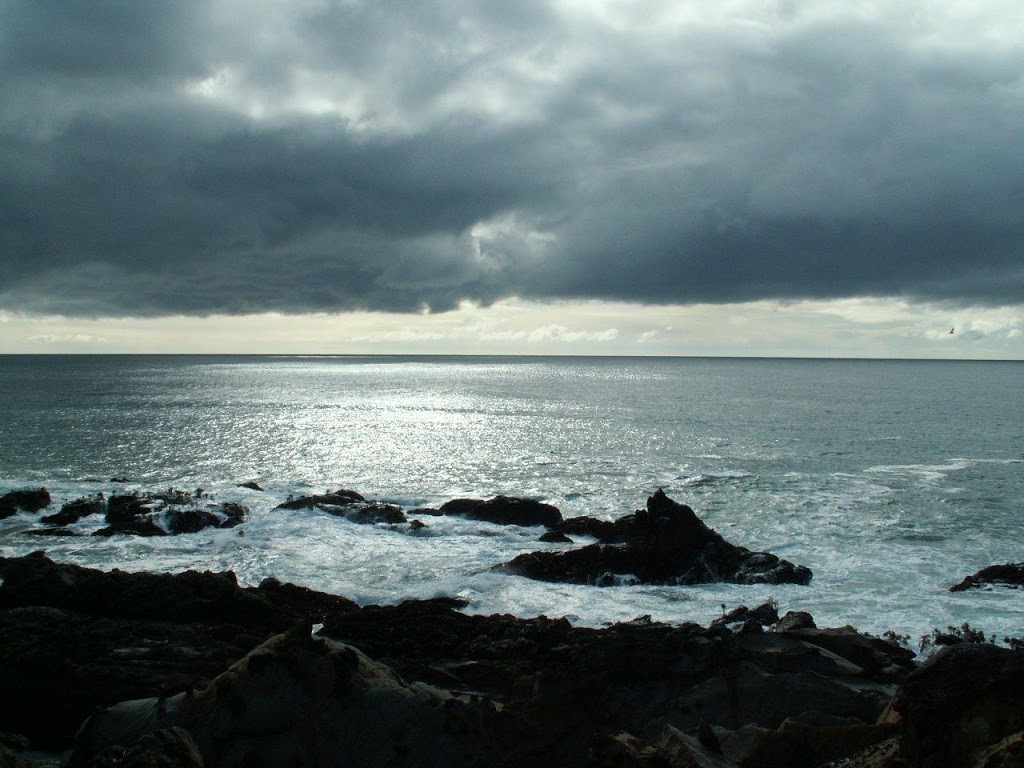
The Mendonoma Coast has been hit by several cold storms in the past couple of days. Robert Scarola took a dramatic photo of the approaching storm.

The rains have reactivated our wild mushrooms. I will be sharing a few photos of them in the days to come. Thanks to Robert for allowing me to share his photo here.

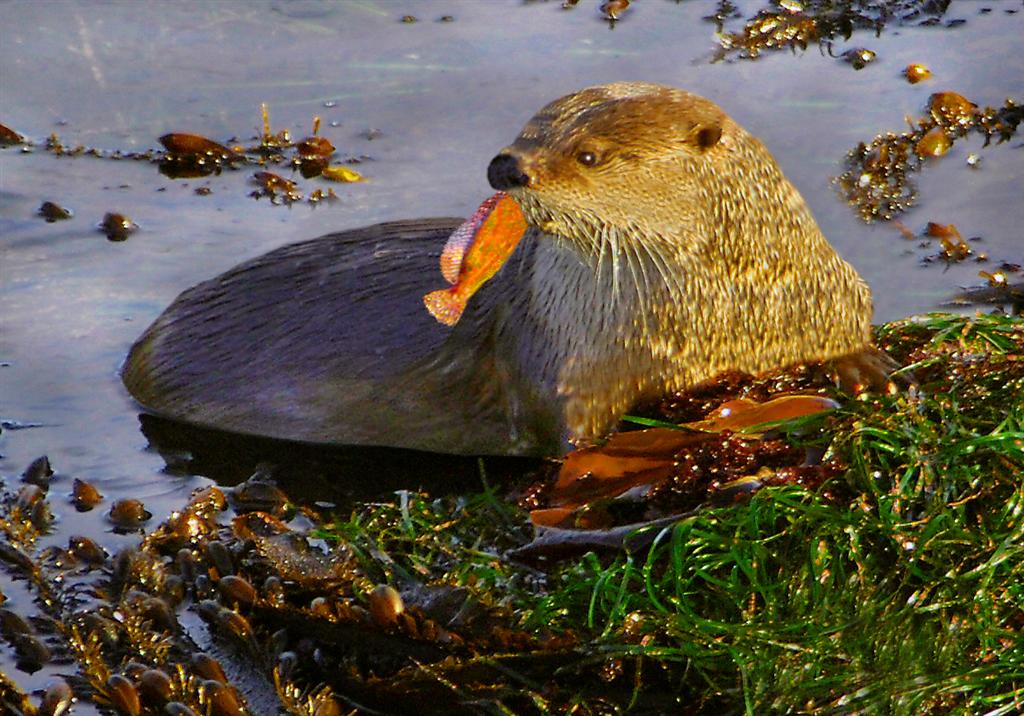
River Otters, Lontra canadensis, can be seen near the mouths of the Mendonoma Coast's rivers and creeks. There is a family of River Otters living in dens on the banks of the Gualala River. They are members of the Weasel family. 

Siegfried Matull photographed a River Otter with a fish, which is their favorite food, and has kindly allowed me to share it with you.

We don't have Sea Otters this far north, for which abalone divers give thanks. River Otters can move on land and sea, whereas Sea Otters never leave the water.