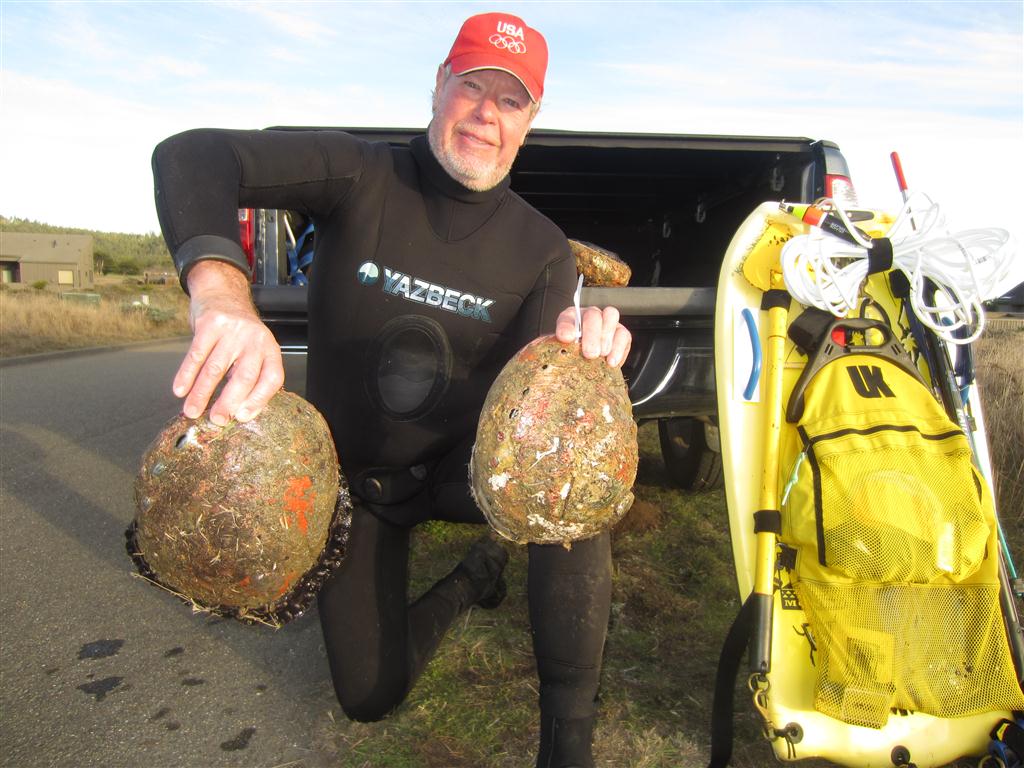
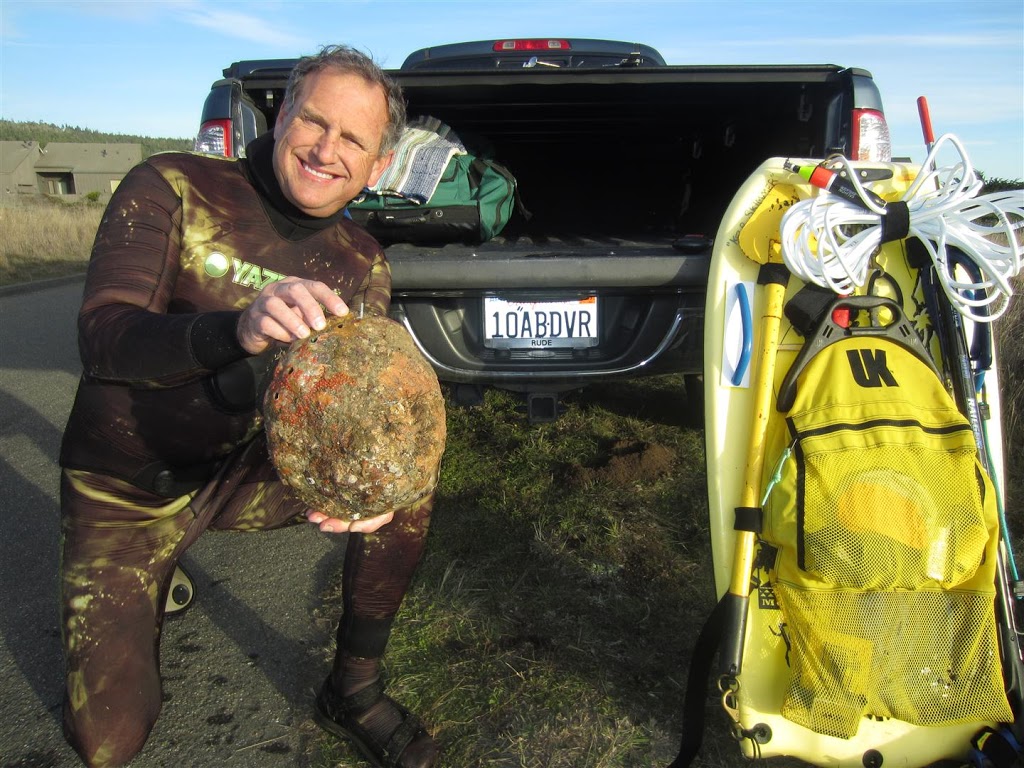
Two Days - five ten inch abalone!
Here is Jack's story.
"With the end of abalone season fast approaching, we finally got some good diving conditions. Roger Rude and I got into the water at one of our less usually dive-able spots on The Sea Ranch. There was a bit of NW swell and the tide was very low so the entry and exit over mussel and algae-covered rocks was a little hairy, but we managed to make it in and out without too much trouble. We had about fifteen feet of visibility underwater and a slight south breeze.
"Roger and I are in the process of making a 'How to' video on abalone diving and had a goal for this dive of filming the take of a ten-inch abalone underwater. Over the two day period, three hours each day in the water, we found five ten-inchers. A couple of them were too far back in cracks to film and with two of them we were so tired at the end of our dive that it was all we could do to get the abalone, let alone set up and film it at 25 feet deep. But we did manage to get some good video of a couple of the ten-inch abalones that we will be using in our upcoming film.
"Five ten-inchers might seem like a lot of large abalone for two people for two days, and it is, but it is rare that we can do this. I have made over 30 dives this season and only taken 19 abalone of my total quota of 24 in a season. There were many dives where I didn't take a single abalone. I see thousands of them because there is a healthy, thriving population along the Sea Ranch coast. They are well protected by the elements of nature and the CA Department of Fish and Wildlife laws that limit numbers, sizes, locations and equipment used for the take of abalone.
"According to a study by Marine Biologists at the Bodega Bay Marine lab, abalones are like humans with regard to reproduction. After they reach their prime - three to ten years old - they begin to decline in their reproductive capabilities. Abalones over ten inches are likely between ten and fifty years old and, depending on their environment, will begin to actually lose shell size.
"We, as abalone divers, are very concerned about the health of abalone along our coast and want our sport to be available for our grandkids. For that reason we do whatever we can to understand and protect the species. The greatest threats to this irreplaceable resource are the reintroduction of Sea Otters and poaching...in that order.
"At TSR we are particularly lucky to have so many people who understand and want to protect the marine environment. I encourage all who watch the ocean to know and understand the laws about abalone diving so that when you see someone poaching, you can report them. It happens, even at TSR, more often than most people realize. Report poachers at 1-888-DFG-CALTIP."