Author Archives: Jeanne Jackson

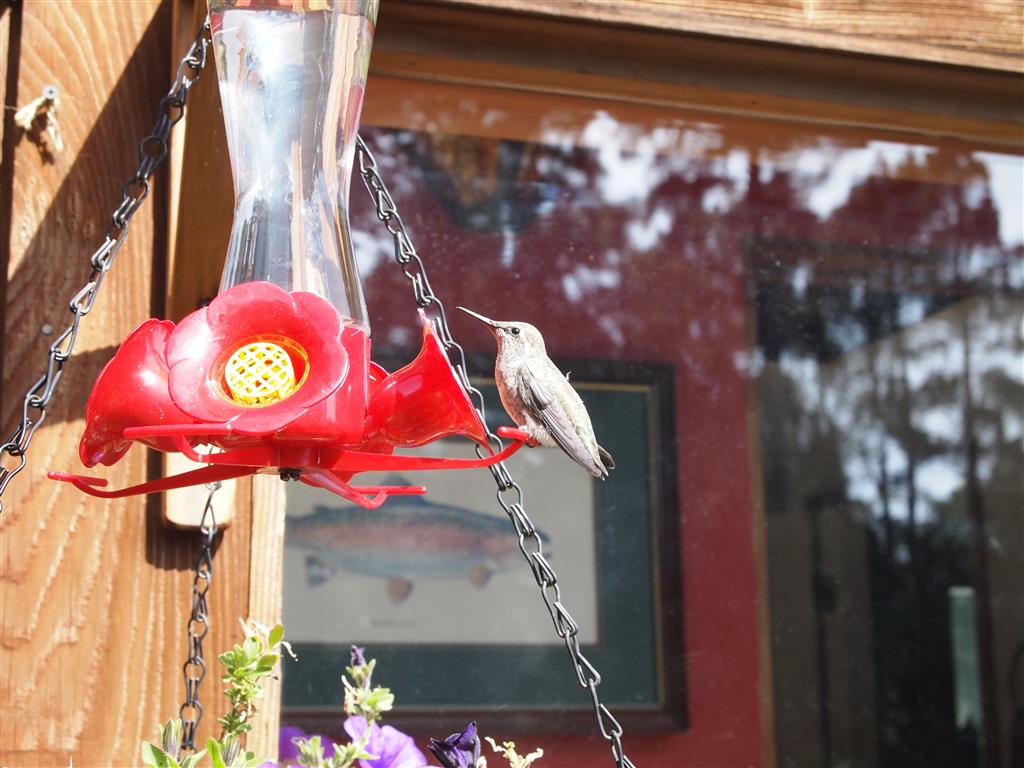
Beth and Jeff Petit had a juvenile Anna's Hummingbird show up at their feeder recently. While I'm still seeing male Anna's displaying for his ladylove and have seen signs of nest building, this youngster's parents obviously got an early start.

Richard Kuehn took a look at the photo for me and he wrote, "It is indeed a downy juvenile. There are multiple downy feathers on this young Anna's hummingbird likely hatched in early to mid-March, I'd guess."

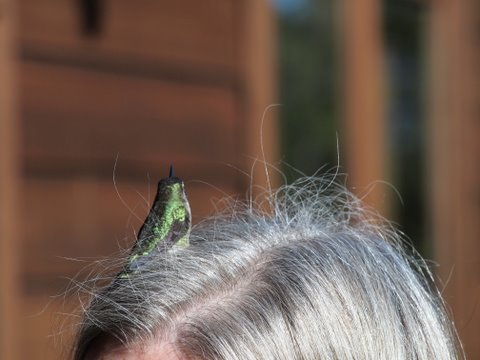
And here's a fun photo from a while ago where an adult Anna's landed on Beth's head!

Thanks to Beth for allowing me to share her photo with you here.

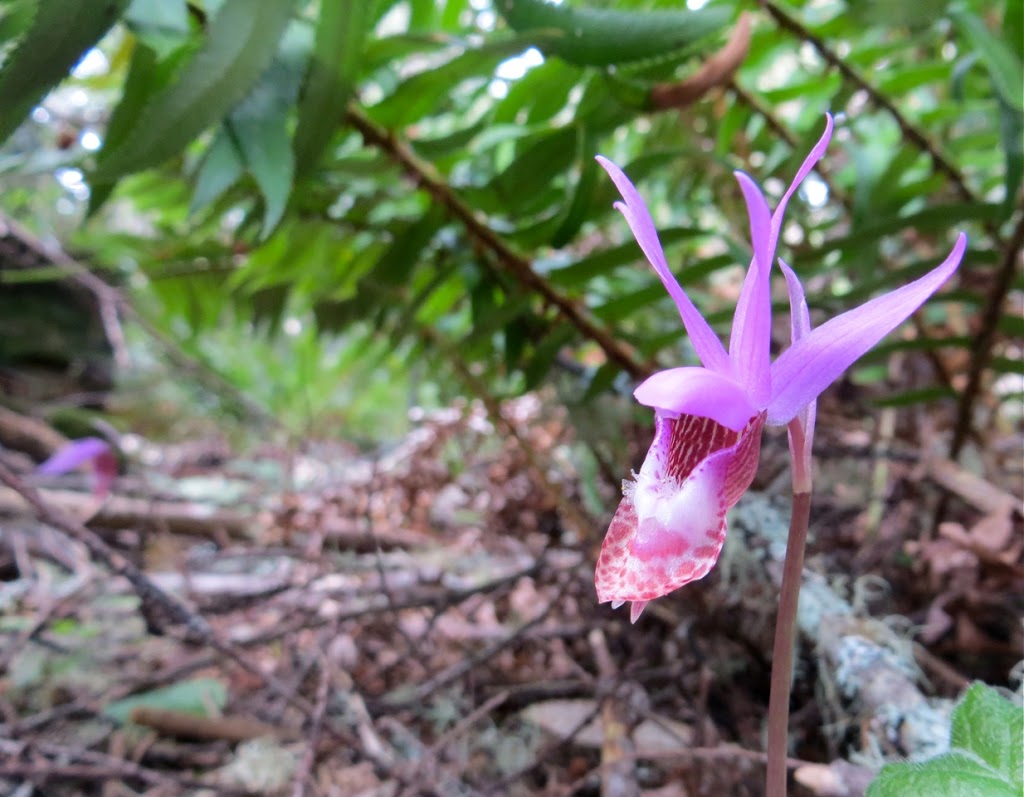
So tiny yet so exquisite, Calypso Orchids are blooming in undisturbed forests on the Mendonoma Coast. Jinx McCombs is lucky to have a patch of them on her property near Point Arena. She took this close-up so you can see its lovely blossom.

This wildflower needs a fungus in the soil to thrive so you should never try to transplant one. If you are fortunate enough to come across one, just appreciate it its natural habitat.

Thanks to Jinx for allowing me to share her photo with  you here.

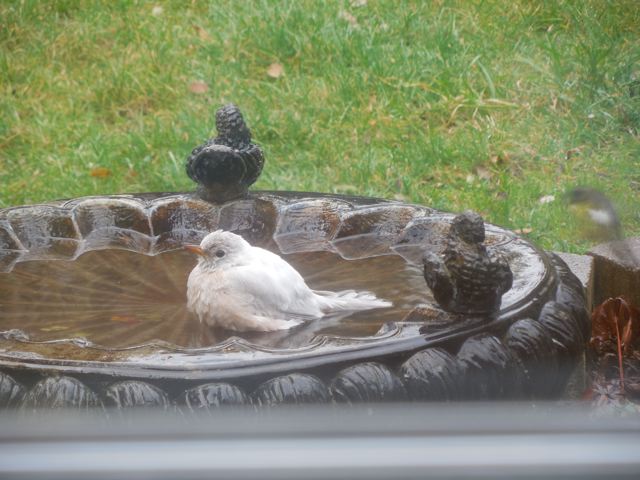
Susan Gonzalez sent in this photo to see if she could get an identification. Ron LeValley identified it as a partially leucistic American Robin.

You can see it's not a true albino as its eyes are normal color. Still it is a very unusual bird.

Thanks to Susan for allowing me to share this photo with you here. To see two other partially leucistic birds, here's the link: http://www.mendonomasightings.com/2012/09/05/two-strangely-colored-jays/

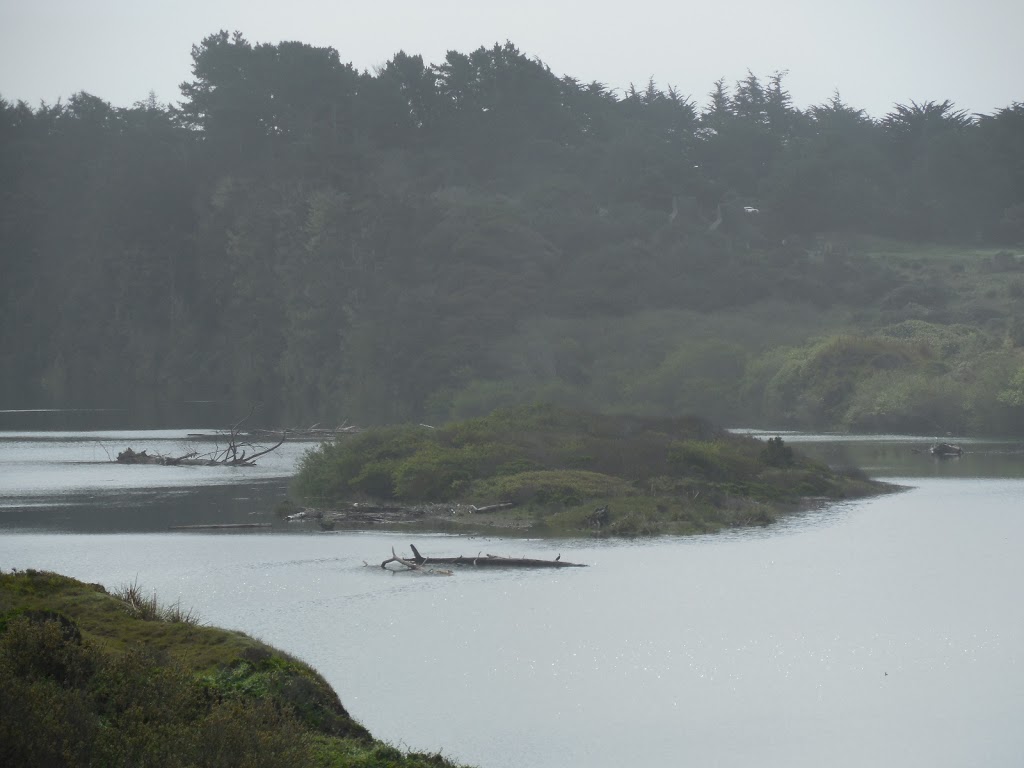
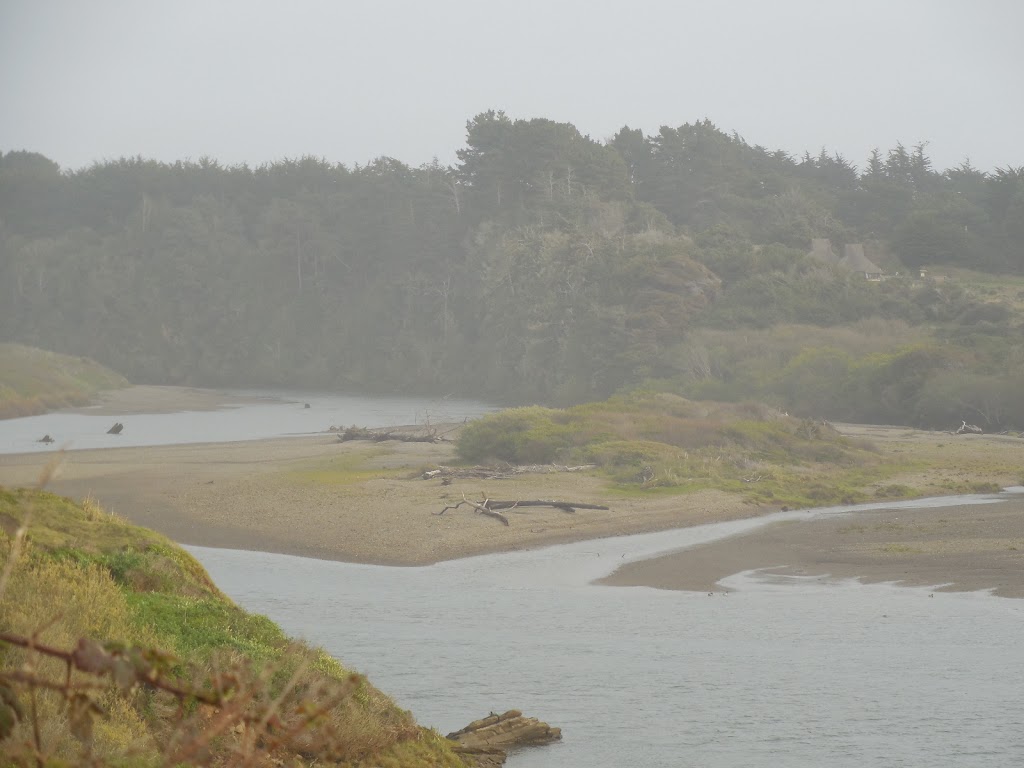
The Gualala River had been closed to the Pacific Ocean by a huge sandbar. We wondered if it was closed for the spring/summer or if it would open again. Then a storm brought over two inches of rain in the watershed and the river opened. This time Peter Baye was fortunate to witness the whole event, which occurred last Saturday, April 6.

The first two dramatic photos shows the before and after. Here the lagoon is full.

 And after the river opened, the river quickly drained down. It took about two hours.

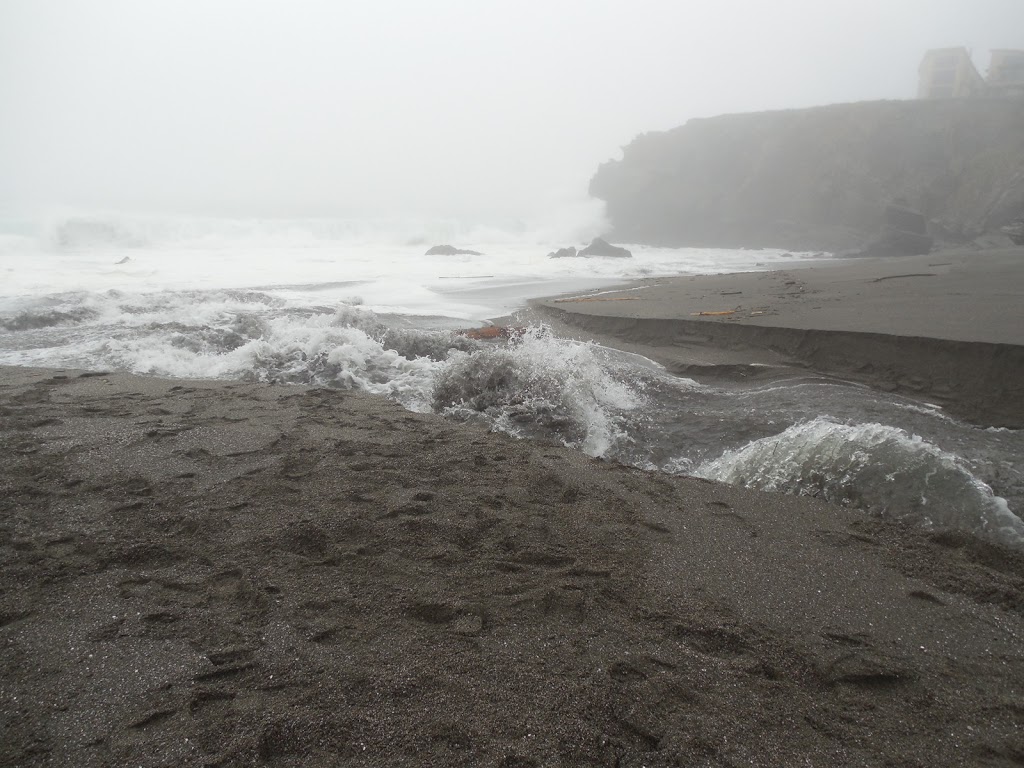
 Below is a photo of the beginning of the breach.

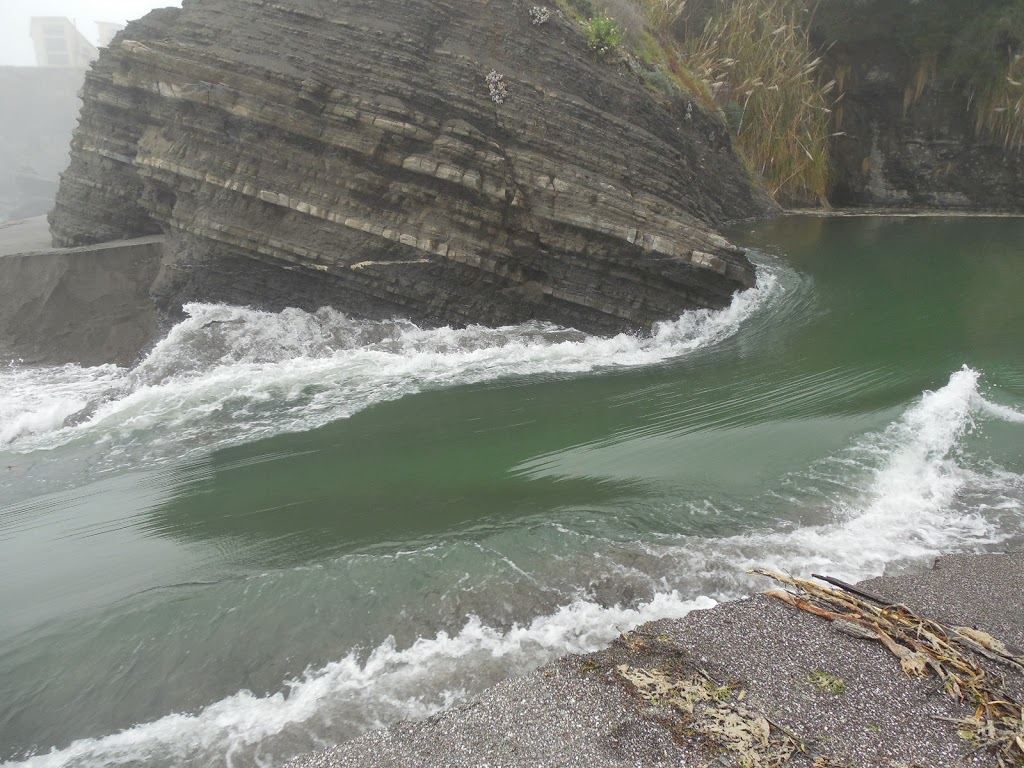
 And then the opening widened and the river was in full breach.

Here's what Peter had to say about his experience:

"I finally got a chance to view and photograph the Gualala lagoon breach cycle in full—from pre-breach to spill, initial cut, through full breach and stable inlet phases!  I stayed around in the morning long before it was close, to assess how fast it was creeping up – and decided it was worth a wait.

"Four hours later, after drawing a small crowd of breach-vigil onlookers, it got close to over-topping, when heavy fog patches came in waves around 2:30. I ran (literally) down to the beach and got fog-privatized “standing room only” photo perspectives and short videos as my camera batteries waned. They lasted until full breach. I returned to my car and got fresh batteries, and got one more set after the lagoon drawdown, and the tide began to rise and transform the outlet channel to a tidal inlet.

"It was an ecstatic and illuminating experience to watch the whole cycle. I’ve only caught them too early or too late (after breach), often without camera before."

Peter also took some video which will be posted on the Friends of the Gualala River website at this link:
http://gualalariver.org/

Many thanks to Peter for allowing me to share his photos with you here.
Warm weather has followed the rains and wildflowers are already putting on quite a show. A walk on a coastal bluff could bring visions of exquisite beauty.

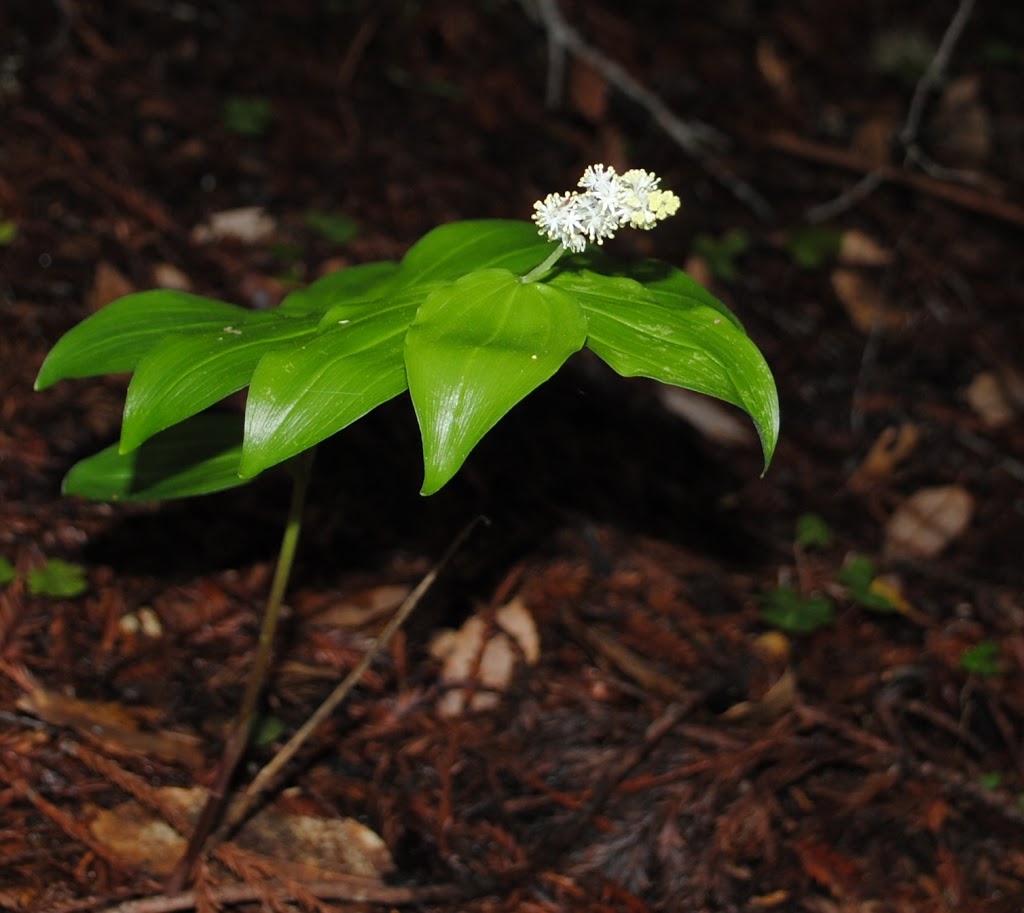
And forests have their share of wildflowers too. False Solomon Seal just began blooming. It's a member of the Lily family.

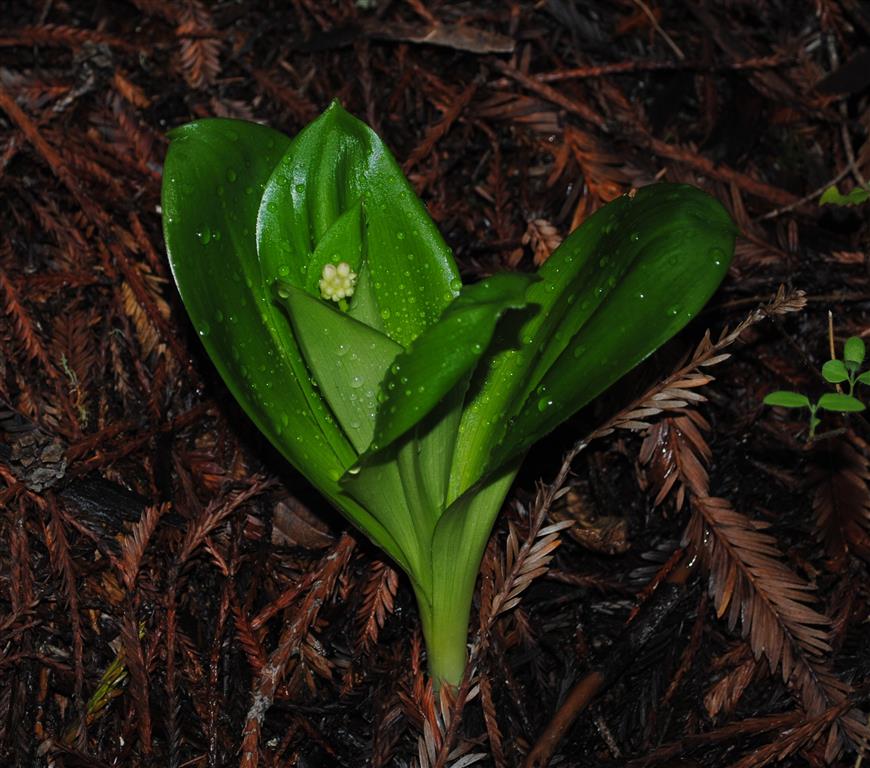
And here is an emerging Andrew's Clintonia, Clintonia andrewsiana, also called a Red Clintonia, It too is a member of the Lily family and, if the flower isn't eaten by a Deer, the beautiful blossoms will bloom the first of May.

It is absolutely lovely here today on the Mendonoma Coast.