Author Archives: Jeanne Jackson

The air is soft and warm here on the Mendonoma Coast today and a string of good-weather days is in our immediate future. This would be a great time to visit the Coast.

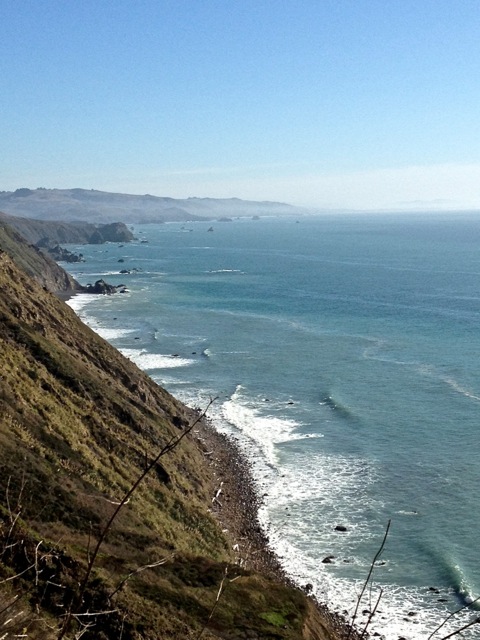
Carolyn André was delivering Meals-On-Wheels to her clients recently. She took a break to photograph the coastline. Can you hear the murmur of the Pacific Ocean?

Thanks to Carolyn for allowing me to share her photo with you here.

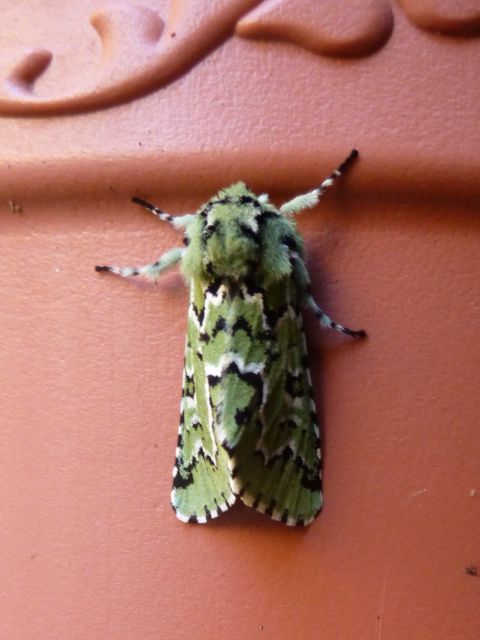
Harmony Susalla found this moth on a flower pot near her home. I have to admit I have never seen one of these so Will Erickson to the rescue. He identified it as a Owlet Moth, Noctuidae.

Isn't it beautifully marked? These moths are preyed upon by bats, as they fly at night. But many of these moths have an organ in their ear that can sense a bat's call. The wing muscles then go into spasms, causing it to fly erratically. Mother Nature sure gave this moth an interesting escape mechanism!

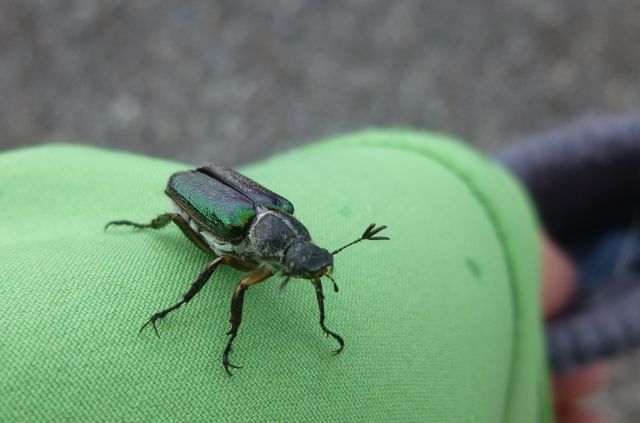
The other insect Harmony photographed was seen at Gualala Point Regional Park. According to Will, it's a Scarab Beetle, Dichelonyx.

Thanks to Harmony for allowing me to share her photos and thanks to Will for identifying these beauties. To see Harmony's beautiful organic textiles, here's the link to her website: http://www.harmonyart.com/

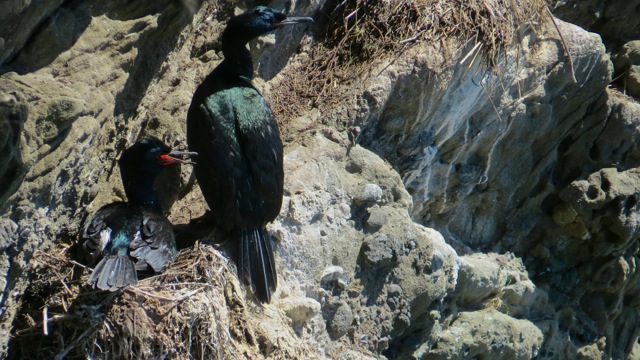
Last week Richard Kuehn took Rick and me to a very special spot on The Sea Ranch. We were told to be quiet as we made our way out to a point where we could observe the nesting Pelagic Cormorants on the protected bluff face. Below is a female sitting on eggs with her mate next to her.

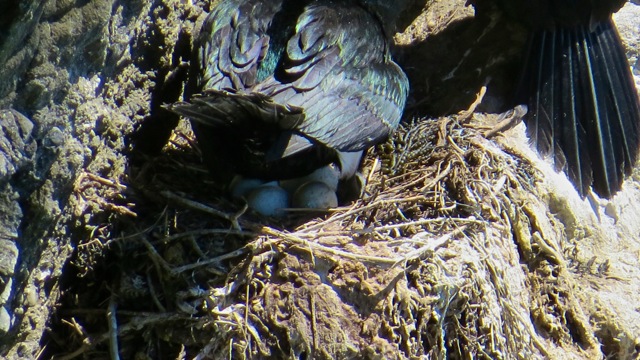
 And a resettling of the female allowed Rich to get a photo of her eggs. It looks like four eggs are in the nest.

There were perhaps a dozen or so nests and the males were coming and going, bringing food to the nesting females. It was magical to observe them and not disturb them in any way.

To hear their calls, here's a link to the Cornell Lab of Ornithology: http://www.allaboutbirds.org/guide/pelagic_cormorant/sounds

Thanks to Rich for allowing me to share his photos and for showing Rick and me this spot. I will share a few more photos of this place soon.

Bonus sighting - the first Wild Rhododendrons have begun their bloom. Rick and I saw the first bloom yesterday, Thursday, April 25.

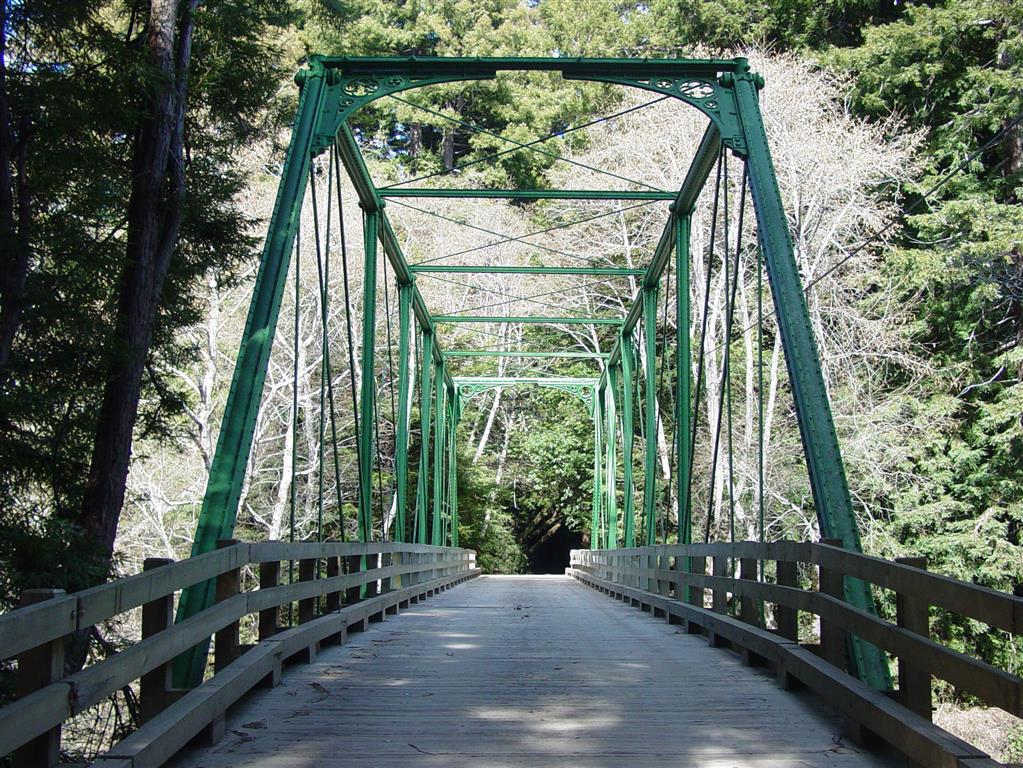
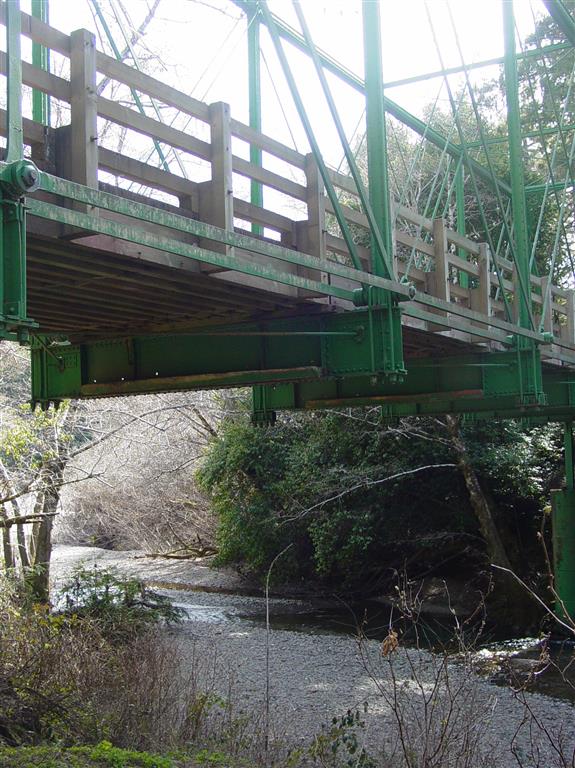
The iconic "Green Bridge" is also called the North Fork Bridge or the Gualala Road Bridge. It spans a portion of the Gualala River. Kay Martin recently photographed it and researched its history.

Kay kindly wrote up the history of this beautiful bridge for our recent Gualala River Sightings event with Friends of the Gualala River. This is what she learned:

North Fork Bridge:   A Brief History

The North Fork Bridge (aka Gualala Road Bridge, "Green" Bridge) was built in 1880 by the Phoenix Bridge Company of Phoenix, PA.  It is referred to as an Iron Pratt Through Truss Bridge, made with cast iron tubes for its compression members and straps for its tension members.  It is 130 feet in length and noteworthy for its major decorative detail and patented Phoenix column.  Designed initially for railroad use, bridges of this type were made disassembled and shipped all over the world for assembly.  This design feature allowed them to be moved from one site to another through time.

The travels of the North Fork Bridge are documented.  It appears to have been initially shipped to Smith River, CA (about 30 miles north of Crescent City), where it served as a lumber mill railroad bridge.  In 1909 it was moved to a lumber mill in Northwood, CA (between Monte Rio and Guerneville), and served as a railroad bridge spanning the Russian River.  Finally, in 1941, it was moved to its current location on the Gualala River and converted to automobile use as a replacement for earlier bridges that had washed away.

The North Fork Bridge has two "sister" bridges in Sonoma County of identical design that were also made in 1880 by the Phoenix Bridge Company.  One spans Big Sur Creek (at Geysers Road), and the other Haupt Creek (on Skagg Springs Road).  The two sister railroad bridges were apparently also moved to Sonoma County from the Smith River site in 1909, although their interim relocation sites are not noted.  According to CalTrans, the Haupt Creek bridge was erected at its current location and converted to automobile use in 1937.
Sources:
Susan M. Clark, Sonoma County Bridges:  Thematic District, Historical Resources Survey, CA Department of Parks & Recreation, 1993.
Independent Coast Observer, The Picture Page, Issue Two, January 1972.
George Bush, personal communication.

Thanks to Kay for allowing me to share her photos and her history of this beautiful green bridge.
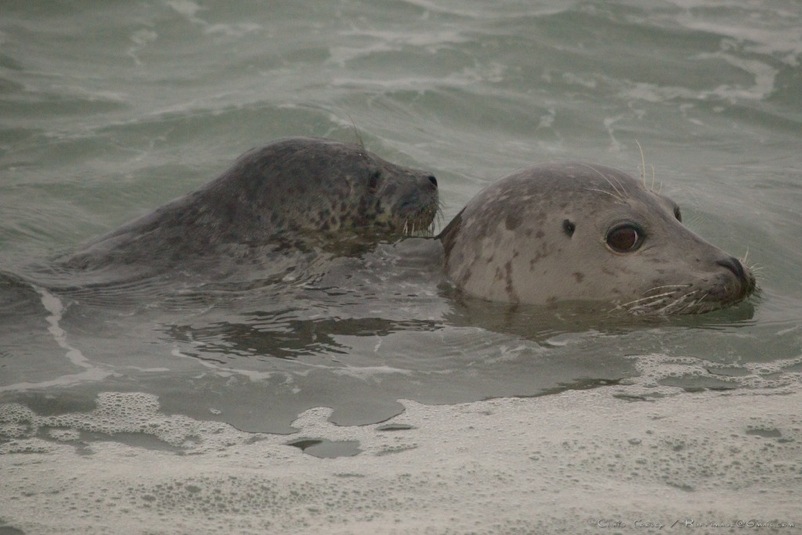
There are several secluded beaches where Harbor Seal moms give birth. One of them is Tide Pool Beach on The Sea Ranch. Craig Tooley photographed the first Harbor Seal to be born this year swimming with its mom. It's wonderful to watch as the pup bonds with its mother. Harbor Seals only have one pup at a time.

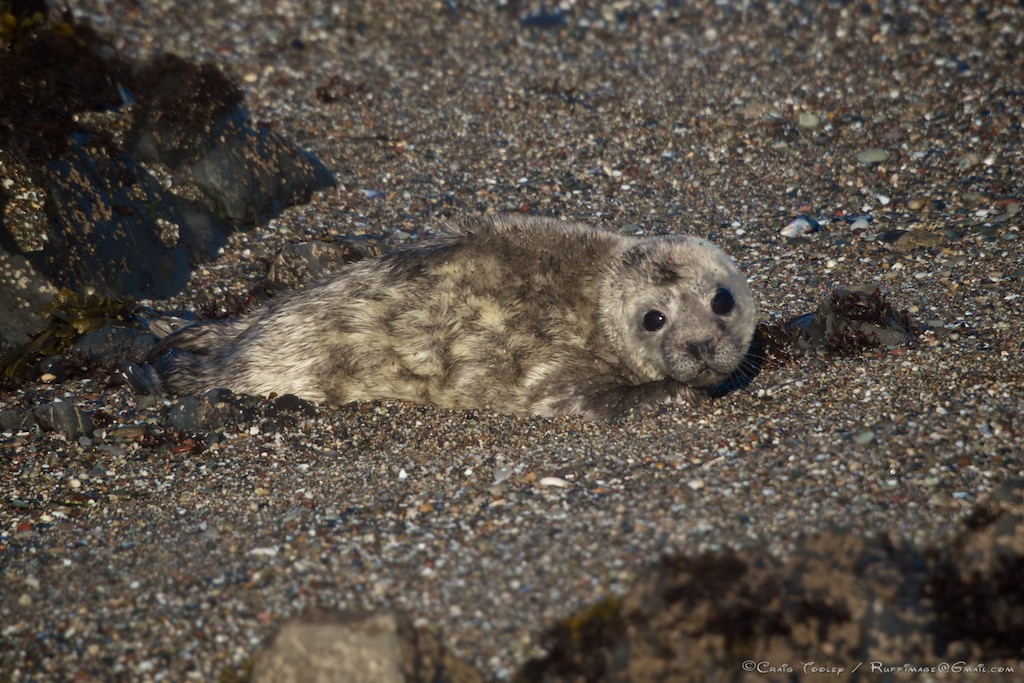
Here's an unusual sighting. This is a lanugo pup. It was born premature and still has its lanugo coat. You can see it is quite hairy. This coat is usually lost before birth but in this little pup's case it is still wearing it. The pup will shed it in the days to come.

You might see a pup on the beach and think it is abandoned. It is not! The mother leaves it there while she heads back into the ocean to feed. If you think a marine mammal is in distress, do not take matters into your own hands. Call the Marine Mammal Center at 415) 289-7350 and they will send a trained volunteer out to assess the situation.

Over twenty pups have been born off The Sea Ranch so far with many more to come. It's a privilege to share the Coast with them.

Thanks to Craig for allowing me to share his photos with you here. To see much more of Craig's photography, here is the link to his website: ruffimage.com