Author Archives: Jeanne Jackson

Chris Braley spotted a group of Steelhead in the lagoon of the Gualala River last week. The river has been closed to the Pacific Ocean by a big sandbar for many weeks, perhaps two months.

We think these are adults who have already spawned. Steelhead often don't die after spawning, and they return to the ocean after spawning where there is more food for them. Rozanne Rapozo had her long lens on her camera the day after Chris took her photo. Rozanne was only able to get two in her photograph but what a great look at these endangered fish.

We have had a lot of rain overnight and continuing today. It's very possible the Gualala River will breach the sandbar, possibly today. When that happens, these Steelhead will be on to the  next phase of their lives. Live long and prosper, Steelhead!

Thanks to Chris and Rozanne for allowing me to share their photos with you here.

There was a wonderful two inches of rain in the gauge at our house this morning and it's continued to rain. 41.85 inches season to date, with "normal" rain being 50 inches. These storms are a gift for us all from Mother Nature, including the Steelhead.

Eric Zetterholm almost couldn't believe what he was seeing. Driving home after work recently, he spotted this Coyote.

We don't see Coyotes often on the coast, but one occasionally appears. We're lucky Eric had his camera at the ready to show us this healthy-looking Coyote.

Thanks to Eric for allowing me to share his photos with you here.

Cliff Swallows have arrived and are busy building their nests of mud. You can see these beautiful swallows working hard at the north end of the Gualala Community Center building, along the entrance road to the post office. Cliff Swallows nest in colonies. Here is a photo Robert Scarolo took some years ago in a tunnel at The Sea Ranch.

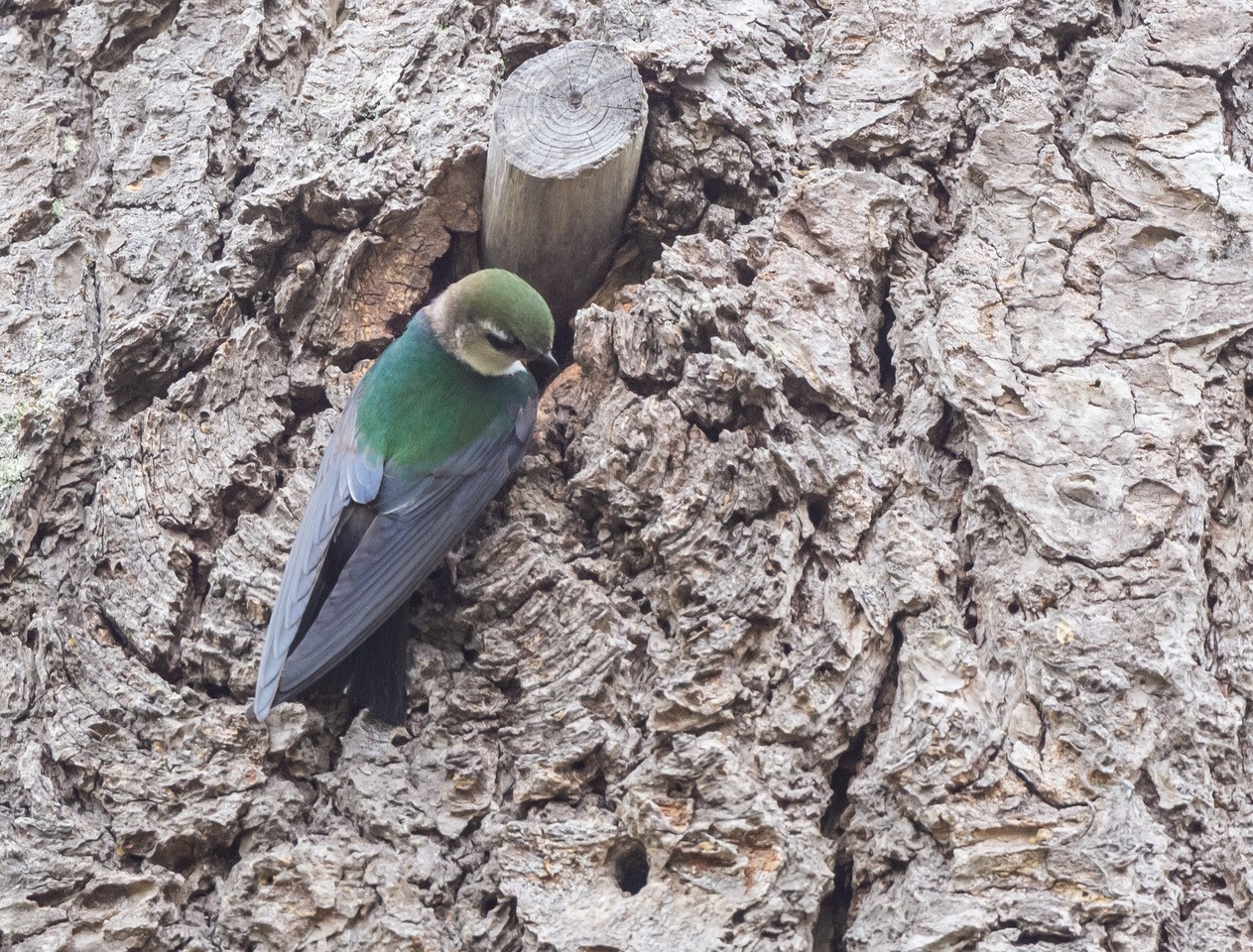
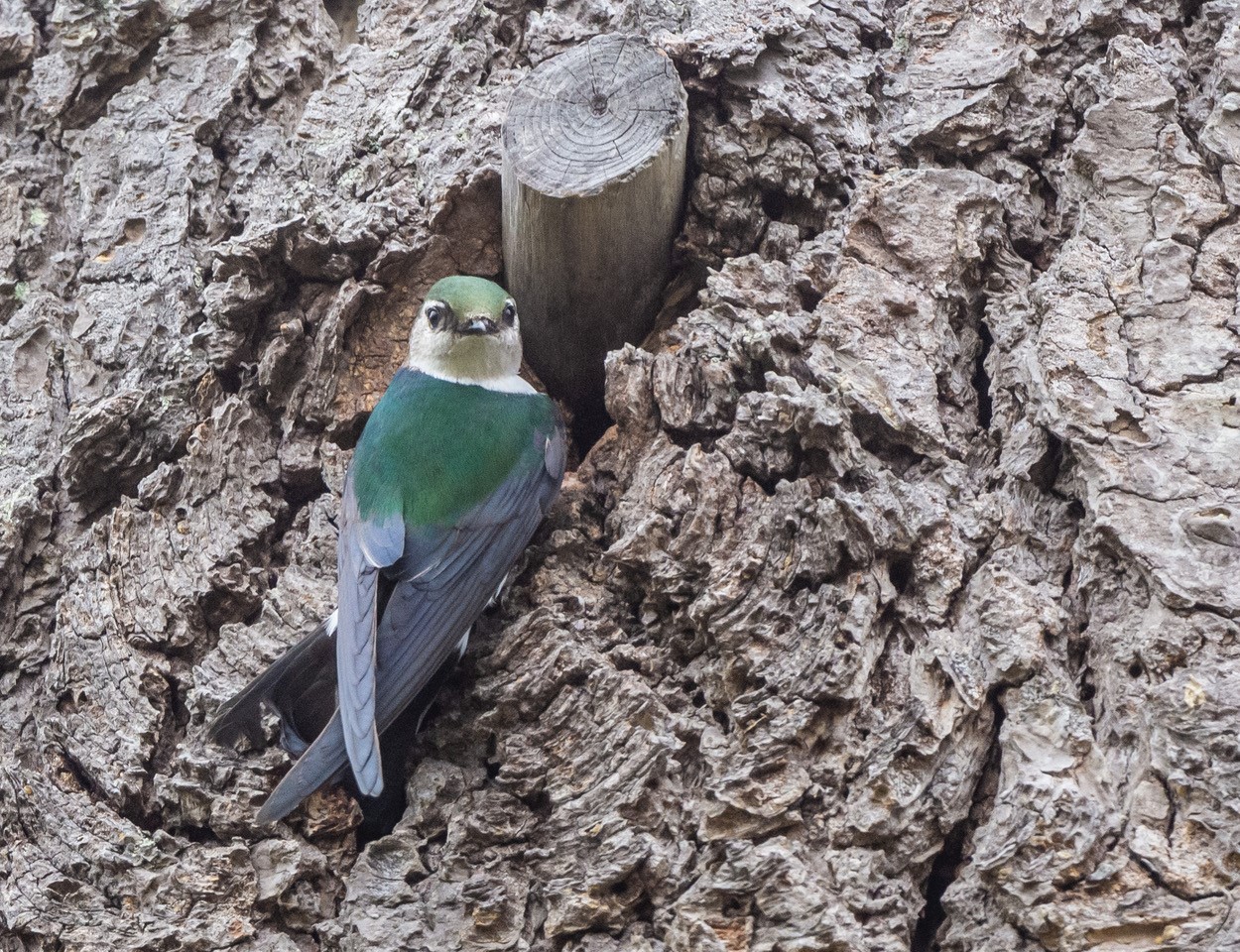
Diane Hichwa further explains. She wrote, “Our Barn Swallows build individual nests [hidden from each other]. Tree Swallows build in cavities in trees or boxes, and may be harder to find! Violet-green Swallows use nesting boxes.” Our largest swallow, the Purple Martin, uses nesting cavities in trees that other birds have made, such as woodpeckers.

Here is the beautiful Violet-green Swallow photographed by Craig Tooley.

And there is one more swallow species that returns here in the spring. Ron Bolander wrote, “I was out photographing at Gualala Point with my  usual Saturday group of friends. We all photographed these Northern Rough-winged Swallows in this tree. It was nice to capture this image on a beautiful day in the park.” Diane tells me this type of swallow is found near a river, as they nest in the river’s banks.

All of these swallows leave our area in the late Summer or early Fall. They are insect eaters, eating over a hundred insects a day, each one of them. In the Winter there aren’t enough insects for them to survive here, so they fly to warmer climes to our south.

If you are lucky enough to have swallows build a nest under your eves or in a light fixture, as happened one year at Surf Super’s entrance doors, think of the benefits these swallows bring by keeping the insect population under control. If you are worried about the mess the baby birds make, you can take a cardboard box and cut the sides off, leaving an inch or so. Tack that up under the nest to catch the waste, and when the birds have fledged, take it down and dispose of it. Remember that migratory birds, and their nests, are protected by law.

Thanks to Robert, Craig and Ron for allowing me to share their photos with you here.

Mary Hunter was out with friends looking for wildflowers. The hike didn't disappoint. She found the white version of Baby Blue Eyes, nemophila menziesii var. atomaria.

And the unique Mission Bells, fritilaria affinis. 

Here Mary photographed Red Larkspur and Buttercups, Mother Nature's garden.

A wonderful place to see wildflowers now is Manchester State Park. On a recent hike, I found the normal blue-colored Baby Blue Eyes in profusion, a charming sight. And Paintbrush in various colors, and so much more.

Thanks to Mary for allowing me to share her photos with you here.

Today it is warm with no wind. 78 degrees at my place in Anchor Bay.

Jeff Goll was at Navarro Beach yesterday, April 5th. There was a high surf advisory and the conditions didn't disappoint. You can almost hear the action by looking at Jeff's photos.

Jeff told me the Navarro River is currently blocked from flowing into the ocean by the big sandbar. So this River Otter had to hotfoot it over the sandbar to reach the ocean.

North American River Otters can navigate on land, in rivers and in oceans. Once a River Otter was seen crossing Highway One in Gualala! They are great climbers and can easily climb up a bluff face. They cannot abide pollution so their presence is a good sign for the health of the Mendonoma Coast's rivers and creeks.

Thanks to Jeff for allowing me to share his photos with you here. To see more of Jeff's nature photography, here is his website: http://jeffgoll.com/

The wind has disappeared and the ocean is calm today. Warm weather is predicted for the next few days. Head for the coast! Bonus sighting: the first mother/calf Gray Whale pair was seen a few days ago off the Point Arena Lighthouse Peninsula by Scott and Tree Mercer.