Author Archives: Jeanne Jackson

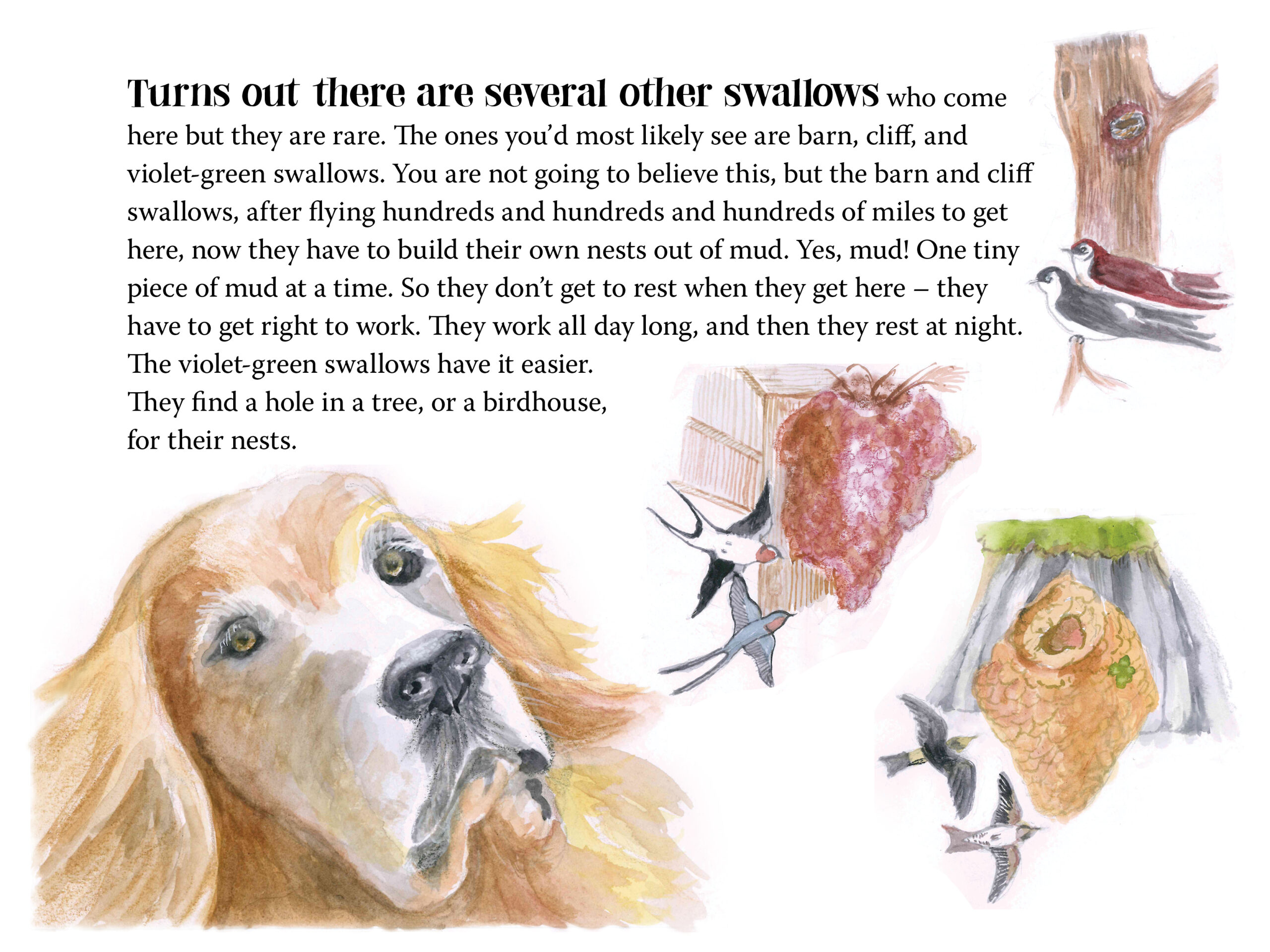
Lots of birds use dead trees. We see the Gualala Bald Eagle pair often perched in a snag just north of the mouth of the Gualala River. Acorn Woodpeckers use snags to drill their holes, which they then proceed to stuff with acorns, creating a granary tree. Michael Reinhart found this dead tree providing nesting cavities for several birds, including Pygmy Nuthatches. He also found Violet-green Swallows bringing insects to their chicks.

The moral of the story is, if you have a dead tree on your property and it isn't a hazard, consider leaving it up for the birds.

Thanks to Mike for allowing me to share his photos with you here.

We woke up to drippy fog this morning, and temps are in the high 50's. Years ago a good friend, Linda Brodie, told me to "embrace your inner fog," a fun way of being able to enjoy the fog we get this time of year. The moisture it brings is very welcome and I'm embracing my inner fog today!

Sunday night, May 15th, brought a celestial phenomenon, a total lunar eclipse. The Moon glowed red and orange, hence it’s often referred to as Blood Moon. Barry and Kathryn Weiss went to a suitable spot on The Sea Ranch to witness and photograph the event. Barry wrote, “So there we were, at the end of Piper’s Reach waiting for sunset. Friends driving by us would stop and ask if we were okay or did we need any help. ‘No, just waiting for sunset.’ ‘Waiting for the eclipse.’ They’d respond, ‘Oh,’ and then drive off. So there we were, freezing our…let’s say feet…off and then we saw it. When I examined my photos I saw that I might have captured the planet Jupiter in it.”

I sent Barry’s photo to sky watcher Mel Smith. Mel believes Barry photographed a star, not the planet Jupiter. Mel said if the eclipse happened during the Zodiac sign of Scorpio, which it did, then Barry photographed Antares. Mel said, “I’ve never seen a star next to an eclipsing Moon before.” There appears to be another faint star on the right side of the Moon.

Diane Hichwa also drove to view the eclipse. As the eclipse continued, she drove past a Raccoon that was huddled in a culvert.

Diane wondered if the Raccoon was scared by the event. When the eclipse was over, the Moon returned to its normal color and the excitement was over.

Thanks to Barry and Diane for allowing me to share their photos with you here.

It's very warm here today, after a warm day yesterday. Hot up on the ridge! Bring back our fog!

It takes a talented photographer to get a photo of an insect while flying! Craig Tooley wrote, “I was out looking for little creatures the other day and thought this one was an interesting bee, or fly, or wispy creature. I thought you might enjoy seeing it. They move so fast, a lot of times you don't get a good look at these impressive little creatures. Where did it get those sunglasses?”

I sent Craig’s photo to entomologist Mary Lou Flint. She wrote, “It’s a Syrphid Fly, sometimes called a Hover Fly or Flower Fly because it hovers over flowers to feed on pollen and nectar. These are wonderful beneficial insects. Their larval stages are little maggots that feed on aphids and sometimes other soft-bodied insects. They can clean up an aphid infestation in a jiffy! The adults resemble bees or wasps, and this mimicry may protect them from some predators. However, as you can tell from Craig’s photo, they only have one pair of true wings, thus they are called Diptera. The rear wings have been reduced to knobs called halters. Bees and wasps have four full wings.”

I also learned these important pollinators, unlike bees and warps, do not sting!

Thanks to Craig for allowing me to share his photo with you here. To see much more of Craig's nature photography, here is the link to his website: http://www.ruffimage.com

It's sunny and breezy today!

Joe Cassetta was in the right place at the right time. Near his Sea Ranch home, around 7 p.m., he saw this Doe give birth to twins. The tiny Fawns are still wet from their birth.

Here they are beginning to explore their mother and begin nursing.

About a week later, Joe spotted the family again, and look how confident the Fawns look now!

Remember to watch for these little ones when driving the coast's roads. If a Doe crosses the road, wait a minute to see if a Fawn...or two...or even three might be following her.

Thanks to Joe for allowing me to share his photos with you here.

Sunny, warm and WINDY! The Pacific Ocean is full of whitecaps today. Upwelling, igniting the marine food chain, is surely taking place courtesy of this northwest wind.


On Sunday May 8th, Jeff Goll was at MacKerricher State Park during the most recent rains. He got this beautiful and unusual photo of a Western Gull in flight. Jeff calls this a hooded gull.

He then spotted a Western Gull - perhaps the same Gull? - nab a Shrimp for its meal.

Rain showers coming in!

Followed by a rainbow.

MacKerricher State Park  is located three miles north of Fort Bragg in Mendocino County. It has nine miles of coastline to explore. You can learn more about this wonderful park at this link: https://www.parks.ca.gov/?page_id=436

Thanks to Jeff for allowing me to share his photos with you here.

It's sunny, but there is fog hovering over the ocean, which keeps the temperature nice and cool. It's springtime breezy too!